
SSAW (Spiral Submerged Arc Welded) steel pipes hold a crucial position in the oil, gas, water conservancy, and building structure industries due to their unique manufacturing process and extremely high cost-effectiveness.
To help purchasers, engineers, and project managers more professionally evaluate and select SSAW carbon steel pipes, this article will provide an in-depth analysis from three dimensions: technical specifications, manufacturing logic, and core international standards.
I. Core Specifications and Advantages of SSAW Steel Pipes
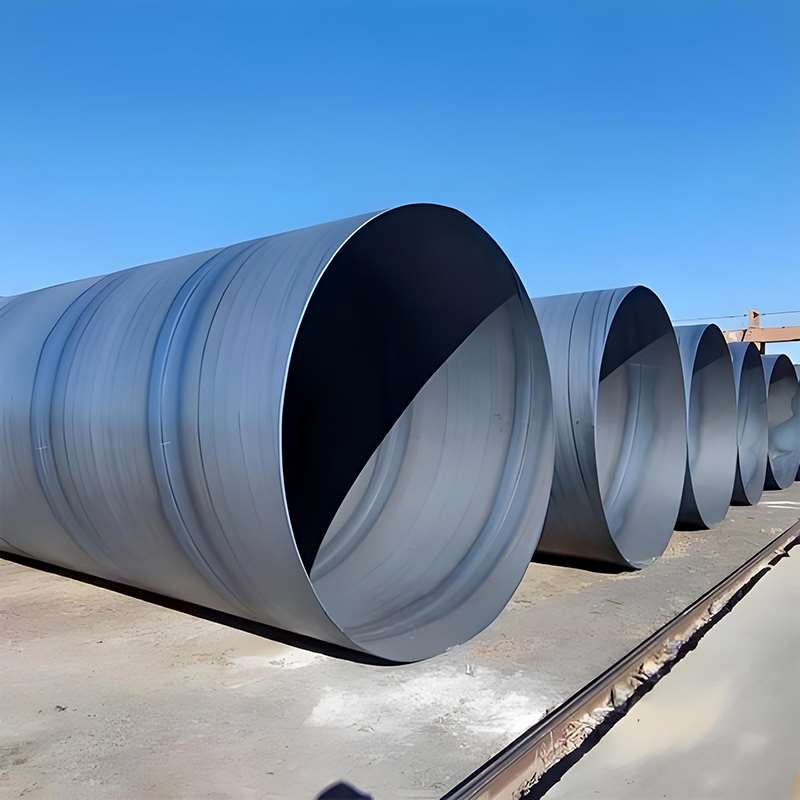
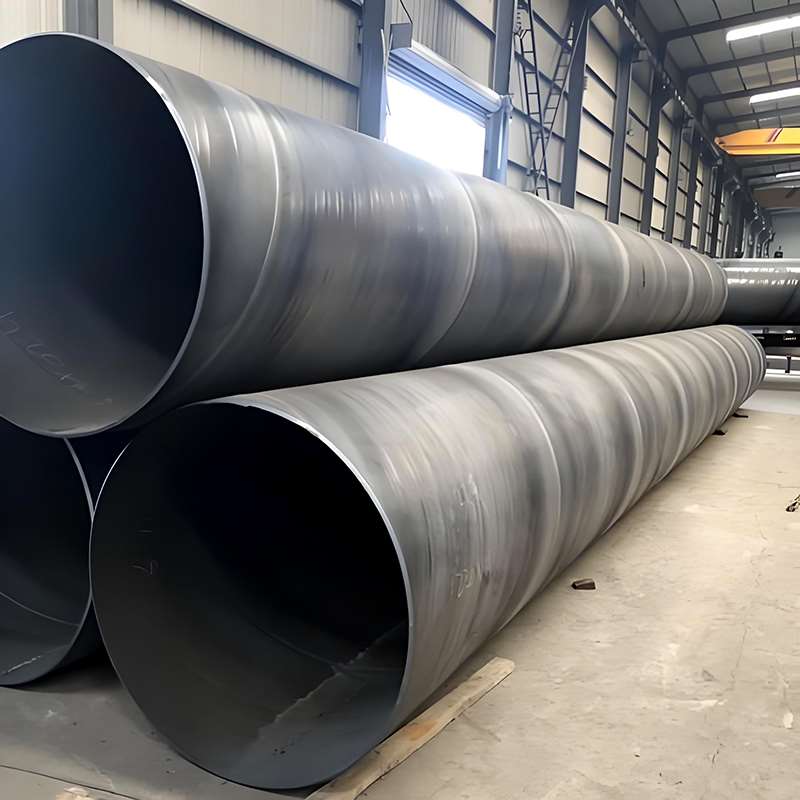
SSAW steel pipes are manufactured by spirally winding hot-rolled strip steel and welding it using double-sided submerged arc welding technology. Its biggest advantage is “large diameter, low cost.”
- Outer Diameter Range: Typically between 219mm and 3500mm. Due to the spiral forming characteristics, large-diameter steel pipes can be produced using narrower strip steel.
- Wall Thickness: Generally between 6mm and 25mm.
- Length: Can be customized according to project requirements, commonly 12m or longer, reducing the number of on-site butt welds.
Why Choose SSAW?
- Flexible Production: By changing the forming angle, steel pipes of different diameters can be produced from the same width of strip steel, which offers a significant delivery advantage in urgent projects.
- Dimensional Accuracy: Modern spiral welded pipe units are equipped with precision control systems to ensure the roundness and straightness of the pipe body.
- Strength advantage: The stress distribution of spiral welded seams is more uniform than that of straight seam welded pipes. When subjected to internal pressure, spiral welded seams bear less principal stress.
II. Detailed Manufacturing Process
High-quality SSAW steel pipes are not simply “rolled and welded.” A rigorous process is key to ensuring the pipe’s pressure resistance and durability:
- Uncoiling and Leveling: After entering the production line, the strip steel is first leveled to eliminate residual stress.
- Edge Milling: This is the most critical step. Double-sided milling of the strip steel edges ensures the bevel angle and geometric dimensions during forming, a prerequisite for ensuring deep penetration weld quality.
- Forming Control: A three-roll or five-roll forming machine is used to precisely roll the strip steel into a spiral shape.
- Double-Sided Submerged Arc Welding: Internal welding is performed before external welding. Submerged arc welding ensures a deep and narrow weld, a small heat-affected zone, and significantly reduces the risk of cracking.
- Online Non-Destructive Testing: Immediately after weld completion, continuous ultrasonic automatic flaw detection is performed.
- Finishing and Hydrostatic Testing: Every steel pipe must undergo a hydrostatic test to ensure no leakage under extreme working pressure.
III. Core ASTM Standards and Material Selection (ASTM Standards)
In international trade and engineering design, selecting the correct implementation standard determines the safety margin for a project.
Common Standards Comparison Table
| Standard | Application | Key Technical Requirements |
|---|---|---|
| ASTM A252 | Structural Piling | Focuses on tensile strength and yield strength; relatively flexible requirements on weld chemical composition. |
| ASTM A53 | Mechanical, Pressure, and Fluid Transmission | Common grade is Grade B; requires hydrostatic testing and good weldability. |
| ASTM A139 | Electric-Fusion (Arc) Welded Steel Pipe (Medium to Large Diameter) | Suitable for water transmission and general structural use; defines five strength grades (A–E). |
| API 5L | Oil and Gas Pipeline Transportation | The most stringent industry standard; SSAW pipes are commonly used in PSL1 and PSL2 pipeline systems, with strict requirements on toughness and non-destructive testing (NDT). |
IV. In-depth Advice for Purchasing and Technical Personnel
As professionals, when evaluating SSAW steel pipes, you should not only look at the unit price, but also pay attention to the following “hidden costs”:
- Misalignment Control: The most common problem with spiral welded pipes is misalignment at the weld seam. Excellent factories can control the misalignment to within 10% of the wall thickness.
- Residual Stress Treatment: Spiral forming generates certain mechanical stress. Understand whether the manufacturer has performed appropriate stress relief treatment after production.
- Coating Compatibility: SSAW steel pipes are often used underground or underwater and usually require 3PE (polyethylene) or FBE (fused epoxy powder) anti-corrosion coating. Please ensure that the weld reinforcement is ground smooth to prevent the anti-corrosion layer from peeling off.