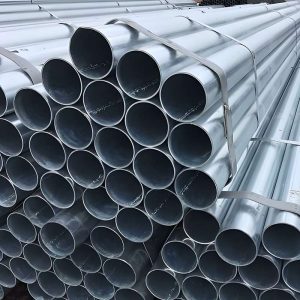
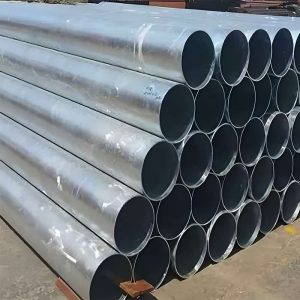
I. What is Galvanized Carbon Steel Pipe?
i. Basic definition
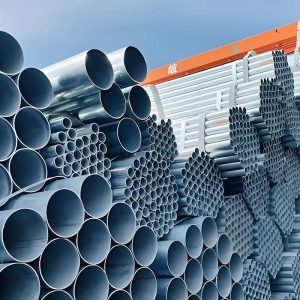
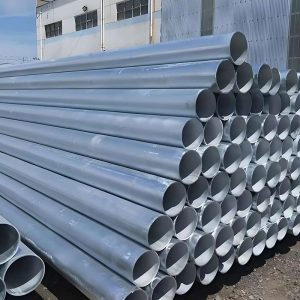
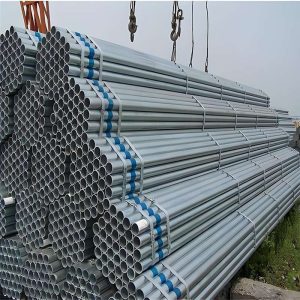
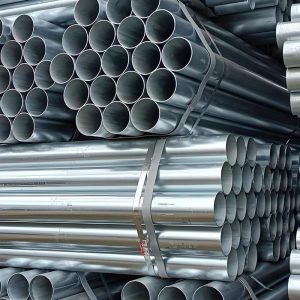
Galvanized Carbon Steel Pipe is a carbon steel pipe coated with a zinc layer through hot-dip galvanizing or electro-galvanizing processes to prevent rust and corrosion.
ii. What are the differences between galvanized pipes and ordinary carbon steel pipes?
| Feature |
Black / Bare Carbon Steel Pipe |
Galvanized Carbon Steel Pipe |
| Appearance |
Dark black or steel gray surface, commonly known as “black pipe” |
Bright silver-white or matte silver-gray surface with characteristic zinc spangle |
| Corrosion Resistance |
Very poor. It begins to rust within days when exposed to air or humid environments |
Excellent. Zinc coating provides a protective barrier, offering 10–50 years of corrosion resistance depending on conditions |
| Cost |
Lower cost due to basic production process |
Higher cost due to pickling, hot-dip galvanizing, and additional raw material usage |
| Weldability |
Excellent weldability with standard welding methods |
More difficult to weld. Zinc coating vaporizes during welding, producing toxic fumes and causing porosity; coating must be removed before welding |
| Main Applications |
Oil and gas transmission, high-pressure steam pipelines, underground pipelines as carrier pipes for insulation systems |
Fire protection systems, gas pipelines, water supply (non-potable), greenhouse structures, scaffolding, and building structures |
II. Applications of Galvanized Carbon Steel Pipe
Galvanized
carbon steel pipes are widely used in building, industrial, and municipal systems. Their core advantages are strong corrosion resistance, moderate cost, and high strength. Different applications have different requirements for galvanized pipes, so the medium, environment, and service life need to be carefully considered when selecting a type.
1. Water Supply & Drainage System
Applicable Scenarios:
- Non-potable water supply systems
- Municipal auxiliary water supply networks
- Industrial circulating water systems
Selection Points:
- Recommended: Hot-dip galvanized steel pipes
- Medium or higher galvanizing thickness (Z80–Z275)
- Note: Water corrosiveness (enhanced protection is required in chlorine-containing or acidic environments)
Reasons for suitability: Strong corrosion resistance, safer and more stable than black pipes
2. Fire Protection System
Applicable Situations:
- Sprinkler System
- Main Fire Protection Piping
Selection Points:
- Must comply with ASTM A53 or relevant fire protection standards
- Requires uniform galvanization of both inner and outer walls
- Hot-dip galvanized seamless or welded pipes are preferred
Reason for suitability: Long-term static water storage environments are prone to corrosion; the galvanized layer ensures reliability.
3. Construction & Structural Use
Applicable Scenarios:
- Scaffolding Systems
- Steel Structure Supports
- Temporary or Permanent Building Frames
Selection Considerations:
- Focus on Mechanical Strength
- Medium-level galvanization (Z60–Z120) is optional
- For high aesthetic requirements, choose a uniform zinc coat surface
Reasons for Suitability: Combines strength and weather resistance, suitable for long-term outdoor use
4. Gas Distribution – Low Pressure
Applications:
- Low-pressure natural gas transmission
- Industrial gas pipelines
Selection Considerations:
- Must comply with API 5L or ASTM A53
- Ensuring weld quality and sealing performance
- Avoid direct burial in highly corrosive environments
Reasons for suitability: Good corrosion resistance, reducing leakage risk
III. Galvanized Carbon Steel Pipe Types
In galvanized steel pipes, the galvanizing method directly determines the pipe's corrosion resistance, service life, and applicable scenarios. Currently, there are two main processes in the industry: hot-dip galvanizing and electro-galvanizing.
1. What is hot-dip galvanizing?
Hot-dip galvanizing involves immersing a steel pipe in molten zinc at approximately 450°C, causing a metallurgical reaction between the zinc and the steel substrate to form a zinc-iron alloy layer and a pure zinc layer.
Characteristics:
- Thick zinc layer (typically 60–275 g/m² or higher)
- Strong adhesion, not easily peeled off
- Extremely strong corrosion resistance
- Suitable for harsh environments
2. What is electro-galvanizing?
Electro-galvanizing is the process of depositing a thin layer of zinc onto the surface of a steel pipe through electrolysis.
Characteristics:
- Thinner zinc layer
- Smooth and uniform surface
- Brighter appearance
- Less corrosion resistance
3. Comparison Table of Hot-Dip Galvanizing vs. Electro-Galvanizing
| Comparison Item |
Hot-Dip Galvanized (Hot-Dip) |
Electro-Galvanized (Electro) |
| Manufacturing Process |
Steel is immersed in molten zinc |
Zinc is deposited through electrolysis |
| Zinc Coating Thickness |
Thick (approx. 60–275 g/m²+) |
Thin (typically 5–30 g/m²) |
| Corrosion Resistance |
Excellent, suitable for outdoor and buried environments |
Relatively weak, suitable for indoor use |
| Service Life |
10–50 years |
3–10 years |
| Surface Appearance |
Rough surface with visible zinc spangle |
Smooth and bright silver finish |
| Adhesion |
Metallurgical bonding, extremely strong |
Physical adhesion, relatively weak |
| Cost |
Higher |
Lower |
| Application Environment |
Outdoor, humid, and industrial environments |
Indoor and dry environments |
IV. Welded Galvanized Steel Pipe Standards
| Category |
Standard Name |
Standard Number |
Application Scope |
| Base Pipe Standard |
ASTM Standard Specification for Pipe |
ASTM A53 |
Structural, water supply, low-pressure fluid transmission |
| Base Pipe Standard |
API Specification for Line Pipe |
API 5L |
Oil and gas transmission pipelines |
| Base Pipe Standard |
European Standard for Welded Steel Tubes |
EN 10217 |
Industrial pressure piping systems |
| Base Pipe Standard |
Welded Steel Pipe for Low Pressure Fluid |
GB/T 3091 |
Water supply, fire protection, general fluid transport |
| Galvanizing Standard |
Hot-Dip Galvanizing Standard for Steel Products |
ASTM A123 |
Hot-dip galvanizing coating for steel structures and pipes |
| Galvanizing Standard |
Hot-Dip Galvanizing for Iron and Steel |
ISO 1461 |
International general hot-dip galvanizing standard |
| Galvanizing Standard |
Zinc Coating for Small Parts |
ASTM A153 |
Galvanizing standard for fittings and small components |
| Galvanizing Standard |
Hot-Dip Galvanizing Standard |
GB/T 13912 |
Chinese standard for hot-dip galvanized coating quality control |
V. Comparison table of API 5L and ASTM A53 galvanized steel pipes
| Comparison Item |
API 5L Galvanized Steel Pipe |
ASTM A53 Galvanized Steel Pipe |
| Standard Position |
Line pipe standard |
General steel pipe standard (Structural & Low-pressure Pipe) |
| Main Application |
Long-distance oil and gas transmission pipelines |
Water supply, fire protection, building structures, general industrial use |
| Pressure Rating |
High-pressure systems |
Low-pressure or medium-pressure systems |
| Strength Requirements |
Higher (e.g., X42–X80 grades) |
Medium (Grade A / Grade B) |
| Chemical Composition Control |
More strict |
Relatively relaxed |
| Industry Application |
Energy, oil and gas engineering |
Construction, municipal, industrial engineering |
| Galvanizing Suitability |
Suitable for buried and industrial corrosion protection pipelines |
Suitable for general corrosion protection requirements |
| Cost |
Higher |
Lower |
| Inspection Requirements |
More stringent (especially PSL2) |
Standard inspection requirements |
| Typical Projects |
Oil & gas pipelines, long-distance transmission projects |
Fire protection systems, structural support, water supply systems |
VI. Common problems with galvanized carbon steel pipes
1. What is galvanized carbon steel pipe? What is it mainly used for?
Galvanized carbon steel pipe is made by hot-dip galvanizing or electro-galvanizing a layer of zinc to form a protective layer on the surface of carbon steel pipe, improving its corrosion resistance.
It is widely used in water supply and drainage systems, fire-fighting pipelines, building structures, agricultural irrigation, and industrial transportation systems.
2. What is the difference between galvanized steel pipe and ordinary black pipe?
The main difference lies in the presence or absence of a zinc coating:
- Black pipe: No anti-corrosion layer, prone to rusting.
- Galvanized pipe: Protected by a zinc coating, providing stronger corrosion resistance and a longer service life.
3. How long is the service life of galvanized carbon steel pipe?
The service life depends on the environment and the thickness of the zinc coating, generally 10–50 years.
- Dry environment: Longer service life.
- Humid or corrosive environment: Relatively shorter service life.
4. Can galvanized steel pipes be welded?
Yes, they can be welded, but the following precautions should be taken:
- The zinc layer will produce harmful fumes during welding.
- Porosity can easily occur, affecting weld quality.
- The zinc layer in the welding area usually needs to be ground down first.
- Post-weld anti-corrosion repair is recommended.
5. What is the difference between hot-dip galvanizing and electro-galvanizing?
- Hot-dip galvanizing: Thicker zinc layer, stronger corrosion resistance, suitable for outdoor and industrial applications.
- Electro-galvanizing: Thinner zinc layer, smoother surface, suitable for indoor or light applications.
Hot-dip galvanized steel pipes are generally preferred for engineering projects.
6. What are the commonly used standards for galvanized carbon steel pipes?
Common standards include:
- ASTM A53 (Welded and Galvanized Steel Pipe)
- API 5L (Steel Pipe for Piping)
- EN 10217 (European Standard for Welded Steel Pipe)
- GB/T 3091 (Chinese Standard for Low-Pressure Fluid Pipes)
Galvanizing standards: ASTM A123, ISO 1461, GB/T 13912