
I. Core Definitions of Alloy Steel Seamless Pipes: Pipe vs. Tube
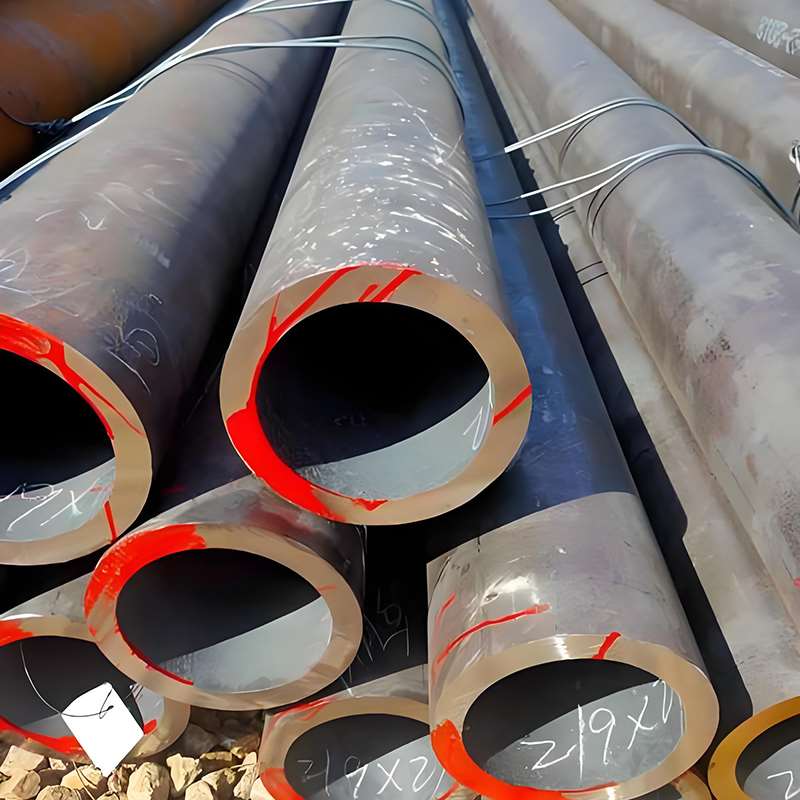
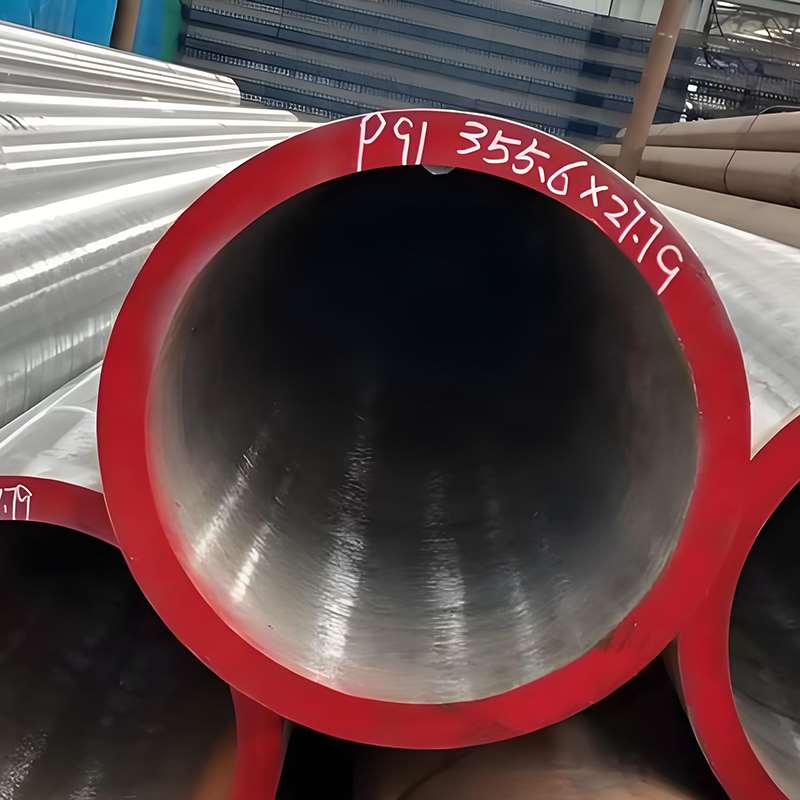
- ASTM A335 (Pipe Standard): This standard is specifically for pipes. In industrial terminology, a pipe primarily refers to a structural conduit for transporting fluids and gases. A335 alloy seamless steel pipes are commonly used as main steam lines, headers, and large transmission lines in power plants.
- ASTM A213 (Tube Standard): This standard covers seamless ferritic and austenitic steel boiler tubes, superheater tubes, and heat exchanger tubes. Tubes are typically used inside equipment (such as boilers or heat exchangers) for their primary purpose of achieving efficient heat exchange.
Key Conclusion: If your requirement is to “transport” fluids, you generally need ASTM A335 pipes; if you are manufacturing boiler internals or heat exchange systems, you need ASTM A213 tubes.
II. Dimensional Standards and Tolerances
Since one is a pipe and the other a tube, their measurement methods are drastically different:
- A335 dimensions: Measured by NPS (nominal pipe diameter) and Schedule (wall thickness class, such as Sch 80). Regardless of wall thickness variations, the outer diameter (OD) of a given NPS is fixed.
- A213 dimensions: Measured by actual outer diameter (OD) and minimum wall thickness or average wall thickness. Because tubes need to pass precisely through the boiler’s tube sheet or header, their tolerance requirements are much stricter than A335.
III. Comparison of Chemical Composition and Grades
These two standards share similar “grades.” A335 typically begins with the letter P (for Pipe), while A213 begins with the letter T (for Tube).
- Common corresponding grades: P11, P22, P5, P9, and P91 in A335 correspond to T11, T22 combined with T5, T9, and T91 in A213, respectively.
- Minor differences: Although the chemical composition is largely the same, there may be slight differences within the specific allowable ranges for elements such as carbon, manganese, and silicon to accommodate different manufacturing processes (Pipes are generally thicker, while Tubes are more precise).
IV. Manufacturing Process and Testing Requirements
Because alloy seamless steel pipes (A335) often withstand greater fluid pressures, while A213 pipes must cope with intense heat exchange, their testing focuses differ:
- Hardness Testing: ASTM A213 has stricter hardness requirements for specific grades to ensure good performance during the bending and forming processes required for boiler installation.
- Flattening and Flaring Testing: A213 must pass mandatory flaring and flanging tests because they often require expansion or bending during installation. In contrast, A335 focuses more on hydrostatic testing or non-destructive electrical testing (NDT).
V. Quick Comparison Table: A335 vs. A213
| Feature | ASTM A335 | ASTM A213 |
|---|---|---|
| Common Name | Chrome-Moly Pipe | Boiler Tube / Heat Exchanger Tube |
| Main Application | Fluid transportation (main pipelines) | Heat exchange (internal equipment components) |
| Size Designation | NPS and Schedule (wall thickness grade) | Actual Outer Diameter (OD) and Wall Thickness |
| Typical Grades | P11, P22, P91 | T11, T22, T91 |
| Tolerance Requirements | Standard pipe tolerances | High precision / strict tolerances |
VI. Why is choosing the right alloy seamless steel pipe crucial?
Incorrectly using A335 where A213 is required (or vice versa) can lead to mechanical failures or unnecessary project cost increases.
In high-temperature, high-pressure steam environments, the chromium and molybdenum content in these pipes provides critical creep resistance (preventing deformation under prolonged high temperatures) and corrosion resistance.
As a professional manufacturer, we offer a full range of alloy seamless steel pipes conforming to ASTM A335 and A213 standards, ensuring your projects are safe, durable, and compliant.