
In underground pipeline projects, pipes are buried deep underground for extended periods and are exposed to corrosion from moisture, acidic and alkaline substances, and stray currents in the soil. If corrosion protection measures are inadequate, steel pipes are prone to localized corrosion and perforation, which can lead to media leaks.
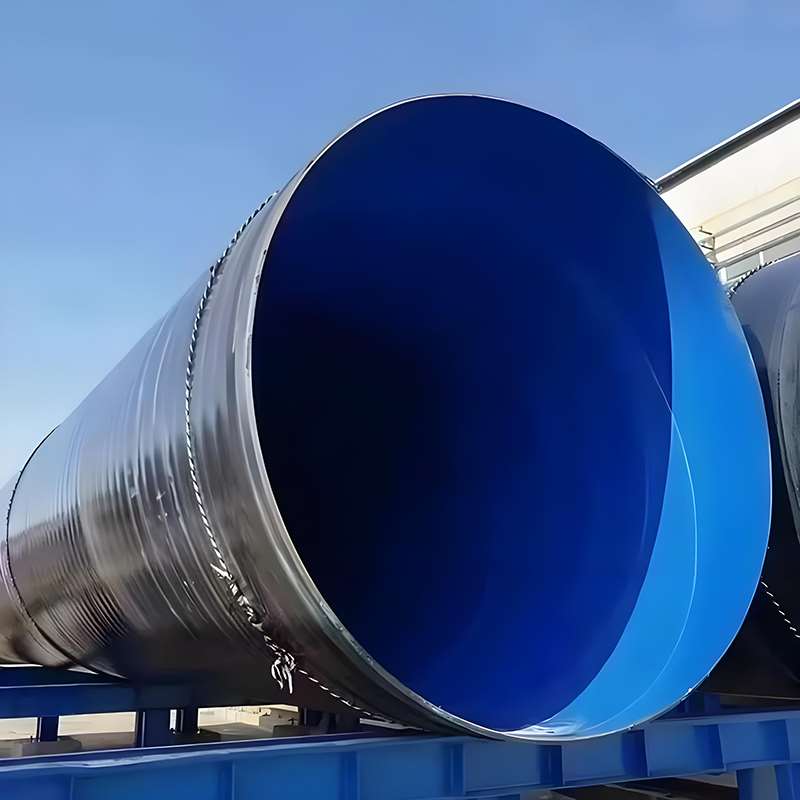
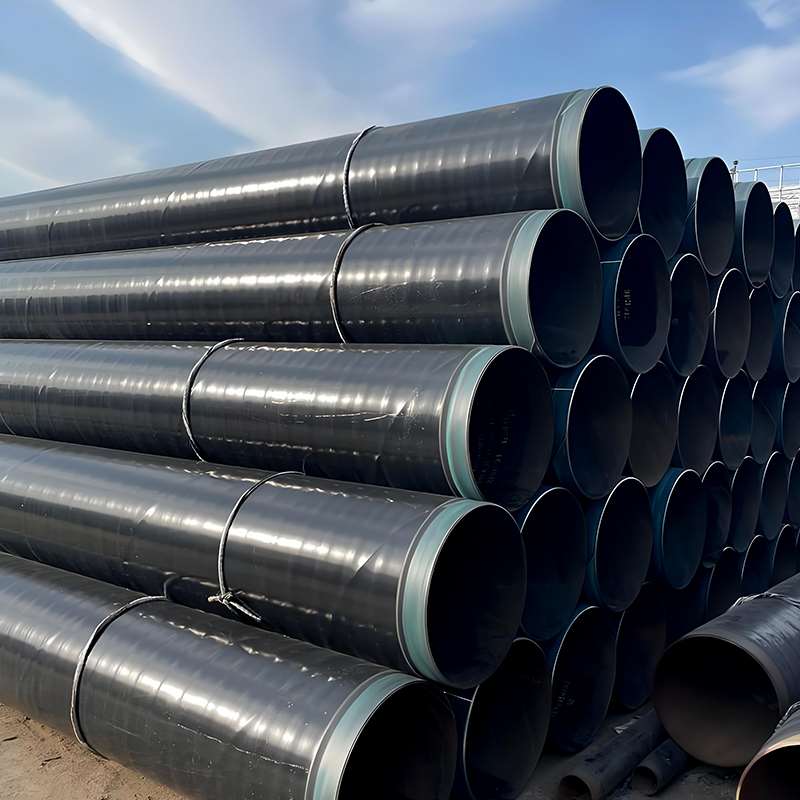
3PE Coated Spiral Steel Pipe adopts the widely used 3PE anti-corrosion technology for buried steel pipelines. It features a three-layer composite coating structure consisting of an epoxy powder primer, adhesive intermediate layer, and polyethylene outer protective layer, effectively enhancing the corrosion resistance and service life of the steel pipe.
I. Common Problems and Solutions
1. Question 1: Insufficient Adhesion Strength of the Anti-Corrosion Coating
On-site Challenge: After pipes are delivered to the construction site, cracks are sometimes found in the anti-corrosion coating at the pipe ends; in some cases, the coating can even be peeled off by hand. If this detachment of the anti-corrosion coating from the steel surface is not detected before installation, the steel pipes will rust rapidly once buried.
Causes and Solutions: This is typically caused by the steel pipe’s surface not being blast-cleaned to the Sa2.5 grade required by specifications prior to anti-corrosion treatment at the factory, or by the intermediate adhesive coating being too thin.
When signing a procurement contract, it should be explicitly required that the manufacturer provide a peel strength test report. At the same time, manufacturers that integrate “steel pipe production and anti-corrosion processing” should be prioritized whenever possible. Since the anti-corrosion treatment is applied immediately after the pipes are welded in-house, this prevents secondary contamination and rusting caused by long-distance transportation, resulting in a more secure bond for the anti-corrosion coating.
Question 2: Standard Grade vs. Reinforced Grade—Not Sure Which to Choose
On-Site Challenge: Manufacturers’ quotations typically include prices for both “Standard Grade” and “Reinforced Grade.” Many procurement officers are unclear about the actual differences between the two and are unsure whether it is necessary to pay extra for the Reinforced Grade.
Causes and Solutions: The difference between the two lies in the thickness of the outermost polyethylene (PE) layer.
Standard Grade: The outer polyethylene layer is generally between 2.0 mm and 2.5 mm thick. If the pipeline is buried in flat plains or sandy areas, and the backfill soil is clean and free of hard rocks, the Standard Grade will meet the requirements and is more cost-effective.
Reinforced Grade: The outer polyethylene layer is generally between 2.7 mm and 3.7 mm thick. If the pipeline needs to pass through mountainous or rocky areas with loose stones, or through coastal marshes with high salinity, the reinforced grade is recommended. The thicker protective layer prevents hard objects in the backfill soil from puncturing the anti-corrosion layer under long-term compression.
Question 3: It is difficult to control the quality of “joint repairs” after on-site welding
On-site Challenges: Each spiral steel pipe is 12 meters long. To facilitate on-site butt welding, approximately 150 mm of bare steel is left exposed at both ends of the pipe. Once the pipes are welded on-site, if these exposed sections—measuring about 30 centimeters—are not properly treated, they often become the first areas along the entire pipeline to corrode and leak.
Causes and Solutions: On-site joint finishing is a manual process, making quality control inconsistent.
When purchasing steel pipes, manufacturers should be required to provide heat-shrink tape and specialized primer that meet the same quality standards. After on-site welding is completed and weld slag is removed, technicians must supervise the construction crew to strictly follow the curing procedure, ensuring that the heat-shrink tape overlaps with the original factory 3PE anti-corrosion coating and is completely sealed, leaving no air bubbles.
II. Three Quality Criteria That Must Be Strictly Met During Factory Acceptance Testing
To ensure service life after burial, please be sure to verify the following three technical specifications during factory acceptance or on-site acceptance:
- 100% Electric Spark Leak Detection Report: Electric spark leak detectors are installed on the 3PE anti-corrosion production line. For oil and gas or critical water transmission pipelines, a 25 kV high-voltage test is typically required. Even a pinhead-sized pore in the coating will trigger an alarm from the instrument; the product must be repaired before it can be shipped.
- Measured Coating Thickness Records: Verify the actual measured thickness of the epoxy powder coating (typically required to be ≥ 100 μm) and the outer polyethylene layer to ensure there is no skimping on materials.
- Tolerance Control of Steel Pipe Base Material: No matter how well the anti-corrosion coating is applied, if the ovality of the spiral steel pipe itself exceeds the specified limits (standards typically require pipe end ovality to be controlled within 1%), on-site butt welding will still be difficult. Therefore, the geometric dimensions of the base material must also be strictly controlled.