Need help? Please contact us via email.
Email: wr@insulatedpipeline.com
Categories
News
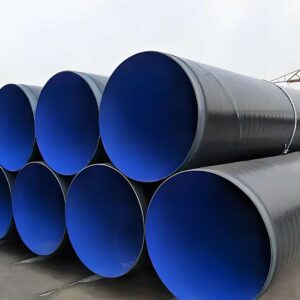
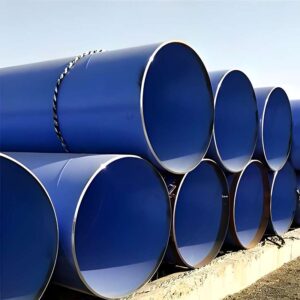
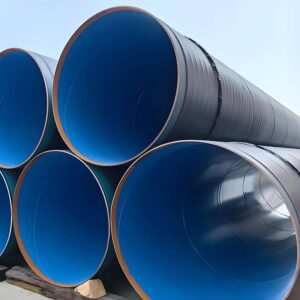
In pipeline engineering, ordinary steel pipes offer high strength and pressure-bearing capacity, but they are vulnerable to corrosion during long-term service. Therefore, Coated Steel Pipe was developed as an effective solution.
It uses a steel pipe as the “base pipe,” which provides structural strength and pressure resistance, and then applies protective coatings to the inner or outer surface to improve the pipe’s resistance to corrosion, wear, and environmental factors. In this way, coated steel pipes retain the excellent mechanical properties of steel while significantly extending the service life of the pipeline.
Whether used for oil and gas transportation, municipal water supply and drainage, chemical processing, fire protection systems, or other engineering applications, selecting the appropriate coating type and base pipe material is essential to ensuring safe pipeline operation, reducing maintenance costs, and extending the overall service life of the project.
Based on different application environments and media, coated steel pipes are mainly divided into the following types:
| Coating Type | Abbreviation | Common Coating Materials | Key Features and Advantages |
|---|---|---|---|
| Three-Layer Polyethylene / Polypropylene | 3LPE / 3LPP | Inner layer: Fusion-bonded epoxy powder + Middle layer: Adhesive + Outer layer: PE/PP | The preferred choice for buried pipelines. It offers excellent impact resistance, low water permeability, and strong resistance to soil stress, with a service life of over 50 years. |
| Fusion Bonded Epoxy Powder | FBE (Single/Dual Layer) | Single-layer or dual-layer epoxy powder coating | Provides excellent adhesion, outstanding cathodic disbondment resistance, and good temperature resistance. Commonly used for external corrosion protection of onshore and offshore oil and gas pipelines. |
| Plastic-Coated / Plastic-Lined Steel Pipe | Plastic-Coated / Lined | Internal and external PE (Polyethylene) or EP (Epoxy Resin) coating/lining | Non-toxic and hygienic, with a smooth inner surface that prevents scaling and reduces fluid resistance. Widely used in building water supply, drainage, and fire protection piping systems. |
The pressure-bearing capacity and structural strength of coated steel pipes depend on the selection of the base pipe. The commonly used base pipes mainly include three types:
Features:
No weld seam, uniform overall structure, and the best performance in high-pressure and high-temperature applications.
Applications:
High-pressure oil and gas well pipes, high-pressure chemical pipelines, and high-stress pipeline systems.
Features:
High dimensional accuracy and uniform wall thickness. LSAW steel pipes are suitable for pipelines requiring large wall thickness and medium-to-high pressure performance.
Applications:
Onshore long-distance oil and gas transmission pipelines, urban gas main networks, and offshore deep-sea pipeline projects.
Features:
Can produce large-diameter steel pipes (such as DN500–DN3000) using narrower steel strips or plates. It offers high cost-effectiveness for large-scale pipeline projects.
Applications:
Long-distance water transmission pipelines, sewage discharge systems, long-distance low-pressure oil and gas transportation pipelines, piling pipes, and structural applications.
| Parameter | Typical Range |
|---|---|
| Outside Diameter (OD) | 219 mm – 3500 mm |
| Wall Thickness | 6 mm – 30 mm |
| Length | 6 m, 9 m, 12 m, or customized lengths |
| Base Pipe Type | SSAW Spiral Welded Steel Pipe, LSAW Longitudinal Submerged Arc Welded Pipe, ERW Welded Steel Pipe, Seamless Steel Pipe |
| Steel Grade | API 5L B/X42/X52/X60, ASTM A252, Q235B, Q355B |
| Anti-Corrosion Coating Type | FBE, 3PE, 3LPP, Epoxy Coating, IPN8710 |
| Manufacturing Standards | API 5L, ISO 21809, ASTM, EN, GB/T |
Different industries have significantly different requirements for pipeline pressure, corrosive media, and installation environments. The following are recommended combinations based on typical industry applications:
Environmental Characteristics:
Long-distance buried or subsea pipelines exposed to soil corrosion, extreme temperatures, and high-pressure operating conditions.
Recommended Combinations:
Environmental Characteristics:
Buried pipelines exposed to soil corrosion, with internal surfaces required to meet drinking water hygiene standards (non-toxic and resistant to scaling).
Recommended Combinations:
Environmental Characteristics:
Indoor or above-ground installation requiring rust prevention, low internal flow resistance, and high-temperature impact resistance for fire protection pipelines.
Recommended Combinations: