
Welded steel pipes and seamless steel pipes are both commonly used steel pipe products in engineering projects. However, they differ significantly in terms of manufacturing processes, pressure-bearing capacity, size range, cost, and application scenarios. Many buyers focus only on price when selecting steel pipes, while overlooking actual operating conditions and usage requirements, which may result in improper product selection.
This article will compare the performance, advantages, limitations, and application ranges of welded steel pipes and seamless steel pipes from different application perspectives, helping engineers and purchasers make more accurate decisions when selecting the right steel pipe products.
I. Comparison of Technical and Performance Differences
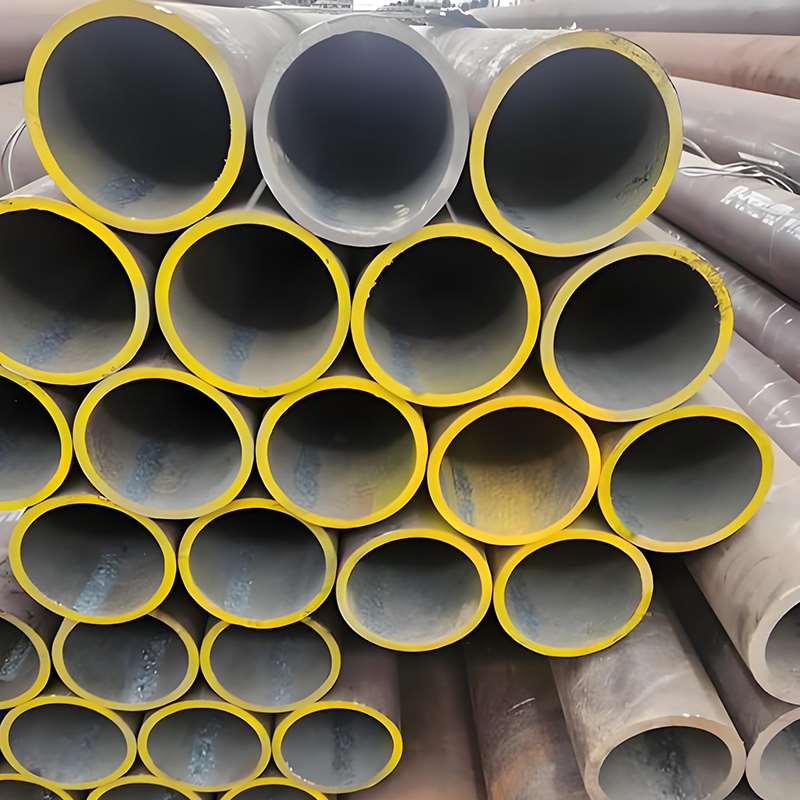
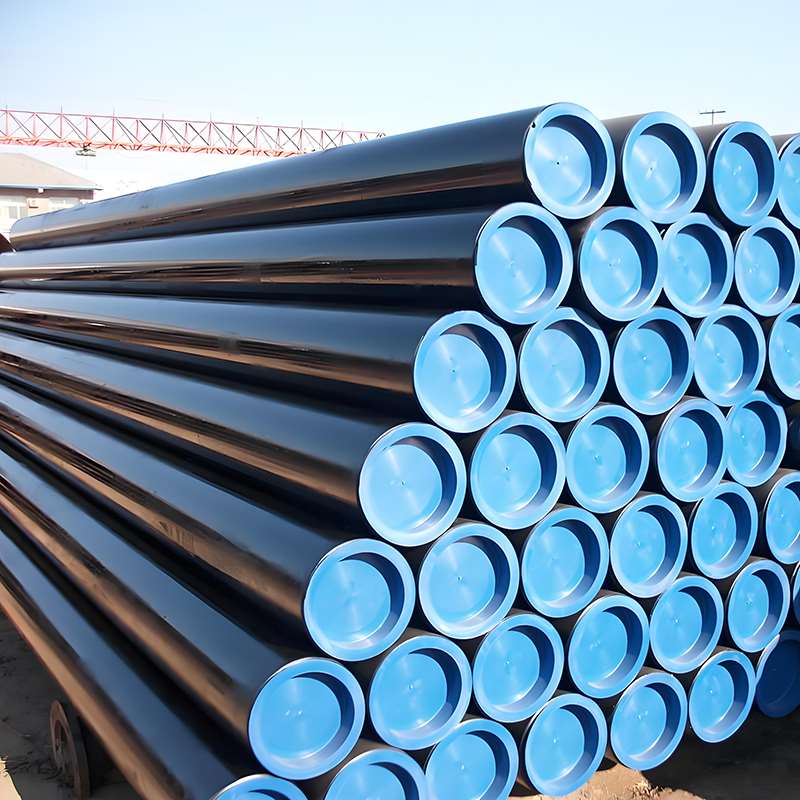
Seamless steel pipes are manufactured from solid billets through processes such as piercing, hot rolling, or cold drawing, resulting in a pipe with a continuous cross-section and no welded seams. Welded steel pipes, on the other hand, are produced by forming steel plates or steel strips into a tubular shape and welding them through processes such as electric resistance welding (ERW), longitudinal submerged arc welding (LSAW), or spiral submerged arc welding (SSAW). This fundamental difference in manufacturing processes directly determines their physical properties.
| Comparison Aspect | Seamless Steel Pipe | Welded Steel Pipe |
|---|---|---|
| Manufacturing Process | Billet piercing + hot rolling/cold drawing | Steel plate/strip forming + automatic welding |
| Maximum Pressure Capacity | Extremely high, with a uniform structure and no weak points | Mainly used for low and medium-pressure applications (high-grade welded pipes can handle medium to high pressure) |
| Dimensional Accuracy | Wall thickness may have eccentricity; inner surface smoothness is generally moderate | Tight wall thickness tolerances, high dimensional accuracy, and a smoother inner surface |
| Size Range | Mainly available in small to medium diameters; large diameters are extremely costly | Wide diameter range; large-diameter and thin-wall specifications are easier to produce |
| Production Cost | Complex manufacturing process, high equipment investment, and higher unit cost | Continuous production, high efficiency, and cost advantages |
II. In-Depth Comparison of Application Scenarios
1. High-Pressure, High-Temperature, and Harsh Fluid Transportation Applications
Typical applications: High-pressure boiler superheater tubes, oil and gas downhole casing and drill pipes, high-pressure hydraulic system piping, and high-pressure chemical process fluid transportation pipelines.
Recommended choice: Seamless steel pipe.
Selection rationale: These operating conditions have extremely high requirements for pipeline pressure resistance and safety. Seamless steel pipes have no welded seam or heat-affected zone, eliminating the risks of thermal stress concentration or internal weld defects (such as pores, slag inclusions, and incomplete penetration) that may lead to pipe failure. They can continuously and reliably withstand high-pressure and high-temperature cyclic conditions.
2. Large-Diameter and Long-Distance Oil/Gas and Water Transportation Applications
Typical applications: Cross-regional onshore oil and gas transmission pipelines, urban water supply main pipelines, large-scale water diversion projects, piling pipes, and bridge structural pipes.
Recommended choice: Welded steel pipes (Longitudinal Submerged Arc Welded Pipe, LSAW / Spiral Submerged Arc Welded Pipe, SSAW).
Selection rationale: If seamless manufacturing is used for large-diameter pipes, the production equipment is extremely expensive, and controlling wall thickness becomes more difficult. In contrast, spiral welded pipes and longitudinal welded pipes can achieve continuous production of large-diameter pipes, while offering high plate rolling accuracy and uniform wall thickness. Combined with modern strict ultrasonic and X-ray non-destructive testing, their safety and reliability fully meet national pipeline standards. As a result, overall procurement and installation costs can be significantly reduced.
3. Municipal Construction, Indoor HVAC, and Low-Pressure Fluid Transportation Applications
Typical applications: Building water supply and drainage systems, fire sprinkler systems, indoor natural gas pipelines, low-pressure steam pipelines, and air-conditioning hot and cold water circulation systems.
Recommended choice: ERW (Electric Resistance Welded) steel pipes / galvanized welded steel pipes.
Selection rationale: These applications generally operate under relatively low pressure conditions, where the main requirements are convenient installation, standardized dimensions, and cost-effectiveness. ERW pipes feature smooth surfaces and tight outer diameter tolerances, making them suitable for threaded connections, grooved connections, or on-site welding installation. They provide excellent economic benefits while fully meeting safety requirements.
4. Mechanical Manufacturing, Structural Support, and Decorative Engineering Applications
Typical applications: Automotive drive shafts, engineering machinery sleeves, scaffolding, building steel structure columns, furniture, and guardrails.
Recommended choice: Selection should be based on load conditions (precision seamless pipe vs. structural welded pipe).
Selection rationale: For critical mechanical components such as shafts or hydraulic cylinders subjected to high torque and alternating stress, precision seamless steel pipes should be selected to ensure consistent mechanical properties of the material. However, for general structural supports, frames, piling applications, and decorative purposes, welded steel pipes are a more suitable choice due to their excellent forming accuracy and cost advantages.
III. Engineering Procurement Selection Guide
When developing a procurement plan for a specific project, engineers and purchasers are advised to follow the following three-step approach:
1. Determine the Pressure Rating and Medium
If the design pressure exceeds the pressure-bearing capacity of conventional welded pipes, or if the medium is highly toxic, flammable, or explosive, seamless steel pipes should be given priority.
2. Evaluate Diameter and Wall Thickness Requirements
For large-diameter applications, welded steel pipes should be considered first. For small and medium diameters where extremely high wall thickness uniformity is required, precision welded pipes or cold-drawn seamless pipes should be evaluated.
3. Balance Cost with Quality Inspection Requirements
While meeting engineering standards such as GB/T, ASTM, or API, avoid blindly choosing seamless pipes. With the widespread adoption of modern non-destructive testing technologies (UT/RT) and weld seam heat treatment processes, the joint efficiency of high-quality welded pipes is now close to 1.0. Selecting welded pipes appropriately can help projects save 20%–40% of the pipe material budget.