
In industrial procurement, construction engineering, and municipal pipeline projects, Spiral Submerged Arc Welded (SSAW) steel pipes often represent a significant portion of total project expenditure. Once a purchasing inquiry is released to the market, it is common to receive dozens of quotations from different spiral steel pipe suppliers within a short period of time.
At this stage, many buyers fall into a common trap: they focus purely on unit price and tend to select the lowest offer at face value.
However, the steel market is far more complex than it appears. Pricing for SSAW steel pipes is never as simple as “per ton” or “per meter.” Relying solely on headline prices can easily lead to situations such as “low bid award, high-cost claims later,” or project delays and rework due to substandard quality.
So how can you evaluate quotations like a professional and truly identify the best cost-performance option? The process can be broken down into four key steps.
I. Standardize the “Benchmark for Comparison”
The first step after receiving quotations is not to look at price, but to verify whether all offers are based on the same commercial and technical assumptions. If the pricing basis differs, any comparison becomes meaningless.
1. Clarify the weight calculation method: actual weight vs theoretical weight
Actual weight (weighbridge pricing):
Steel pipes are weighed on a scale after production, and settlement is based on the real measured weight.
Theoretical weight (calculated by dimensional formula):
Weight is calculated based on nominal outside diameter, wall thickness, and length using standard formulas.
Key risk:
During production, steel pipes are typically allowed a negative tolerance in wall thickness (i.e., the actual wall thickness may be slightly thinner than the nominal value, as long as it remains within standard limits). As a result, theoretical weight is usually higher than actual delivered weight.
For example, Supplier A may quote 4,000 RMB/ton based on actual weight, while Supplier B quotes 3,900 RMB/ton based on theoretical weight. Although B appears cheaper, after accounting for negative tolerance, the final settlement price may actually be higher than A.
Practical recommendation:
Force all suppliers to quote using a unified method—either all based on actual weight or all based on theoretical weight.
2. Clarify logistics and tax terms: EXW vs delivered price
Ex-factory price (EXW):
Only the price of goods loaded at the factory gate, excluding transportation.
Delivered price (landed price):
Includes freight, unloading charges, and sometimes insurance.
Tax inclusion:
It must be clearly stated whether the price includes 13% VAT (value-added tax) invoices.
Practical recommendation:
In the comparison sheet, always include a column for “Final Landed Price (Including Tax & Freight)”. All suppliers must be required to include transportation and tax so that comparison is made on a true apples-to-apples basis at the project site.
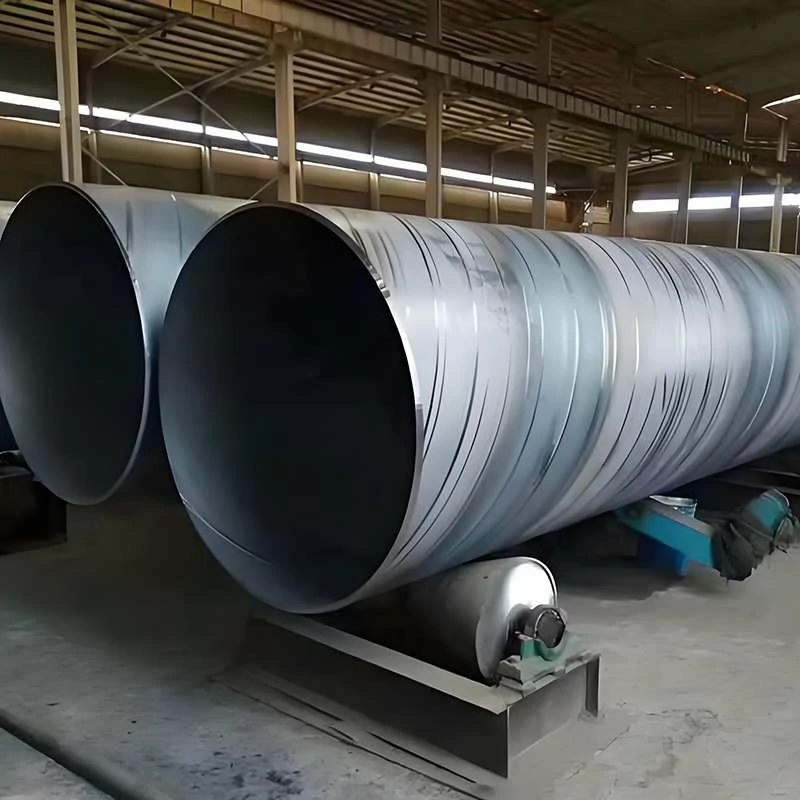
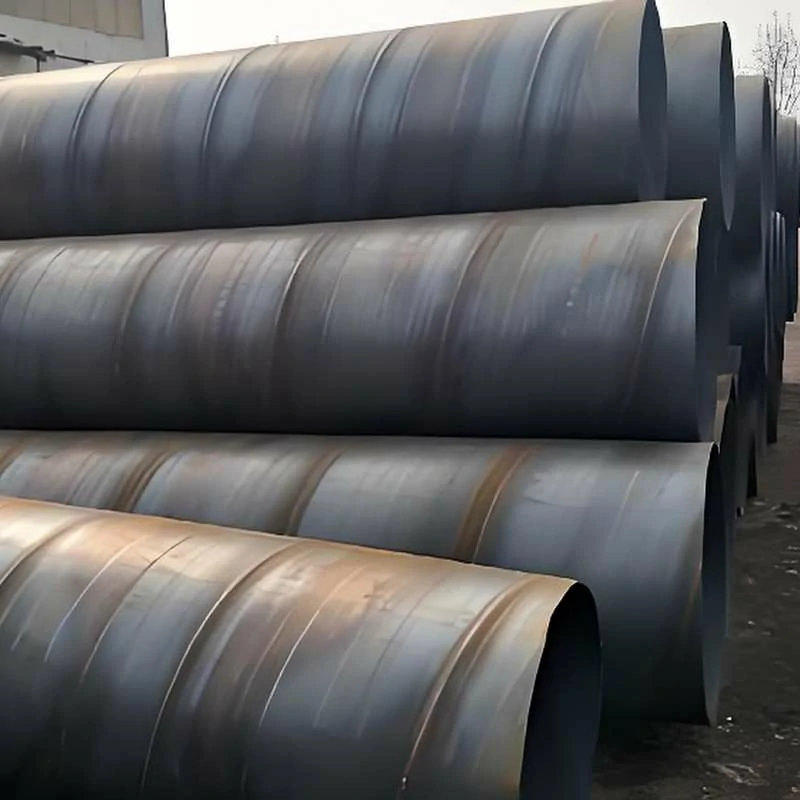
II. Break Down “Core Technical Specifications”
SSAW steel pipes are not standardized consumer goods. Raw materials, manufacturing standards, and steel grades directly impact cost. Lower prices often come from compromises in technical specifications.
1. Is the steel grade consistent?
Grades such as Q235B, Q355B, X42, X52, etc., represent material strength and performance levels. Higher-grade steel means higher cost.
It is essential to verify whether the supplier is strictly quoting according to the project design requirements, and whether any substitution with lower grades (e.g., using Q235A in place of Q235B) is being used to artificially reduce the price.
2. Standard compliance: industry standard vs national standard
This is one of the most significant price differentiators.
Industry standard (SY/T 5037):
Spiral welded steel pipes for general fluid transport. Relatively lower requirements, commonly used for drainage, sludge transport, and general structural applications.
National standard (GB/T 9711):
Steel pipes for oil and gas transmission pipelines. Extremely strict inspection requirements, including 100% radiographic testing (X-ray), ultrasonic testing, and hydrostatic testing. Widely used in gas, heating, and high-pressure water systems.
Due to differences in production processes and testing costs, the price difference can reach several hundred RMB per ton.
If a quotation only states “SSAW pipe” without specifying the execution standard, it is incomplete and unacceptable.
3. End finishing and anti-corrosion requirements
- Are pipe ends plain-cut or beveled for field welding?
- Does the price include anti-corrosion treatment such as 3PE coating, coal tar epoxy, or IPN8710 potable water coating system?
- What is the specified coating thickness?
If these items are not clearly included in the initial quotation, suppliers will often charge additional “processing fees” later in the project.
III. Build a Multi-Dimensional Quotation Comparison Sheet
To avoid confusion caused by multiple PDF files or chat screenshots, procurement teams should standardize all quotations into an Excel-based comparison model.
A typical comparison framework may include:
- Specification Model
- Supplier A / B / C
- Key Risk Notes
Example structure:
- Specification: D529 × 10
(Verify OD and wall thickness consistency) - Material / Standard:
Q235B / GB/T 9711 vs Q235B / SY/T 5037
→ Supplier B uses lower standard; reject or request re-quotation - Weight Basis:
Weighbridge vs theoretical vs weighbridge
→ Must be unified - Unit Price (RMB/ton):
4,200 / 3,950 / 4,250
→ B appears cheapest but uses lower standard + different weight basis - Freight & Tax:
Included / excluded / included
→ Confirm actual freight cost for Supplier B - Payment Terms:
Cash before delivery / 30% deposit + balance on delivery / 30-day credit
→ Longer credit terms improve buyer cash flow - Delivery Time:
7 days / 10 days / 15 days
→ Must align with project schedule - Final Landed Cost:
Fully recalculated total cost including freight and tax
Conclusion example:
Supplier A is actually the most cost-effective option.
By structuring data this way, what initially appears to be the cheapest option may turn out to be the most expensive after adjusting for logistics, standards, and hidden costs. This is the power of structured procurement analysis.
IV. Look Beyond Price: Evaluate “Soft Strength”
If two or three suppliers remain after the first three steps with similar pricing, the decision should no longer be based on minor price differences. At this stage, the focus shifts to supplier capability and reliability.
1. Payment terms
In engineering procurement, cash flow is critical.
- Supplier A: Requires full payment before shipment or production
- Supplier B: Accepts 30% deposit, balance after site acceptance
- Supplier C: Offers credit terms or monthly settlement
Even if a supplier with better payment terms charges 30–50 RMB more per ton, they may still be the better choice because they reduce financial pressure and project risk.
2. Production capacity and delivery reliability
SSAW pipes are large and space-consuming, and construction sites often cannot store large volumes at once. Therefore, phased delivery is usually required.
Key evaluation points:
- Is the supplier a direct manufacturer or a trading intermediary?
- How many production lines do they operate?
- Can they accelerate production (e.g., deliver 100 tons within 3 days if required)?
Manufacturers generally have stronger control over production scheduling compared to traders.
3. Value-added service and after-sales support
If defects are discovered upon delivery—such as weld seam cracking or excessive ovality (out-of-round pipes that cannot be welded properly)—how does the supplier respond?
High-quality suppliers typically offer:
- Return and replacement guarantees for quality issues
- On-site technical response within 24 hours
In contrast, unreliable suppliers may shift responsibility to logistics providers or site contractors after receiving full payment.