
In industrial pipeline systems—such as municipal water conveyance, oil and gas transmission, and construction piling—spiral welded steel pipes (SSAW) are widely used due to their large diameter capability and high production efficiency. However, in real engineering applications, a persistent challenge remains: once steel pipes are buried underground or exposed to atmospheric conditions, corrosion becomes the primary failure risk.
Once corrosion leads to leakage of water, oil, or gas, the repair cost is often significantly higher than the original pipe procurement cost.
Therefore, selecting an appropriate anti-corrosion coating system is critical. During procurement and design, engineers are often confronted with options such as 3PE, TPEP, and Fusion Bonded Epoxy (FBE), which can be confusing.
There is no universally “best” coating system—only the one that is most suitable for the application scenario. This guide helps you make practical and efficient selection decisions.
I. Understanding the “Nature” of Spiral Welded Pipes Before Selecting Coatings
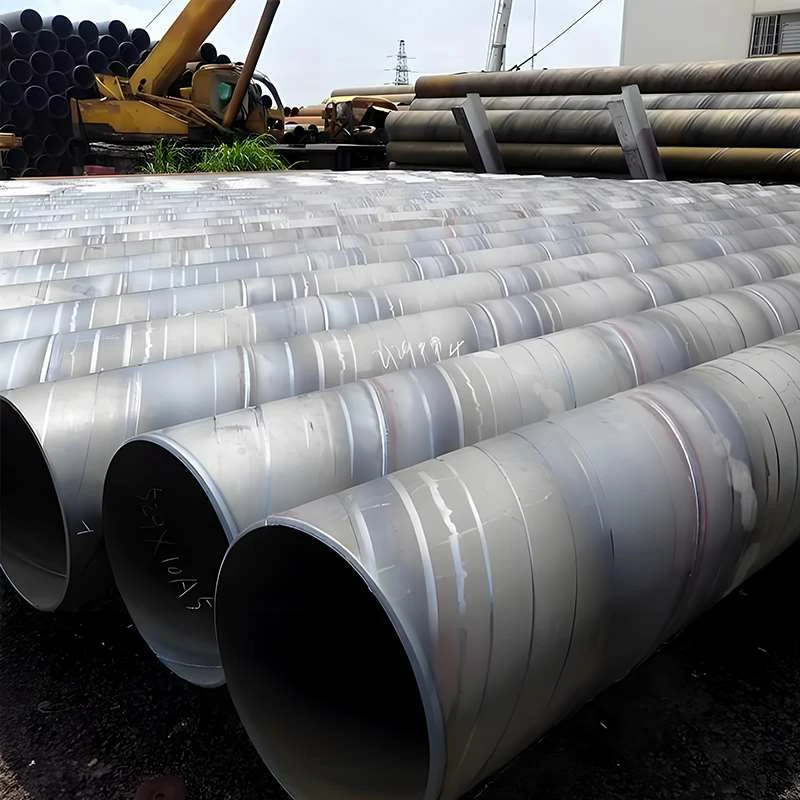
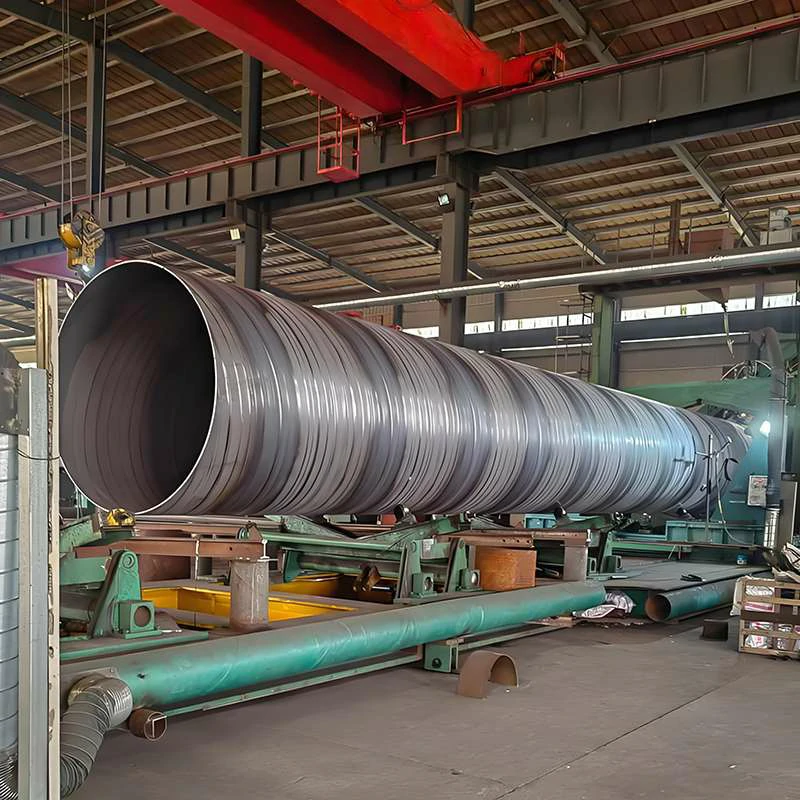
Spiral welded steel pipes are manufactured by continuously forming steel strip into a spiral tube and welding the seam along the spiral line. This process creates a long, raised spiral weld bead along the pipe surface.
This weld seam becomes the most challenging area for anti-corrosion application.
If the coating process is not properly executed:
- Coating thickness may become uneven at the weld bead
- Micro-voids or pinholes may remain along the seam edges
In underground environments, moisture and oxygen will penetrate these weak points. Once corrosion starts at the weld seam, coating delamination and large-scale failure will quickly follow.
Key principle:
For SSAW pipes, the coating system must be able to fully wrap and seal the raised spiral weld seam without dead zones or gaps.
II. Standard Solution for Buried Pipelines: 3PE Coating
For buried pipelines transporting oil, natural gas, or long-distance water transmission—especially when budget allows—the 3PE (Three-Layer Polyethylene) coating system is the most widely adopted solution.
1. Structure of 3PE Coating
3PE consists of three functional layers:
- Layer 1 (FBE – Fusion Bonded Epoxy):
Applied directly onto the steel surface, acting as an anti-corrosion primer with strong adhesion. - Layer 2 (Adhesive Layer):
A copolymer adhesive that bonds the epoxy layer and outer polyethylene layer. - Layer 3 (PE Outer Layer):
A high-density polyethylene protective jacket that resists soil pressure, rock abrasion, and moisture intrusion.
2. Why 3PE Works Well for SSAW Pipes
The outer polyethylene layer is applied through a continuous wrapping and compression process, similar to spiral wrapping under tension.
Even with a raised spiral weld seam, the coating system:
- Applies uniform pressure
- Eliminates voids and air gaps
- Ensures full encapsulation of the weld bead
As a result, it provides excellent long-term protection for buried SSAW pipelines.
III. Upgraded Solution for Drinking Water Systems: TPEP Coating
For municipal water supply networks, large-scale inter-basin water diversion projects, or any potable water application, TPEP (Three-layer PE external + internal epoxy coating) is the preferred upgraded solution.
1. Structure of TPEP Coating
TPEP provides dual-side protection:
- External layer: Same 3PE system as above for soil and mechanical protection
- Internal layer: Fusion bonded epoxy powder (FBE) coating applied to the pipe interior
2. Advantages for SSAW Applications
Traditionally, spiral pipes used internal cement mortar lining for water pipelines. However, this approach has several drawbacks:
- High weight increases transportation cost
- Long-term cracking and detachment risk
- Biofouling (algae growth) can cause blockage
TPEP eliminates these issues. Its internal epoxy coating provides:
- Extremely smooth hydraulic surface (near mirror finish)
- Reduced friction loss, improving pumping efficiency
- Anti-scaling and anti-fouling performance
- Food-grade safety compliance for potable water systems
IV. Fusion Bonded Epoxy (FBE) Coating
For harsh mechanical or chemical environments, thick external coatings like 3PE may be vulnerable to abrasion. In such cases, Fusion Bonded Epoxy (FBE) is the preferred solution.
1. Coating Process
FBE is essentially the base epoxy layer of 3PE used independently:
- Steel pipe is preheated
- Epoxy powder is electrostatically sprayed onto the surface
- The coating cures into a dense, hard protective film (typically 400–800 μm thick)
2. Why FBE is Suitable for SSAW Pipes
Although thin, FBE forms a strong metallurgical bond with the steel surface, offering:
- Excellent adhesion strength
- High resistance to chemical corrosion
- Strong abrasion resistance
It is particularly suitable for:
- Bridge and harbor piling pipes
- Horizontal directional drilling (HDD) river crossings
- Chemical pipelines
In such environments, soil, sand, and rock friction may severely damage 3PE coatings, whereas FBE remains firmly bonded to the steel surface.
Procurement Warning
FBE coatings are mechanically strong but sensitive to impact damage during handling:
- Only nylon slings should be used for lifting
- Steel hooks or wire ropes are strictly prohibited
Otherwise, surface scratches can compromise coating integrity and negate the entire corrosion protection system.
V. Coal Tar Epoxy Coating (Liquid Applied System)
1. Structure and Application
Coal tar epoxy coatings are applied in alternating layers:
- Epoxy coal tar paint
- Glass fiber reinforcement cloth
- Multiple layers applied manually or semi-mechanically (“three cloth, five coats” system)
2. Application Suitability for SSAW Pipes
The only major advantage of this system is low cost, making it suitable for projects with tight budgets.
However, it is increasingly discouraged in modern engineering practice due to:
- Strong odor and environmental compliance issues
- Increasing regulatory restrictions in many regions
- Heavy dependence on manual workmanship
Because SSAW pipes have spiral weld seams and uneven surface geometry, manual application often leads to:
- Poor adhesion at weld seams
- Entrapped air pockets
- Early-stage coating failure after burial
VI. Anti-Corrosion Coating Selection Comparison Table
| Coating System | Application Scenarios | Expected Service Life (Industry Standard) | Cost Optimization Factors | Inspection & Quality Control Key Points |
|---|---|---|---|---|
| 3PE (Three-Layer Polyethylene) | Buried oil pipelines, high-pressure gas pipelines, long-distance municipal water transmission | 50+ years | – Two pricing grades (standard vs. reinforced), 0.5 mm thickness difference significantly affects cost – Separate pricing for bare pipe and coating should be requested to avoid hidden cost bundling | – Verify extrusion wrapping process (not simple spray coating) – Use holiday detector to inspect coating thickness, especially at spiral weld seam peaks |
| TPEP (Internal + External Coating System) | Municipal potable water systems, large-scale water diversion projects, food-grade pipelines | 50+ years | – Internal FBE grade and supplier determine major cost variation – Replace outdated cement mortar lining cost assumptions when calculating logistics weight | – Mandatory potable water hygiene certification required – Internal surface must be mirror-smooth, especially at spiral weld seam areas |
| FBE (Fusion Bonded Epoxy / Dual-layer FBE) | Harbor piling, bridge foundations, HDD crossings, chemical pipelines | 30–50 years | – Thin coating (400–800 μm) means lower processing cost; similar pricing to 3PE indicates overpricing – Dual-layer FBE offers enhanced abrasion resistance for severe geology | – Strict lifting requirement: nylon slings only – Long-term outdoor storage requires UV protection to prevent chalking |
| Coal Tar Epoxy (Three Cloth Five Coat System) | Municipal sewage pipelines, stormwater drainage, temporary low-pressure pipelines | 15–20 years | – Low material cost, significant bargaining flexibility – Labor cost dominates pricing structure; local fabricators may offer better rates | – Environmental compliance must be verified before contract signing – Backfill soil must be free of sharp stones to prevent coating cracking |
Conclusion
Selecting an anti-corrosion system for spiral welded steel pipes is not about choosing the most advanced technology, but about matching the right solution to the right engineering environment.
- 3PE: Best for buried high-pressure transmission pipelines
- TPEP: Ideal for potable water and high-cleanliness requirements
- FBE: Best for high-abrasion and mechanical stress environments
- Coal Tar Epoxy: Low-cost option for non-critical applications
A scientifically selected coating system not only extends pipeline lifespan to over 50 years but also significantly reduces lifecycle maintenance costs and operational risk.