
In the procurement process of spiral steel pipes, price comparison helps identify suppliers that offer the best value for money, while spotting supplier tricks helps eliminate potential risks that could derail an entire project.
The steel market is vast, highly competitive, and filled with suppliers of varying quality. Unreliable spiral steel pipe suppliers are often skilled at using ultra-low prices as bait. Once a deposit is paid or a contract is signed, buyers may face quality fraud, endless delivery delays, or even suppliers disappearing with advance payments.
So, how can buyers quickly and accurately identify risky suppliers among dozens of options? Rather than discussing complicated theories, this guide focuses on practical procurement experience and highlights five key areas that deserve immediate attention.
I. Analyze the Quotation: An Unreasonably Low Price Is the Biggest Red Flag
1. Pricing Below Cost Level
The price of a spiral steel pipe consists of three primary components:
- Raw material cost (steel coil)
- Processing cost (including electricity, welding wire and flux, labor, and equipment depreciation)
- Reasonable manufacturer profit
Current steel coil market prices are publicly available and can be checked online at any time. Processing costs also fall within a relatively stable industry range.
If a supplier’s quotation, after calculation, is lower than or roughly equal to the prevailing steel coil market price, they are certainly not operating at a loss out of goodwill. Instead, they are likely planning to recover profits elsewhere at your expense.
2. Deliberately Vague Quotations
Unreliable suppliers often attract buyers with an appealing low price while intentionally omitting critical specifications from the quotation.
Common tactics include providing only a description such as:
“Spiral Steel Pipe Φ529 × 10 mm”
while failing to specify:
- Steel grade (Q235B or Q235A)
- Applicable standard (GB/T 9711 or SY/T 5037)
- Weight settlement method (actual weighing or theoretical weight calculation)
Their objective: secure your interest with a low initial price and then either substitute lower-grade materials during production or generate additional profit through theoretical weight settlement during final invoicing.
II. Verify the Supplier: Identify Shell Companies and Fake Manufacturers
The spiral steel pipe industry contains numerous traders and inventory-free intermediaries. There is nothing inherently wrong with trading companies—many reputable traders provide excellent service. The real concern lies with shell companies that lack financial strength, assume no commercial risk, and falsely present themselves as large manufacturers.
1. Refusing or Avoiding Factory Audits
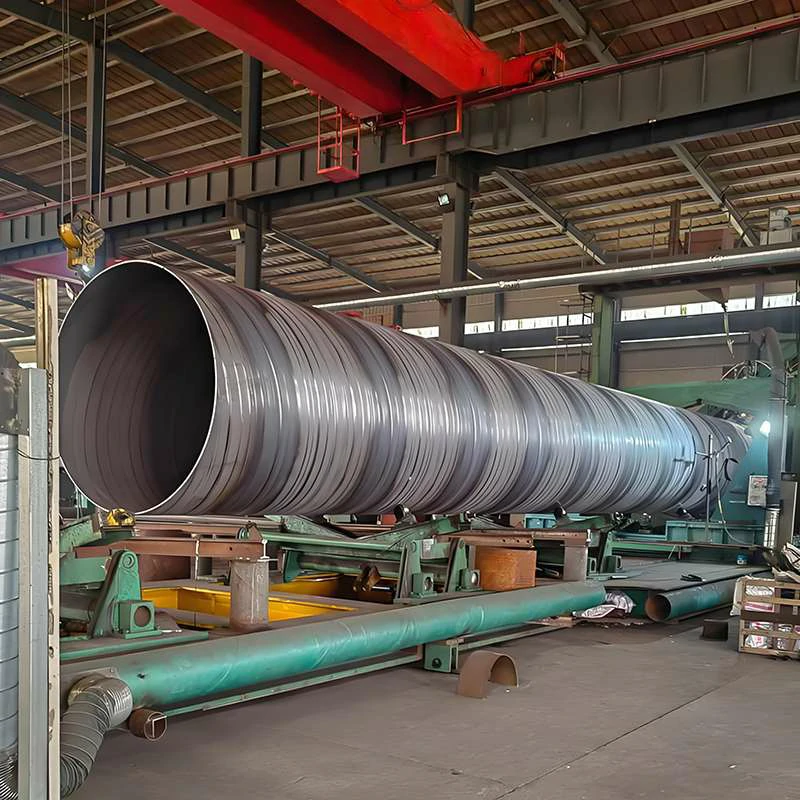
Spiral steel pipe manufacturing requires large-scale facilities, including forming machines, submerged arc welding equipment, and X-ray inspection systems. Genuine manufacturers are usually confident and transparent about their operations.
If you request:
“Before production begins, our procurement and technical teams would like to visit the factory and inspect the production line.”
An unreliable supplier may respond with excuses such as:
- “The factory is temporarily shut down due to environmental inspections.”
- “We are working on confidential projects, and external visitors are not allowed.”
- “The factory is too far away; there is no need to visit. We’ll send you videos instead.”
Practical Tip: Suppliers that consistently avoid factory visits are often either pure intermediaries with no manufacturing facilities or small workshops with inadequate equipment and poor quality control.
2. Factory Visits Designed to Mislead Buyers
More sophisticated intermediaries may agree to arrange a factory visit, but the facility they show you actually belongs to another company.
Warning signs include:
- Factory workers and security personnel appear unfamiliar with the supplier representative.
- The representative struggles to communicate confidently with workshop managers or technical supervisors.
- Questions regarding equipment models, production capacity, or manufacturing processes are answered vaguely.
- The representative frequently checks their phone before responding.
These are strong indicators that the supplier does not own the facility being presented.
III. Evaluate Quality: Four Common Methods Used to Pass Off Inferior Products
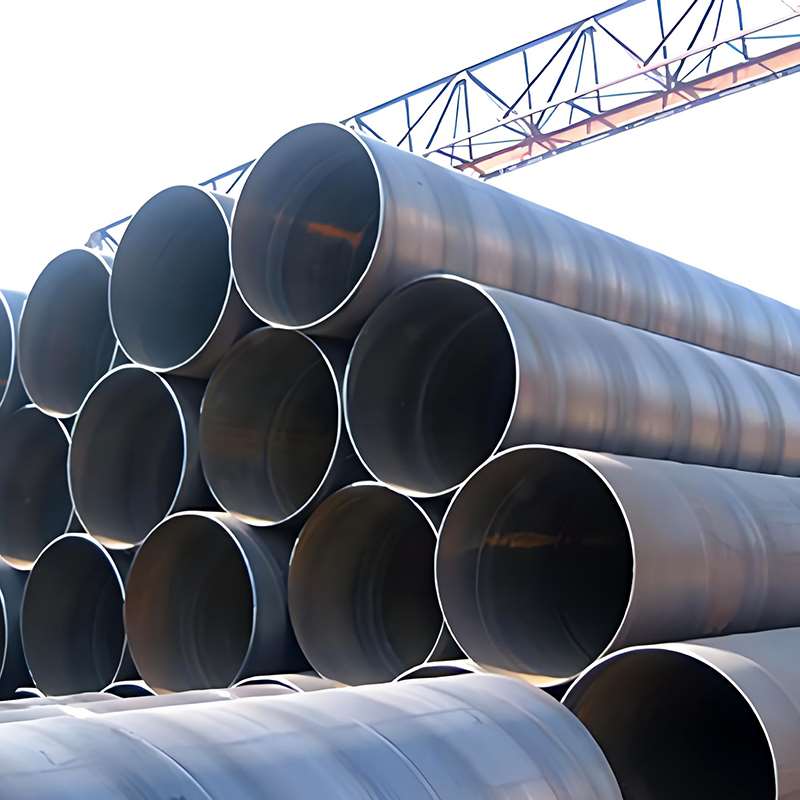
Spiral steel pipes are widely used in water transmission, gas transmission, district heating networks, and piling projects. They often serve as the structural backbone or transportation channel of critical infrastructure.
When quality issues occur, repair and replacement costs can easily exceed the original procurement cost by ten times or more.
The following four quality-related tricks are among the most common.
1. Reducing Wall Thickness
Industry standards permit certain negative wall thickness tolerances. For example, a pipe with a nominal wall thickness of 10 mm may still be considered compliant at 9.5 mm.
Unreliable suppliers exploit this rule by purchasing what the industry commonly calls “under-gauge steel coil”—material manufactured at or even below the minimum tolerance limit.
Although the pipes may appear compliant, they are significantly lighter and possess reduced pressure-bearing capacity.
2. Refurbishing Used Pipes
Some suppliers acquire decommissioned pipeline sections or heavily rusted inventory pipes and refurbish them through:
- Sandblasting
- Repainting
- Re-machining pipe bevels
The refurbished products are then sold as new pipes.
How to Identify Them:
Inspect the internal surface carefully. Refurbished pipes often display uneven pitting, corrosion marks, and surface irregularities that remain visible even after coating.
3. Misrepresenting Product Standards
Your contract may specify pipes manufactured according to the more stringent GB/T 9711 standard, but the supplier may actually deliver pipes produced under SY/T 5037 requirements.
To pass inspections, some suppliers purchase counterfeit Mill Test Certificates (MTCs) or fabricate quality documents containing falsified heat numbers and batch numbers.
4. Poor Weld Quality
The weld seam is the most critical component of a spiral steel pipe.
To accelerate production and reduce operating costs, unreliable manufacturers may use unstable welding parameters, resulting in:
- Undercut defects
- Porosity
- Incomplete penetration
- Other weld discontinuities
Such pipes often fail hydrostatic testing and may leak immediately after installation.
IV. Review the Contract: Avoid Suppliers That Hide Risks in Contract Terms
The contract represents the final line of protection in any transaction. Unreliable suppliers often attempt to minimize or completely avoid liability through unfavorable contractual provisions.
1. Refusal to Accept a Quality Claim Period
A standard purchase contract typically includes a clause stating that:
“The buyer has the right to raise quality claims within XX days after goods arrive at the project site.”
Risky suppliers frequently insist on terms such as:
- “No responsibility after unloading.”
- “Goods leaving the factory are deemed accepted.”
They understand that their products may not withstand field welding inspections or hydrostatic pressure testing, so they attempt to transfer all risk to the buyer as early as possible.
2. Unbalanced Liability Clauses
Review the supplier’s contract template carefully.
A common pattern is:
- Buyers face significant penalties for delayed payment.
- Suppliers face little or no liability for late delivery or non-conforming products.
In many cases, compensation provisions are omitted entirely, or delayed delivery is simply described as “subject to extension.”
Such one-sided contracts should be treated as a serious warning sign.
V. Investigate Reputation: Conduct Background Checks Using Online Resources and Industry Networks
In today’s information-driven market, every supplier leaves a trace. Before paying any deposit, spend thirty minutes conducting the following checks.
Check Corporate Credit Records
Search the supplier’s full legal company name on business information platforms.
Pay particular attention to:
Company Age
If a company was established only a few months ago and is offering unusually low prices, be cautious. Some operators frequently close one company and open another to avoid liabilities.
Litigation History
If the company is associated with numerous cases involving:
- Contract disputes
- Quality disputes
- Court enforcement actions
- Debt recovery proceedings
it is generally safer to walk away.
Verify Registered Capital and Business Scope
If a company has a registered capital of only RMB 500,000 and its business scope primarily covers consulting services or gift sales, yet claims to handle multi-million-RMB spiral steel pipe projects, there is a clear mismatch between its credentials and its promises.
Consult Industry Contacts
The steel industry is smaller than many people think.
A simple phone call to a colleague, industry peer, or procurement manager from a previous project can provide valuable insight:
“Have you worked with this supplier before? How is their reputation?”
Sometimes a single honest opinion from someone with firsthand experience can save your company hundreds of thousands of dollars in potential losses.
Conclusion
When sourcing spiral steel pipes, the most dangerous suppliers are often not those with the highest prices, but those offering deals that appear too good to be true.
By carefully evaluating quotations, verifying manufacturing capabilities, inspecting quality controls, reviewing contract terms, and conducting reputation checks, buyers can significantly reduce procurement risks and avoid costly project failures.
A reliable supplier should welcome transparency, provide complete documentation, allow factory inspections, and stand behind both product quality and delivery commitments. Any supplier unwilling to do so deserves a closer look—or should be avoided altogether.