
In pipeline engineering and industrial procurement, welded steel pipes play a vital role. Among the various types of welded pipes, ERW (Electric Resistance Welded Pipe), LSAW (Longitudinal Submerged Arc Welded Pipe), and SSAW (Spiral Submerged Arc Welded Pipe) are the three most widely used mainstream types.
Although all three are classified as welded steel pipes, their fundamental differences in forming processes and welding methods result in significant variations in diameter range, pressure-bearing capacity, production costs, and application scenarios.
I. Comparison of Technical and Performance Parameters
| Comparison Criteria | ERW (Electric Resistance Welded Pipe) | LSAW (Longitudinal Submerged Arc Welded Pipe) | SSAW (Spiral Submerged Arc Welded Pipe) |
|---|---|---|---|
| Raw Material Form | Hot-rolled steel coil | Wide and thick steel plate | Hot-rolled steel coil |
| Forming Method | Continuous roll forming | Press forming (JCOE / UOE) | Spiral forming by bending steel coil |
| Welding Process | High-frequency electric resistance welding (fusion welding without welding wire or flux) | Double-sided automatic submerged arc welding (with welding wire and flux) | Double-sided automatic submerged arc welding (with welding wire and flux) |
| Weld Seam Type | Longitudinal seam with no obvious weld reinforcement | Longitudinal seam with internal and external weld reinforcement | Spiral seam; weld length is approximately 30%–50% longer than the pipe length |
| Common Diameter Range | Small and medium diameters (DN15 – DN600) | Large diameter and heavy wall pipes (DN400 – DN1600+) | Large diameter pipes with medium and thin walls (DN200 – DN3000+) |
| Pressure Performance | Low to medium pressure applications | Extremely high pressure; preferred for high-pressure and severe service conditions | Medium to high pressure applications |
| Production Efficiency & Cost | High production efficiency and low cost | Slow production speed, expensive equipment, and higher unit price | Continuous production; high efficiency and significant cost advantages for large-diameter pipes |
II. Application Scenarios and Selection Logic of the Three Types of Steel Pipes
1. ERW Steel Pipe: The Preferred Choice for Small and Medium Diameters, High Efficiency, and Cost-Effectiveness
Technical Features:
ERW steel pipes use the skin effect and proximity effect of high-frequency electric current to heat the edges of the steel strip to a molten state, followed by mechanical welding through extrusion rollers. Since no additional welding wire is used, the weld seam is very smooth, and the production speed is high.
Main Applications:
- Municipal Low-Pressure Fluid Transportation: Drinking water pipelines, urban natural gas pipelines, and low-pressure heating pipelines.
- Construction and Structural Applications: Fire sprinkler systems, building scaffolding, and structural support pipes.
- Mechanical Manufacturing: Automotive drive shafts, mechanical sleeves, and casing tubes.
Selection Recommendation:
For fluid transportation systems with nominal diameters below DN600, relatively low design pressure, and normal-temperature operating conditions, or for structural components, ERW steel pipes are the preferred choice.
2. LSAW Steel Pipe: A Reliable Solution for High Pressure, Severe Service Conditions, and Critical Projects
Technical Features:
LSAW steel pipes use individual wide and thick steel plates as raw materials. The plates are gradually formed through a press-forming process, followed by double-sided submerged arc welding and full-length mechanical expansion. Since the weld seam is short and parallel to the pipe axis, the pipe has excellent stress distribution, high dimensional accuracy, and superior mechanical performance.
Main Applications:
- High-Pressure Long-Distance Oil and Gas Transmission Pipelines: Especially critical pipeline sections passing through areas prone to geological hazards, densely populated regions, or harsh environments such as extremely cold climates and offshore locations.
- Offshore Engineering: Subsea oil and gas pipelines, deep-water piling pipes, and support piles for offshore wind turbine jacket structures.
- Pressure Vessels and Heavy-Duty Structures: Main columns of large bridges and heavy load-bearing piles for high-rise buildings.
Selection Recommendation:
For critical projects involving large diameters (above DN400), high design pressures (>6.4 MPa), or requirements for extreme corrosion resistance and resistance to external deformation, LSAW steel pipes provide the highest level of safety and reliability.
3. SSAW Steel Pipe: An Economical Solution for Large-Diameter Long-Distance Transportation
Technical Features:
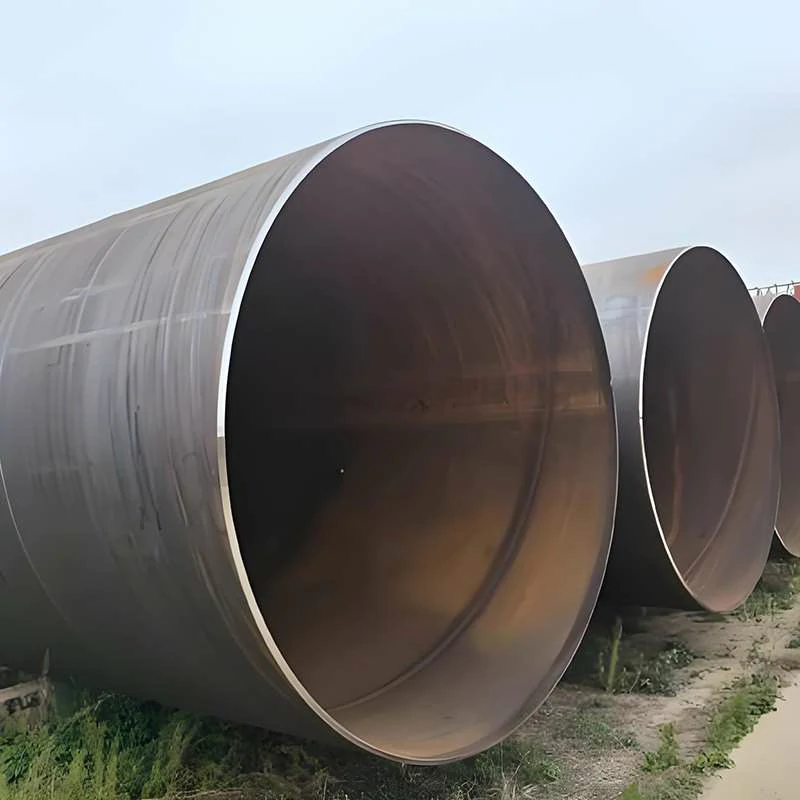
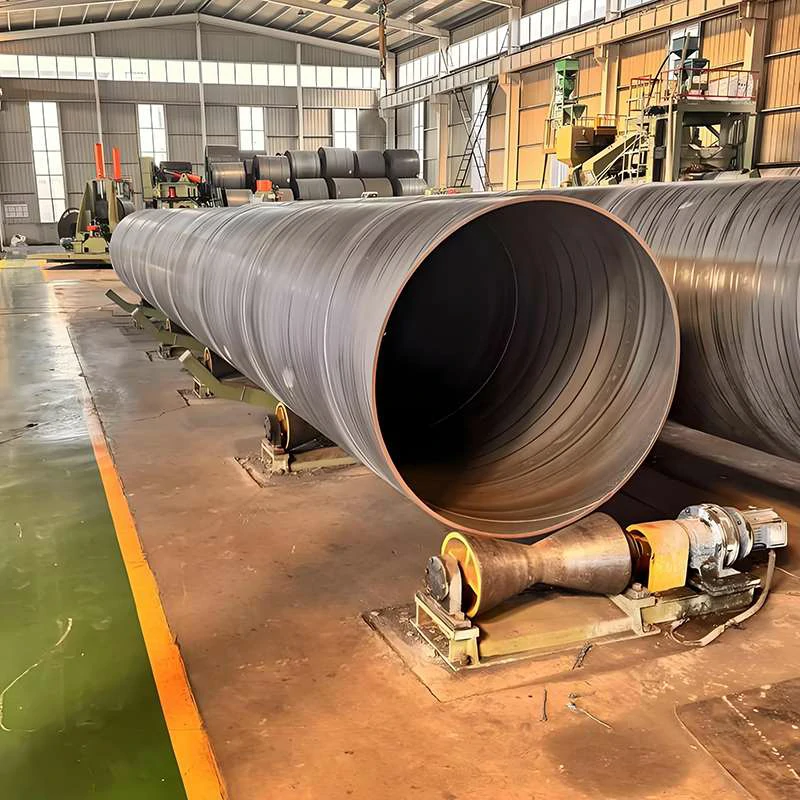
SSAW steel pipes are manufactured by spiral forming using relatively narrow steel coils, with the forming angle adjusted to produce large-diameter pipes. Their key advantage is the concept of “producing large pipes from narrow plates” — steel strips of the same width can be used to manufacture pipes with various diameters.
Main Applications:
- Long-Distance Onshore Pipelines: Large-diameter natural gas and crude oil transmission pipelines in plains and low-risk areas.
- Water Conservancy and Municipal Projects: Cross-regional water diversion projects, large-diameter sewage pipelines, and industrial water circulation pipelines.
- Foundation Piling: Pile pipes for ports, docks, and bridge foundations.
Selection Recommendation:
When extremely large diameters are required (above DN1000) and the pressure range is from atmospheric pressure to medium pressure, SSAW steel pipes offer significantly lower procurement and construction costs compared with LSAW pipes, making them a highly cost-effective choice for engineering projects.
III. Engineering Procurement Decision Roadmap
Determine Pipe Diameter and Wall Thickness Requirements:
- Small and medium diameters (≤ DN600) → Choose ERW steel pipes.
- Large diameters (> DN600) with heavy wall thickness (> 20 mm) → Choose LSAW steel pipes.
- Large diameters (> DN600) with medium or thinner wall thickness → Evaluate and select between SSAW and LSAW based on pressure requirements.
Evaluate Pressure Conditions and Geological Risks:
- High-pressure applications, offshore pipelines, areas crossing geological fault zones, or densely populated regions → Give priority to LSAW steel pipes.
- Medium- and low-pressure applications, onshore pipeline installation in flat areas, and water diversion projects → Choose SSAW or ERW steel pipes.
Calculate the Overall Procurement Cost:
While ensuring compliance with the requirements of relevant standards such as API 5L, GB/T 9711, or ASTM, select and match the three types of welded steel pipes appropriately. This helps avoid unnecessary budget waste caused by over-specification or potential safety risks caused by under-specification.