
In thermal power plants, combined heat and power (CHP) facilities, and supercritical and ultra-supercritical power stations, piping systems endure prolonged exposure to high temperatures, high pressures, and continuous operation under demanding conditions. This places extremely high demands on the strength, heat resistance, and safety reliability of the piping materials.
ASTM A335 alloy steel seamless pipes, with their outstanding high-temperature strength, creep resistance, and excellent weldability, have become one of the most commonly used and reliable piping materials in power plant boilers and high-temperature steam systems.
I. Differences Between ASTM A335 and Ordinary Carbon Steel Pipes
Ordinary carbon steel pipes are prone to strength degradation and microstructural deterioration at elevated temperatures. In contrast, ASTM A335 alloy steel pipes can operate safely for extended periods under higher temperatures and greater pressures, making them the essential material for high-parameter systems in power plants.
II. Pipe Requirements for High-Temperature, High-Pressure Systems in Power Plants
i. Operating Conditions of Power Plant Boiler Systems
Power plant boiler systems typically operate under:
- High temperatures (500–650°C)
- High pressures (10–30 MPa or higher)
- Long-term continuous operation
Pipe failure can lead to severe safety incidents and significant economic losses.
ii. Material Requirements for Main Steam and Reheated Steam Piping
Main steam and reheat steam piping impose stringent material requirements, demanding steel pipes with:
- Stable high-temperature strength
- Excellent creep resistance
- Good weldability and field installation performance
iii. Challenges to Steel Pipe Performance from Long-Term High-Temperature Operation
Under prolonged high-temperature conditions, steel pipes are susceptible to microstructural aging, oxidation, and creep damage. Therefore, selecting ASTM A335 alloy steel pipes of appropriate grades is critical.
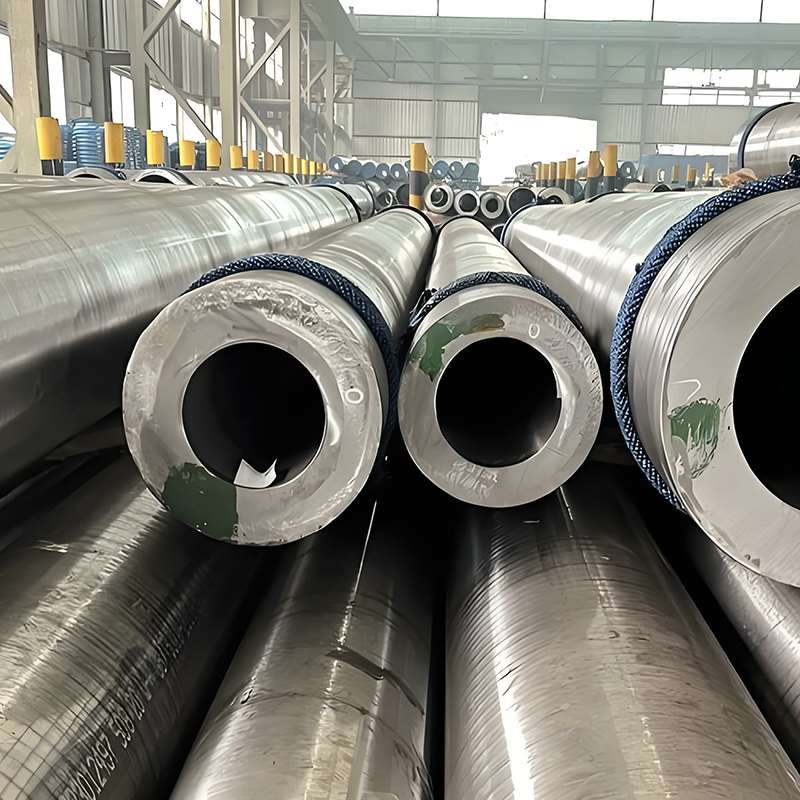
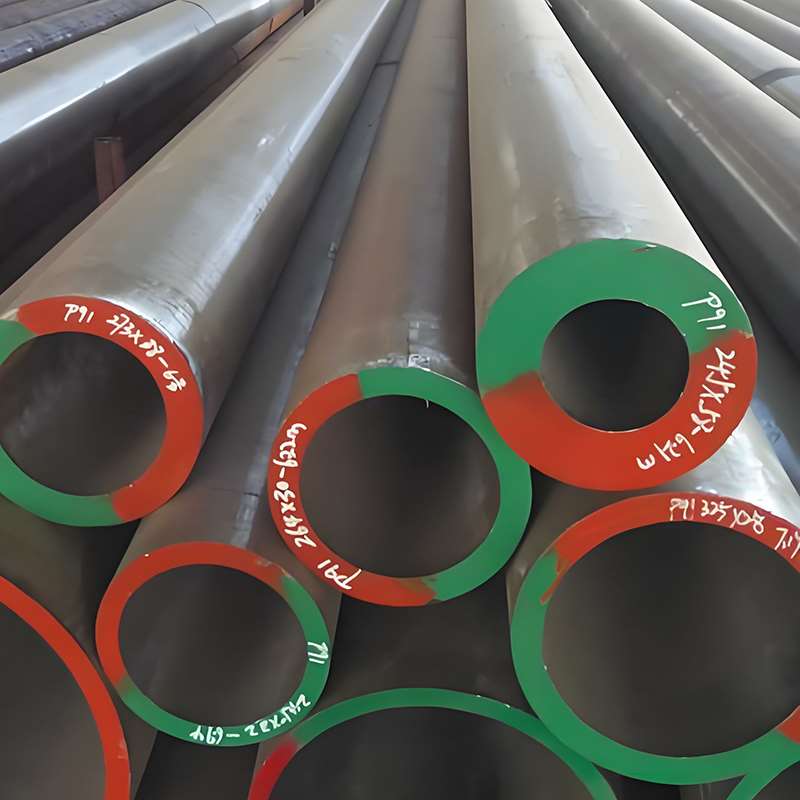
III. Typical Applications of ASTM A335 Alloy Steel Pipes in Power Plants
i. Boiler Heat Transfer Piping (Superheater / Reheater)
ASTM A335 alloy steel pipes are extensively used in:
Superheater tubes
Reheater tubes
Effectively withstanding the combined effects of high-temperature flue gas and steam.
ii. Main Steam Pipeline System
As one of the most critical high-parameter systems in power plants, main steam pipelines typically employ grades such as P22, P91, and P92 to ensure long-term safe operation.
iii. Reheat Steam and High-Temperature Header Piping
Within reheat systems and high-temperature headers, ASTM A335 alloy steel pipes maintain excellent microstructural stability and mechanical properties.
iv. High-Temperature, High-Pressure Auxiliary Piping
Critical auxiliary lines including bypass systems and startup systems similarly require high-temperature alloy steel pipes for reliability.
IV. Common ASTM A335 Steel Grades and Selection Recommendations
| ASTM A335 Grade | Typical Alloy Composition | Applicable Temperature Range (℃) | Applicable Pressure Level | Typical Power Plant Application | Selection Recommendation |
|---|---|---|---|---|---|
| P11 / P12 | 1Cr–0.5Mo | ≤ 540 | Medium Pressure | Conventional coal-fired boilers and auxiliary steam systems | Suitable for medium-temperature, medium-pressure conditions; cost-effective |
| P22 | 2.25Cr–1Mo | ≤ 580 | Medium-High Pressure | Main steam pipelines, reheater steam pipelines | Mainstream choice; balanced performance and cost |
| P91 | 9Cr–1Mo–V | ≤ 610–620 | High Pressure | Supercritical unit main steam systems | Suitable for high-parameter power plants; high strength |
| P92 | 9Cr–0.5Mo–W | ≤ 620–650 | Ultra-High Pressure | Critical pipelines of ultra-supercritical power plants | Extremely high temperature resistance; suitable for long-term operation |
The actual permissible temperature and pressure must be comprehensively determined based on ASME design stress, pipe diameter, wall thickness, and service life.
V. Manufacturing Processes and Quality Control
i. Manufacturing Process Flow for Seamless Alloy Steel Tubes
Utilizing seamless tube manufacturing processes such as piercing, hot rolling, and sizing ensures uniform microstructure and stable performance characteristics.
ii. Impact of Heat Treatment Processes on Performance
Heat treatment processes including normalizing and tempering are critical for enhancing the high-temperature performance and microstructural stability of steel tubes.
iii. Chemical Composition and Mechanical Property Testing
Composition analysis and mechanical property tests (tensile, impact, etc.) are conducted strictly in accordance with ASTM A335 standards.
iv. Non-Destructive Testing (UT/RT/HT) Requirements
Internal quality reliability is ensured through non-destructive testing methods including ultrasonic and radiographic inspection.
VI. Summary Table of Key Inspection Requirements for ASTM A335 Alloy Steel Pipes
| Test Item | Description | Purpose | Applicable Scope |
|---|---|---|---|
| Chemical Composition Analysis | Detection of alloy elements such as C, Cr, Mo | Verify the steel grade meets ASTM A335 requirements | All grades |
| Tensile Test | Tensile strength, yield strength, elongation | Verify mechanical properties at room temperature | All grades |
| Hardness Test | Brinell / Rockwell / Vickers hardness | Control material brittleness and ensure weldability | All grades |
| Impact Test | Impact energy at room or low temperature | Evaluate material toughness | As per project requirement |
| Non-Destructive Testing (UT) | Ultrasonic testing for internal defects | Detect internal cracks and inclusions | Mandatory |
| Non-Destructive Testing (RT) | Radiographic testing | Detect internal defects | As per contract requirement |
| Non-Destructive Testing (ET) | Eddy current testing | Detect surface and near-surface defects | As required |
| Visual and Dimensional Inspection | Outer diameter, wall thickness, ovality, surface quality | Ensure dimensional and appearance compliance | All grades |
| Heat Treatment Status Check | Normalizing + tempering / quenching & tempering | Ensure high-temperature performance | Alloy steel grades |
| Hydrostatic Test | Test pipe pressure-bearing capacity | Verify pressure resistance and sealing | As per standard or contract |
| Identification and Documentation Check | Heat number, steel grade, MTC | Ensure traceability | All grades |