
During the procurement of carbon steel pipes, ASTM A53 and API 5L steel pipes are often compared. Both are widely used carbon steel pipe standards, and some grades (such as A53 Grade B and API 5L Grade B) have certain similarities in mechanical properties, which makes them easy for many purchasers to confuse.
However, ASTM A53 and API 5L have significant differences in their design purposes, application fields, quality requirements, and service conditions. Incorrect selection may not only lead to increased costs but also affect the safety and service life of the entire pipeline system.
This article will help engineers and procurement professionals correctly select between ASTM A53 and API 5L steel pipes by comparing their standard positioning, manufacturing methods, performance requirements, application areas, and key purchasing considerations.
I. What Are ASTM A53 and API 5L Steel Pipes?
ASTM A53 and API 5L are two commonly used carbon steel pipe standards in industrial applications. They are respectively intended for general mechanical applications and low-pressure fluid transportation, and long-distance oil and gas transmission pipelines.
1. ASTM A53 Steel Pipe (General Structural and Low-Pressure Fluid Pipe)
ASTM A53 is a standard developed by the American Society for Testing and Materials (ASTM). It is mainly used for transporting general pressure fluids such as water, steam, natural gas, and air, and is also commonly used for structural supports, scaffolding, and building frameworks.
Manufacturing Types:
- Type F: Furnace butt-welded / continuous welded (Furnace Butt-Welded, Grade A only).
- Type E: Electric resistance welded (ERW – Electric Resistance Welded, including Grade A and Grade B).
- Type S: Seamless steel pipe (Seamless, including Grade A and Grade B).
Common Steel Grades:
Grade A and Grade B, with A53 Grade B being the most widely used. It has a minimum yield strength of ≥ 240 MPa and a minimum tensile strength of ≥ 415 MPa.
Surface Treatment:
ASTM A53 pipes are commonly supplied as black steel pipes or hot-dip galvanized steel pipes.
2. API 5L Steel Pipe (Oil & Gas Line Pipe)
API 5L is a line pipe standard developed by the American Petroleum Institute (API). It is specifically designed for long-distance transportation systems for crude oil, natural gas, refined petroleum products, and water, with stringent requirements for toughness, weldability, and corrosion resistance.
- Product Specification Levels (PSL):
- PSL1: Standard quality level with relatively basic technical requirements and no mandatory impact toughness testing.
- PSL2: Higher quality level with additional requirements, including limits on chemical composition, Charpy impact testing, nondestructive testing, and carbon equivalent control. It is suitable for pipelines operating under harsh environmental conditions or high-pressure service.
- Common Steel Grades:
- Standard grades: API 5L Gr.B, X42, X46, X52.
- High-strength grades: X60, X65, X70, X80, etc. The number represents the minimum yield strength in ksi; for example, X52 has a minimum yield strength of 52 ksi ≈ 360 MPa.
- Manufacturing Processes:
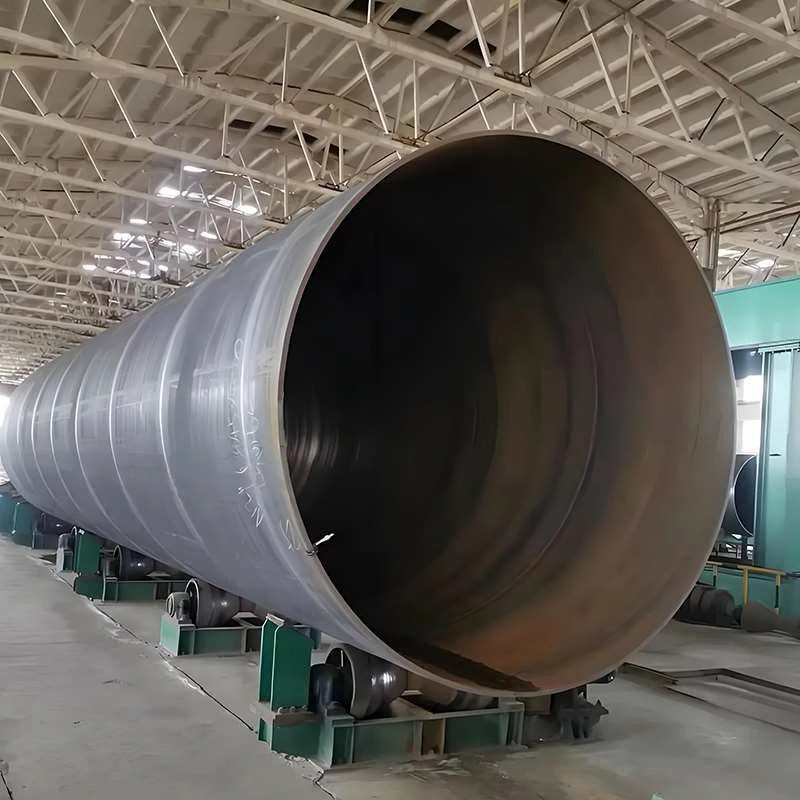
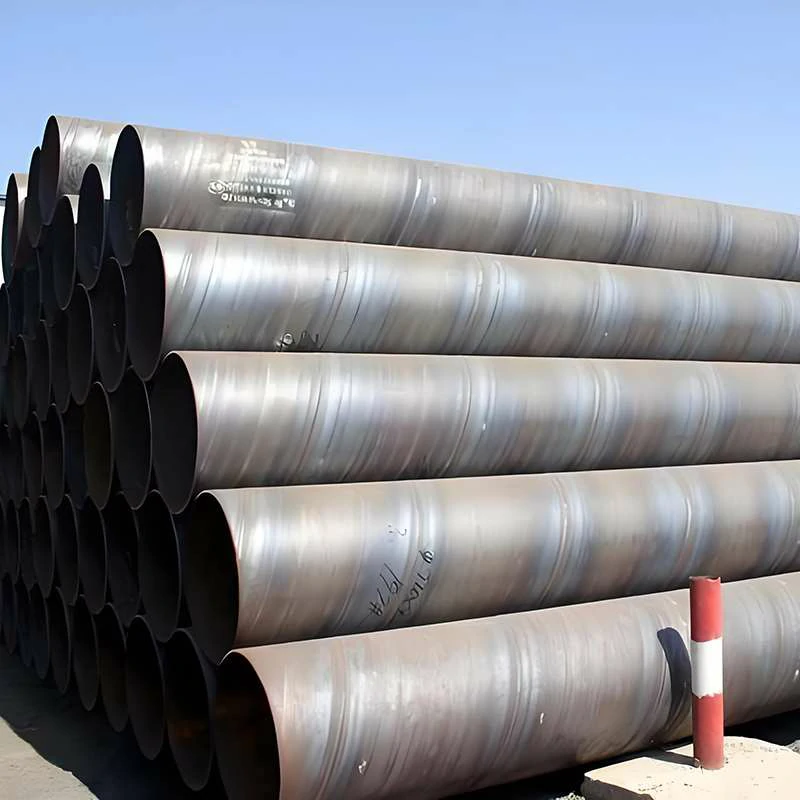
API 5L covers both seamless and various types of welded pipes, including ERW (Electric Resistance Welded), LSAW (Longitudinal Submerged Arc Welded), and SSAW (Spiral Submerged Arc Welded) pipes.
3. Key Comparisons and Substitution Relationships
| Comparison Criteria | ASTM A53 | API 5L |
|---|---|---|
| Application Areas | Building structures, fire protection water pipes, low-pressure steam, and general industrial fluids | Long-distance oil and gas transmission pipelines, onshore and subsea pipeline projects |
| Standard-Setting Organization | ASTM (American Society for Testing and Materials) | API (American Petroleum Institute) |
| Quality Classification | Classified by manufacturing type: Type F / E / S | Classified by product specification level: PSL1 / PSL2 |
| Testing Requirements | Basic hydrostatic testing, mechanical property testing, and chemical analysis | PSL2 has stricter requirements for impact toughness, carbon equivalent, and full-coverage nondestructive testing |
II. Comparison of Manufacturing Processes: ASTM A53 vs. API 5L
| Dimension / Technical Indicator | ASTM A53 Steel Pipe Standard | API 5L Steel Pipe Standard |
|---|---|---|
| Standard Positioning | General-purpose structural pipe and low-pressure fluid transportation pipe | Dedicated line pipe for long-distance oil and gas transmission pipelines |
| Manufacturing Process Types | Type S: Seamless pipe Type E: Electric Resistance Welded (ERW) pipe Type F: Furnace-welded / continuous-welded pipe | Seamless: Seamless pipeERW / HFW: Longitudinal high-frequency electric resistance welded pipeLSAW (UOE/JCOE): Longitudinal double-sided submerged arc welded pipe SSAW / HSAW: Spiral double-sided submerged arc welded pipe |
| Common Diameter Range (OD) | Mainly small diameters (typically ≤ 26 inches) | Covers a full range of diameters, including large diameters (up to more than 100 inches) |
| Raw Material Form | Tube billets (for seamless pipes) or hot-rolled steel coils (for ERW pipes) | Tube billets, hot-rolled steel coils (for ERW/SSAW), and high-strength heavy plates (for LSAW) |
| Quality / Specification Level | Classified by manufacturing process (Type F / E / S), with Grade A and Grade B | Classified by quality control level: PSL1 (standard level) and PSL2 (more stringent level) |
| Steel Grades and Strength Representation | Grade A, Grade B (yield strength ≥ 240 MPa) | B, X42, X46, X52, X60, X65, X70, X80 (the number represents the yield strength in ksi) |
| Weld Seam Heat Treatment Requirements | ERW weld seams require basic online heat treatment / annealing | Strict requirements; PSL2 imposes stringent requirements for weld seam heat treatment and full-body normalizing / quenching and tempering |
| Mechanical Expansion Process | Not mandatory | LSAW steel pipes are required to undergo full-length mechanical expansion to relieve residual stresses |
| Nondestructive Testing (NDT) Requirements | Basic hydrostatic testing and routine nondestructive testing | Strict requirements; PSL2 requires 100% UT/RT inspection of weld seams and pipe ends |
| Charpy Impact Toughness Testing | Generally not mandatory unless specifically required by the purchaser through a supplementary agreement | Mandatory Charpy impact toughness testing at low or ambient temperatures for PSL2 |
| Possibility of Dual-Standard Certification | Yes. A53 Gr.B seamless pipes can often be dual-certified to API 5L Gr.B PSL1 | Yes. However, the pipes must meet the more stringent requirements for chemical composition and testing under both standards |
III. Selection in Practical Applications
When selecting and procuring materials for actual engineering projects, the choice between ASTM A53 and API 5L depends primarily on the characteristics of the conveyed medium, operating pressure, ambient temperature, pipe diameter, as well as budget and specification requirements.
1. Quick Selection Comparison Table
| Decision Factor | Prefer ASTM A53 | Prefer API 5L |
|---|---|---|
| Conveyed Medium | General water, HVAC circulating water, low-pressure steam, compressed air, and fire protection water | Crude oil, natural gas, refined petroleum products, sour / sulfur-containing media, high-pressure water and gas |
| Operating Pressure | Low to medium pressure (conventional low-pressure pipelines, low-pressure boiler pipes) | High to ultra-high pressure (long-distance transmission pipelines, high-pressure gathering pipelines) |
| Pipe Diameter | Small to medium diameters (typically ≤ 24″) | Full range of diameters, especially large diameters (LSAW / SSAW preferred for 24″ and above) |
| Service Environment | Indoor building applications, within plant facilities, and conventional shallow-buried pipelines | Cross-border / long-distance transmission trunk lines, extremely cold regions, subsea pipelines, and corrosive soil environments |
| Quality Level | Basic industrial grade (general mechanical and fluid transportation applications) | High-quality grade (PSL1) or stringent safety grade (PSL2 is mandatory) |
| Budget | Lower budget, with a focus on cost-effectiveness | Relatively higher budget, especially for PSL2 and higher-strength X-series grades |
2. Four Core Principles for Practical Pipe Selection
1) Medium and Industry Standards
Oil and Gas Industry:
For long-distance oil and gas transmission pipelines, station piping, and high-pressure gathering pipelines, API 5L must be selected.
Construction and General Industry:
For fire protection systems, HVAC water piping, low-pressure water / compressed air pipelines within industrial facilities, and structural support pipes, ASTM A53 is generally preferred.
2) Pressure and Safety Level (PSL1 vs. PSL2)
Low-Pressure, Conventional Service:
Either ASTM A53 Gr. B or API 5L Gr. B PSL1 can be selected.
High-Pressure / Severe Service:
If the pipeline operates under high pressure or in flammable, explosive, or extremely cold environments, API 5L PSL2 should be selected. This is because PSL2 requires Charpy V-notch impact testing for low-temperature toughness and carbon equivalent control to help prevent weld cracking, whereas A53 does not include these requirements.
3) Matching Pipe Diameter with the Manufacturing Process
Small Diameter (≤ 2″):
Seamless pipe (SMLS) is generally preferred, and both A53 and API 5L seamless pipes are widely available from stock.
Medium Diameter (2″–24″):
Either ERW (Electric Resistance Welded) or seamless (SMLS) pipe can be used, offering good cost-effectiveness.
Large Diameter (24″ and above):
ASTM A53 is rarely available in large diameters on the market, so API 5L LSAW (Longitudinal Submerged Arc Welded) or SSAW (Spiral Submerged Arc Welded) pipe must generally be selected.
4) Practical Procurement: Making Effective Use of Dual-Certified Pipes
In actual procurement, for medium- and low-pressure seamless or ERW pipes (such as NPS 2″–16″), steel mills often issue dual-certified Material Test Certificates (MTCs).
Typical Marking:
ASTM A53 Gr. B / API 5L Gr. B PSL1