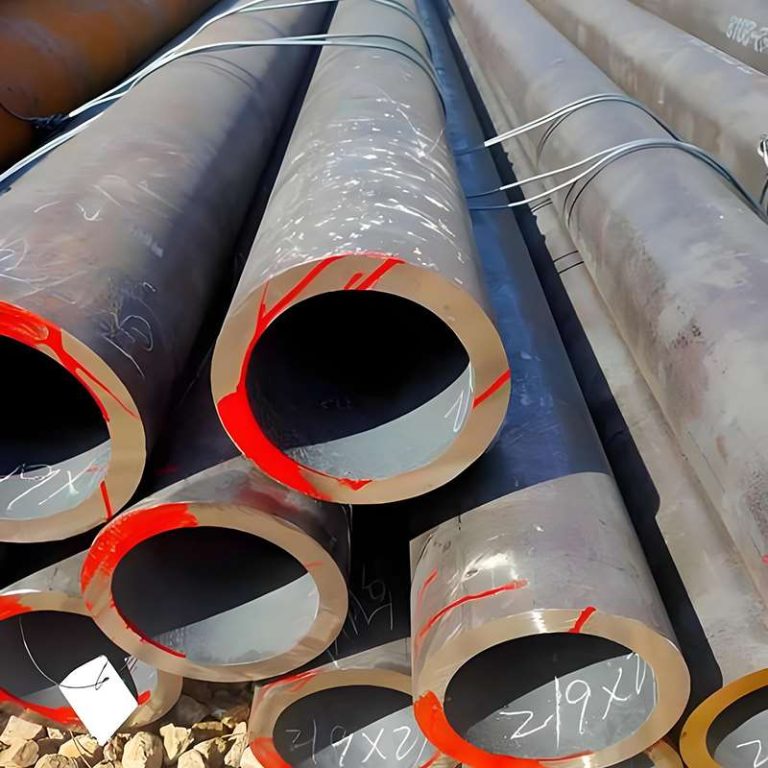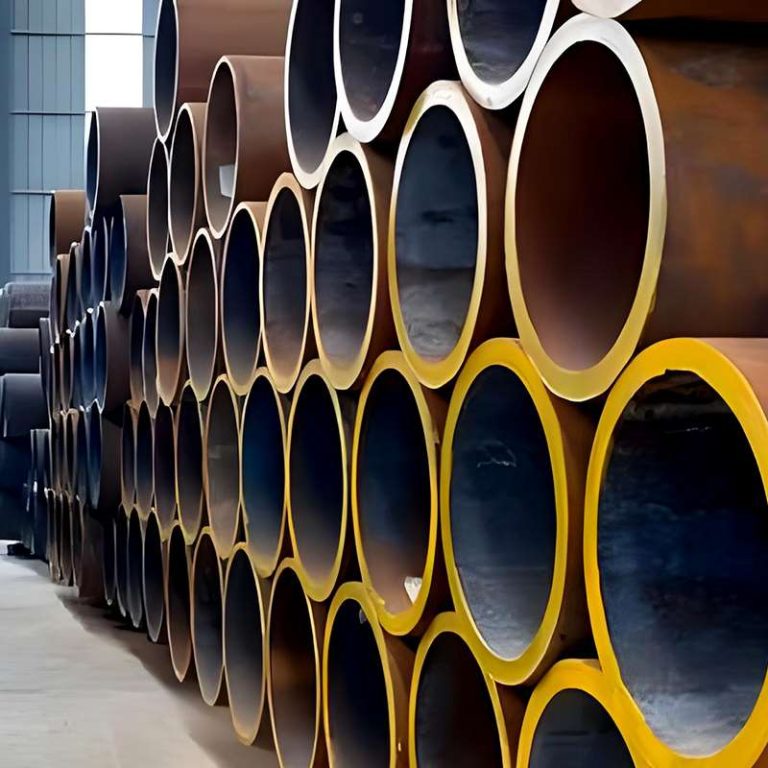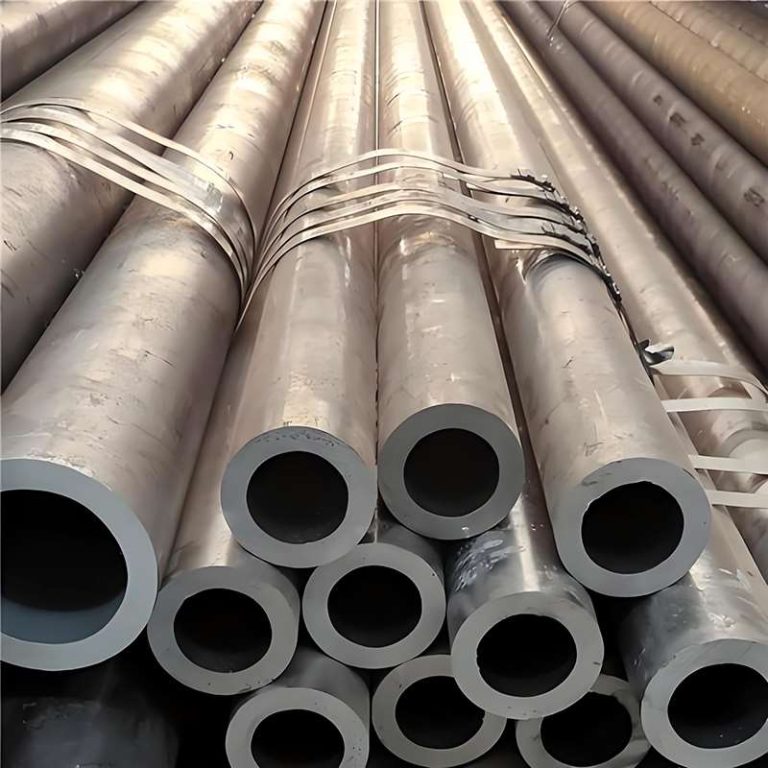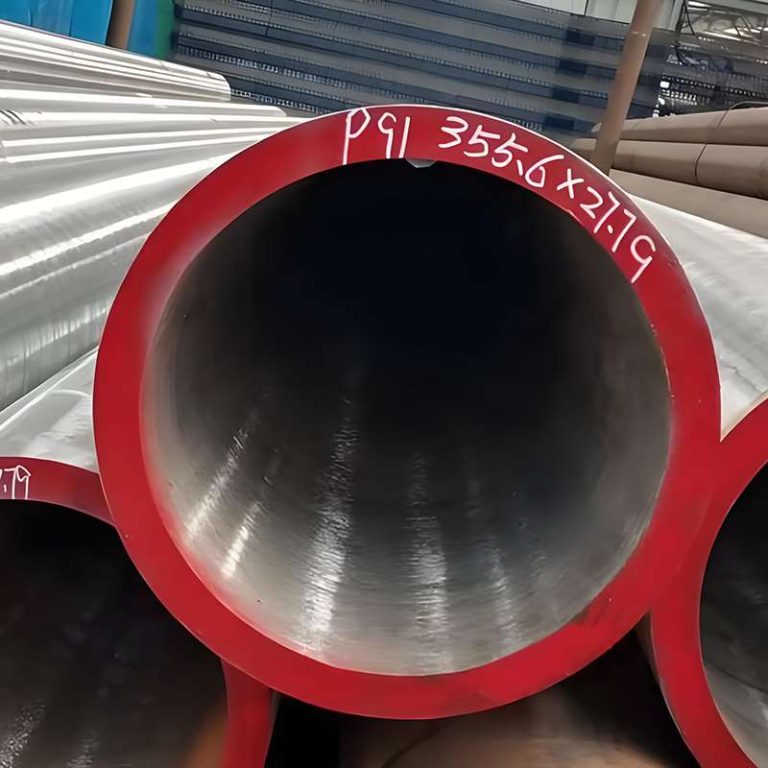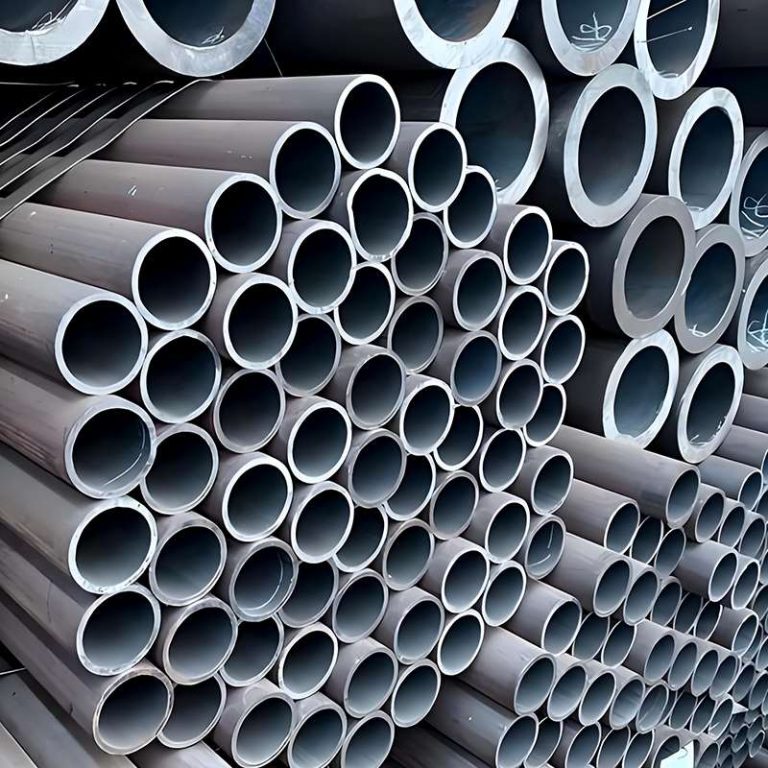
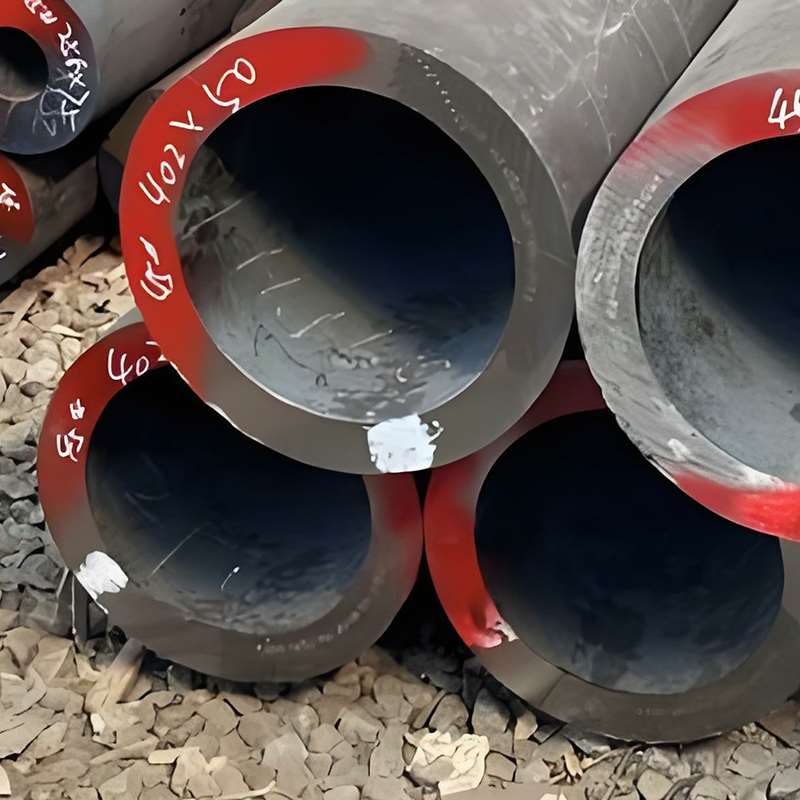
I. Introduction to ASTM A335 P91 Alloy Steel Pipe for Power Plant Boilers
ASTM A335 P91 alloy steel pipe is a high-performance tubing primarily alloyed with chromium (Cr), molybdenum (Mo), vanadium (V), niobium (Nb), and other elements. It strictly complies with the American standard ASME SA-335 / SA-335M and is compatible with international standards including Chinese National Standard (GB), Japanese Industrial Standard (JIS), and German Industrial Standard (DIN).
Its steel grade follows internationally recognized coding conventions: the first two digits denote carbon content in parts per ten thousand, alloy element symbols indicate specific composition levels, microalloying elements are separately labeled, and the “A” suffix signifies advanced premium steel.
P91 tubing is specifically engineered for power plant boilers and high-temperature, high-pressure steam pipelines. It delivers long-term stable operation under extreme thermal and pressure conditions while exhibiting exceptional corrosion resistance and creep resistance.
Product Advantages:
- Reliable High-Temperature Strength: Optimized chromium-molybdenum-vanadium alloy composition enables sustained resistance to steam pressures at 550–620°C.
- Superior Corrosion Resistance: Withstands power plant steam and high-temperature chemical environments, reducing maintenance frequency.
- International Standard Compatibility: Complies with ASME SA-335 standards while meeting domestic, European, and Asian requirements, facilitating export and international project applications.
- Long-Term Stable Operation: Microalloying elements and precise heat treatment processes ensure outstanding creep and fatigue resistance under prolonged high-temperature, high-pressure conditions.
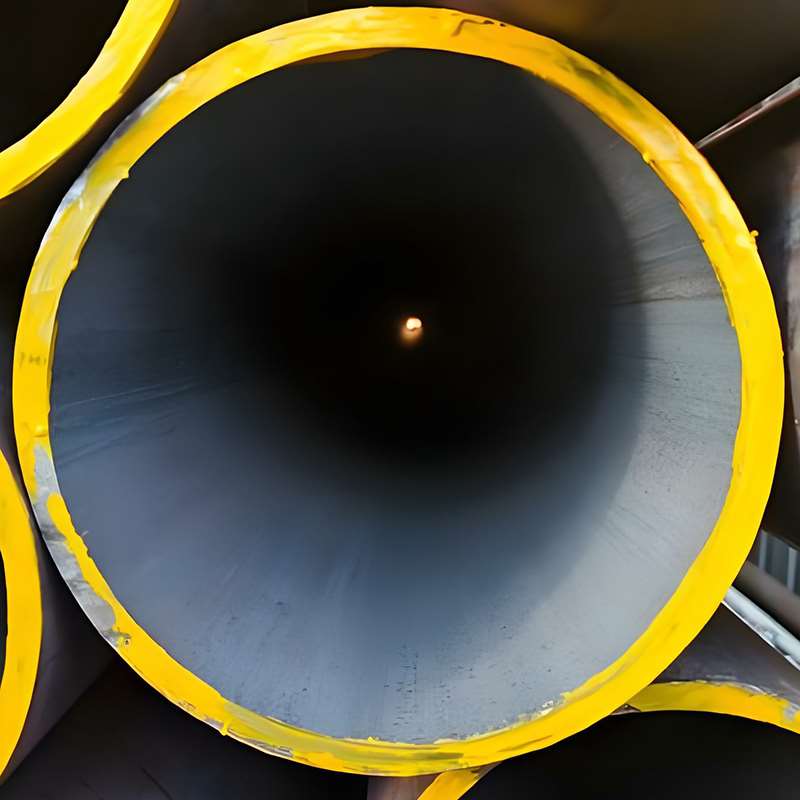
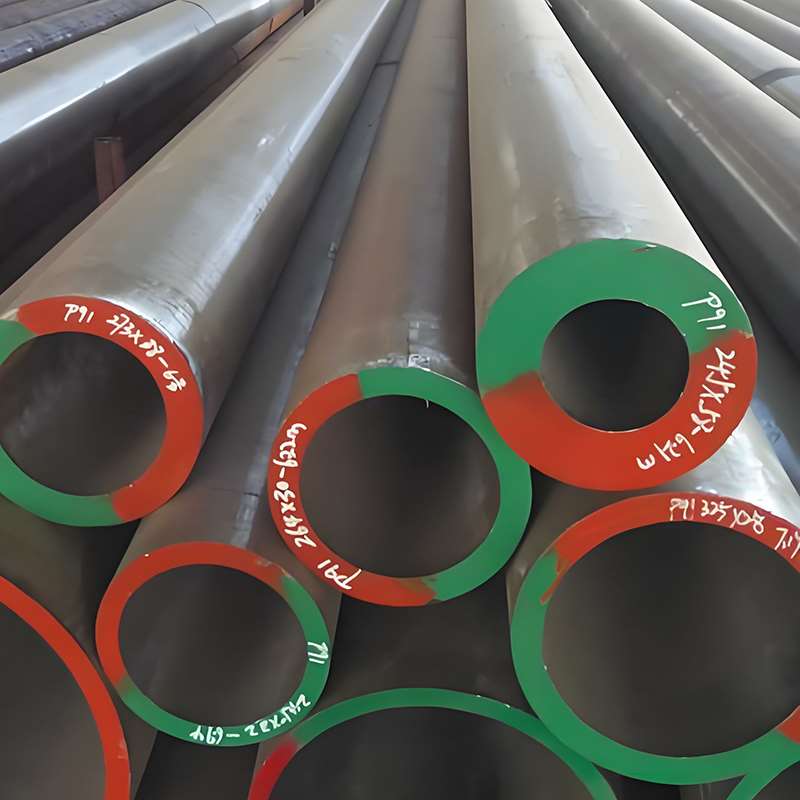
II. Chemical Composition and Mechanical Properties of ASTM A335 P91 Alloy Steel Pipes for Power Plant Boilers
i. ASTM A335 P91 Chemical Composition (%)
| Element | Content Range |
|---|---|
| C (Carbon) | 0.08 – 0.12 |
| Si (Silicon) | 0.20 – 0.50 |
| Mn (Manganese) | 0.40 – 0.70 |
| P (Phosphorus) | ≤0.020 |
| S (Sulfur) | ≤0.010 |
| Cr (Chromium) | 8.0 – 9.5 |
| Mo (Molybdenum) | 0.85 – 1.05 |
| V (Vanadium) | 0.18 – 0.25 |
| Nb (Niobium) | 0.06 – 0.12 |
| Fe (Iron) | Balance |
ii. ASTM A335 P91 Mechanical Properties
| Performance Indicator | Minimum Value |
|---|---|
| Tensile Strength (MPa) | 585–740 |
| Yield Strength (MPa) | ≥415 |
| Elongation (%) | ≥20 |
| Impact Toughness (Charpy V, J) | ≥47 @ -29℃ |
Note: P91 steel grade undergoes normalizing + tempering heat treatment to ensure long-term stability under high-temperature, high-pressure conditions (550–620°C).
III. Production Process Flow for ASTM A335 P91 Alloy Steel Pipes
Ingot Melting → Rolling Heating → Hot Rolling Forming → Dimensional Correction → Normalizing or Annealing → Quenching and Tempering (P91 High-Grade Steel) → Dimensional Cutting and End Processing → Non-Destructive Testing (UT/MT/RT) → Surface Treatment (Pickling/Sandblasting/Rust-Preventive Oil) → Packaging and Shipping
IV. ASTM A335 P91 Alloy Steel Pipe Specification and Dimension Table
| Outer Diameter (OD) mm | SCH Wall Thickness (mm) | Standard Length (m) | Applicable Pressure Rating |
|---|---|---|---|
| 21.3 | SCH10 – SCH40 | 6 – 12 | Medium–Low Pressure |
| 26.9 | SCH10 – SCH40 | 6 – 12 | Medium–Low Pressure |
| 33.7 | SCH10 – SCH40 | 6 – 12 | Medium–Low Pressure |
| 42.4 | SCH10 – SCH80 | 6 – 12 | Medium–High Pressure |
| 48.3 | SCH10 – SCH80 | 6 – 12 | Medium–High Pressure |
| 60.3 | SCH10 – SCH80 | 6 – 12 | Medium–High Pressure |
| 76.1 | SCH20 – SCH80 | 6 – 12 | High Pressure |
| 88.9 | SCH20 – SCH160 | 6 – 12 | High Pressure |
| 114.3 | SCH20 – SCH160 | 6 – 12 | High Pressure |
| 168.3 | SCH40 – SCH160 | 6 – 12 | High Pressure |
| 219.1 | SCH40 – SCH160 | 6 – 12 | High Pressure |
| 273.0 | SCH40 – SCH160 | 6 – 12 | High Pressure |
| 323.9 | SCH40 – SCH160 | 6 – 12 | High Pressure |
| 355.6 | SCH40 – SCH160 | 6 – 12 | High Pressure |
| 406.4 | SCH40 – SCH160 | 6 – 12 | High Pressure |
| 508.0 | SCH40 – SCH160 | 6 – 12 | High Pressure |
| 610.0 | SCH40 – SCH160 | 6 – 12 | High Pressure |
V. ASTM A335 P91 Alloy Steel Pipe Selection Reference
- High-Temperature Steam Pipeline Applications
Applicable Scenarios: Main steam pipes and reheat steam pipes in thermal power plant boilers.
Temperature Range: Approx. 550–620°C
Pressure Range: Medium-high to high-pressure steam pipelines
Selection Rationale: P91 steel exhibits outstanding high-temperature strength and creep resistance, ensuring long-term operational stability while withstanding prolonged corrosion and thermal stress from high-temperature steam.
- High-Temperature Heat Exchange Systems
Application: Power plant heat exchanger piping, high-temperature circulation lines in petrochemical plants.
Temperature Range: 500–600°C
Pressure Range: Medium-to-high pressure
Selection Rationale: Contains alloying elements Cr, Mo, V, Nb for high-temperature oxidation resistance, ensuring long-term stable operation of heat exchange systems.
- Supercritical and Ultra-High-Pressure Boiler Piping Conditions
Application: Supercritical boilers, critical high-temperature/high-pressure main steam lines.
Temperature Range: 580–620°C
Pressure Range: High-pressure, ultra-high-pressure
Selection Rationale: P91 steel offers high strength, low creep rate, and exceptional long-term reliability, making it suitable for extreme operating conditions.
- Chemical and Petrochemical High-Temperature Circulation Applications
Applicable Scenarios: High-temperature circulation pipelines and thermal medium transport pipelines in petrochemical plants.
Temperature Range: 450–600°C
Pressure Range: Medium to high pressure
Reason for Selection: Steel pipes offer excellent corrosion resistance, withstanding high-temperature erosion from chemical media while maintaining stable mechanical properties at elevated temperatures.
- Long-Term Operation, High Thermal Stress Piping
Application: High-temperature, high-pressure pipelines requiring continuous operation for over 20 years.
Reason for Selection: P91 steel’s microalloying elements and precise heat treatment ensure creep resistance and fatigue strength, reducing maintenance frequency and pipeline replacement costs.
VI. ASTM A335 P91 Alloy Steel Pipe Testing Standards
| Test Item | Test Method / Standard Requirement | Key Indicators |
|---|---|---|
| Chemical Composition | Spectral analysis or chemical analysis | C 0.08–0.12%, Si 0.2–0.5%, Mn 0.4–0.7%, P ≤0.020%, S ≤0.010%, Cr 8–9.5%, Mo 0.85–1.05%, V 0.18–0.25%, Nb 0.06–0.12% |
| Tensile Test | Universal testing machine | Tensile strength 585–740 MPa, Yield strength ≥415 MPa, Elongation after fracture ≥20% |
| Hardness Test | Rockwell or Brinell hardness | HRB ≤230 (room temperature hardness) |
| Impact Test | Charpy V-notch test | ≥47 J @ -29℃ |
| Nondestructive Testing | UT / MT / RT | Detect internal and surface defects; no cracks, porosity, or slag inclusions |
| Dimensional Tolerance | OD, wall thickness, roundness measurement | OD tolerance ±1%, Wall thickness tolerance ±10%, Roundness deviation ≤0.5% |
| End Finishing | Chamfered or plain ends | Complies with ASME / customer requirements |
| Surface Treatment | Pickling / Sandblasting | No scale, smooth surface, can be coated with anti-rust oil |
Specifications
- Chemical composition ensures high-temperature mechanical properties and creep resistance.
- Mechanical property testing guarantees long-term safe operation of the tubing under boiler and high-temperature steam conditions.
- Non-destructive testing ensures the tubing is free from internal defects, meeting safety requirements for high-temperature, high-pressure pipelines.
- Dimensional and surface quality assurance enables precise connection with flanges, valves, and other pipe fittings, reducing installation rework rates.
VII. Common FAQs on ASTM A335 P91 Alloy Steel Pipe Usage
Q1: Does P91 pipe exhibit creep during long-term high-temperature operation?
A1: Within the design temperature range (550–620°C) and at specified pressures, P91 pipe demonstrates very low creep rates. However, exceeding standard operating conditions or prolonged overheating may induce creep, necessitating strict control of operating temperature and pressure.
Q2: Are welding issues common with P91 piping?
A2: As a high-alloy steel, P91 requires strict control of welding procedures and preheating/post-weld heat treatment during fabrication. Failure to do so may result in cracking or degraded weld properties. Use of specification-compliant welding materials and heat treatment processes is recommended.
Q3: Can fatigue or cracking occur in pipes after long-term operation?
A3: Prolonged high-temperature, high-pressure operation may cause thermal fatigue or low-cycle fatigue, particularly near elbows, flanges, or support points. Regular inspections, proper support design, and expansion compensation can mitigate these risks.
Q4: How corrosion-resistant is P91 steel pipe?
A4: P91 steel exhibits good corrosion resistance in steam or neutral media, but corrosion may still occur in environments containing chlorine, sulfur, or acidic substances. Anti-corrosion coatings or cathodic protection measures are recommended.
Q5: Can thermal expansion of pipelines cause joint leaks?
A5: Under high-temperature conditions, P91 steel pipes have a relatively high thermal expansion coefficient. If expansion compensation (expansion joints or expansion gaps) is not incorporated in the design, excessive joint stress may occur, leading to leakage.
Q6: What is the maintenance cycle and service life of P91 steel pipes?
A6: Under normal design conditions, P91 steel pipes can operate reliably for 20–30 years. Regular inspections of welds, support points, and corrosion-prone areas can extend service life and reduce unexpected failures.