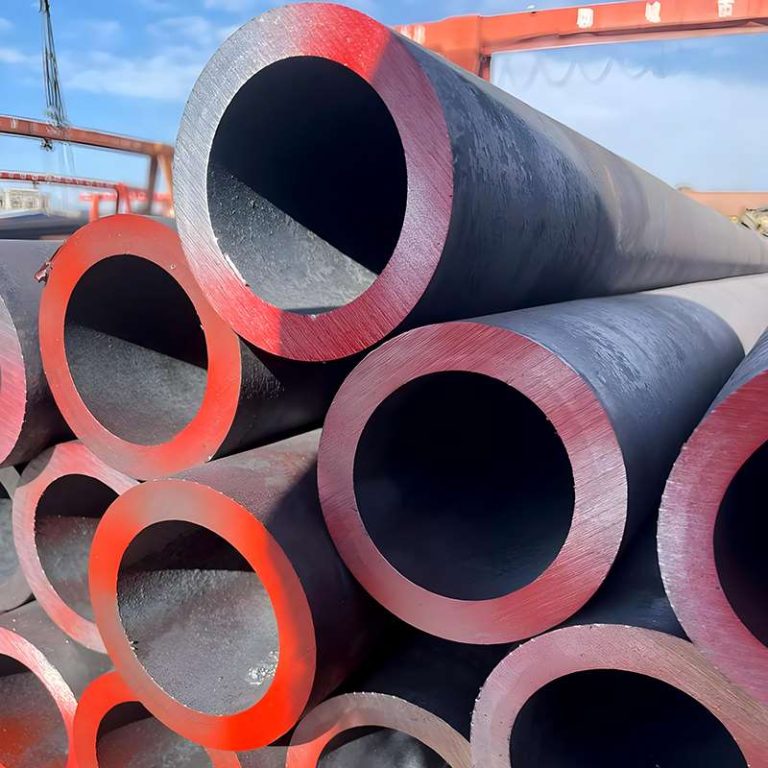
I. Overview of ASTM A335 P5 Alloy Steel Pipe
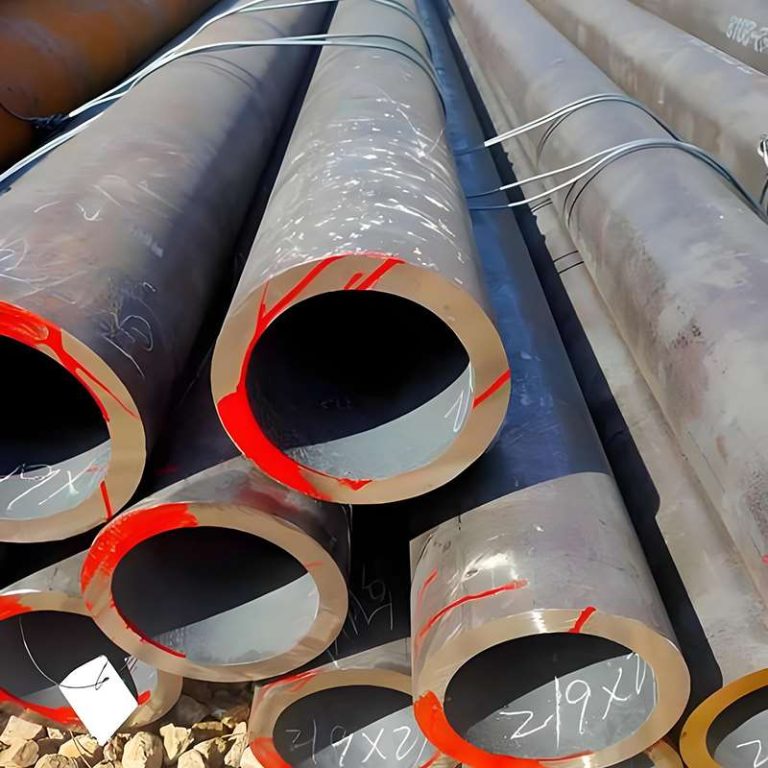
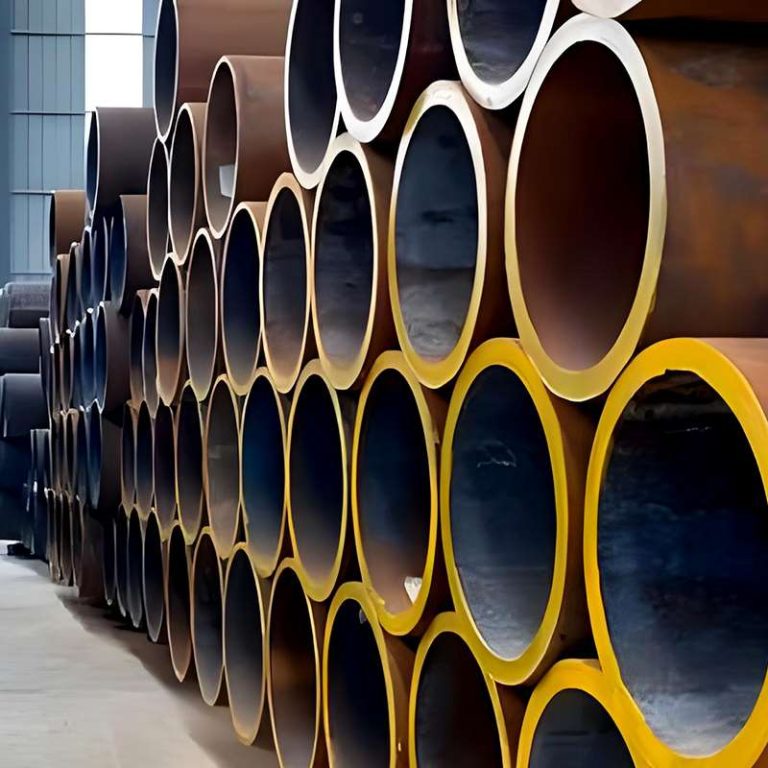
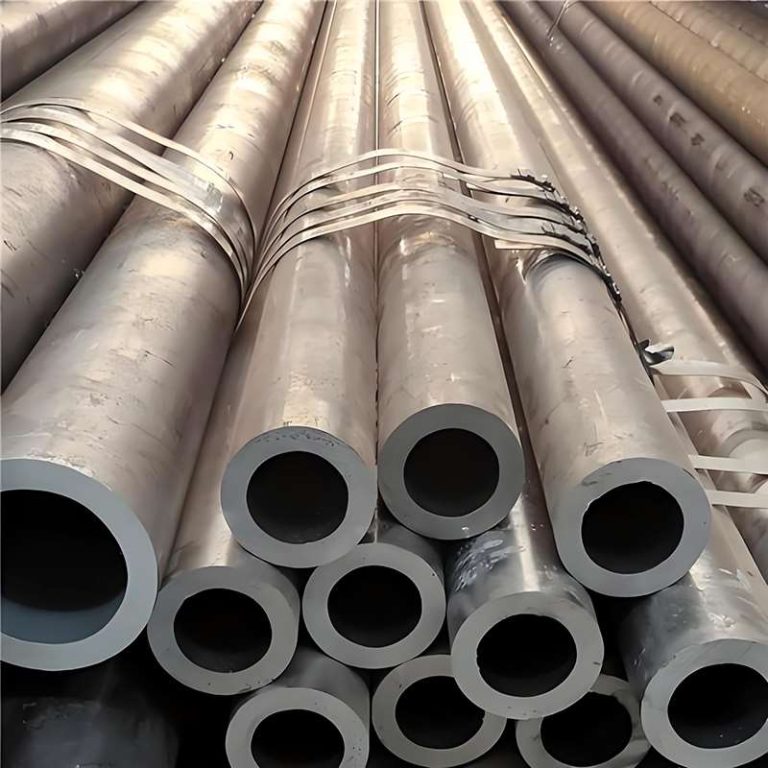
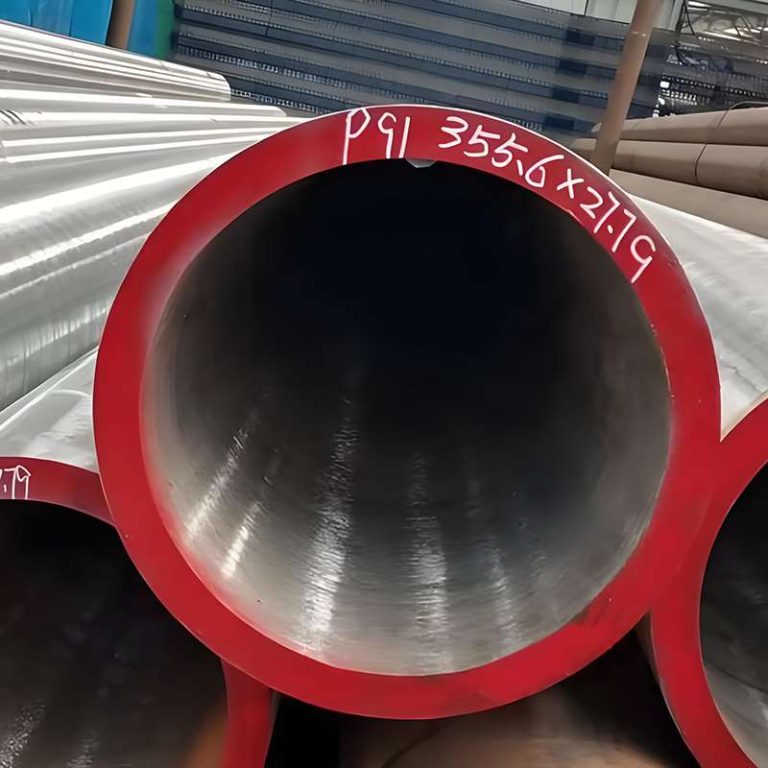
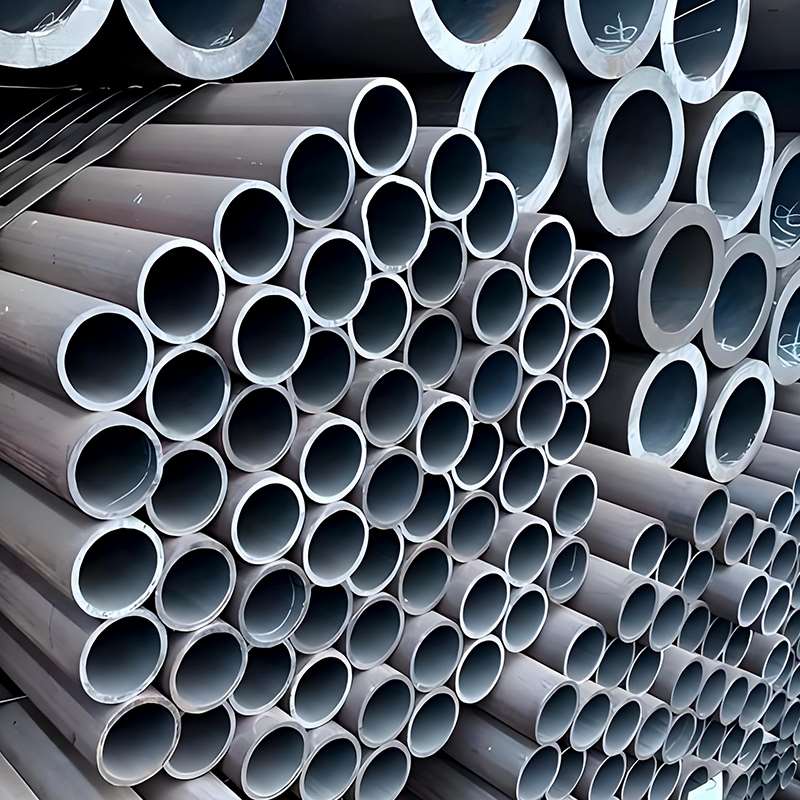
ASTM A335 P5 alloy steel pipe is a type of seamless alloy steel pipe designed for use under high-temperature and high-pressure conditions. It is primarily utilized in piping systems within the chemical, petroleum, energy, and power generation industries.
This steel pipe features excellent resistance to high temperatures and corrosion, along with strong creep resistance, making it suitable for conveying chemical media and high-pressure steam.
Key Features:
- High strength at elevated temperatures
- Excellent corrosion resistance
- Good weldability and machinability
- Suitable for high-pressure and high-temperature operating conditions
Application Areas:
- Chemical Plants
Used for conveying high-temperature, high-pressure steam and chemical media. - Thermal & Nuclear Power Plants
Main steam piping for boilers and superheated steam lines. - Oil & Gas Industry
High-temperature, high-pressure transmission pipelines and refinery reactor piping. - High-Temperature Heat Exchange Equipment
Heat exchangers, boilers, and steam condenser tubes.
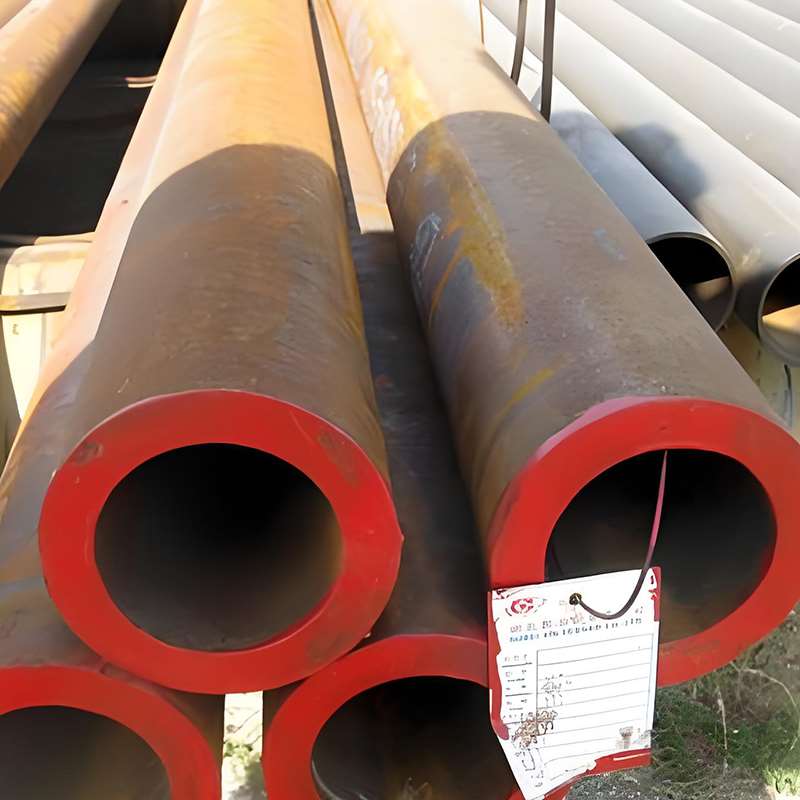
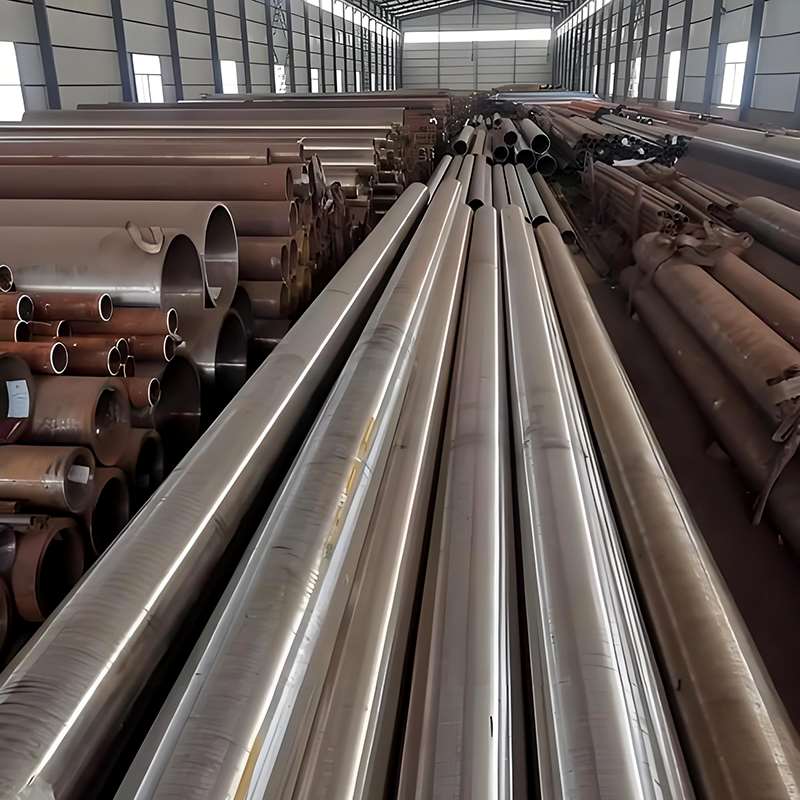
II. Chemical Composition and Mechanical Properties of ASTM A335 P5 Alloy Steel Pipe
| Parameter Category | Parameter Name | Value / Range |
|---|---|---|
| Chemical Composition | Carbon (C) | ≤0.12% |
| Manganese (Mn) | 0.30–0.60% | |
| Phosphorus (P) | ≤0.025% | |
| Sulfur (S) | ≤0.015% | |
| Silicon (Si) | 0.20–0.35% | |
| Chromium (Cr) | 1.00–1.50% | |
| Molybdenum (Mo) | 0.50–0.65% | |
| Mechanical Properties | Yield Strength | ≥205 MPa |
| Tensile Strength | 415–585 MPa | |
| Elongation | ≥30% | |
| Impact Toughness | ≥34 J | |
| Hardness | 179–217 HB |
III. ASTM A335 P5 Alloy Steel Pipe — Dimensions Table
| Outer Diameter (mm) | Wall Thickness (mm) | Standard Length (m) | Notes |
|---|---|---|---|
| 21.3 | 2 – 4 | 6 – 12 | Customizable length |
| 26.9 | 2.5 – 5 | 6 – 12 | Common chemical piping |
| 33.7 | 2.5 – 6 | 6 – 12 | High-temperature steam pipes |
| 42.4 | 3 – 8 | 6 – 12 | High-pressure boiler pipes |
| 48.3 | 3 – 9 | 6 – 12 | Heat exchanger pipes |
| 60.3 | 3 – 10 | 6 – 12 | Power plant applications |
| 76.1 | 4 – 12 | 6 – 12 | Oil & gas pipelines |
| 88.9 | 4 – 14 | 6 – 12 | High-pressure service |
| 114.3 | 5 – 16 | 6 – 12 | Custom thickness up to 20 mm |
| 139.7 | 5 – 20 | 6 – 12 | Special high-temperature use |
| 168.3 | 6 – 22 | 6 – 12 | Large-diameter boiler pipes |
| 219.1 | 8 – 25 | 6 – 12 | High-pressure chemical transport |
| 273.0 | 10 – 28 | 6 – 12 | Power plant steam mains |
| 323.9 | 12 – 32 | 6 – 12 | Custom thick-walled options |
| 355.6 | 12 – 36 | 6 – 12 | Special service pipelines |
| 406.4 | 14 – 40 | 6 – 12 | Ultra-high temperature pipes |
| 457.2 | 16 – 45 | 6 – 12 | High-pressure chemical/power |
| 508.0 | 18 – 50 | 6 – 12 | Large-diameter high-pressure |
| 610.0 | 20 – 50 | 6 – 12 | Custom thickness up to 50 mm |
IV. ASTM A335 P5 Alloy Steel Pipe Manufacturing Process Flow
Billet Preparation → Heating and Rolling → Seamless Extrusion / Hot Rolling into Pipe → Normalizing or Quenching & Tempering Heat Treatment → Pickling or Stress-Relief Annealing → Finishing → Cutting to Specified Length → End Finishing (Chamfering / Squaring) → Surface Treatment / Rust Prevention → Coating (Optional) → Inspection / Quality Control → Packaging and Dispatch
V. ASTM A335 P5 Alloy Steel Pipe Inspection Standards
| Test Item | Test Content | Technical Requirement / Standard | Test Method |
|---|---|---|---|
| Visual Inspection | Surface cracks, pores, looseness, shrinkage, scabs | Surface should be smooth and free of obvious defects | Visual inspection |
| Dimensional Measurement | Outer diameter, wall thickness, length | OD tolerance ±0.5%, wall thickness tolerance ±10%, length tolerance +50/-0 mm | Vernier caliper / OD gauge / thickness gauge |
| Straightness Test | Pipe bending or twisting | Bending deviation ≤1/1000 of pipe length | Straightness measuring device |
| Hardness Test | Brinell or Rockwell hardness | 179–217 HB | Brinell hardness tester / Rockwell hardness tester |
| Tensile Test | Yield strength, tensile strength, elongation | Yield strength ≥205 MPa, tensile strength 415–585 MPa, elongation ≥30% | Tensile testing machine |
| Impact Test | Low-temperature impact toughness | Impact energy ≥34 J | Charpy impact tester |
| Bend Test | Pipe bending performance | According to ASTM A335 standard requirements | Bending testing machine |
| Non-Destructive Testing (NDT) | Internal defect detection | Ultrasonic or radiographic testing; no cracks or pores | UT / RT testing |
| Chemical Composition Analysis | C, Mn, P, S, Si, Cr, Mo, etc. | According to ASTM A335 P5 standard requirements | Spectroscopy / chemical analysis |
| Pressure Test (optional) | Pipe pressure resistance | According to design pressure, no leakage | Hydrostatic / pneumatic test |
VI. Procurement and Selection Recommendations for ASTM A335 P5 Alloy Steel Pipe
First, confirm the operating conditions → Determine the grade → Specify the outer diameter and wall thickness → Select surface treatment options → Verify supplier qualifications and test reports. This systematic approach ensures safer selection, controllable costs, and smooth construction and installation.
- Confirm Operating Condition Requirements
Clearly define the pipeline’s operating temperature, operating pressure, and the type of medium being transported.
P5 pipes are suitable for high-temperature (≤500°C) and high-pressure steam, as well as chemical media applications.
If the temperature or pressure requirements are higher, consider higher-grade steel pipes, such as P11 or P22. - Select the Appropriate Material/Grade
ASTM A335 P5 is suitable for use in chemical plants, boilers, steam systems, energy facilities, and oil and natural gas transmission pipelines.
For highly corrosive media, consider the additional application of anti-corrosion coatings or alloy linings. - Determine Outer Diameter and Wall Thickness
The outer diameter should be selected based on the specified pipeline design specifications.
The wall thickness must be calculated based on the design pressure and temperature to ensure an adequate safety margin for the pipeline.
Standard wall thicknesses range from 2 mm to 50 mm; however, custom dimensions can be produced to meet specific project requirements. - Length and End Requirements
Standard lengths range from 6 to 12 meters; custom lengths can be fabricated to accommodate on-site installation requirements.
Pipe ends are available in either plain-end or beveled-end configurations to facilitate welding or flanged connections. - Surface Treatment and Coatings
For piping intended for long-term exposure to outdoor or humid environments, the application of rust-inhibiting oil, anti-oxidation treatments, or epoxy coatings is recommended. - Standards and Certifications
Verify that the supplier provides ASTM/ASME certifications as well as inspection reports (covering chemical composition, mechanical properties, and non-destructive testing). - Special Requirements
For high-temperature steam piping, stress-relief annealing treatments may be selected.
For piping exposed to corrosive chemical environments, internal linings or external coatings utilizing specialized anti-corrosive materials may be applied. - Logistics and Packaging
Verify that the packaging method is moisture-proof and impact-resistant, ensuring its suitability for long-distance transport and on-site handling.
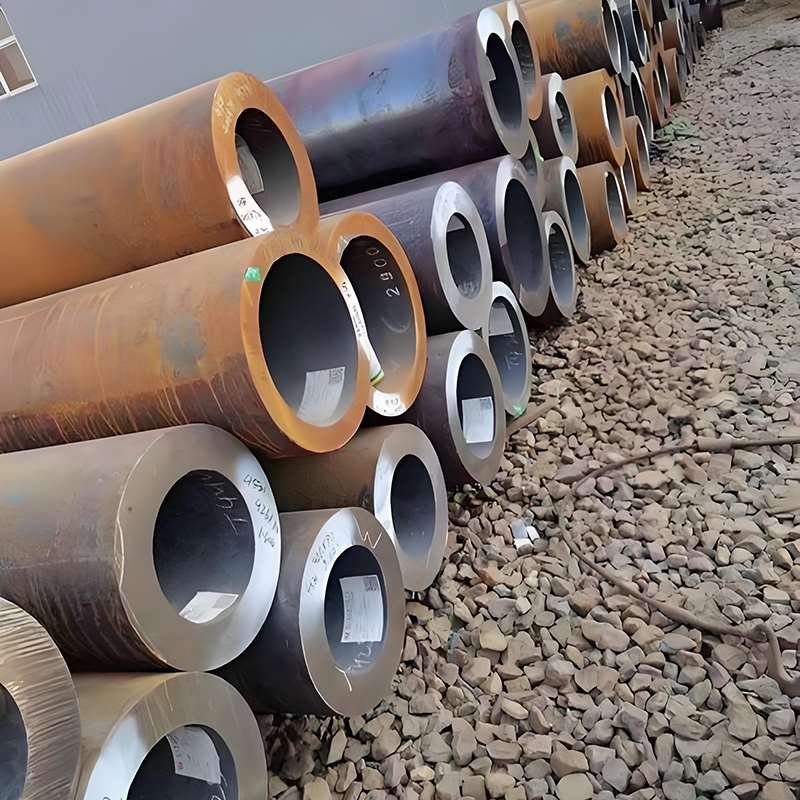
VII. ASTM A335 P5 Alloy Steel Pipe Selection FAQ
Q1: For which operating conditions are P5 alloy steel pipes suitable?
A1:
P5 steel pipes are primarily used for piping systems involving high-temperature (≤500°C), high-pressure steam, and chemical media. Typical applications include chemical plant pipelines, high-temperature boiler tubing, steam transport, and the energy and oil & gas industries.
When selecting P5 material, one must consider the operating temperature, pressure, and type of medium to ensure that the piping does not experience creep, cracking, or corrosion during long-term service.
Q2: How do I select the pipe’s outer diameter and wall thickness?
A2:
The outer diameter is determined based on the pipe’s design specifications; the wall thickness must be calculated based on the design pressure, operating temperature, and pipe length to ensure an adequate safety factor.
It is recommended to consult pressure piping design codes—such as ASME B31.1 or ASME B31.3—while also considering the practicalities of transportation, installation, and welding. A wall thickness that is too thin compromises safety, whereas one that is too thick increases costs.
Q3: What are the differences between P5 and P11/P22? When is it necessary to upgrade the material?
A3:
P5: Suitable for temperatures ≤500°C, high-temperature steam, and general chemical media.
P11: Suitable for temperatures of 500–550°C, high-pressure boilers, and steam piping.
P22: Suitable for temperatures of 550–600°C, and long-service-life, high-temperature operating conditions.
When the operating temperature or pressure of the piping exceeds the permissible range for P5, the material should be upgraded to P11 or P22 to ensure safety and service life.
Q4: How do I select the appropriate surface treatment and coating?
A4:
Standard internal and external acid pickling is sufficient for general boiler or chemical processing applications.
If the piping will be exposed to the elements for extended periods, or if it will handle highly corrosive chemical media, options such as rust-inhibiting oil, anti-oxidation treatments, or epoxy coatings should be selected.
For specialized high-temperature steam piping, stress-relieving annealing may also be considered to enhance high-temperature resistance and extend the service life of the pipe.
Q5: How can I verify the quality of the piping material during procurement?
A5:
Verify that the supplier provides ASTM A335 / ASME SA335 certification.
Request reports detailing chemical composition, mechanical properties, and non-destructive testing results (UT/RT).
Conduct on-site random inspections of the pipe’s appearance, dimensions, hardness, and bending properties to ensure compliance with design specifications.
Consider engaging a third-party quality inspection or certification agency to further enhance reliability.
Q6: How should I select the pipe length and end configuration?
A6:
Standard lengths typically range from 6 to 12 meters; however, custom lengths can be specified based on the requirements of the construction site and design.
End configurations can be specified as plain ends or beveled ends to facilitate welding or flanged connections.
For long-distance piping projects, it is advisable to consider ease of transportation and installation to avoid using excessively long pipe sections, which could lead to difficulties during hoisting or result in material damage.