
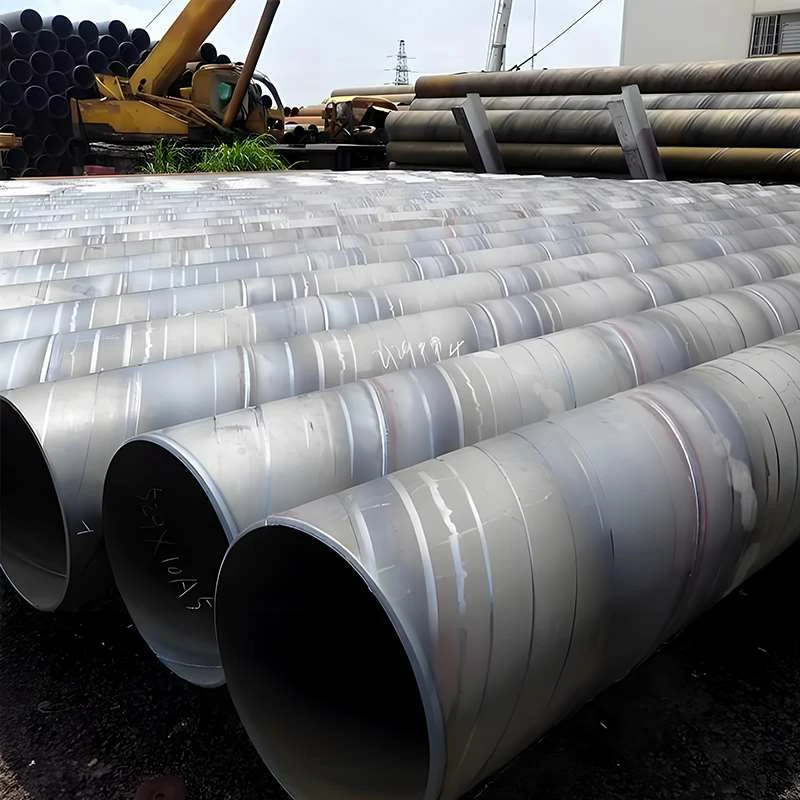
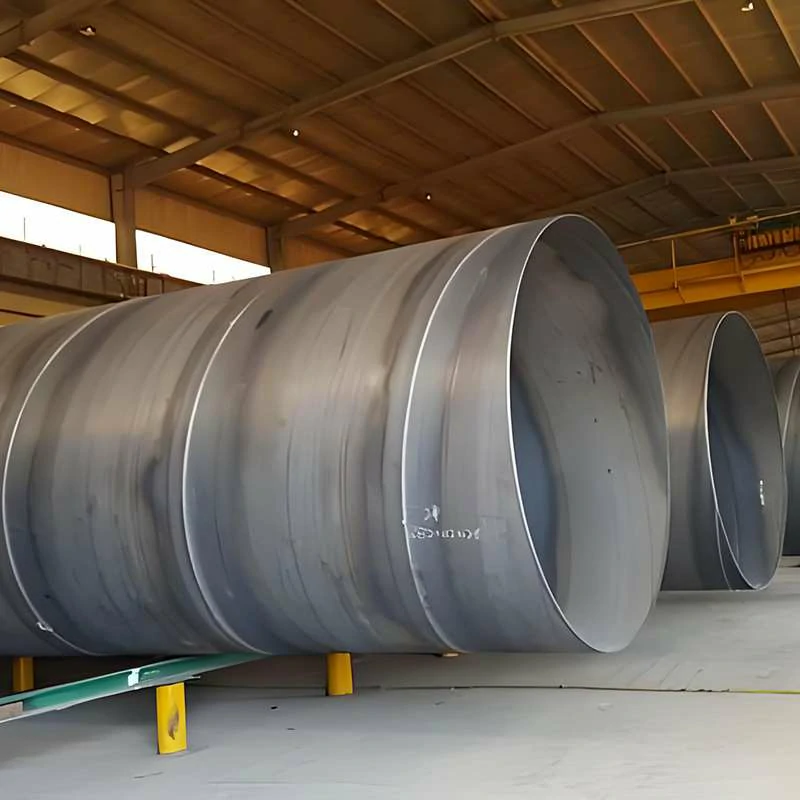
In bridge construction, fluid transmission systems, large-span steel structures, and piling projects, Spiral Submerged Arc Welded (SSAW) Steel Pipe has become an indispensable structural and transportation material due to its unique structural advantages and excellent cost-performance ratio.
However, when faced with engineering drawings filled with dimensional specifications, many buyers and engineers struggle to understand the relationship between outside diameter, wall thickness, and theoretical weight.
This guide explains the dimensional logic behind SSAW steel pipes and provides a practical size and weight reference table to help you make informed decisions during material selection, quotation evaluation, and project execution.
I. Basic Concepts: DN, Outside Diameter, and Wall Thickness
Nominal Diameter (DN)
Nominal Diameter (DN) is a numerical designation used throughout piping systems and related fittings. DN does not represent the actual outside diameter (OD) or inside diameter (ID) of a pipe. Instead, it serves as a standardized nominal size for engineering design and calculations (e.g., DN200).
Outside Diameter (OD or D)
The Outside Diameter (OD) refers to the actual external diameter of the spiral steel pipe and is typically expressed in millimeters (mm).
For example, in the Chinese market, a DN200 SSAW steel pipe commonly has an actual outside diameter of 219 mm.
Wall Thickness (T)
Wall Thickness refers to the thickness of the pipe wall. For spiral steel pipes, wall thickness directly affects pressure-bearing capacity, structural strength, and service life.
II. Theoretical Weight Calculation Formula for SSAW Steel Pipe
In most procurement contracts, spiral steel pipes are sold and settled by weight (tons). Understanding the theoretical weight formula helps buyers estimate material costs and verify delivered quantities.
The standard theoretical weight formula is:
W = (D − T) × T × 0.02466
Where:
- W = Theoretical weight per meter (kg/m)
- D = Outside diameter (mm)
- T = Wall thickness (mm)
- 0.02466 = Carbon steel density conversion coefficient (based on a density of 7.85 g/cm³ and unit conversion factors)
Example Calculation
Assume a spiral steel pipe with:
- Outside Diameter: 219 mm
- Wall Thickness: 6 mm
The theoretical weight per meter is:
(219 − 6) × 6 × 0.02466
= 213 × 6 × 0.02466
≈ 31.51 kg/m
If the standard pipe length is 12 meters, the total theoretical weight is:
31.51 × 12
≈ 378.12 kg
III. Common SSAW Steel Pipe Size, Wall Thickness, and Weight Reference Table
The following table summarizes commonly used SSAW steel pipe specifications available on the market. Since spiral steel pipe is a highly customizable product, multiple wall thickness options are typically available for the same outside diameter. Selection should be based on actual project pressure requirements.
| Nominal Size (DN) | Common OD (mm) | Typical Wall Thickness (mm) | Theoretical Weight Range (kg/m) | Recommended Applications |
|---|---|---|---|---|
| DN200 | 219 | 5.0 – 8.0 | 26.39 – 41.63 | Municipal water supply and drainage, small-diameter gas transmission |
| DN250 | 273 | 5.0 – 8.0 | 33.04 – 52.28 | Fire protection pipelines, sewage trunk lines |
| DN300 | 325 | 6.0 – 10.0 | 47.20 – 77.68 | Industrial circulating water systems, district heating pipeline casings |
| DN400 | 426 | 6.0 – 12.0 | 62.14 – 122.51 | Foundation piling, medium-span bridge supports |
| DN500 | 529 | 6.0 – 12.0 | 77.38 – 153.00 | Municipal district heating mains, wastewater treatment plants |
| DN600 | 630 | 7.0 – 14.0 | 107.54 – 212.67 | Large-scale water diversion projects, natural gas transmission networks |
| DN800 | 820 | 8.0 – 16.0 | 160.19 – 317.18 | Port piling, large-span structural projects |
| DN1000 | 1020 | 9.0 – 18.0 | 224.38 – 444.77 | Utility tunnels, high-capacity drainage pumping stations |
| DN1200 | 1220 | 10.0 – 20.0 | 298.39 – 591.84 | Heavy-duty building foundations, deep-water piling |
Note: The above figures are theoretical values calculated according to Chinese standards such as GB/T 9711 and SY/T 5037. Actual production may include a permissible negative wall thickness tolerance, resulting in a slightly lower actual weight than the theoretical value.
IV. Common Pitfalls to Avoid During Procurement and Installation
1. Do Not Focus Solely on Diameter and Wall Thickness — Verify Design Pressure Requirements
Many buyers only pay attention to specifications such as Φ529 × 10 mm while overlooking actual operating conditions.
Even with identical dimensions, pressure-bearing capacity can vary significantly depending on steel grade, such as:
- API 5L Grade B
- API 5L X52
For water transmission, oil, or gas pipeline projects, always verify:
- Operating Pressure
- Design Pressure
- Hydrostatic Test Pressure
2. Pay Attention to Negative Wall Thickness Tolerance
SSAW steel pipes are manufactured with allowable wall thickness tolerances.
If a design specifies only a nominal wall thickness of 10 mm, the actual thickness may be:
- 9.5 mm or slightly lower
- Still within the allowable standard tolerance range
However, reduced wall thickness directly affects pressure-bearing capability.
Recommendation
For high-pressure applications:
- Add a safety margin of approximately 0.5–1.0 mm
- Clearly specify a Minimum Wall Thickness Requirement in procurement documents
3. Select the Appropriate Coating System Based on Service Environment
Many pipeline failures are caused by incorrect coating selection rather than defects in the steel pipe itself.
Common Anti-Corrosion Coating Options
3PE (Three-Layer Polyethylene Coating)
- Preferred choice for buried oil and gas pipelines
- Industry-standard solution for underground applications
FBE (Fusion Bonded Epoxy)
- Suitable for elevated temperatures and specialized environments
Coal Tar Epoxy Coating
- Lower initial cost
- Reduced long-term durability compared with modern coating systems
4. Weld Quality Is the Most Critical Control Point
The structural integrity of SSAW steel pipe depends primarily on weld quality rather than the steel strip itself.
Before placing an order, confirm:
- Whether 100% UT (Ultrasonic Testing) is performed
- Whether RT (Radiographic Testing) is available
- Whether weld reinforcement treatment or weld grinding is conducted
- Compliance with API 5L, ASTM, or other applicable standards
5. Confirm Pipe Length and Transportation Requirements in Advance
The standard pipe length is typically 12 meters, but practical project challenges often include:
- Overlength transportation restrictions
- Increased on-site cutting costs
- Difficulties during lifting and installation
Recommendation
Verify whether the supplier can provide:
- Fixed-Length Production
- Custom Cutting Services
For overseas shipments, confirm the:
- Container Loading Plan
- Breakbulk Shipping Arrangement (if required)
6. Supplier Capability Matters More Than Price
One of the most common procurement mistakes is:
“Choosing the lowest-priced supplier.”
In reality, project success depends far more on supplier capability than on a small price difference.
Evaluate whether the supplier has:
- Stable SSAW production lines
- The ability to provide a Mill Test Certificate (MTC)
- Reliable delivery performance
- Support for third-party inspections such as SGS or BV
Key Takeaway
Price differences are often driven by quality control systems, inspection procedures, and manufacturing capability—not merely by raw material costs.
Selecting a qualified and reliable supplier is usually more cost-effective than choosing the lowest bidder.