
In oil, natural gas, water supply, or pile driving projects, every dimension listed on the drawings directly affects cash flow and can make or break on-site construction. Because spiral-seam submerged-arc welded steel pipes come in a wide range of diameters and specifications, even the slightest oversight in dimensional details can lead to disasters such as “purchased pipes that cannot be welded, insufficient pressure resistance, or immediate rejection by the supervising engineer.”
To help you avoid dimensional pitfalls during design, procurement, and construction, this article outlines three practical solutions to common dimensional challenges, along with a standard dimensional reference table.
I. Confusion Between Nominal Diameter (DN) and Actual Outer Diameter (OD)
Newly hired procurement staff or on-site novices often make a common mistake—placing orders based directly on the nominal diameter listed on the drawings. For example, if a drawing specifies DN500, and the manufacturer produces and ships the pipe with an outer diameter of 500 mm, you’ll find upon arrival at the construction site that it cannot be welded to valves, elbows, or flanges with a standard outer diameter of 508 mm. The entire construction crew would be forced to halt work and wait, incurring heavy daily losses.
You must distinguish between these three concepts:
- Outer Diameter (OD): The physical core of spiral welded steel pipes. When placing an order with the manufacturer, you must specify the exact outer diameter in millimeters (e.g., 508 mm).
- Nominal Diameter (DN): This is merely a designation for compatibility; it is neither the inner diameter nor the outer diameter.
- Inner Diameter (ID): Outer Diameter – (2 × Wall Thickness). This directly determines the fluid flow rate of your pipeline.
For your convenience, the table below lists the standard SSAW spiral steel pipe size conversion chart commonly used in global oil and gas and infrastructure projects:
| Nominal Diameter (DN) | International Standard Outside Diameter (Series A / Common for Oil & Gas) | Traditional Domestic Outside Diameter (Series B / Common for Water Conservancy & Structural Applications) | Common Wall Thickness Range (WT) |
|---|---|---|---|
| DN200 | 219.1 mm | 219 mm (Basically the same) | 5.0 mm – 8.0 mm |
| DN300 | 323.9 mm | 325 mm | 6.0 mm – 10.0 mm |
| DN400 | 406.4 mm | 426 mm (20 mm difference!) | 6.0 mm – 12.0 mm |
| DN500 | 508.0 mm | 529 mm (21 mm difference!) | 6.0 mm – 14.0 mm |
| DN600 | 610.0 mm (609.6 mm) | 630 mm (20 mm difference!) | 7.0 mm – 16.0 mm |
| DN800 | 812.8 mm | 820 mm | 8.0 mm – 18.0 mm |
| DN1000 | 1016.0 mm | 1020 mm | 9.0 mm – 20.0 mm |
| DN1200 | 1219.2 mm | 1220 mm | 10.0 mm – 22.0 mm |
Notes:
- Series A (International Standard Outside Diameter) is widely used in oil & gas pipelines and follows international pipe sizing practices.
- Series B (Traditional Domestic Outside Diameter) is commonly used in water conservancy, municipal, and structural engineering projects.
- The actual outside diameter selection should be confirmed according to the project specifications, applicable standards, and connection requirements.
II. Ignoring “Dimensional Tolerances” and Ending Up with Oval Pipes
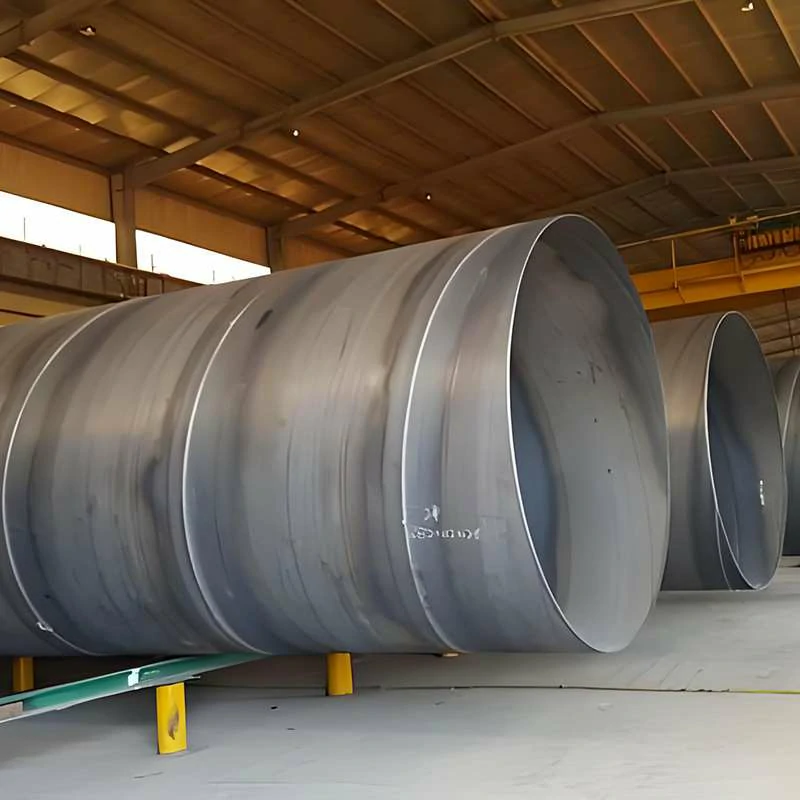
Steel production allows for reasonable errors, known as tolerances. Some buyers, in an effort to save money, do not strictly enforce tolerance clauses with manufacturers in their contracts. As a result, upon delivery, they discover that the steel pipes are “flattened” overall (excessive ovality), with some having a wall thickness of 10 mm and others only 8.5 mm (excessive negative tolerance).
Standard Thresholds:
When signing a contract with a supplier, tolerance standards must be clearly specified in writing. According to international standards such as API 5L or ASTM A252, SSAW steel pipes must meet the following tolerance thresholds:
- Outer Diameter Tolerance: For large-diameter spiral-welded pipes (≥ 508 mm), this should be controlled within ±0.75%.
- Wall Thickness Tolerance: Strictly controlled within ±10%, with no malicious negative tolerances allowed.
- Ovality: The difference between the maximum and minimum outer diameters at the pipe ends must not exceed 1% of the standard outer diameter. The rounder the pipe, the faster your on-site construction will proceed.
III. Unreasonable Design of Fixed-Length Sections
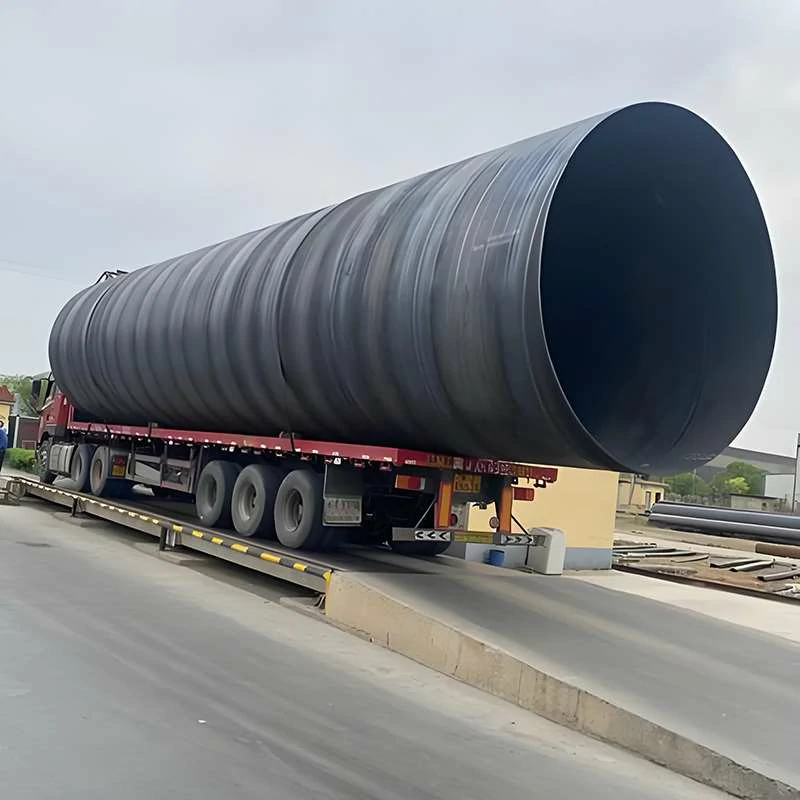
Spiral welded steel pipes are heavy and bulky. If the logistics and on-site installation requirements are not carefully considered in advance, two problems may arise:
- The pipes won’t fit in the container: Pipes measuring 12.5 meters each were ordered for export, only to discover that a standard 40-foot high-cube container (40HC) can only accommodate pipes up to 11.8 meters in length. This forced a last-minute switch to expensive bulk carrier transport, causing freight costs to skyrocket.
- On-site cutting results in nothing but scrap: The design depth for bridge pile driving is 9 meters, but you purchased the standard 12-meter pipes available on the market. Once on site, each pipe must be cut by 3 meters using a cutting torch, turning a significant amount of material costs into worthless scrap metal.
A Customized Approach:
- One of the advantages of SSAW spiral steel pipes is that the length of each pipe can be fully customized to meet specific needs (typically between 6 meters and 18 meters).
- For international exports: Be sure to specify in the contract that the fixed length per pipe is either 11.8 meters or 5.8 meters. This maximizes container space utilization and reduces ocean freight costs.
- For piling or specific engineering projects: Coordinate with the on-site construction team in advance so the manufacturer can precisely produce the required lengths (e.g., exactly 9 meters or 10 meters). These can then be transported directly to the site for welding, enabling “zero-waste” construction.