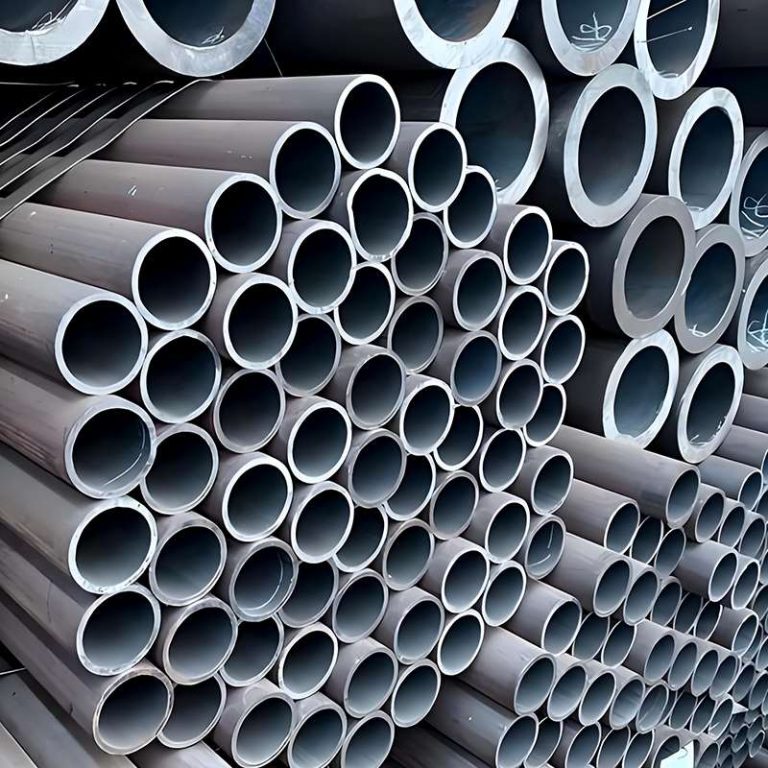
I. Introduction to ASTM A335 Alloy Steel Pipe for High-Temperature Service
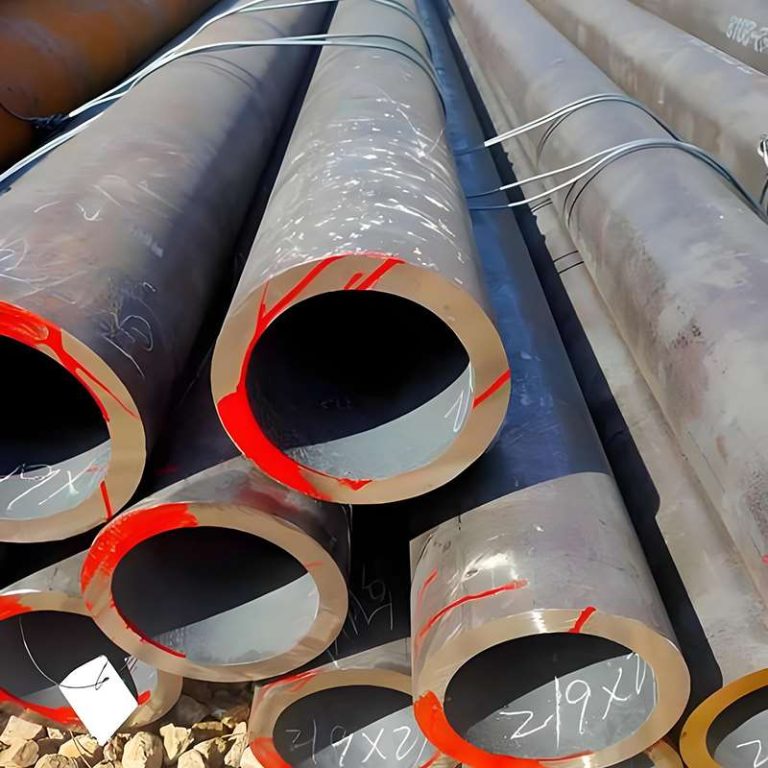
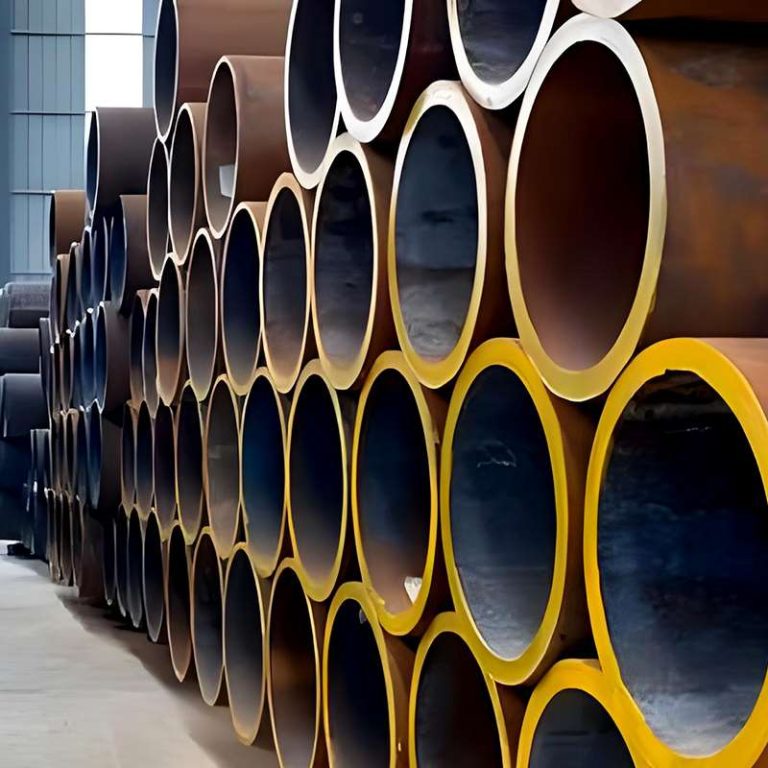
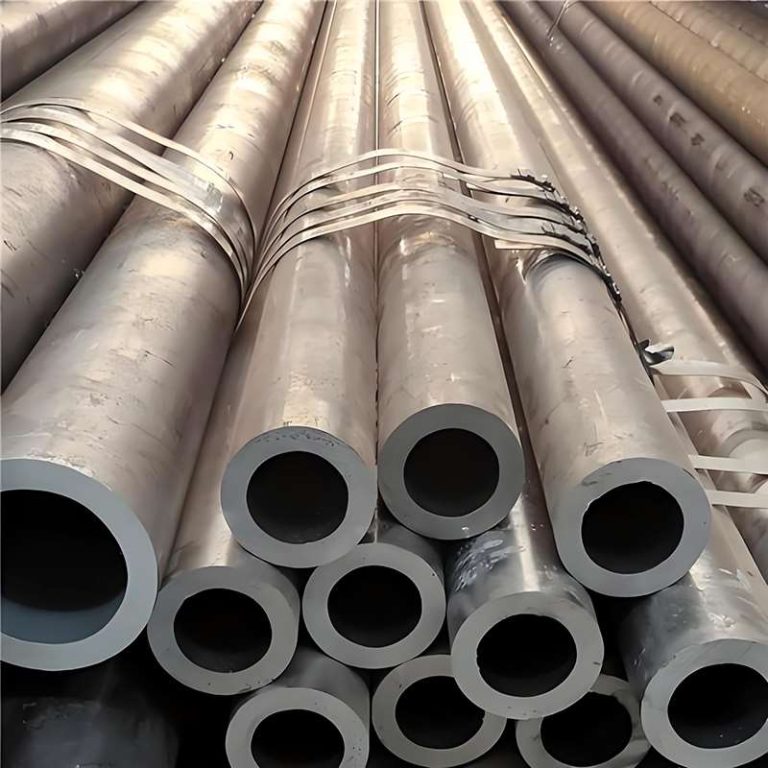
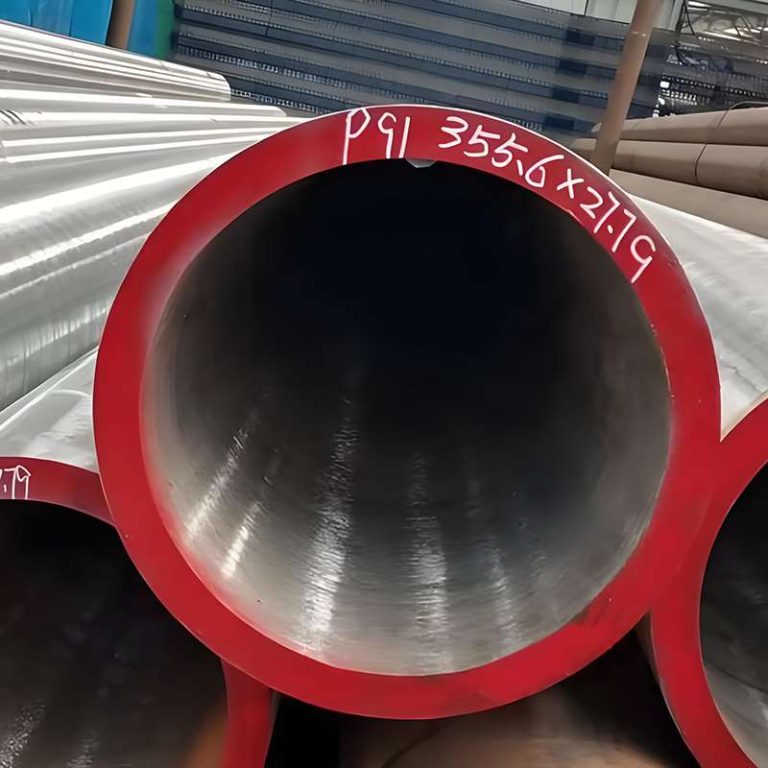
ASTM A335 alloy steel pipe for high-temperature service is an industrial piping material specifically designed for high-temperature applications. Compliant with ASTM A335 / ASME SA335 standards, it is widely used in power plant boilers, steam piping, chemical plants, and high-temperature piping systems in petrochemical facilities.
Manufactured from alloy steel, these pipes withstand high-temperature and high-pressure environments while delivering superior mechanical properties and long-term stability.
Strength and toughness can be optimized through heat treatment, annealing, or normalizing processes. The pipes support multiple wall thickness schedules (SCH10–SCH160), various diameters (1/2“–24”), and custom lengths (6–12 meters) to meet diverse engineering requirements.
Surfaces can be acid-washed or coated with rust-preventive oil, and anti-corrosion coatings can be applied at the factory to ensure pipeline safety during transportation and installation.
II. Commonly Used Grades of ASTM A335 High-Temperature Alloy Steel Pipes
| Grade | Chemical Composition Features | Service Temperature Range (℃) | Application Scenario |
|---|---|---|---|
| P1 | Carbon steel alloyed with small amounts of manganese and silicon | ≤400 | Low-temperature steam pipelines, boiler return lines |
| P5 | Moderate alloy content with added chromium and molybdenum | 400–540 | Medium-temperature steam pipelines, chemical process piping |
| P11 | Alloy steel with 1% Cr and 0.5% Mo | 450–550 | Power plant boilers, main steam supply lines |
| P22 | Alloy steel with 2.25% Cr and 1% Mo | 500–580 | High-temperature steam pipelines, high-temperature petrochemical units |
| P91 | Alloy steel with 9% Cr and 1% Mo | 550–620 | Ultra-high-temperature steam pipelines, heat exchanger systems, power plant boilers |
| P92 | Alloy steel with 9% Cr, 1% Mo, trace Nb/V | 580–650 | Ultra-high-temperature high-pressure boilers, thermal power plants, and critical petrochemical pipelines |
Note:
Higher grades exhibit greater resistance to high temperatures, typically accompanied by higher yield strength and tensile strength.
P1–P22 are commonly used in medium-to-high temperature steam and process piping, offering high cost-effectiveness.
P91/P92 are ultra-high-temperature grades used in power plant boilers, thermal power plants, and critical high-temperature piping in petrochemical facilities, where stringent mechanical properties and long-term stability are required.
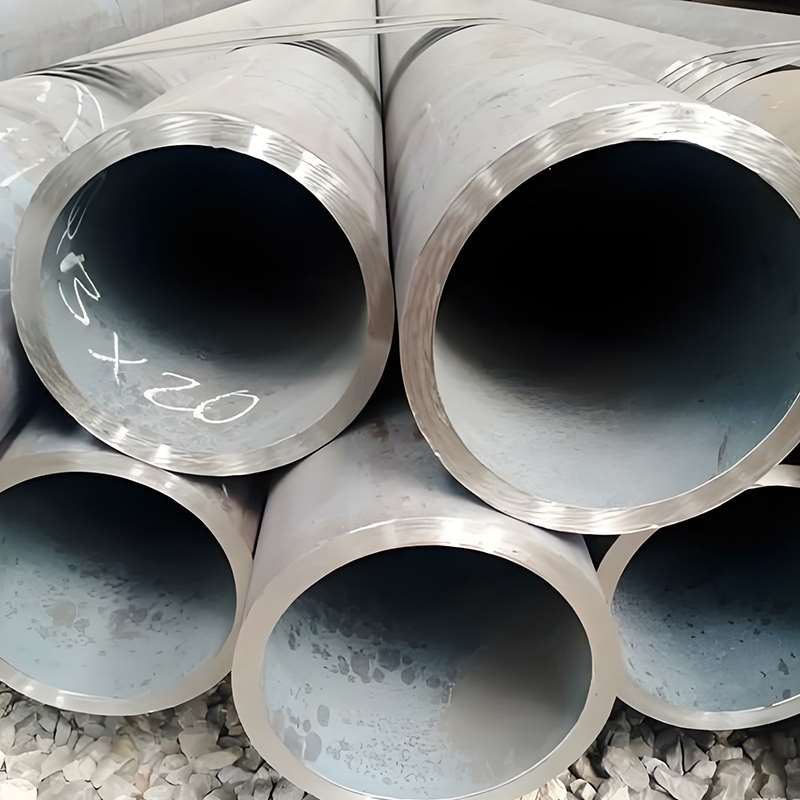
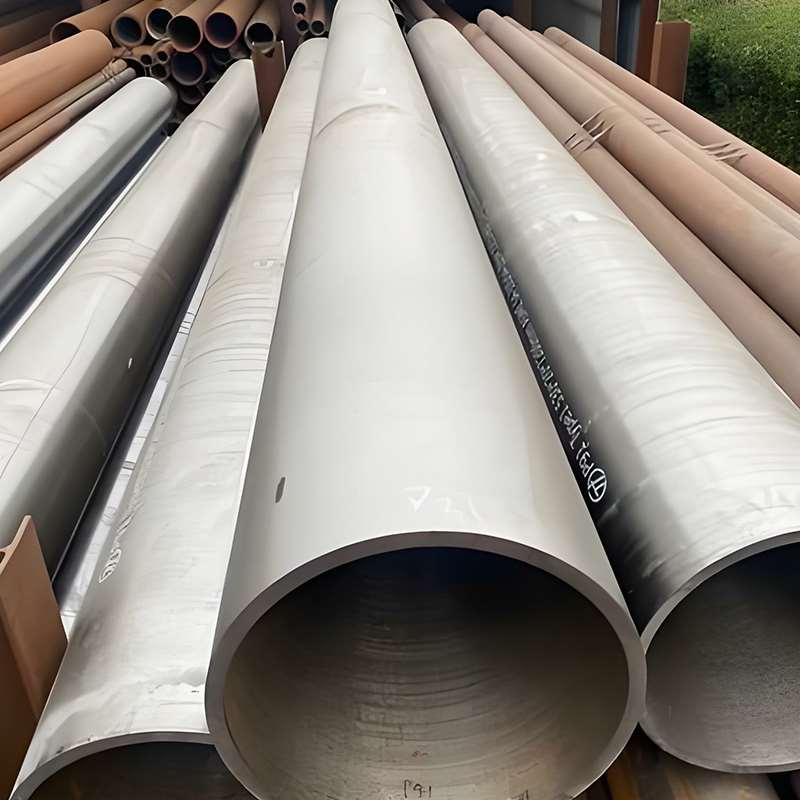
III. Chemical Composition and Mechanical Properties of ASTM A335 High-Temperature Alloy Steel Pipes
i. Chemical Composition Table (%)
| Element | P1 | P5 | P11 | P22 | P91 | P92 |
|---|---|---|---|---|---|---|
| Carbon C | ≤0.25 | 0.05–0.15 | 0.08–0.15 | 0.08–0.15 | 0.08–0.12 | 0.08–0.12 |
| Manganese Mn | 0.29–0.60 | 0.30–0.60 | 0.30–0.60 | 0.30–0.60 | 0.40–0.60 | 0.40–0.60 |
| Silicon Si | 0.10–0.35 | 0.10–0.35 | 0.10–0.50 | 0.10–0.50 | 0.20–0.50 | 0.20–0.50 |
| Sulfur S | ≤0.035 | ≤0.035 | ≤0.035 | ≤0.035 | ≤0.010 | ≤0.010 |
| Phosphorus P | ≤0.035 | ≤0.035 | ≤0.035 | ≤0.035 | ≤0.015 | ≤0.015 |
| Chromium Cr | 0.3–0.6 | 0.45–0.65 | 0.8–1.1 | 1.9–2.3 | 8.5–9.5 | 8.5–9.5 |
| Nickel Ni | 0.3–0.6 | 0.3–0.6 | 0.3–0.45 | 0.3–0.6 | 0.3–0.6 | 0.3–0.6 |
| Molybdenum Mo | – | 0.45–0.65 | 0.44–0.65 | 0.85–1.05 | 0.85–1.05 | 0.85–1.05 |
| Vanadium V | – | – | – | – | 0.18–0.25 | 0.18–0.25 |
| Cobalt Co | – | – | – | – | – | 0.30–0.50 |
ii. Mechanical Properties Table
| Steel Grade | Yield Strength σy (MPa) | Tensile Strength σt (MPa) | Elongation δ5 (%) | Impact Test (J) | Service Temperature Range (℃) |
|---|---|---|---|---|---|
| P1 | ≥205 | 415–540 | ≥20 | ≥27 | ≤400 |
| P5 | ≥240 | 415–540 | ≥20 | ≥27 | 400–540 |
| P11 | ≥275 | 415–570 | ≥20 | ≥27 | 450–550 |
| P22 | ≥310 | 415–620 | ≥20 | ≥27 | 500–580 |
| P91 | ≥415 | 585–710 | ≥20 | ≥40 | 550–620 |
| P92 | ≥450 | 620–750 | ≥18 | ≥40 | 580–650 |
Note:
- As the steel grade increases in high-temperature alloy steel pipes, the content of alloying elements such as Cr, Mo, and V rises, enhancing high-temperature resistance and creep resistance.
- P91/P92 belongs to the ultra-high-temperature steel grade, suitable for critical pipelines in power station boilers and thermal power plants, with high requirements for mechanical properties and impact toughness.
- P1–P22 is suitable for medium-to-high-temperature steam, chemical, and petrochemical pipelines, offering high cost-effectiveness.
IV. ASTM A335 Alloy Steel Pipe Selection Guide for High-Temperature Applications
- Service Condition: Low-temperature steam or boiler feedwater piping
Operating Temperature: ≤ 400°C
Recommended Grade: P1
Rationale: Carbon steel alloyed for high cost-effectiveness, suitable for medium-to-low pressure piping. Meets requirements for small or low-pressure boiler return lines and auxiliary piping.
- Service Conditions: Medium-temperature steam pipelines or chemical process piping
Operating Temperature: 400–540°C
Recommended Grade: P5
Applicability Rationale: Chromium-molybdenum alloy steel, resistant to medium-high temperatures and oxidation. Suitable for thermal cycle piping in chemical plants or steam auxiliary piping, ensuring long-term stable operation.
- Application: Power plant boiler main steam pipes, reheat steam pipes
Operating temperature: 450–550℃
Recommended steel grade: P11
Reason for suitability: Contains 1% Cr and 0.5% Mo, possesses high mechanical strength, suitable for medium-to-high temperature steam transportation, ensuring the safety of the boiler’s main steam pipes.
- Application: Refinery high-temperature steam pipes, petrochemical plant heat circulation pipes
Operating temperature: 500–580℃
Recommended steel grade: P22
Reason for suitability: Contains 2.25% Cr and 1% Mo, resistant to high temperature and high pressure, suitable for high-temperature cyclic conditions, ensuring long-term stability and safety.
- Service Conditions: High-temperature, high-pressure piping in supercritical boilers and heat exchange systems
Operating Temperature: 550–620°C
Recommended Grade: P91
Rationale: 9% chromium, 1% molybdenum alloy steel with excellent creep resistance, suitable for critical piping in long-term high-temperature, high-pressure operation.
- Service Conditions: Critical high-temperature, high-pressure pipelines in power plants; key installations in thermal power plants and petrochemical facilities
Operating Temperature: 580–650°C
Recommended Grade: P92
Reason for Selection: 9% Cr, 1% Mo, trace Nb/V ultra-high-temperature steel grade suitable for extreme high-temperature, high-pressure environments, ensuring long-term safety and stability.
- Usage Instructions:
- First, determine the steel grade range based on operating temperature and pressure.
- Then, confirm the final steel grade by considering pipeline type and specific service requirements (e.g., steam, chemical media, high-temperature petrochemical pipelines).
- Final selection can be completed by incorporating pipe diameter, wall thickness, and corrosion protection requirements.
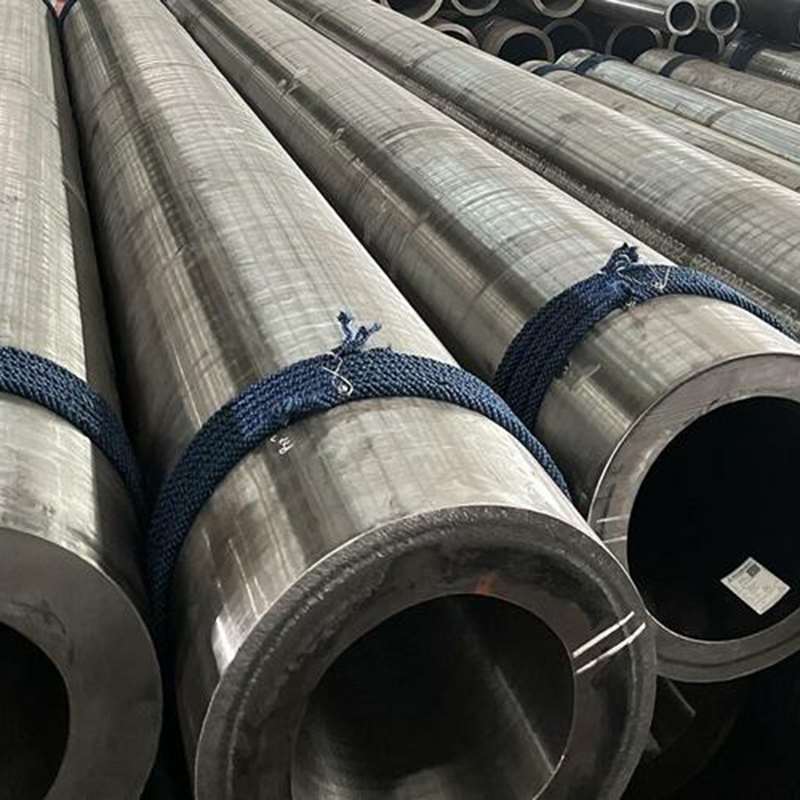
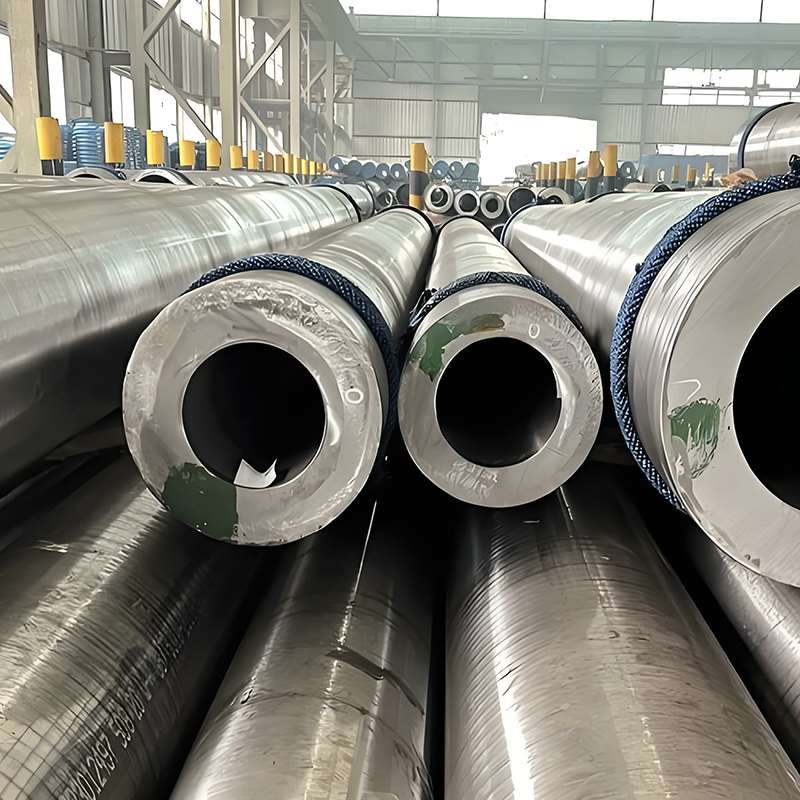
V. Manufacturing Process for ASTM A335 High-Temperature Alloy Steel Pipes
- Billet Preparation
Alloy steel billets are melted according to the selected steel grade (P1 / P5 / P11 / P22 / P91 / P92).
Chemical composition is strictly controlled to ensure alloying elements such as Cr, Mo, V, and Nb meet design requirements.
- Heating and Hot Rolling
Heat the billets to the appropriate temperature (approximately 1200°C) for hot rolling.
Hot rolling forms the preliminary seamless pipe shape, controlling outer diameter, wall thickness, and roundness to meet ASTM A335 standard requirements.
- Heat Treatment
Normalizing or annealing: Improves the microstructure of steel pipes, enhancing toughness and high-temperature resistance.
Quenching and tempering (for high-grade steels like P91/P92): Optimizes strength and creep resistance, ensuring stability during prolonged high-temperature operation.
- Dimensional Machining and Inspection
Cut to standard lengths (6–12 meters optional).
Precision-machine ends (plain or chamfered) for seamless flange/valve connections.
Inspect O.D., wall thickness, roundness, and tolerances to meet ASTM A335 / ASME SA335 standards.
- Non-Destructive Testing
Ultrasonic Testing (UT): Detects internal defects.
Magnetic Particle Testing (MT) or Radiographic Testing (RT): Inspects surface and internal defects after welding or heat treatment.
- Surface Treatment
Pickling to remove scale or sandblasting.
Coating with rust-preventive oil or epoxy resin (optional) to ensure corrosion protection during transportation and storage.
- Packaging and Shipping
Wooden pallets or steel strapping, waterproof and rustproof.
Custom lengths, bulk packaging, and anti-corrosion coating treatments available upon customer request.
VI. Common FAQs on Selecting ASTM A335 Alloy Steel Pipes for High-Temperature Applications
Q1: Which steel grade should I choose—P11, P22, P91, or P92?
A1: Selecting a steel grade depends primarily on the pipeline’s operating temperature and pressure. P11/P22 is typically chosen for medium-temperature steam pipelines, while P91/P92 should be selected for high-temperature, high-pressure boiler tubes or critical petrochemical pipelines. Over-specifying increases costs, while under-specifying may fail to meet long-term high-temperature strength requirements.
Q2: How are wall thickness and SCH schedule determined?
A2: Wall thickness must be calculated based on operating pressure and temperature. Common schedules include SCH40, SCH80, and SCH160. Excessively thin walls compromise safety, while excessive thickness increases costs and installation complexity. Calculations should incorporate pipe diameter, pressure rating, and thermal expansion coefficient.
Q3: Does heat treatment affect material selection?
A3: Yes. Ultra-high-temperature grades like P91/P92 typically require quenching and tempering or normalizing to ensure creep strength and long-term stability. Pipes without proper heat treatment may experience creep or cracking under sustained high temperatures.
Q4: How do different materials compare in terms of high-temperature resistance?
A4: High-temperature resistance primarily depends on the steel grade and alloying element content (Cr, Mo, V, Nb, etc.). Grades P1–P11 are suitable for medium-temperature conditions, P22 for high temperatures, and P91/P92 for ultra-high temperatures. Material selection should comprehensively consider operating temperature, pressure, and long-term service requirements.
Q5: Are corrosion protection and surface treatment important in material selection?
A5: Extremely important. Even if the steel grade meets temperature and pressure requirements, pipes without corrosion-resistant coatings or pickling treatment are prone to premature failure in corrosive media or humid environments. Select appropriate surface treatments and corrosion protection schemes based on operating conditions.
Q6: Do length and customization affect selection?
A6: Length and customization impact construction efficiency and cost. Standard lengths typically range from 6–12 meters. Custom lengths can reduce on-site welding frequency and improve installation efficiency. Selection should be determined based on the project’s designed length and construction method.