
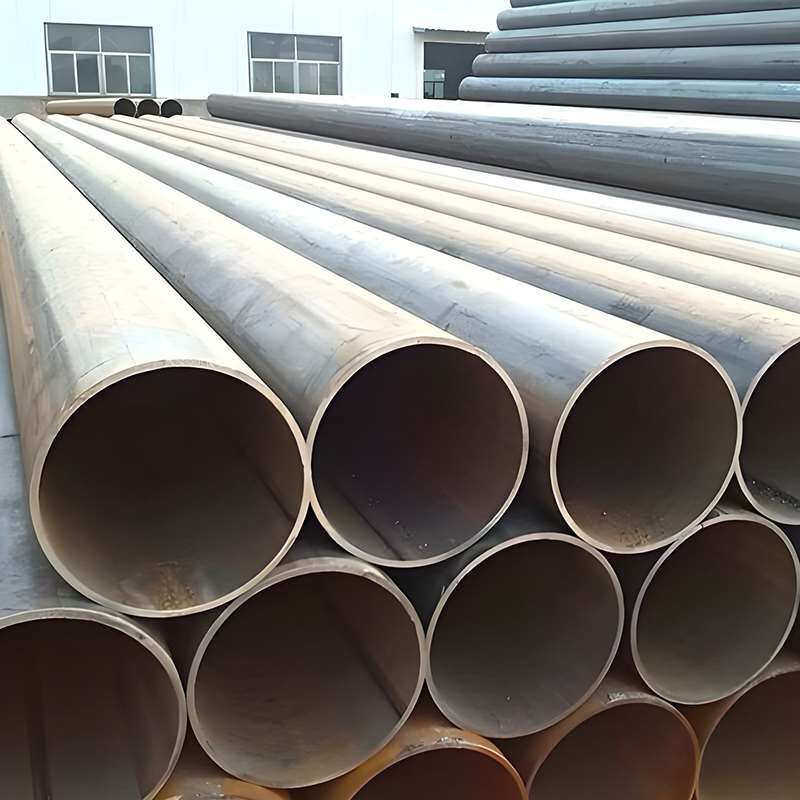
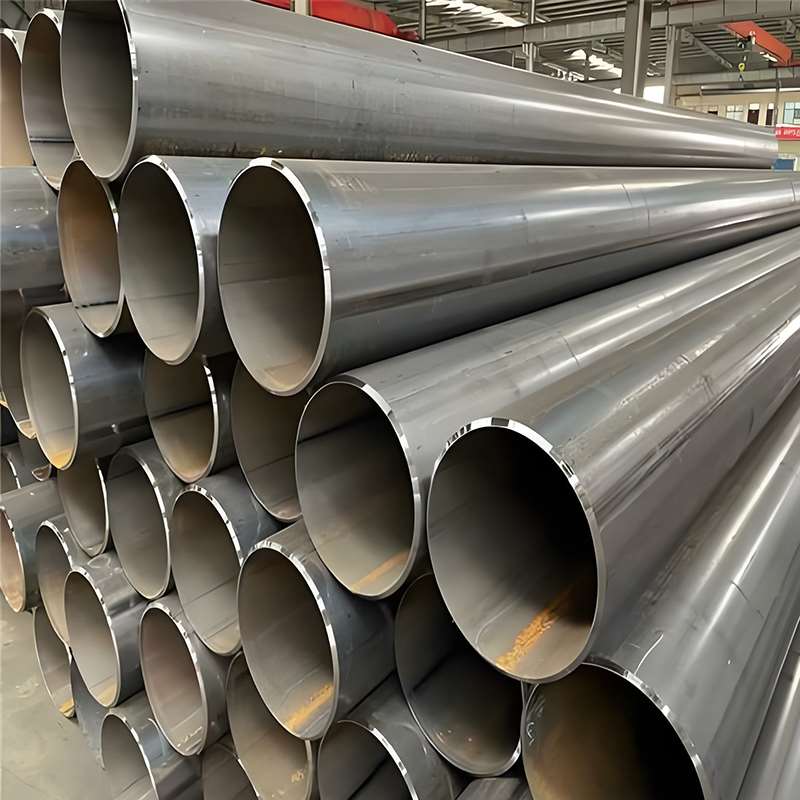
Welded carbon steel pipe is a commonly used construction material. Due to its cost-effectiveness, ease of construction, and stable mechanical properties, it is widely used in auxiliary structures in buildings.
This article will introduce the main application scenarios, advantages, and engineering usage recommendations for welded carbon steel pipes, helping engineers and project personnel make informed decisions regarding material selection and construction.
I. Main Applications of Welded Carbon Steel Pipes in Building Auxiliary Structures
i. Support Structures
Welded carbon steel pipes are commonly used in pipe racks, pipe supports, and auxiliary load-bearing supports.
They are suitable for non-critical load-bearing parts, providing reliable support while being easy to install and maintain.
ii. Non-Critical Load-Bearing Components
In lightweight building structures, welded carbon steel pipes can be used for non-critical load-bearing components such as scaffolding, fences, and railings.
These components have moderate load-bearing requirements, and welded carbon steel pipes can meet the strength requirements and ensure structural stability.
iii. Decorative and Ancillary Facilities
Welded carbon steel pipes are also commonly used in ancillary facilities such as curtain wall supports, guardrails, and railings.
They not only ensure safety but also consider architectural aesthetics and long-term durability.
II. Material Properties of Welded Carbon Steel Pipes
| Property | Typical Value / Feature |
|---|---|
| Yield strength | 235–355 MPa (depending on steel grade) |
| Tensile strength | 400–550 MPa |
| Elongation | 20–30% |
| Operating temperature | ≤350 ℃; for high-temperature service, alloy steel pipes are required |
| Corrosion resistance | Performs well in non-corrosive or mildly corrosive environments; outdoor use may require anti-corrosion coating |
| Diameter range | DN15–DN600 (customizable) |
| Wall thickness range | 2–20 mm (according to design requirements) |
III. International and Domestic Standards
| Standards System | Standard No. | Application / Description |
|---|---|---|
| ASTM (USA) | A53 / A53M | Water, steam, air, and general industrial piping |
| ASTM | A135 / A135M | Boiler and high-temperature industrial piping |
| ASME / ANSI | B36.10M | Standard for industrial pipe dimensions and wall thickness |
| EN (Europe) | EN 10255 | Building water supply and drainage, and industrial piping |
| GB (China) | GB/T 8162 | Welded pipes for general industrial structural applications |
IV. Advantages of Welded Carbon Steel Pipes
i. Convenient Construction
Welded carbon steel pipes are quick to install, and the welded connections are flexible, making them suitable for complex structural layouts.
On-site processing is convenient, and the pipe length and layout can be adjusted according to actual project requirements.
ii. Economical and Practical
Compared to seamless steel pipes or high-alloy pipes, welded carbon steel pipes are more cost-effective.
The economic advantages are particularly evident for large-diameter pipelines and large-area auxiliary structures.
iii. Stable Mechanical Properties
Under medium and low temperature and pressure conditions, welded carbon steel pipes have good compressive and tensile strength.
For auxiliary structures and non-critical load-bearing components, they can ensure long-term safe operation.
iv. Wide Range of Applications
Welded carbon steel pipes can be used in industrial plants, municipal buildings, and light building structures.
The diameter, wall thickness, and length can be flexibly selected according to project requirements, meeting the needs of different structural designs.
V. Recommendations for Engineering Applications (for welded carbon steel pipes used in auxiliary building structures)
| Item | Recommendation / Description |
|---|---|
| Selection | Choose pipe diameter and wall thickness based on load requirements; avoid using pipes for primary structural load if not designed for it |
| Welding & Construction | Strictly follow welding standards, ensure uniform welds, and perform non-destructive testing if necessary |
| Corrosion Protection | Apply anti-corrosion coating for outdoor or humid environments; decorative pipes can be galvanized or painted |
| Installation & Support | Distribute support points evenly to avoid local stress concentration and excessive bending |
| Routine Maintenance | Regularly inspect welds and pipe surfaces, and address corrosion or damage promptly |
VI. Cost and Economic Analysis
- Low material cost: Welded carbon steel pipes have a significant cost advantage compared to seamless steel pipes and high-alloy pipes.
- High construction efficiency: Welding and installation are fast, saving labor costs.
- Low maintenance costs: Proper construction and anti-corrosion treatment ensure long-term use.
- High cost-effectiveness: Suitable for large-diameter and large-area building auxiliary structures.
VII. Safety and Risk Warnings
- Not suitable for the following conditions: core load-bearing applications, high pressure, high temperature, and highly corrosive environments.
- Welding quality: Must be strictly controlled to prevent cracks, pores, and slag inclusions.
- Regular maintenance: Inspect the pipe surface and welds, and address any problems promptly.
- Corrosion protection measures: Apply coatings or galvanizing when necessary to ensure long-term durability.