
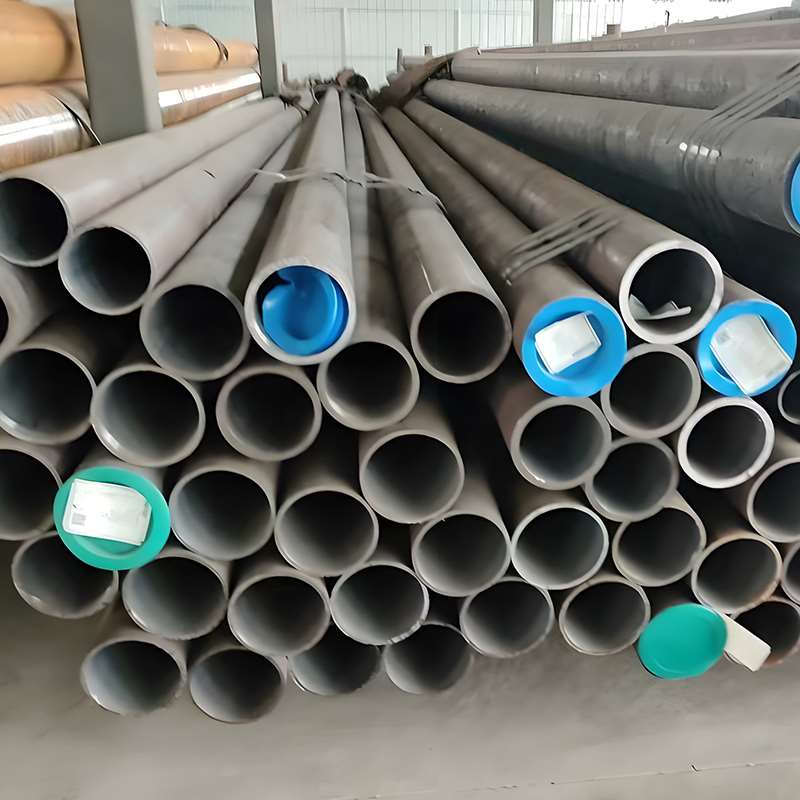
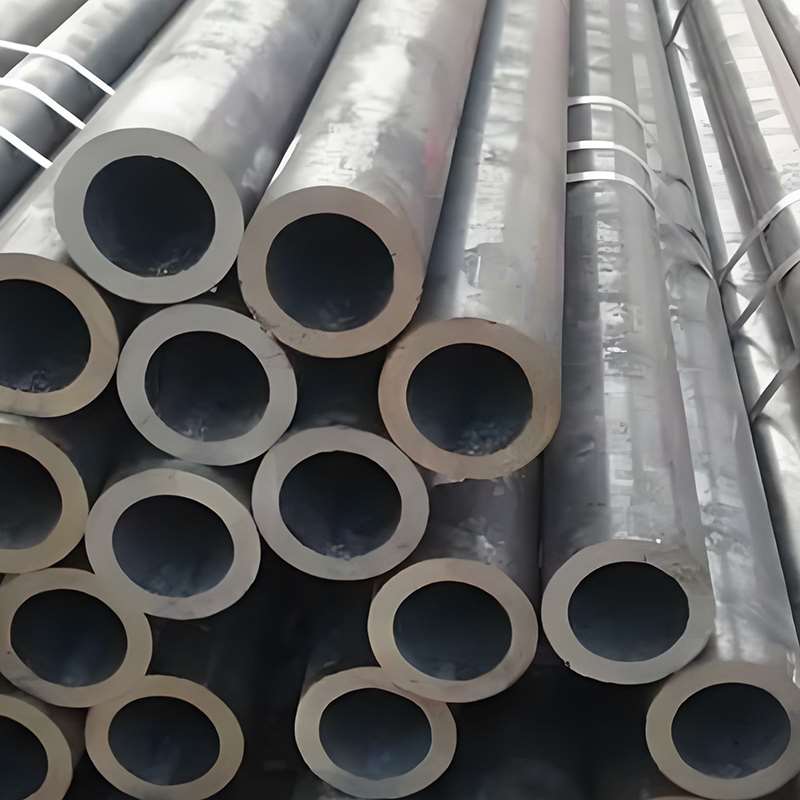
Welded carbon steel pipes are widely used in municipal low-to-medium pressure water supply and drainage and water transmission pipeline systems due to their ease of construction, cost-effectiveness, and stable mechanical properties.
They are suitable for low-to-medium pressure conditions and can effectively meet the pipeline requirements of urban water supply, drainage, and water transmission projects.
I. Main Application Scenarios for Welded Carbon Steel Pipes
- Urban Water Supply Pipelines
Used in urban water supply systems, including water supply for residential areas, industrial zones, and public facilities.
Under medium and low-pressure conditions, welded carbon steel pipes ensure stable water flow and long-term safe use.
They can be flexibly integrated with pumping stations, valves, and control systems.
- Municipal Drainage and Stormwater Pipelines
Used in rainwater drainage systems, sewage discharge systems, and combined sewer systems.
The pipes can adapt to complex terrain and network layouts.
The sealing and durability of welded carbon steel pipes help prevent leaks and corrosion.
- Water Supply Pipelines in Industrial Parks and Factories
Used for circulating water, cooling water, or domestic water supply in industrial parks.
Pipe diameters and wall thicknesses can be customized according to different flow rates and water pressure requirements.
Provides an economical, reliable, and easy-to-maintain water supply solution.
- Temporary or Auxiliary Pipeline Systems
Can be quickly installed and dismantled at construction sites or in temporary water supply and drainage projects.
Suitable for emergency water supply or temporary drainage systems.
Highly flexible, saving construction time and costs.
- Supporting Facilities and Auxiliary Pipelines
Used for pipe supports, pipe rack supports, or auxiliary water supply pipelines.
Ensures reasonable pipeline layout and stable support.
Can withstand medium and low-pressure conditions, ensuring the long-term safe operation of the pipeline system.
II. Advantages of Welded Carbon Steel Pipes
- Flexible Construction and Quick Installation
The pipes are of moderate weight, facilitating on-site handling and installation.
They can be cut and welded on-site, meeting the needs of complex pipe network layouts.
The pipe connections are flexible, allowing for quick assembly or modification.
- Economical and Cost-Effective
Lower material costs compared to seamless pipes and high-alloy steel pipes.
Significant economic advantages for large-diameter pipes and long-distance laying.
Low overall project cost and short construction period.
- Stable Mechanical Properties
Reliable pressure resistance under medium and low pressure and medium and low temperature conditions.
Good tensile, compressive, and bending strength.
Meets the long-term service requirements of municipal water supply, drainage, and auxiliary pipelines.
- Customizable Corrosion Resistance
Corrosion-resistant coatings or galvanizing treatments can be selected according to the environment.
Suitable for indoor, outdoor, and mildly corrosive environments.
Helps extend pipe service life and reduce maintenance costs.
- Wide Range of Applications
Urban water supply and drainage systems and rainwater/sewage separation pipe networks.
Circulating water transportation systems in industrial parks or factories.
Temporary pipelines and auxiliary pipeline layouts.
- Easy Maintenance and Management
Welded pipe layouts are clear, facilitating daily inspections.
Damaged sections can be quickly replaced, making maintenance convenient.
Low pipeline management costs and stable operation.
III. Frequently Asked Questions and Solutions
| Issue | Solution |
|---|---|
| Pipe welds not tight, causing leakage | Ensure strict welding procedures; perform non-destructive testing (NDT) if necessary |
| Outdoor pipe corrosion | Apply anti-corrosion coating or galvanization |
| Uneven support causing local stress concentration | Design support spacing properly to prevent bending and deformation |
| Pipe diameter mismatch affecting flow | Customize pipe diameter and wall thickness to meet different operating conditions |
IV. Material Selection and Engineering Recommendations for Welding Carbon Steel Pipes
| Item | Recommendation |
|---|---|
| Pipe diameter and wall thickness | Select based on flow rate and water pressure to ensure safety and cost-effectiveness |
| Material grade | Welded carbon steel pipe according to GB/T 8162 or ASTM A53 standards |
| Welding construction | Welds should be uniform, free of cracks and slag; perform non-destructive testing (NDT) if necessary |
| Support and installation | Supports should be evenly distributed; install main lines first, then branches to reduce local stress |
| Anti-corrosion protection | Galvanize or coat for outdoor use; for indoor use, choose protective layers based on environment |
| Maintenance and management | Regularly inspect welds, protective layers, and support points; promptly address any damage |