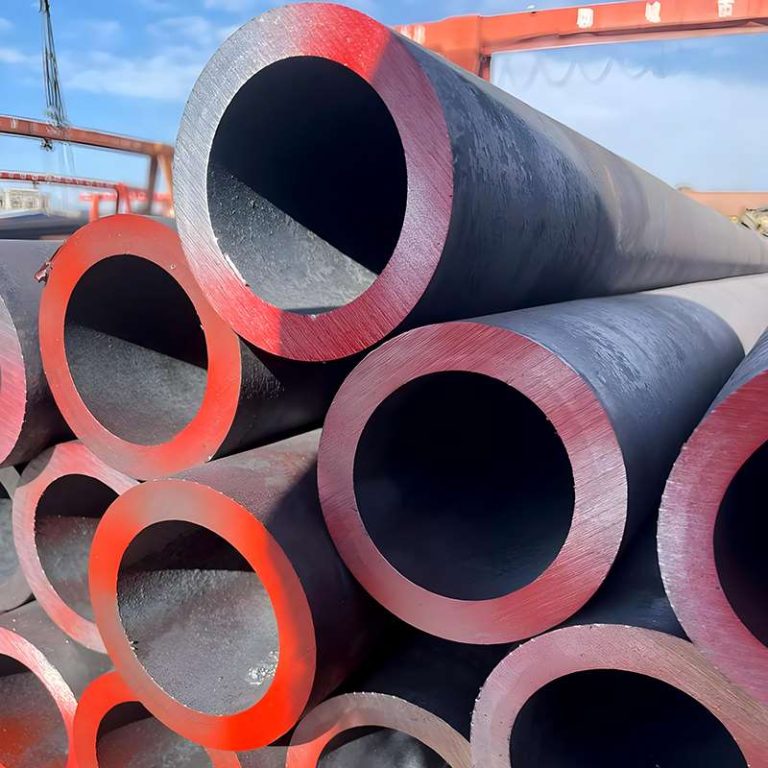
I. Overview of Alloy Pipes for Thermal Power Plants
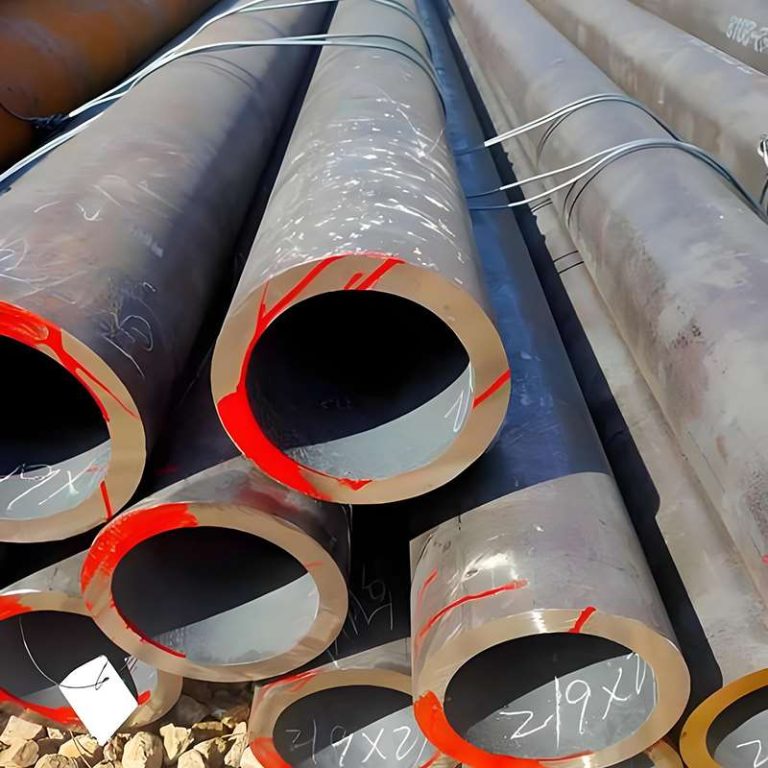
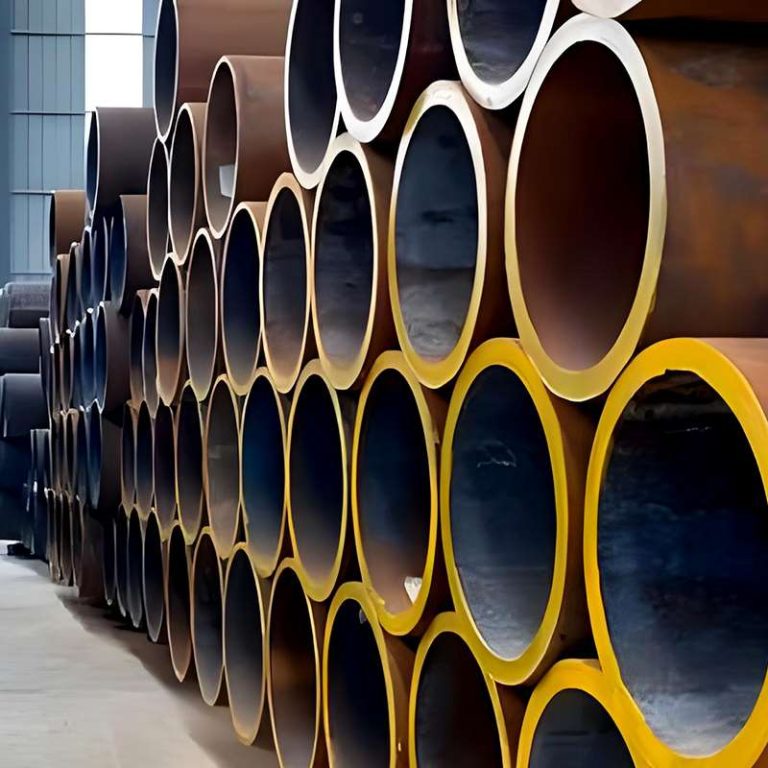
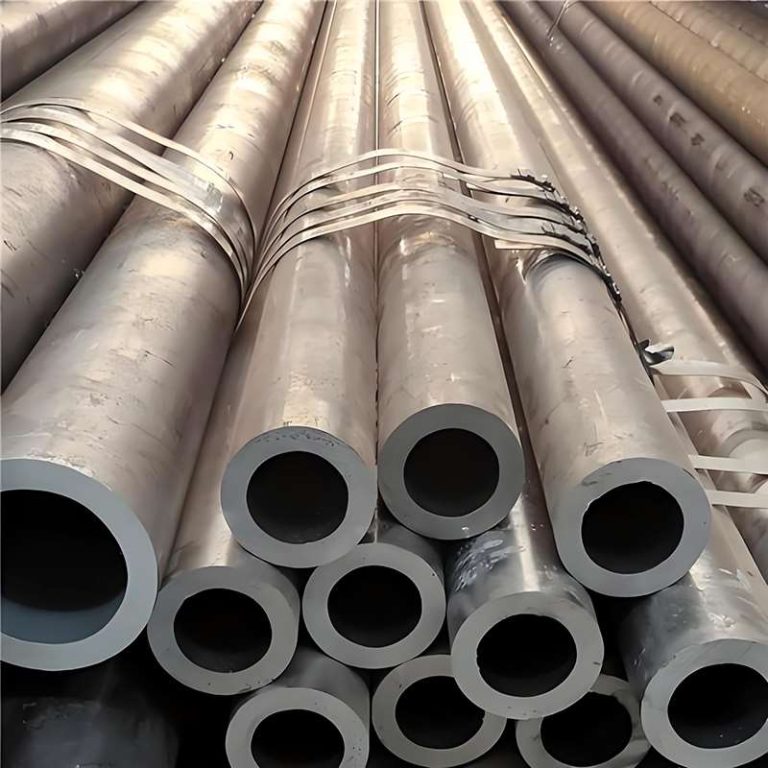
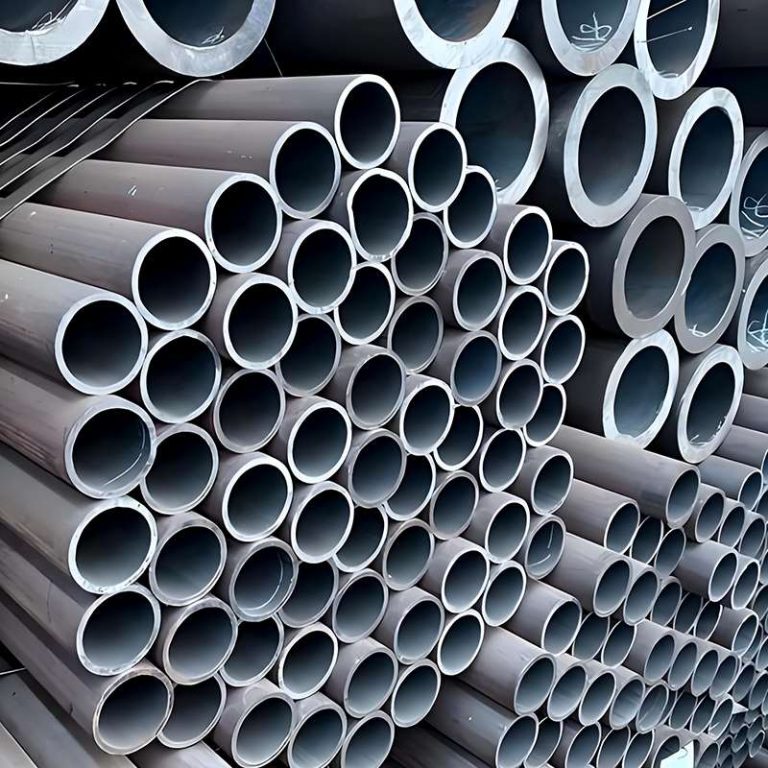
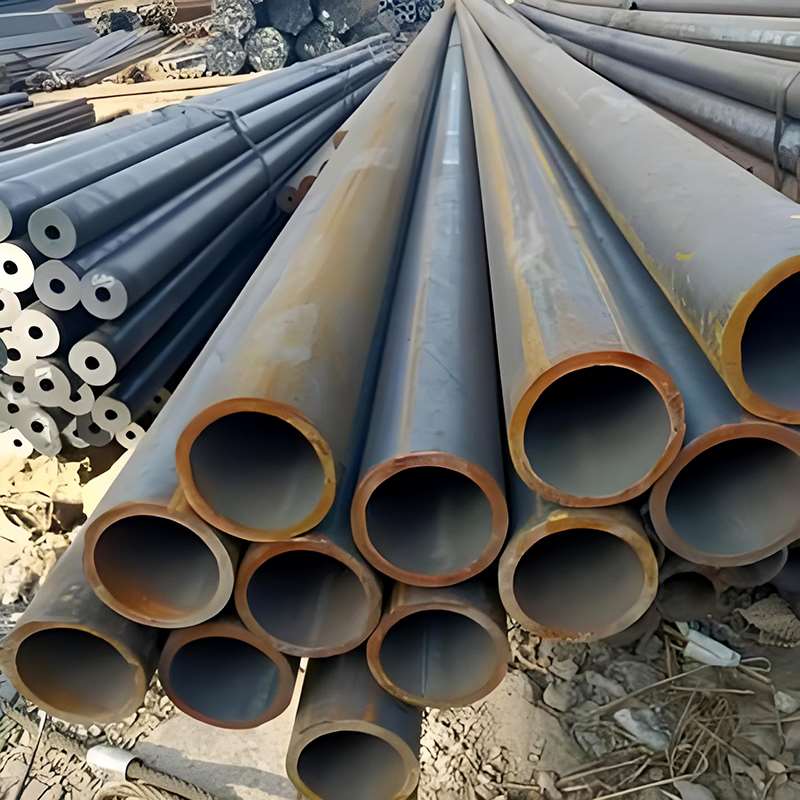
Alloy steel pipes for thermal power plants are specifically engineered for high-temperature and high-pressure operating conditions, finding extensive application in the boilers, steam piping, and heat exchange systems of thermal power generation facilities.
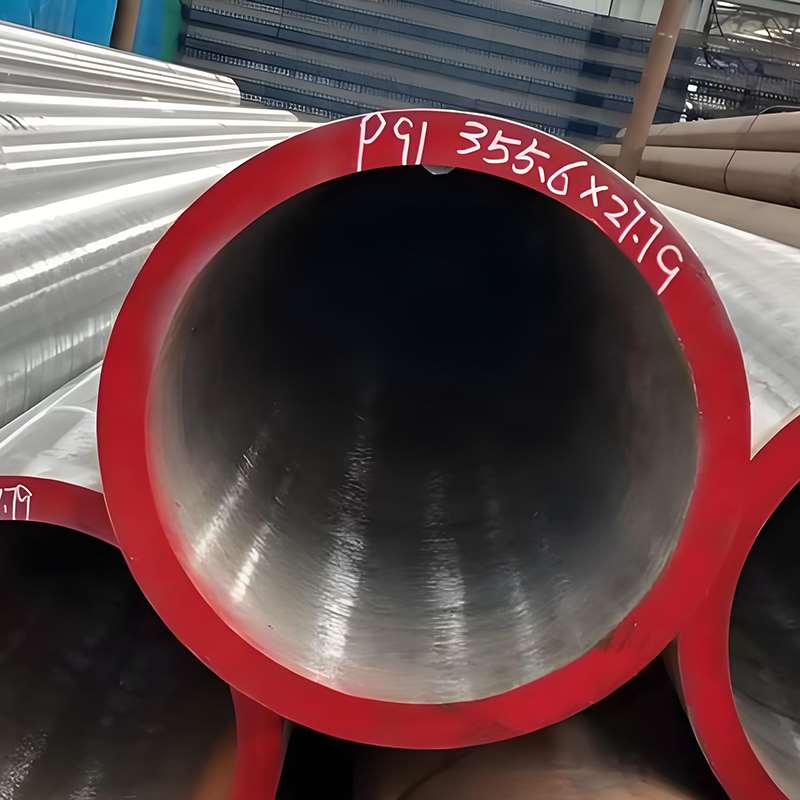
Manufactured from high-temperature alloy steels—such as grades P5, P11, P22, and P91—these pipes exhibit exceptional resistance to high temperatures, corrosion, and pressure, ensuring stable and reliable long-term performance even under extreme operating environments.
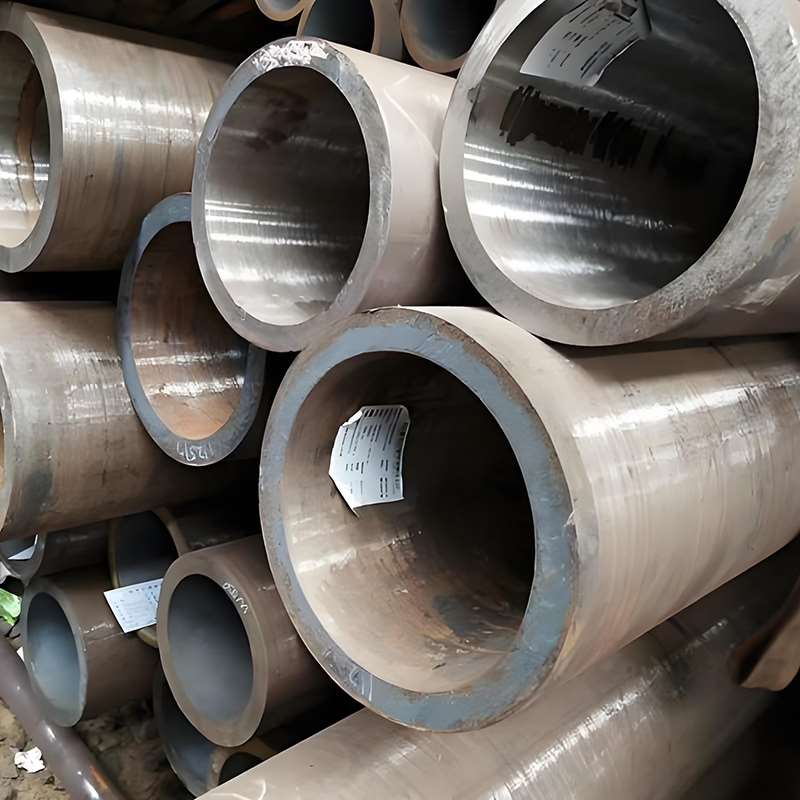
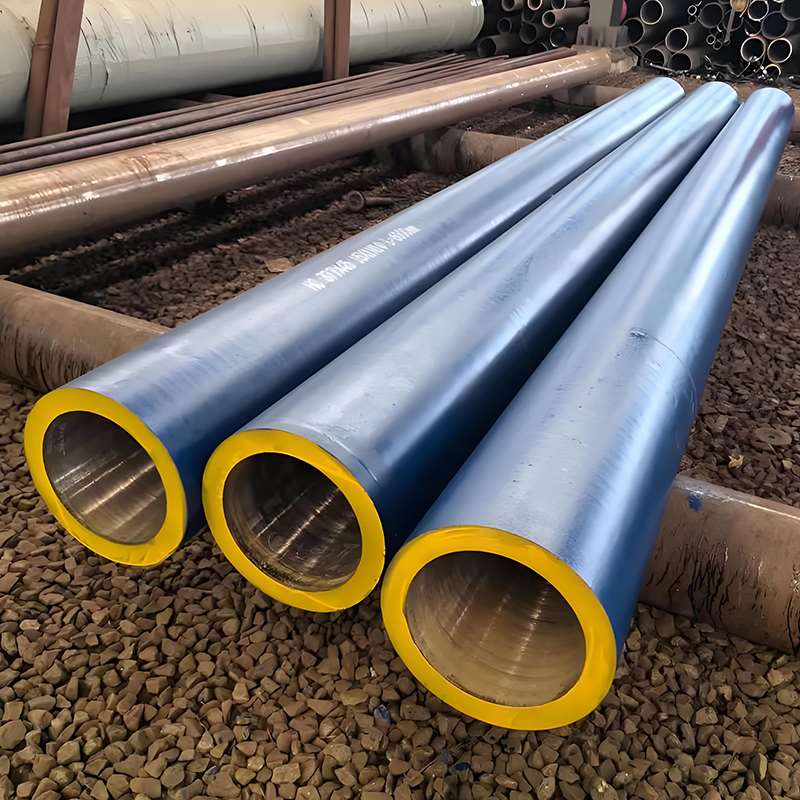
The pipe surfaces can undergo various treatments—including hot rolling, pickling, and polishing—and may be further treated with rust-inhibiting oil or protective coatings (such as epoxy or polyethylene) to ensure their integrity and safety during transportation and installation.
II. Specifications and Dimensions Table for Thermal Power Plant Alloy Pipes
| Outer Diameter (mm) | Wall Thickness (mm) | Standard Length (m) | Tolerance ± | Material / Grade |
|---|---|---|---|---|
| 21.3 | 3 – 6 | 5.8 / 6 | ±0.1 | P5 / P11 / P22 |
| 26.9 | 3 – 7 | 5.8 / 6 | ±0.1 | P5 / P11 / P22 |
| 33.7 | 3 – 8 | 5.8 / 6 | ±0.1 | P5 / P11 / P22 |
| 42.4 | 3 – 10 | 5.8 / 6 | ±0.1 | P5 / P11 / P22 / P91 |
| 48.3 | 4 – 12 | 5.8 / 6 | ±0.1 | P5 / P11 / P22 / P91 |
| 60.3 | 4 – 15 | 5.8 / 6 | ±0.2 | P5 / P11 / P22 / P91 |
| 76.1 | 5 – 18 | 5.8 / 6 / 11.8 | ±0.2 | P11 / P22 / P91 |
| 88.9 | 5 – 20 | 5.8 / 6 / 11.8 | ±0.2 | P11 / P22 / P91 |
| 114.3 | 6 – 25 | 5.8 / 6 / 11.8 | ±0.3 | P22 / P91 / P92 |
| 139.7 | 6 – 30 | 5.8 / 6 / 11.8 | ±0.3 | P22 / P91 / P92 |
| 168.3 | 8 – 35 | 5.8 / 6 / 11.8 | ±0.3 | P22 / P91 / P92 |
| 219.1 | 10 – 40 | 5.8 / 6 / 11.8 | ±0.5 | P22 / P91 / P92 |
| 273.0 | 12 – 45 | 5.8 / 6 / 11.8 | ±0.5 | P91 / P92 |
| 323.9 | 12 – 50 | 5.8 / 6 / 11.8 | ±0.5 | P91 / P92 |
| 355.6 | 14 – 50 | 5.8 / 6 / 11.8 | ±0.5 | P91 / P92 |
| 406.4 | 16 – 50 | 5.8 / 6 / 11.8 | ±0.5 | P91 / P92 |
| 508.0 | 20 – 50 | 5.8 / 6 / 11.8 | ±1.0 | P91 / P92 |
| 610.0 | 25 – 50 | 5.8 / 6 / 11.8 | ±1.0 | P91 / P92 |
Notes:
- The table above lists common specification ranges; length and wall thickness can be customized according to customer requirements.
- The material/grade corresponds to standard high-temperature piping grades used in thermal power plants, complying with ASTM A335, GB/T 9948, and EN 10216-2 standards.
- The tolerances represent the permissible ranges for pipe processing and inspection; actual tolerances may be adjusted based on applicable standards or specific customer requirements.
- End finishes are available in three options: plain ends, threaded ends, or flanged ends.
III. Standards Applicable to Thermal Power Plant Alloy Pipes
| Standard Type | Standard Number / Name | Description |
|---|---|---|
| American Standard ASTM | ASTM A335 / A213 / A179 | Alloy steel pipes for high-temperature service, suitable for boilers and steam pipelines |
| Chinese Standard GB/T | GB/T 9948 / GB/T 5310 | High-temperature alloy steel pipe standards covering boiler pipes, heat exchanger pipes, and high-temperature pipelines |
| European Standard EN | EN 10216-2 / EN 10217 | Seamless steel pipe standards for high-temperature and high-pressure industrial pipelines |
| Boiler-Specific Standard | ASME SA335 / SA213 | US Boiler and Pressure Vessel Code, ensuring reliability under high temperature and pressure |
| Testing & Certification Standards | ISO 9001 / ISO 14001 / PED 2014/68/EU (Pressure Equipment) | Ensures pipe production quality, environmental management, and pressure equipment compliance |
Reference Table: Standards and Corresponding Material Grades
| Standard | Common Material Grades / Steel Grades |
|---|---|
| ASTM A335 | P5 / P9 / P11 / P22 / P91 / P92 |
| ASTM A213 | TP5 / TP9 / TP11 / TP22 |
| GB/T 9948 | 5CrMo / 9CrMo / 12CrMo / 15CrMo / 12Cr1MoV |
| GB/T 5310 | 12Cr1MoV / 15CrMoG / 12Cr1MoVG |
| EN 10216-2 | P235GH / P265GH / 13CrMo4-5 / 15CrMoG |
| EN 10217-2 | P235GH / P265GH / 13CrMo4-5 / 15CrMoG |
| ASME SA335 | P5 / P9 / P11 / P22 / P91 / P92 |
| ASME SA213 | TP5 / TP9 / TP11 / TP22 |
IV. Application Fields for Thermal Power Plant Alloy Piping
- Thermal Power Plant Boilers and Steam Systems
- Boiler Main Steam Piping, Superheater, and Reheater Piping: Subject to high temperatures (≥540°C) and high pressures (≥16 MPa), these components require piping materials that possess high-temperature strength, creep resistance, and thermal fatigue resistance.
- Feedwater Piping and Steam Return Piping: Continuously exposed to cyclic thermal stresses and corrosive media over extended periods; these applications require materials characterized by structural stability, excellent weldability, and suitability for periodic inspection and maintenance.
- High-Temperature Piping in Chemical and Petrochemical Industries
- Reactors, High-Temperature Heat Exchangers, and Steam Transport Pipelines: Operating environments may contain corrosive gases or liquids; therefore, the piping materials must not only withstand high temperatures and pressures but also possess resistance to corrosion and oxidation.
- High-Temperature Process Circulation Systems: Piping design requires precise dimensional accuracy and thermal expansion compensation to prevent stress concentration, which could lead to premature failure.
- Metallurgy and Industrial Heat Treatment Systems
- High-Temperature Furnace Tubes, Hot Air Ducts, Carburizing Furnaces, and External Gas Flow Piping: These applications require piping materials capable of enduring prolonged high-temperature stress, thermal cycling fatigue, and localized corrosion.
- Material grades and wall thicknesses must be selected with precision—based on operating temperatures and the corrosivity of the medium—in order to maximize service life.
- Other High-Temperature, High-Pressure Industrial Piping Systems
- This category includes systems for papermaking, food-grade steam, petrochemicals, and high-temperature fluid transport.
- Under non-standard operating conditions, the selection of materials and wall thicknesses must be determined comprehensively—taking into account pressure, temperature, medium, and flow rate—to ensure both safety and cost-effectiveness.
V. Selection Guide for Thermal Power Plant Alloy Piping
- Material Grade Selection — Centered on Temperature and Pressure
- Low-to-Medium Temperature and Pressure (≤300°C, ≤10 MPa): Grades P5 and P9 satisfy requirements and offer high cost-effectiveness.
- Medium-to-High Temperature and High Pressure (300–540°C, 10–25 MPa): Grades P11 and P22 are the mainstream choices, balancing high-temperature strength with cost considerations.
- High Temperature and Ultra-High Pressure (≥540°C, ≥25 MPa): Grades P91 and P92 feature high material strength and superior creep resistance, making them suitable for long-term operation.
- Material Selection Principle: Always prioritize safety margins, service life, and maintenance cycles; avoid the sole pursuit of low-cost materials.
- Wall Thickness and Pipe Diameter Matching — Dual Considerations of Pressure and Flow Velocity
- High-pressure piping requires increased wall thickness to withstand internal pressure; for pipes with large diameters, thermal expansion and bending stresses must also be taken into account.
- Wall thickness selection should be determined based on relevant standards (e.g., ASTM A335, GB/T 9948, EN 10216-2) in conjunction with engineering safety factors.
- Surface Treatment and Corrosion Protection Selection—Solutions Driven by Media Characteristics
- Corrosive Media: The selection of an epoxy lining or polyethylene coating can significantly extend the service life of the piping.
- Non-corrosive Media: Simple anti-rust oil application or hot-rolled polishing suffices, thereby reducing costs.
- Surface treatment also impacts weld quality; therefore, specific process requirements must be clearly defined prior to construction.
- End Configurations and Lengths—Optimizing for Construction Convenience
- Plain Ends: Facilitate welded connections and are the preferred choice for high-temperature and high-pressure systems.
- Threaded Ends / Flanged Ends: Suitable for temporary or detachable connections, offering ease of maintenance.
- Length Selection: Standard lengths include 5.8m, 6m, and 11.8m; however, lengths can be customized based on the specific site layout to minimize the number of field welds required.
- Safety and Maintenance Considerations
- High-temperature and high-pressure pipelines should be inspected periodically for corrosion, wall thickness, and creep.
- High-grade materials (such as P91 and P92) entail higher initial costs but offer superior economic efficiency by extending service life and reducing the frequency of maintenance and replacement.
VI. Inspection Standards for Alloy Pipes in Thermal Power Plants
| Test Item | Test Content | Technical Requirement / Acceptance Criteria | Description & Value |
|---|---|---|---|
| Visual Inspection | Surface cracks, pores, looseness, scabs, shrinkage | Surface should be smooth and free of obvious defects | Ensures welding and transport safety, preventing early failure |
| Dimensional Measurement | Outer diameter, wall thickness, length | OD tolerance ±0.5% or ±0.10 mm; wall thickness tolerance ±10%; length tolerance +50/-0 mm | Ensures installation fit and system pressure capacity |
| Straightness Test | Pipe bending or warping | Straightness deviation ≤ 0.2% of pipe length | Improves installation accuracy and reduces welding stress on site |
| Chemical Composition Test | C, Mn, P, S, Si, Cr, Mo, V, etc. | Controlled according to material grade standard (e.g., ASTM A335 P22: C≤0.15%, Mn≤0.60%) | Ensures high-temperature strength, corrosion resistance, and design life |
| Mechanical Properties Test | Yield strength, tensile strength, elongation, impact toughness | According to standard requirements (e.g., ASTM A335 P91: σy ≥ 585 MPa, σb ≥ 740 MPa) | Ensures reliability of pipes under long-term high-temperature and high-pressure service |
| Non-Destructive Testing (NDT) | Ultrasonic, radiographic, or magnetic particle testing | No cracks, pores, or inclusions | Detects potential defects early, ensuring pipeline safety |
| High-Temperature Creep Performance | Long-term loading tests at high temperature | Meets P91, P92 material high-temperature creep limit requirements | Guarantees stable long-term operation under high-temperature and high-pressure conditions |
| Pressure Test | Hydrostatic or pneumatic testing | Per standard, generally 1.5–1.75 times the design pressure | Verifies pipe and weld joint pressure capacity, ensuring system safety |
VII. Frequently Asked Questions (FAQ)
1. How do I select the appropriate material grade for high-temperature and high-pressure operating conditions?
Answer:
Material grade selection should be based on the pipeline’s operating temperature and pressure:
- ≤ 300°C: Grades P5 and P9 are sufficient and offer high cost-effectiveness.
- 300–540°C: Grades P11 and P22 are the mainstream choices, balancing high-temperature strength with cost considerations.
- ≥ 540°C or High-Pressure Steam: Grades P91 and P92 are more suitable, offering superior creep resistance and a longer service life.
Recommendation: When selecting materials, prioritize safety margins and long-term operating costs rather than simply pursuing the lowest price.
2. How are the pipe wall thickness and outer diameter determined?
Answer:
- The wall thickness and pipe diameter should be determined by comprehensively considering internal pressure, flow rate, and thermal expansion:
- For high-pressure steam pipelines, the wall thickness must be increased to meet the specified design pressure and safety factors;
- For pipelines with larger diameters, factors such as thermal expansion, bending stress, and on-site installation feasibility must be taken into account.
Recommendation: It is advisable to select pipe specifications based on the standard ranges outlined in ASTM A335, GB/T 9948, or EN 10216-2 to avoid the need for on-site modifications.
3. Pipelines are susceptible to corrosion or damage during long-term use; how can they be protected?
Answer:
- For corrosive media or high-temperature oxidizing environments: Epoxy or polyethylene coatings may be selected;
- For general steam or water media: The application of rust-inhibiting oil or acid pickling and polishing is typically sufficient;
- Regular inspections, cleaning, and wall thickness measurements can effectively extend the service life of the pipeline.
4. What factors should be considered when selecting and installing pipe end types?
Answer:
- Plain Ends: Suitable for welded connections; the preferred choice for high-temperature and high-pressure systems.
- Threaded Ends / Flanged Ends: Suitable for temporary or detachable piping systems, facilitating easier maintenance.
Recommendation: Select the appropriate end type based on on-site installation conditions and the required frequency of system maintenance to minimize welding-related risks and reduce maintenance costs.
5. How can one ensure that pipe quality complies with applicable standards?
Answer:
- Verify the manufacturer’s adherence to relevant standards (e.g., ASTM A335, GB/T 9948, EN 10216-2, ASME SA335, etc.).
- Request Material Test Certificates (MTCs) and third-party inspection reports, which should include data on chemical composition, mechanical properties, and non-destructive testing results.
- Specify detailed inspection requirements within the procurement contract to ensure that the pipes meet design specifications immediately upon leaving the manufacturer’s facility.
6. Given the high cost of high-grade materials, is the investment justified?
Answer:
- High-grade materials (such as P91 and P92) entail higher initial costs; however, they offer superior resistance to high temperatures and creep, resulting in a significantly longer service life.
- In terms of long-term operational and maintenance costs, these materials reduce the frequency of replacements and the expense of repairs, thereby offering superior overall economic efficiency.
Recommendation: Base your decision on the total lifecycle cost of the piping system, rather than focusing solely on the one-time purchase price.