
In oil and gas pipeline projects, what site managers and procurement supervisors fear most isn’t overtime—it’s “unexpected problems.”
Just when they think everything is going according to plan, the moment the pipes arrive on site, all sorts of unforeseen complications arise one after another: welds keep cracking, the pipes are out of round and won’t line up no matter what, and even after they’ve been buried with great difficulty, they quietly corrode and leak a few years later… Failure to properly resolve any of these issues can lead to work stoppages, cost overruns, or even serious safety incidents involving liability.
Today, we won’t delve into broad, theoretical concepts. Instead, we’ll focus on the three core pain points commonly encountered in oil and gas pipeline construction—and how to address them using high-standard API 5L spiral welded steel pipes.
I. Getting the Pipes to Line Up on Site Is Next to Impossible, and Construction Progress Hits a Snag Every Day
- The Challenges You Face:
Often, in an effort to save money, you end up buying pipes produced by low-end manufacturers. When you unpack them at the remote construction site, you discover that one end of the steel pipe is larger than the other, or that the pipe ends aren’t round at all—they’re oval-shaped. On-site welders, hoisting pipes weighing several metric tons, try jacking them into position with a jack or prying them with a crowbar, but the two pipe ends simply won’t align. The bevel edges vary in thickness, and the bevel angles are all over the place. - The resulting problems:
The on-site schedule was brought to a complete standstill. To force the pipe ends to align, welders had to spend hours on-site using cutting torches to modify the bevels and grind them down. What used to be 10 welds per day was now reduced to just 3. Not only were labor costs and crane rental fees eating into the budget day after day, but the forced alignment also created massive internal stresses within the pipe ends, making them highly prone to cracking later on. - Our Solution:
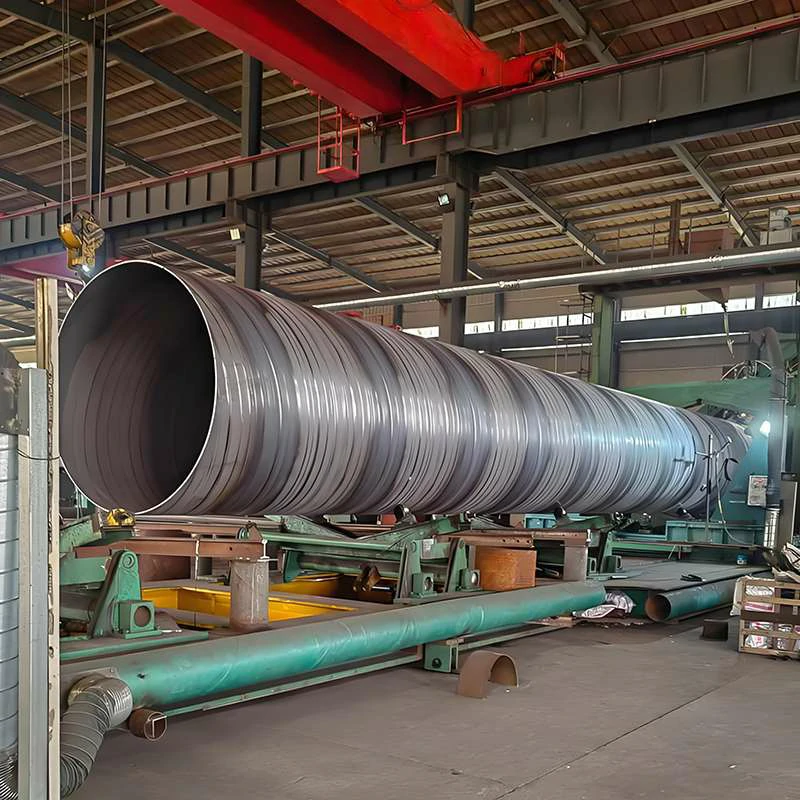
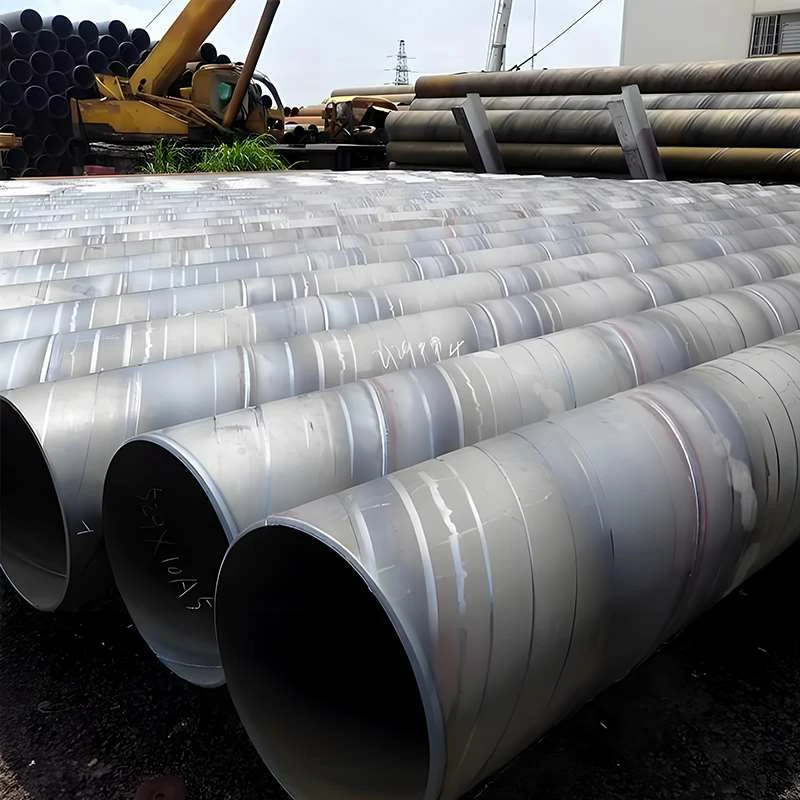
API 5L spiral steel pipes are manufactured using continuous forming and double-sided submerged arc automatic welding processes. Before shipment, every pipe undergoes high-precision mechanical machining of the pipe ends and rigorous roundness and dimensional inspections. - Value to You:
The steel pipes delivered to the site exhibit highly consistent roundness and standardized groove angles. During on-site construction, the pipe ends “align perfectly upon placement and pass inspection upon welding.” Your welders won’t have to endure the elements while using angle grinders in the open air, and project progress will be maximized.
II. Welds Fail Non-Destructive Testing and Are Repeatedly Reworked Until They Fail
- The challenges you face:
Oil and gas trunk lines have a zero-tolerance policy for safety. Supervisors are on-site daily with X-ray (RT) or ultrasonic (UT) equipment to perform non-destructive testing. If the weld quality of the pipe itself is substandard—with internal defects such as porosity, slag inclusions, or lack of fusion that are invisible to the naked eye—the test results will show the film covered in black spots, leading to an immediate rejection during acceptance inspection. - The Resulting Problems:
If even one spot fails inspection, the weld must be cut open, the groove re-cut, the weld re-done, and the inspection repeated. Repeated exposure to high-temperature welding causes the steel to become brittle. Daily rework not only demoralizes the construction crew but may also result in massive claims from the owner due to missed deadlines. - Our Solution:
For oil and gas pipeline projects, we must adhere to the API 5L PSL 2 standard. This is more than just a certificate—it represents the rigorous quality control we perform for you right here in our factory: Before leaving the factory, every steel pipe undergoes 100% full-length, in-line dual non-destructive testing using ultrasonic and X-ray methods. Any minor internal defects are identified and the pipe is scrapped before shipment. - The Value We Provide:
We eliminate all risks at our factory before shipment. Once the pipes arrive at your site, as long as your on-site welders are skilled, the first-pass weld inspection pass rate can reach over 98%. You won’t have to spend your days anxiously waiting for inspection reports, and your project will pass acceptance testing with ease.
III. Quiet Perforations After Just a Few Years Underground; Production Halts and Emergency Repairs Result in Heavy Losses
- The Challenges You Face:
The vast majority of oil and gas pipelines are buried in soil or run through damp swamps and rivers. If the pipes lack sufficient resistance to external forces or have poor corrosion protection (some are even coated with just a single layer of asphalt paint), as soon as they are buried, acidic and alkaline substances in the soil, groundwater, and plant roots will begin to aggressively corrode the steel pipes. - The Resulting Problems:
Within as little as two or three years, or as long as four or five years, the pipe walls will be completely corroded through, leading to oil and gas leaks. At that point, you’ll not only face massive fines for environmental pollution but also astronomical losses from prolonged production shutdowns, site closures, and large-scale excavation for emergency repairs. For any project manager, this is a career-ending disaster. - Our Solution:
We offer an integrated solution ranging from high-toughness base material (API 5L premium pipeline steel) to a flawless 3PE external anti-corrosion coating. The pipeline steel itself has undergone rigorous low-temperature Charpy impact testing and possesses exceptional tensile strength, even in the event of minor geological subsidence; The outer 3PE coating is applied via thermal spraying after large-scale shot blasting and rust removal in the factory, ensuring high peel strength. - The Value We Deliver:
We equip your steel pipes with “bulletproof armor.” Once buried underground, they can operate for 30 or even 50 years without major repairs. The operations team will only need to perform simple routine inspections, helping you reduce long-term maintenance costs to zero.