
In long-distance water conveyance projects—such as inter-regional water transfers, urban water supply trunk lines, and agricultural irrigation—spiral-welded submerged-arc-welded steel pipes have consistently dominated pipe selection due to their large diameters and high pressure-bearing capacity.
However, during actual bidding, procurement, and acceptance processes, many engineering projects often place excessive emphasis on the “unit price per metric ton” while neglecting critical technical details regarding corrosion protection quality and wall thickness tolerances. This not only risks frequent disputes at construction sites but also creates serious safety hazards—such as pipe ruptures, leaks, and secondary water contamination—once the pipelines are put into service.
This article outlines four common misconceptions regarding corrosion protection and wall thickness in the selection of spiral-welded steel pipes for water conveyance projects, helping engineering designers, procurement managers, and supervision teams accurately avoid these pitfalls and build cost-effective pipelines.
I. Focusing Only on “Rust Prevention” for Internal Wall Corrosion Protection, While Neglecting “Drinking Water Grade” and Hydraulic Performance
In water transmission pipelines, internal wall corrosion protection not only affects the pipeline’s service life but also directly determines the safety of the transported water quality and the energy costs associated with long-distance water transmission.
Key Points to Avoid Pitfalls:
- Must possess drinking water safety certification: When transporting tap water or raw water, the internal coating must strictly comply with national drinking water hygiene standards, ensuring the absence of harmful substances such as heavy metals and organic solvents.
- Neglecting Internal Surface Smoothness Leads to Skyrocketing Electricity Costs: High-quality FBE coatings cure to a smooth surface with low roughness, effectively reducing hydraulic resistance. If inferior coatings are used or the application is rough, the electricity costs resulting from pumps operating under constant pressure year-round will far exceed the initial savings from the lower pipe material purchase price.
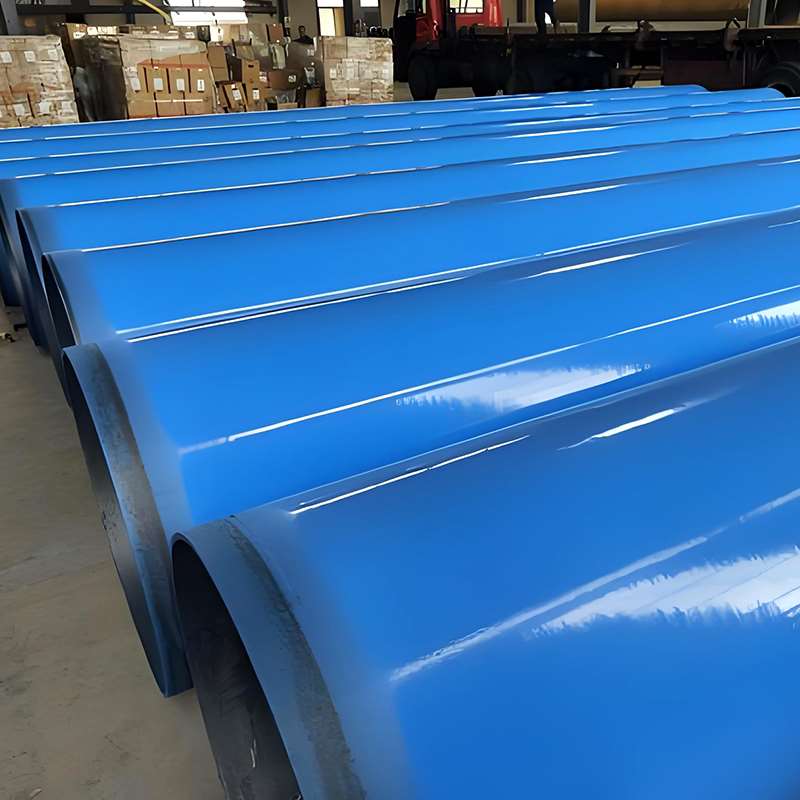
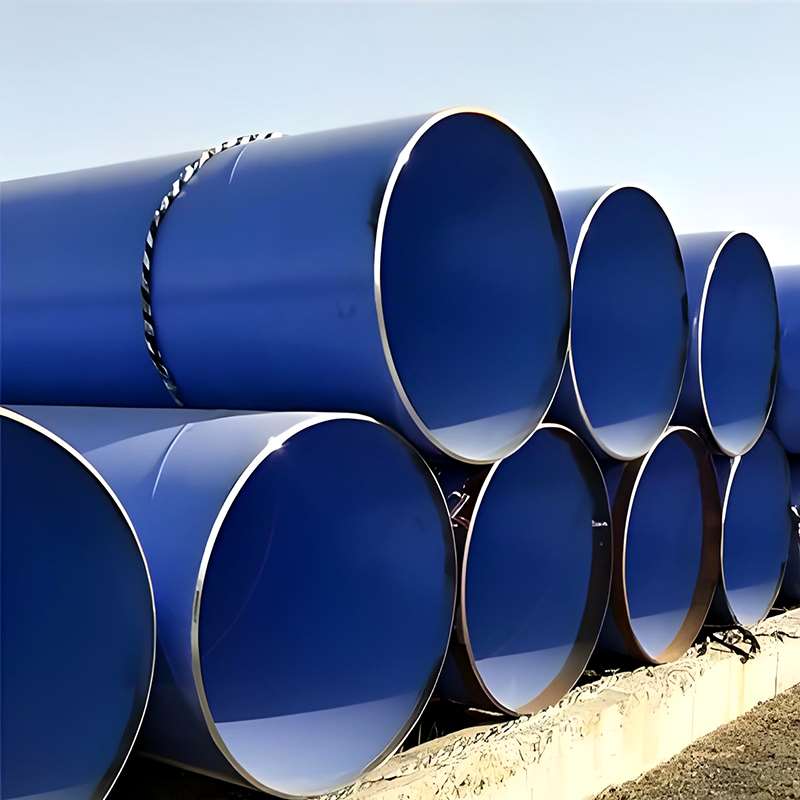
II. Blindly Pursuing “Thickness” in External Anti-Corrosion Coating While Neglecting “Resistance to Cathodic Disbonding” and Joint Quality
The anti-corrosion coating serves as the first line of defense against electrochemical corrosion in underground soil. Many purchasers mistakenly believe that “the thicker the coating, the better,” yet overlook the adhesion mechanism between the coating and the steel.
Key Points to Avoid Pitfalls:
- Surface preparation determines the success or failure of corrosion protection: Regardless of whether single-layer/double-layer FBE or 3PE coating is used on the outer wall, the steel pipe surface must achieve a Sa 2.5 rust removal grade, and the anchor pattern depth must be controlled between 40–90 μm. If the sandblasting pretreatment fails to meet standards, extensive peeling will occur even with a very thick coating.
- Neglecting Resistance to Cathodic Delamination: Buried pipelines are typically used in conjunction with cathodic protection systems. High-quality FBE-coated steel pipes possess excellent resistance to cathodic delamination; even if the outer wall is locally scratched during construction, corrosion is unlikely to propagate along the interface between the pipe and the coating.
- Prioritizing the Main Pipe Over Joints: After on-site welding and installation, the corrosion protection at the joints is the weakest link in the entire pipeline. Joints must be protected with FBE heat-shrink sleeves or two-component liquid epoxy that is compatible with the main pipe, and must undergo spark testing in strict accordance with specifications.
III. Purchasing Based Solely on “Nominal Wall Thickness,” While Ignoring “Negative Tolerances” and Lower Limit Deviations
“Is a steel pipe with a nominal wall thickness of 10 mm considered acceptable if the actual delivered thickness is only 9.0 mm?”—This is a common pitfall for many newcomers to steel pipe procurement.
Key Points to Avoid This Pitfall:
- Clarify Permissible Wall Thickness Tolerances: Reasonable wall thickness deviations are inherent in the steel mill’s production of steel strips and the tube rolling process. If the contract simply states “wall thickness 10 mm,” some suppliers may deliver products at the lower limit of the negative tolerance permitted by national standards (-10% or -12.5%), resulting in a significant reduction in actual pressure-bearing capacity.
- Precisely Limit Negative Tolerances Based on Project Pressure: For large-diameter, high-pressure water transmission trunk lines (e.g., with operating pressures > 1.6 MPa), the negative wall thickness tolerance should be strictly limited to a reasonable range when signing technical agreements (e.g., controlled to ±5% or less according to API 5L or GB/T 9711 standards), and random inspections of the entire pipe section should be conducted using an ultrasonic thickness gauge during on-site acceptance.
IV. Confusing “Standard Industrial Welded Pipes” with “High-Standard Pipes for Water Conservancy Projects”
Although both are spiral-welded pipes, the quality inspection standards for pipes used in ordinary structural supports and those used in high-pressure water transmission trunk lines are worlds apart.
Key Points to Avoid Pitfalls:
- Hydrostatic testing must be conducted on 100% of the pipes, one by one: Pipes for water conservancy projects must undergo 100% hydrostatic testing and pressure holding (typically for no less than 5 seconds) before leaving the factory to ensure there are no microscopic leaks.
- Non-destructive testing coverage must be maximized: For long-distance water conveyance pipelines, welds must undergo 100% ultrasonic testing, with additional X-ray spot checks at weld intersections and pipe end areas to eliminate potential hazards such as porosity, slag inclusions, or lack of fusion.
V. Quick Reference Chart for Selecting Spiral-Welded Steel Pipes for Water Conveyance
| Application | Pipe Diameter & Wall Thickness Range | Corrosion Protection System | Acceptance Criteria |
|---|---|---|---|
| Municipal Water Distribution Pipelines (Buried) | DN500–DN1000Wall thickness: 6–10 mm | Internal: Drinking water-grade FBE or solvent-free epoxy coatingExternal: 3PE or single-layer FBE coating | Drinking water compliance certification, wall thickness negative tolerance, external coating adhesion |
| Long-Distance Water Transmission Trunk Pipelines (High Pressure) | DN1200–DN2400Wall thickness: 12–20 mm | Internal: Drinking water-grade FBE coatingExternal: Dual-layer FBE or 3PE coating | 100% weld NDT inspection, hydrostatic pressure test with pressure holding, cathodic disbondment resistance |
| Pipe Jacking / Rocky Crossing Sections | DN800–DN1800Wall thickness: 10–16 mm | Internal: Drinking water-grade coatingExternal: Dual-layer FBE (scratch-resistant type) | Coating impact and puncture resistance, holiday detection (spark testing) of field joint coatings |