
When it comes to water supply projects, the steel pipes truly worth purchasing aren’t necessarily the ones with the lowest quoted price, but rather those that best meet project requirements, are of reliable quality, and have a lower total cost of ownership.
So, what key factors should be considered when purchasing spiral-welded steel pipes?
I. Verify the Applicable Standards Rather Than Directly Comparing Prices
When many procurement professionals receive quotes, their first instinct is to compare unit prices.
In reality, prices are virtually incomparable until the applicable standards have been verified.
Different standards specify varying requirements for steel properties, dimensional tolerances, weld quality, and inspection procedures, which in turn lead to differences in production costs.
Common standards include:
- API 5L—Applicable to pressure pipelines for water, oil, and natural gas
- GB/T 9711—Applicable to long-distance transmission pipelines
- SY/T 5037—Spiral submerged-arc welded steel pipes
- ASTM A252—Primarily used for piling and structural engineering
When procuring materials, the corresponding standards should be selected strictly in accordance with design drawings or technical specifications, rather than arbitrarily changing standards to reduce costs; otherwise, this may affect project acceptance and subsequent operation.
II. Thicker Isn’t Always Better When It Comes to Wall Thickness
- Many people believe that the thicker the wall, the safer the steel pipe.
- In fact, this is a common misconception.
- Wall thickness should be determined through comprehensive calculations based on operating pressure, burial depth, soil loads, vehicle loads, and safety factors.
- If the wall is too thin, it may compromise the pipe’s pressure-bearing capacity; if it is too thick, it not only increases steel consumption but also raises transportation, hoisting, and construction costs.
- The truly reasonable approach is to select an economical and appropriate wall thickness that meets design requirements, rather than simply pursuing greater thickness.
III. Corrosion Protection Methods Determine the Service Life of Pipelines
For buried water supply pipelines, corrosion is often not a short-term issue, but rather a key factor affecting their operational lifespan of several decades.
Currently, common corrosion protection methods include:
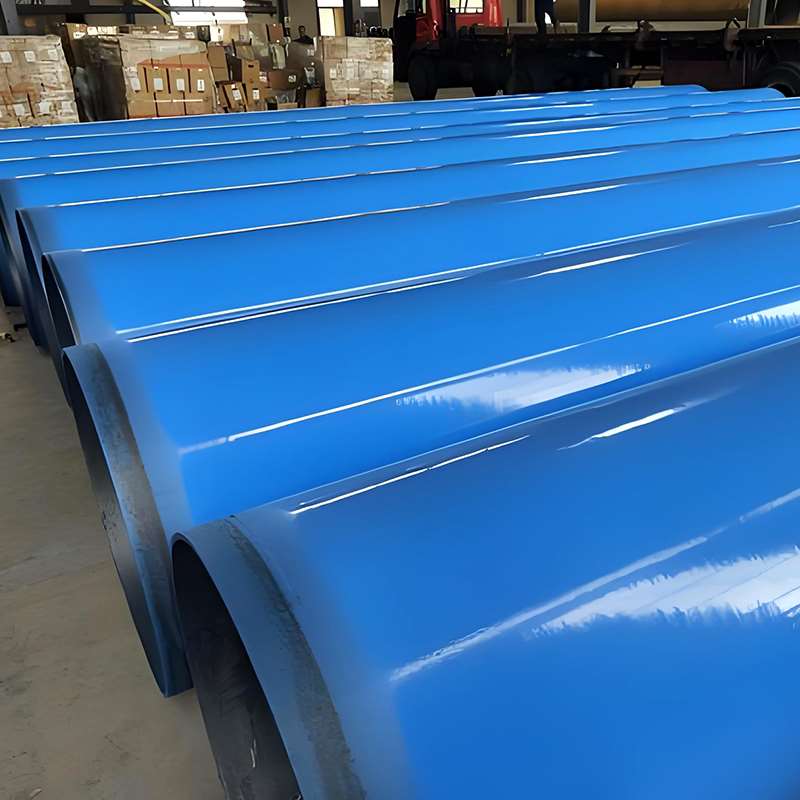
- FBE-Coated Steel Pipe (Fusion-Bonded Epoxy Powder Coating)
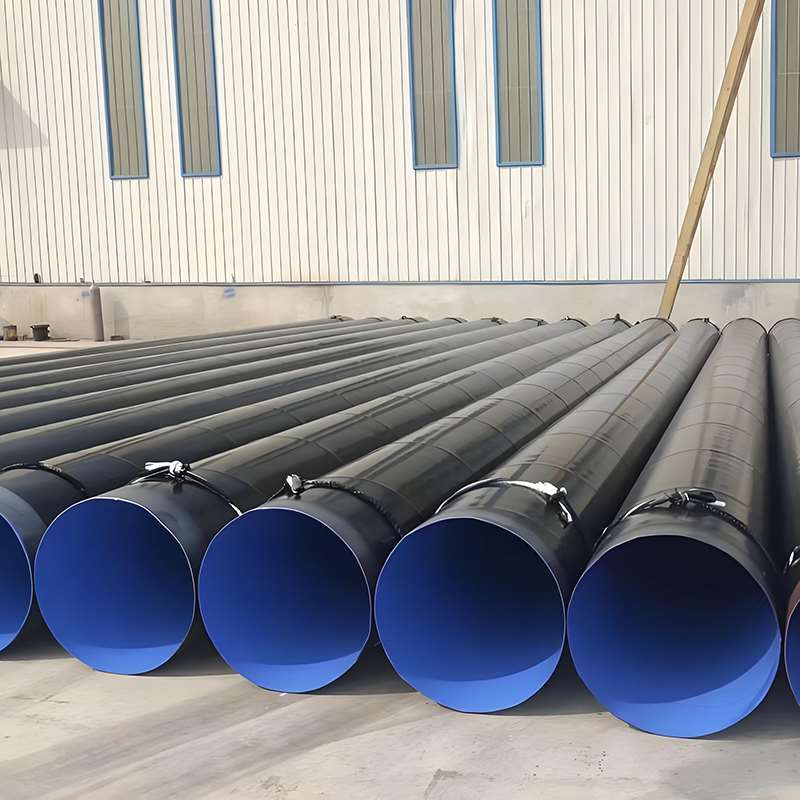
- 3PE-Coated Steel Pipe
- Cement Mortar Lining
- Epoxy Resin Internal Coating
Different corrosion protection solutions should be selected based on the specific project environment.
For example:
- For general water supply projects, FBE or an epoxy internal coating may be used;
- In areas with highly corrosive soil or in coastal regions, 3PE coating is typically more suitable;
- For projects with high water quality requirements, food-grade internal anti-corrosion coatings may be selected.
Selecting the appropriate anti-corrosion method not only enhances corrosion resistance but also effectively reduces future maintenance and repair costs.
IV. Welding Quality Determines the Reliability of Steel Pipes
Spiral-welded steel pipes are a type of welded steel pipe; therefore, the quality of the welds directly affects the safe operation of the pipeline.
Reputable manufacturers typically use the double-sided submerged arc welding process and conduct multiple quality inspections, such as:
- Ultrasonic Testing (UT)
- Radiographic Testing (RT)
- Hydrostatic Testing
- Visual and Dimensional Inspection
When purchasing, you should not only inquire whether the steel pipes have undergone testing but also confirm whether the manufacturer can provide material certificates, test reports, and third-party inspection reports (if required by the project).
Products backed by test reports are more trustworthy than a simple assurance that “the quality is fine.”
V. A Supplier’s Capabilities Are Often More Important Than the Quote
There are many spiral steel pipe manufacturers on the market, but their production capacities and quality management standards vary.
A reliable supplier typically possesses:
- A complete spiral steel pipe production line;
- Specialized anti-corrosion production equipment;
- A comprehensive quality management system;
- Extensive experience supplying large-scale projects;
- Consistent delivery capabilities and after-sales service.
For large-scale water supply projects, on-time delivery and consistent product quality are often more important than a price difference of a few hundred yuan.
VI. Don’t Focus Solely on Purchase Price; Consider Total Life-Cycle Costs Instead
Purchase costs are only a portion of the total project cost.
If you choose lower-quality steel pipes to reduce the purchase price, problems such as corrosion, leaks, repairs, or even replacements may arise later on. The resulting additional costs often far exceed the initial savings on purchase costs.
Therefore, when making a purchase, you should comprehensively consider the following:
- product quality;
- corrosion resistance;
- testing standards;
- service life;
- long-term maintenance costs;
- and the supplier’s service capabilities.
Truly cost-effective procurement does not mean buying the cheapest product, but rather striking a balance between quality, service life, and cost.