
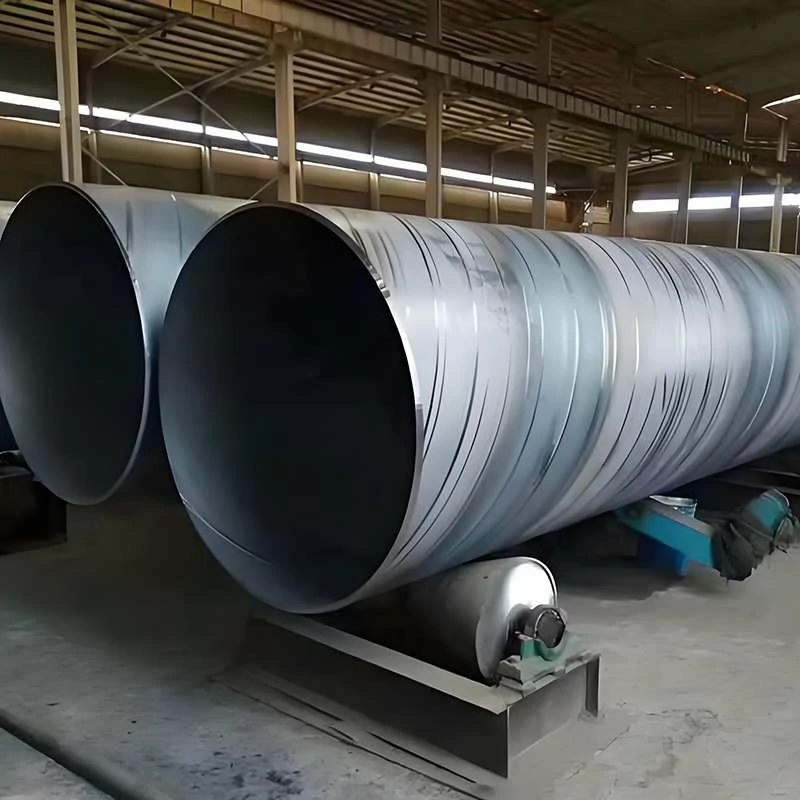
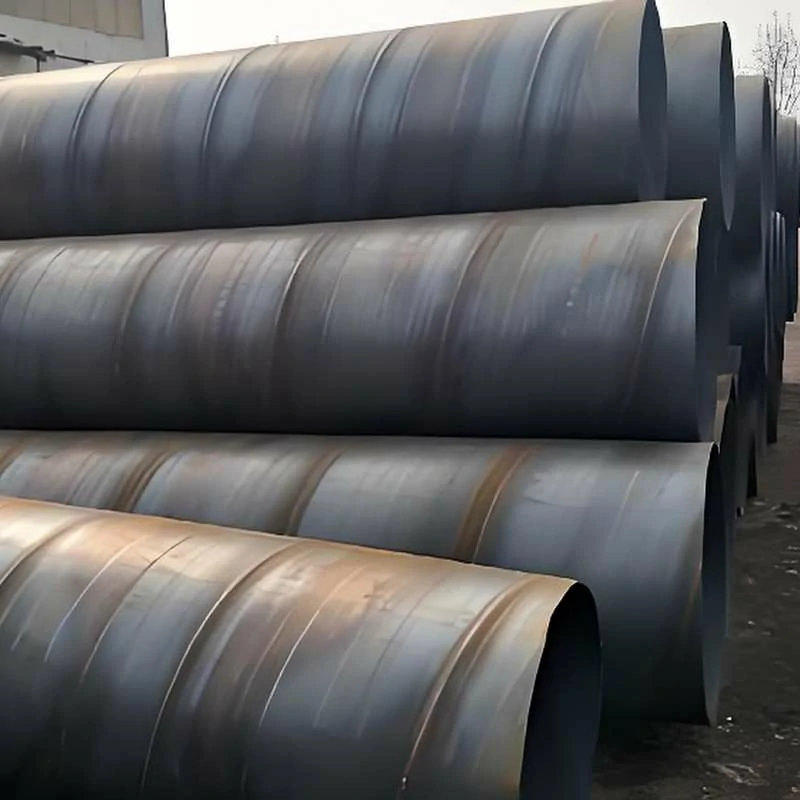
In industrial and infrastructure procurement projects, Spiral Submerged Arc Welded (SSAW) Steel Pipe is often one of the largest cost items in the project budget.
Many procurement professionals make the same mistake when reviewing engineering drawings:
“Whatever specification the design institute provides, I simply request quotations for that exact specification and purchase from whoever offers the lowest total price.”
However, due to the unique manufacturing characteristics of large-diameter SSAW steel pipes, the marketplace contains numerous hidden pricing and quality traps.
If you do not understand the commercial relationship between operating pressure, wall thickness, and steel grade, you may easily fall victim to artificially low quotations. The consequences can be severe, including pipeline failures during hydrostatic testing, project rejection, material returns, contractual disputes, and even legal liability.
Rather than focusing solely on complex engineering formulas, this article examines SSAW pipe procurement from a practical business perspective, covering risk avoidance, cost optimization, and contract protection strategies to help procurement teams make informed decisions.
I. The Hidden Cost Trap Behind Nominal Wall Thickness and Actual Delivered Thickness
SSAW steel pipe is typically sold by weight (tonnage), creating opportunities for some suppliers to manipulate pricing through allowable wall thickness tolerances.
1. How Suppliers Use Negative Wall Thickness Tolerance to Create Artificially Low Quotes
Both national and industry standards permit certain negative wall thickness tolerances.
For example, if the engineering specification requires a nominal wall thickness of 10 mm, manufacturing standards may allow a tolerance of approximately ±10%.
The Common Low-Price Strategy
Supplier A submits a quotation that appears significantly cheaper than competitors.
However, the supplier plans to deliver pipe with an actual wall thickness of only 8.8 mm or 9.0 mm, while still marketing it as a 10 mm product.
The Real Cost Difference
Consider a spiral steel pipe with:
- Outside Diameter: 1020 mm
- Nominal Wall Thickness: 10 mm
The theoretical weight is:
249.1 kg/m
If the supplier delivers pipe with an actual wall thickness of only 9.0 mm, the weight becomes:
224.4 kg/m
That represents a reduction of nearly:
25 kg of steel per meter
In large-scale pipeline projects, this difference translates into a substantial reduction in actual steel content and structural capacity.
2. How Buyers Can Avoid This Pricing Trap
Procurement teams that focus exclusively on price per ton often assume Supplier A offers the best deal.
However, once the material arrives on-site and is verified using truck scales or ultrasonic thickness gauges, it may become clear that:
- The delivered tonnage is lower than expected
- The actual wall thickness fails to meet design pressure requirements
Professional Procurement Language
Every RFQ should require suppliers to clearly state:
Is this quotation based on nominal wall thickness or guaranteed net wall thickness?
Will delivery quantities be settled according to actual weighed weight or theoretical weight?
By forcing all suppliers to compete based on the same actual steel content, much of the pricing manipulation immediately disappears.
II. Reducing Costs Through Material Upgrading Instead of Supplier Price Compression
Many buyers assume cost reduction means squeezing supplier margins.
Experienced procurement professionals understand that the most effective savings often come from optimizing technical specifications rather than negotiating lower prices.
According to pipeline design principles, required wall thickness is inversely proportional to the yield strength of the steel material.
When operating pressure and pipe diameter remain constant, higher-strength steel allows thinner wall designs.
Case Study: A 10 km Water Transmission Pipeline
Project Parameters:
- Pipeline Length: 10 km
- Diameter: DN1200
- Design Pressure: 1.6 MPa
The procurement department evaluated two options after receiving the original design drawings.
Option A: Original Design
Material:
Q235B
Because of its relatively low yield strength, the required wall thickness was:
14 mm
Performance:
- Weight per meter: 416.3 kg/m
- Total project weight: 4,163 tons
- Market price: RMB 4,200/ton
Total pipe cost:
RMB 17.484 million
Option B: Procurement Optimization Proposal
The procurement team recommended that the engineering department discuss an alternative design with the project consultant.
Material upgraded to:
Q355B
Because of the significantly higher yield strength, wall thickness could be safely reduced to:
11 mm
Performance:
- Weight per meter: 327.9 kg/m
- Total project weight: 3,279 tons
- Market price: RMB 4,350/ton
Total pipe cost:
RMB 14.263 million
| Option | Material Grade | Wall Thickness | Total Weight | Unit Price | Total Cost | Savings |
|---|---|---|---|---|---|---|
| Option A | Q235B | 14 mm | 4,163 tons | RMB 4,200/ton | RMB 17.484 million | Baseline |
| Option B | Q355B | 11 mm | 3,279 tons | RMB 4,350/ton | RMB 14.263 million | RMB 3.221 million saved (approximately 18.4%) |
Additional Procurement Benefits
Reducing wall thickness from 14 mm to 11 mm generates savings beyond raw material costs.
Additional reductions include:
- Transportation expenses
- Crane and lifting equipment rental costs
- Field welding labor
Since thinner walls require fewer welding passes, installation productivity also improves significantly.
III. Managing Delivery Lead Time and Minimum Order Quantity (MOQ)
In supply chain management, delivery schedules and minimum order quantities can be just as critical as pricing.
Since SSAW pipe is manufactured from steel coils, coil availability directly affects production planning.
Standard Wall Thicknesses
For example, for a 630 mm diameter pipe, common market wall thicknesses include:
- 6 mm
- 8 mm
- 10 mm
These are standard rolling specifications routinely produced by steel mills.
As a result:
- Coil inventory is readily available
- Production can begin immediately
- Shipment is often possible within three days
Non-Standard Wall Thicknesses
Problems arise when engineering calculations generate unusual specifications such as:
- 8.3 mm
- 11.5 mm
If procurement insists on these exact dimensions:
- SSAW manufacturers may not have suitable coil inventory
- The steel mill must schedule a special production run
- Steel mills often require minimum production quantities of 50–100 tons per specification
- Lead times can increase from three days to more than twenty days
Smart Procurement Strategy
When non-standard wall thicknesses appear in project specifications, buyers should review the pressure design margins with project engineers.
If sufficient safety margin exists, a recommendation can be made to adopt a standard market thickness such as:
- 8 mm
- 9 mm
(subject to engineering verification)
Although the wall thickness may increase slightly, avoiding special production charges and utilizing stock materials often reduces total procurement cost while shortening delivery time by more than two weeks.
IV. Four Non-Negotiable Contract Clauses Every Buyer Should Include
A pipe rupture during hydrostatic testing can become a catastrophic quality incident.
To minimize risk and protect project interests, procurement contracts should clearly define the following requirements.
1. Specify the Exact Applicable Standard
Never use vague wording such as:
“National Standard”
Instead, clearly identify the applicable standard:
- SY/T 5037 for general low-pressure fluid transportation
- GB/T 9711 for oil, gas, and high-performance water transmission pipelines
These standards establish the acceptance criteria for hydrostatic testing, weld quality, and overall manufacturing requirements.
2. Define the Minimum Delivered Wall Thickness
Avoid simply stating:
Wall Thickness: 10 mm
Instead, specify:
Nominal Wall Thickness: 10 mm
Minimum Delivered Wall Thickness (Net Thickness): Not Less Than 9.5 mm
This requirement prevents suppliers from exploiting allowable negative tolerances.
3. Require NDT and Hydrostatic Test Documentation
The contract should require suppliers to provide:
- Hydrostatic test records for every pipe
- Weld X-ray inspection reports
- Ultrasonic testing (UT) reports
Any pipe without traceable inspection records corresponding to its pipe number should be considered non-compliant.
Final payment should not be released until all required documentation has been verified.
4. Clearly Define the Weight Settlement Method
Whenever possible, procurement should adopt:
Actual Weighed Weight Settlement
If theoretical weight settlement is unavoidable, the contract must clearly define:
- The calculation formula used
- Applicable tolerance allowances
- Any weight adjustment factors
Failure to define these details can lead to significant disputes during project execution.