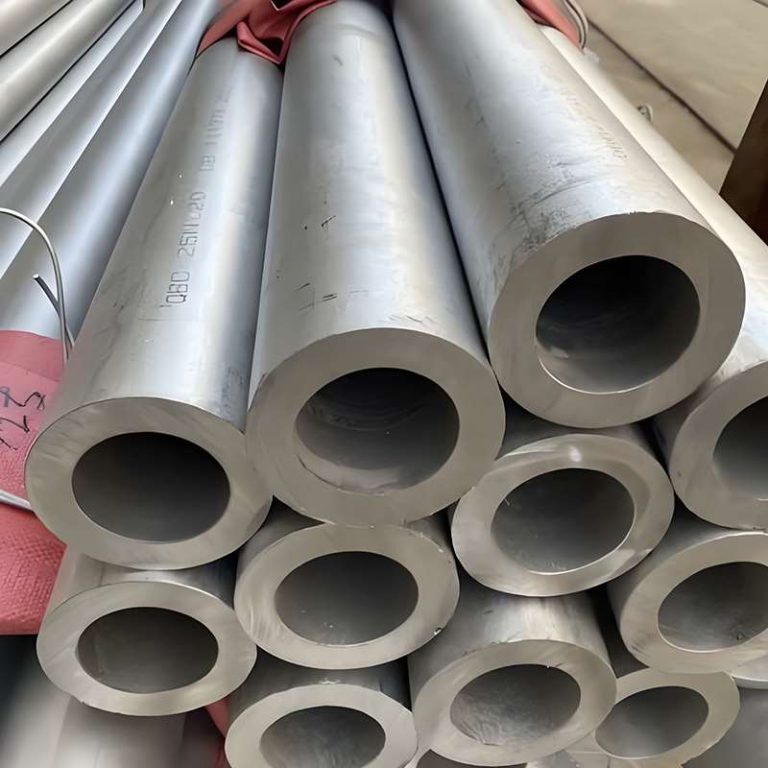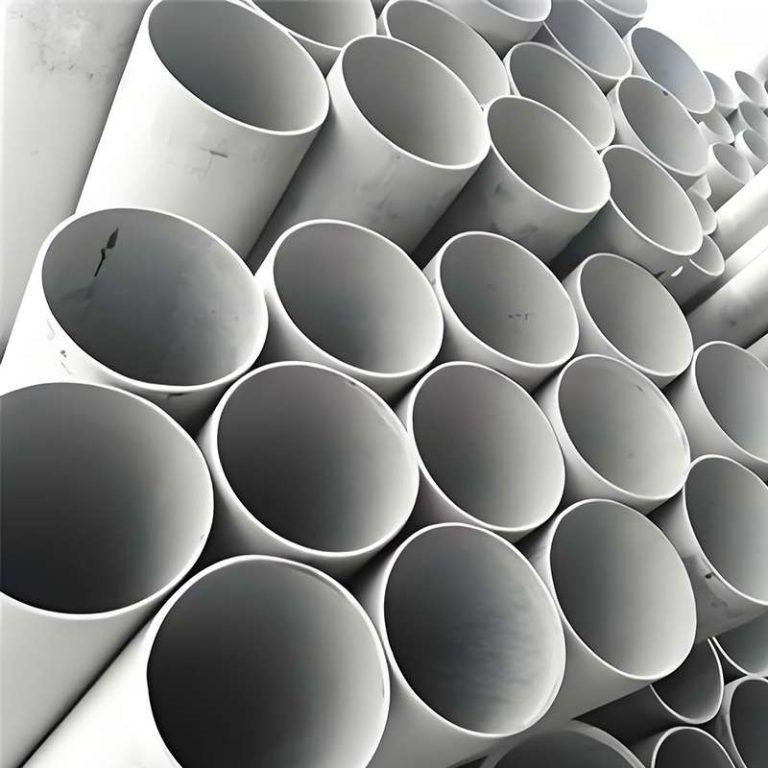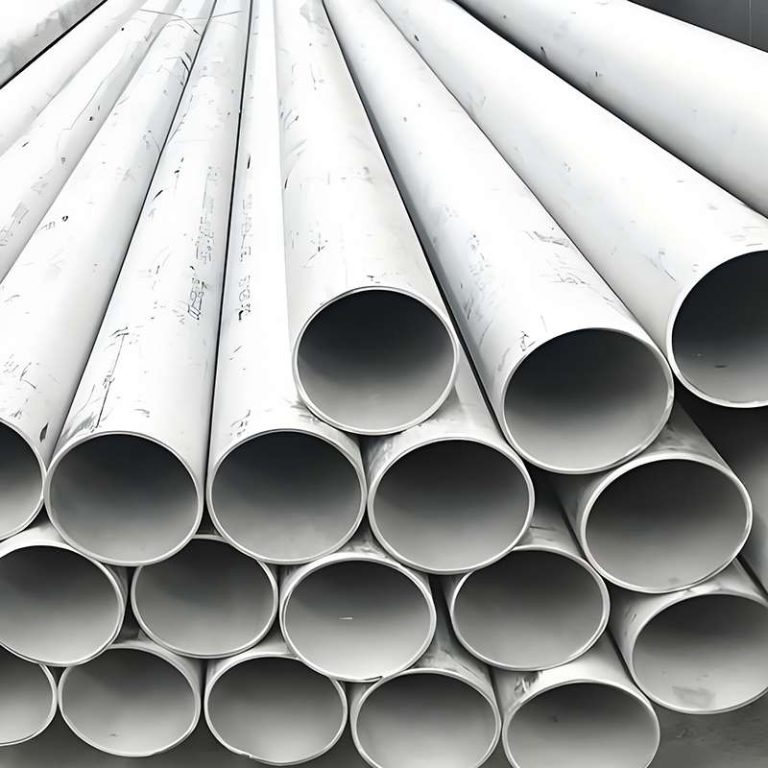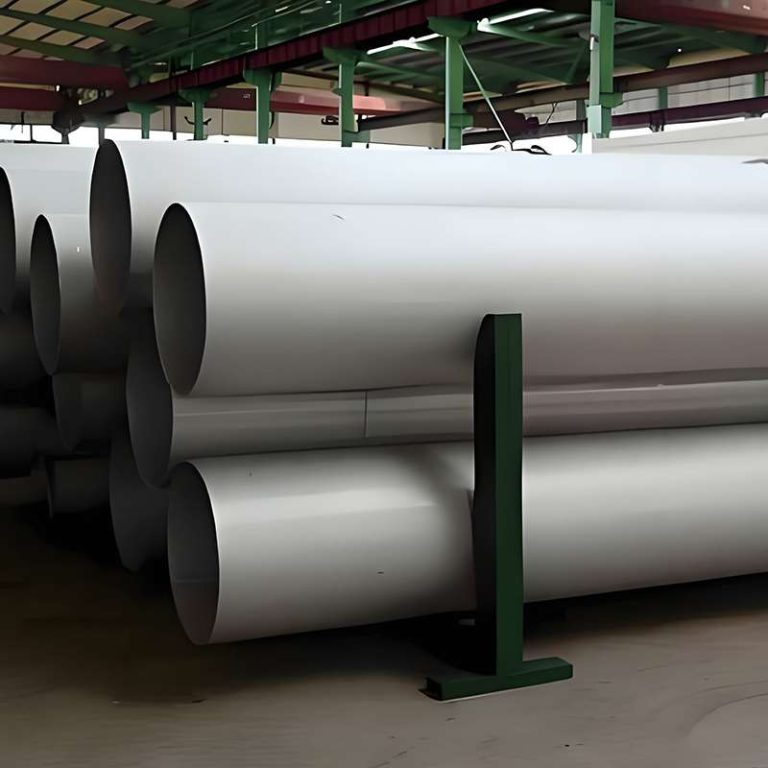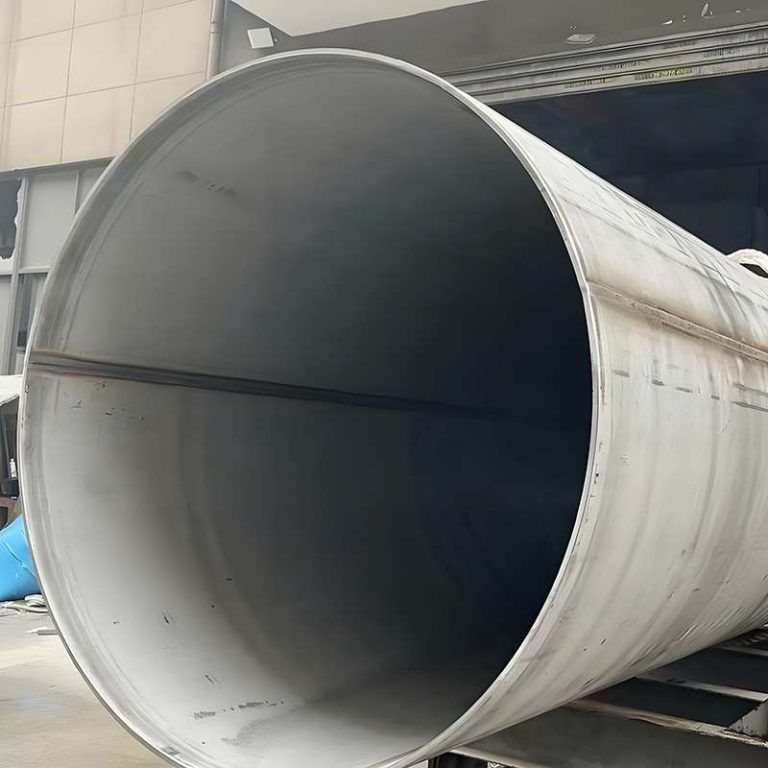
I. Introduction to 304 Stainless Steel Welded Pipe
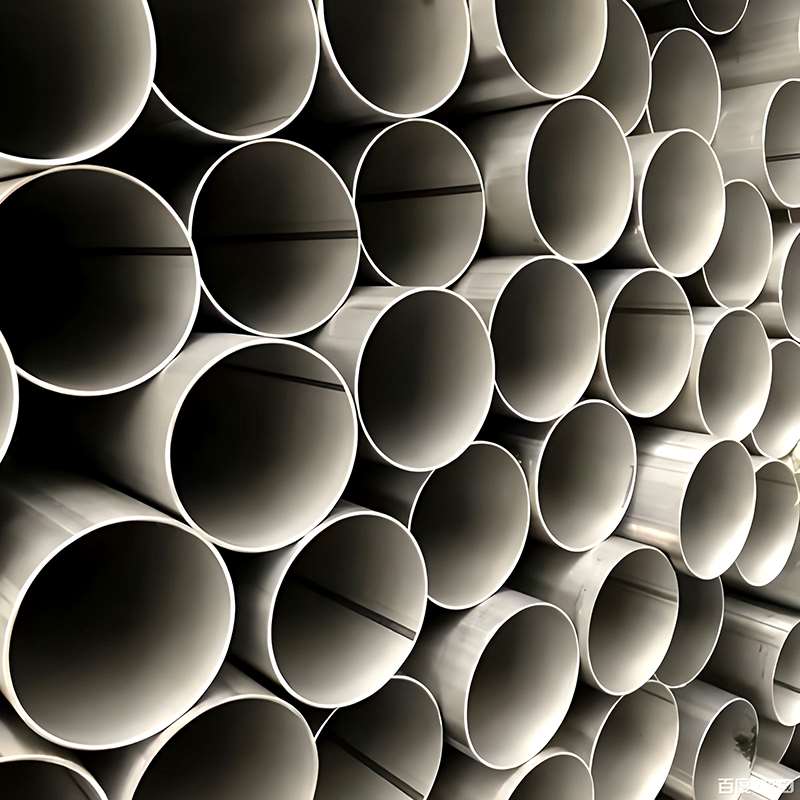
304 stainless steel welded pipe is manufactured by welding 304 stainless steel strip into tubular form. It offers excellent corrosion resistance, dimensional stability, and weldability.
Widely used in water supply and drainage, chemical processing, food and beverage, machinery manufacturing, and building structures, it can be customized with various diameters, wall thicknesses, and surface finishes as required.
Key Features of 304 Stainless Steel Welded Pipe
- Corrosion Resistance: Constructed from 304 stainless steel, resistant to water, acids, alkalis, and common chemical media.
- Excellent Weldability: Supports ERW, TIG, MIG, SAW, and other welding processes, producing smooth and reliable welds.
- Dimensional Stability: Uniform outer diameter and wall thickness, standard sizes Φ6–219 mm, with custom large diameters available.
- Diverse Surface Finishes: Pickled, polished, mirror-finished, etc., meeting industrial or sanitary requirements.
- Moderate Strength: Good pressure-bearing capacity, suitable for medium-low pressure piping and structural applications.
- Wide Applications: Water supply and drainage, chemical processing, food and beverage, machinery manufacturing, and building structures.
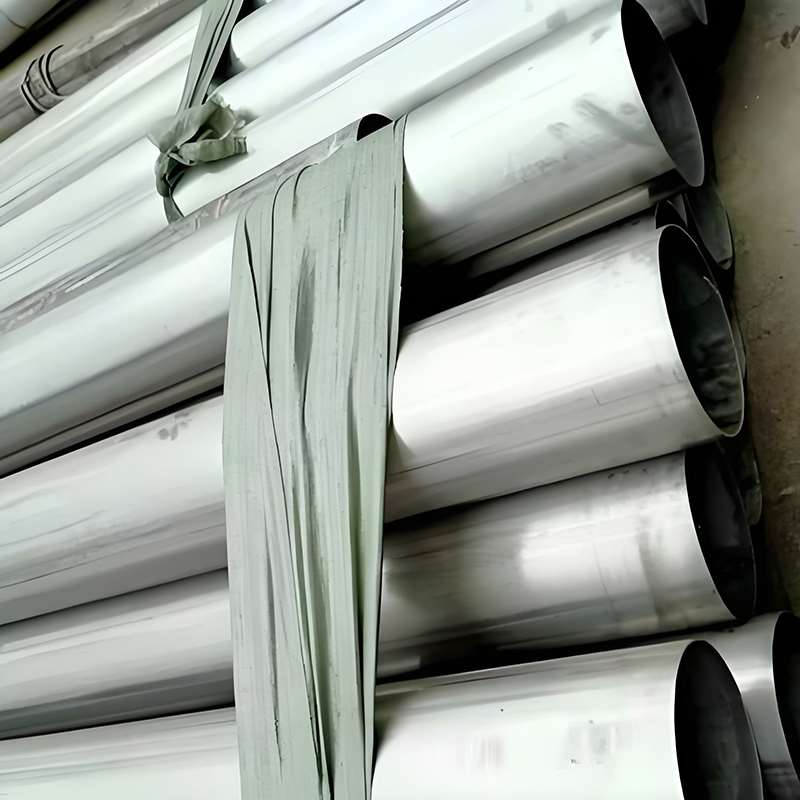
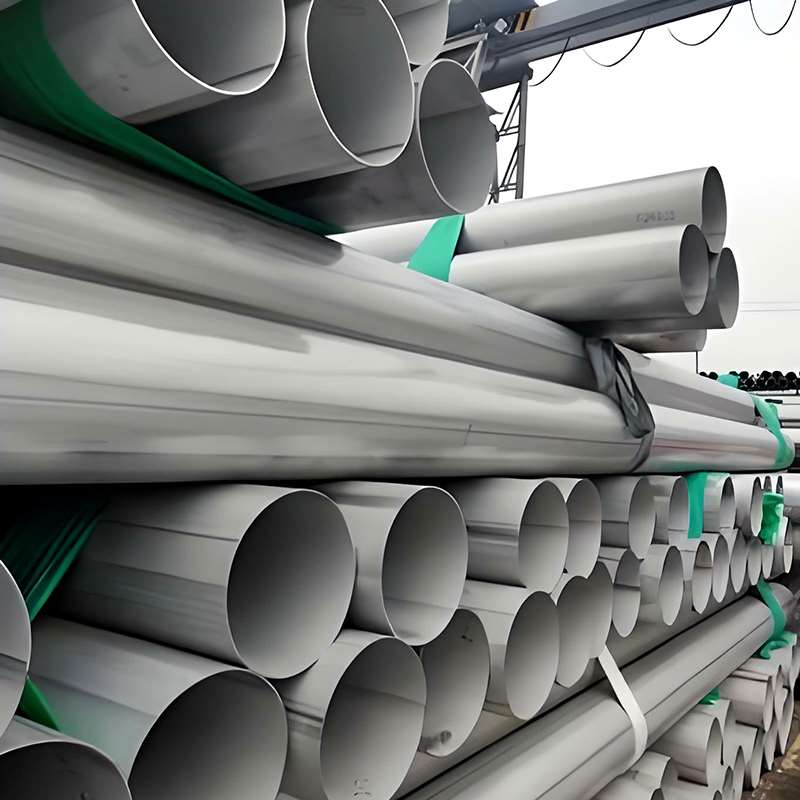
II. Classification of Welding Processes for 304 Stainless Steel Welded Pipes
| Process Type | Description | Features | Common Diameter Range |
|---|---|---|---|
| Resistance Welded Pipe (ERW / HFW) | Pipes welded by resistance heating and pressure | High weld strength, fast production, suitable for small diameters | Φ6 – Φ168 mm (standard) |
| TIG Argon Arc Welded Pipe (GTAW) | Pipe seam welded using argon-shielded arc | High weld quality, suitable for food and pharmaceutical industries | Φ6 – Φ89 mm |
| MIG Argon Arc Welded Pipe (GMAW) | Continuous wire electrode welding | High production efficiency, stable weld quality | Φ6 – Φ114 mm |
| Submerged Arc Welded Pipe (SAW) | Automatic welding with flux covering the seam | Suitable for medium to large diameters; high weld strength | Φ60 – Φ2000 mm |
| Double-Sided Submerged Arc Welded Pipe (LSAW / SSAW) | Longitudinal seam welded on both sides using submerged arc | Can produce large-diameter, thick-walled pipes; ideal for pipeline projects | Φ219 – Φ2000+ mm |
III. 304 Stainless Steel Welded Pipe Common Standards
| Standard System | Standard Number | Applicable Scope / Description |
|---|---|---|
| ASTM (USA) | ASTM A312 / A358 | Industrial and pressure pipelines; austenitic stainless steel welded pipes |
| ASME (American Society of Mechanical Engineers) | ASME SA312 / SA358 | Pressure equipment and boiler piping |
| EN (Europe) | EN 10217-7 | Pressure-rated welded pipes; austenitic stainless steel |
| JIS (Japan) | JIS G3459 | Stainless steel welded pipe standard for industrial use |
| GB (China) | GB/T 12771 / GB/T 14976 | Industrial piping, water supply & drainage, and pressure pipelines |
| ISO (International) | ISO 15510 / ISO 15649 | Reference standards for stainless steel pipes and pressure systems |
IV. Chemical Composition and Mechanical Properties of 304 Stainless Steel Welded Pipes
1. Chemical Composition (Mass Fraction %)
| Element | Typical Range (%) |
|---|---|
| Carbon (C) | ≤ 0.08 |
| Manganese (Mn) | ≤ 2.00 |
| Silicon (Si) | ≤ 0.75 |
| Phosphorus (P) | ≤ 0.045 |
| Sulfur (S) | ≤ 0.030 |
| Chromium (Cr) | 18.0 – 20.0 |
| Nickel (Ni) | 8.0 – 10.5 |
| Iron (Fe) | Balance |
2. Mechanical properties
| Property | Standard Value |
|---|---|
| Tensile Strength | 515 – 750 MPa |
| Yield Strength (0.2%) | ≥ 205 MPa |
| Elongation (A5) | ≥ 40% |
| Hardness (HRB) | 70 – 90 |
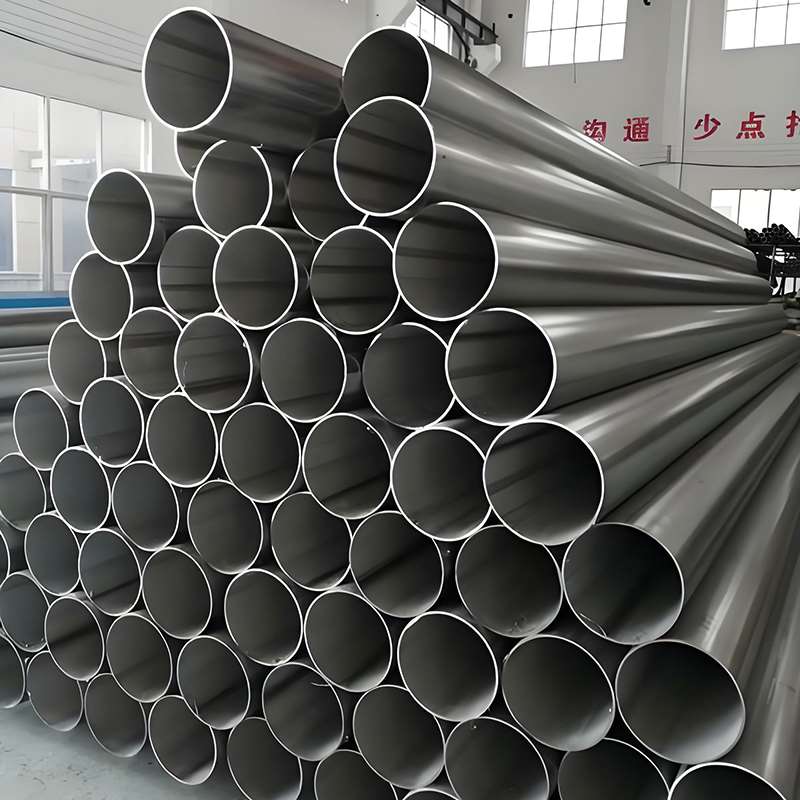
V.304 Stainless Steel Welded Pipe Application Areas and Selection Guide
1. Water Supply and Drainage Systems
Common Issues/Pain Points: Water quality corrosion, pipe leakage, weld seam susceptibility to rust
Recommended Pipe Material: 304 Welded Pipe
Selection Recommendations:
- Outer Diameter: Φ15–219 mm (Standard Stock)
- Wall Thickness: Select SCH10S / SCH40S based on water pressure
- Surface Treatment: Pickled or polished to ensure corrosion resistance and ease of cleaning
- Welding Process: ERW/TIG for smooth, reliable welds
2. Chemical and Petrochemical Piping
Common Issues/Pain Points: Chemical corrosion, weld seam leakage
Recommended Pipe Material: 304 or 304L (for high-volume welding or post-weld non-heat treatment)
Selection Recommendations:
- Pressure below 10 bar: Φ25–168 mm, ERW pipe sufficient
- High pressure or pipe diameter > Φ219 mm: Select SAW/LSAW thick-walled pipe
- Standards: ASTM A312/A358 or EN 10217-7
3. Food, Beverage, and Pharmaceutical Industries
Common Challenges/Pain Points: Stringent hygiene requirements; rough weld seams impede cleaning
Recommended Tubing: 304L welded tubing (low carbon content, post-weld resistance to intergranular corrosion)
Selection Recommendations:
- Surface Finish: Mirror or polished, Ra ≤ 0.4 μm
- Outer Diameter: Φ15–114 mm (standard for food-grade sanitary tubing)
- Welding Process: TIG/MIG, spatter-free welds for easy cleaning
- Pressure Rating: Select SCH5S–SCH40S based on process pipeline requirements
4. Mechanical Manufacturing & Building Structures
Common Issues/Pain Points: Insufficient load-bearing capacity, dimensional instability
Recommended Pipe Material: 304 Welded Pipe
Selection Recommendations:
- OD: Φ15–219 mm
- Wall Thickness: Select SCH10–SCH40 based on structural load requirements
- Welding Process: ERW or MIG, ensuring weld seam strength
- Surface Finish: Pickling sufficient; sandblasting or polishing as needed
5. Water Treatment and Environmental Protection Engineering
Common Issues/Pain Points: Prone to scaling, corrosion, and high maintenance costs
Recommended Pipe Material: 304 or 304L
Selection Recommendations:
- Outer Diameter: Φ15–219 mm (standard)
- Wall Thickness: SCH10S / SCH40S
- Surface Treatment: Pickling, industrial grade sufficient
- Pressure Rating: Select wall thickness based on circulating water system pressure
6. General Principles for Selection (Quick Decision Table)
| Key Factor | 304 Welded Pipe Selection Guidance |
|---|---|
| Corrosiveness of Medium | General water / chemical liquids → 304; High corrosion / chloride-containing → 316 / 316L |
| Welding Volume | Large welding volume or no post-weld heat treatment → 304L |
| Diameter Selection | Φ6–219 mm → standard stock; Φ219 mm and above → custom SAW / LSAW |
| Pressure Rating | Medium–low pressure → standard wall SCH5S–SCH40S; High pressure → thick-wall SAW pipe |
| Surface Requirements | Industrial pipes → pickled; Sanitary pipes → polished / mirror finish, Ra ≤ 0.4 μm |
| Standard Requirements | ASTM A312 / A358, EN 10217-7, GB/T 12771 |
VI. Common Questions on Selecting 304 Stainless Steel Welded Pipes
1. Should I choose 304 or 304L?
Determination Criteria: Welding volume and post-weld heat treatment status
Recommendation:
Small batches or short pipe welding → 304 is sufficient
High welding volume with no post-weld heat treatment → 304L (low-carbon) prevents intergranular corrosion
Application Reference: Chemical and food pipelines recommend 304L
2. How to determine pipe diameter and wall thickness?
Criteria: Medium flow rate, pressure rating, pipeline length
Recommendations:
Low pressure, low flow → Thin-wall SCH5S / SCH10S
Medium pressure or high pressure requirements → SCH40S / SCH80S
Large-diameter pipelines (Φ219 mm and above) → Custom SAW / LSAW thick-wall pipes
3. What pressure and operating conditions are welded pipes suitable for?
Criteria: Pipeline pressure rating, temperature, and medium corrosiveness
Recommendations:
Low-to-medium pressure water/chemical pipelines → ERW/TIG/MIG welded pipes
High-pressure steam or highly corrosive media → Consider thick-walled seamless pipes or SAW/LSAW large-diameter pipes
4. How to select surface treatment?
Criteria: Sanitary requirements, cleanability, corrosion resistance
Recommendations:
Industrial piping → Acid pickling or standard polishing
Sanitary piping (food, beverage, pharmaceutical) → Mirror polishing, Ra ≤ 0.4 μm, ensuring smooth welds
5. How to select welding processes?
Selection criteria: Pipe diameter, weld quality requirements, application
Recommendations:
Small diameter (Φ6–114 mm) → TIG/MIG, high-finish welds
Standard diameter (Φ6–168 mm) → ERW, high efficiency
Large diameter (Φ219 mm+) → SAW/LSAW, thick-walled pipes, high pressure rating
6. How to determine between welded and seamless pipes?
Criteria: Pressure, operating conditions, budget
Recommendations:
High pressure, thick walls, high-temperature resistance, high corrosion → Seamless pipe
Medium/low pressure, cost-sensitive, large batches → Welded pipe
Practical tip: Welded pipes for general water supply/drainage, machinery, decorative piping; seamless pipes for high-pressure steam, chemical, petroleum pipelines.