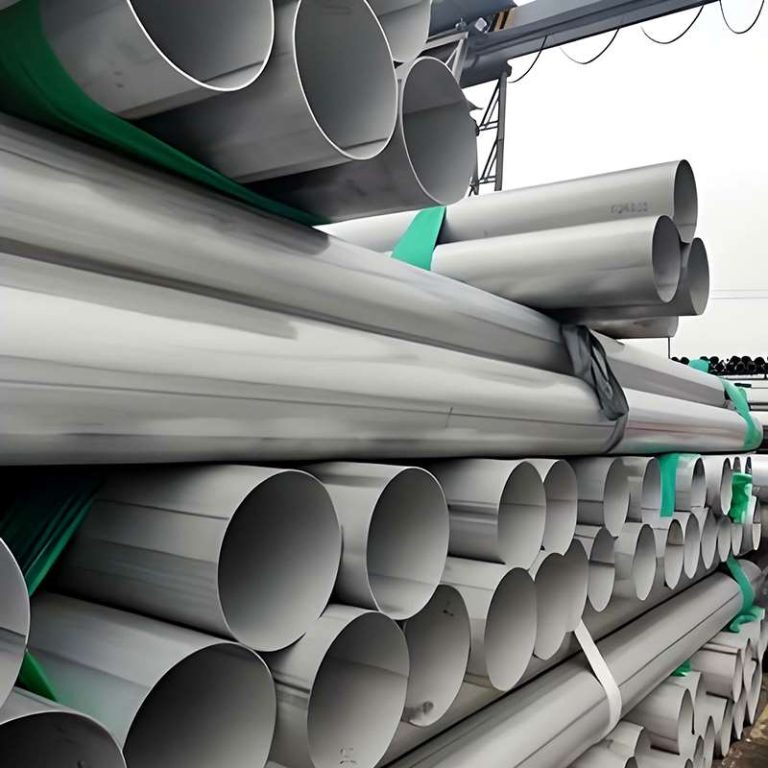
I. Overview of ASTM A312 Stainless Steel Welded Pipe
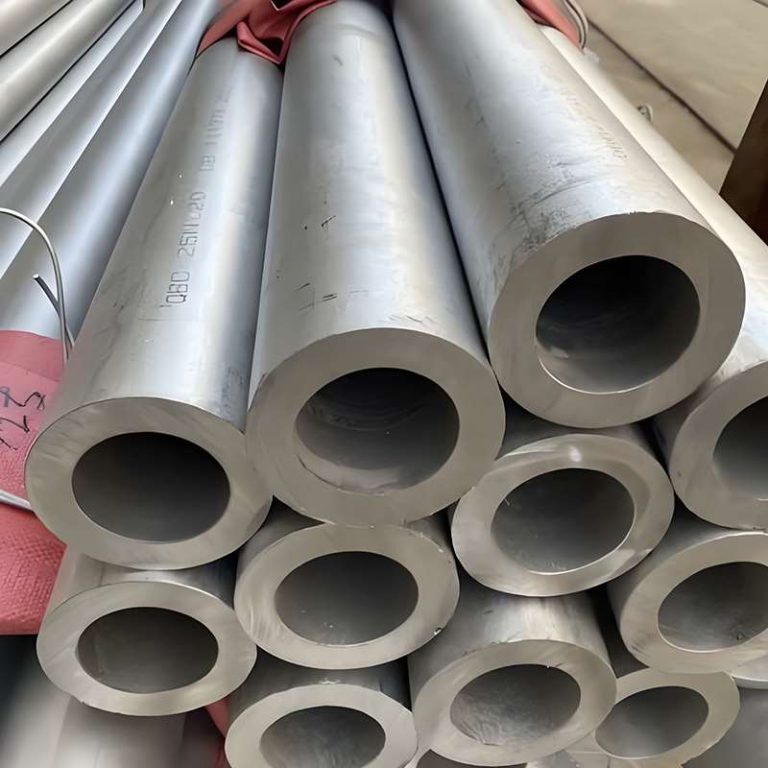
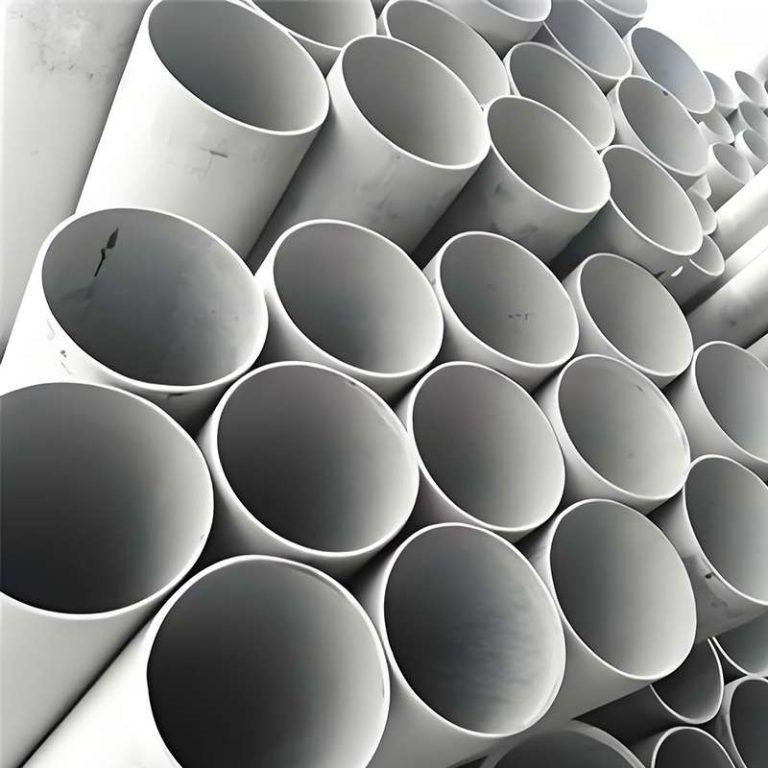
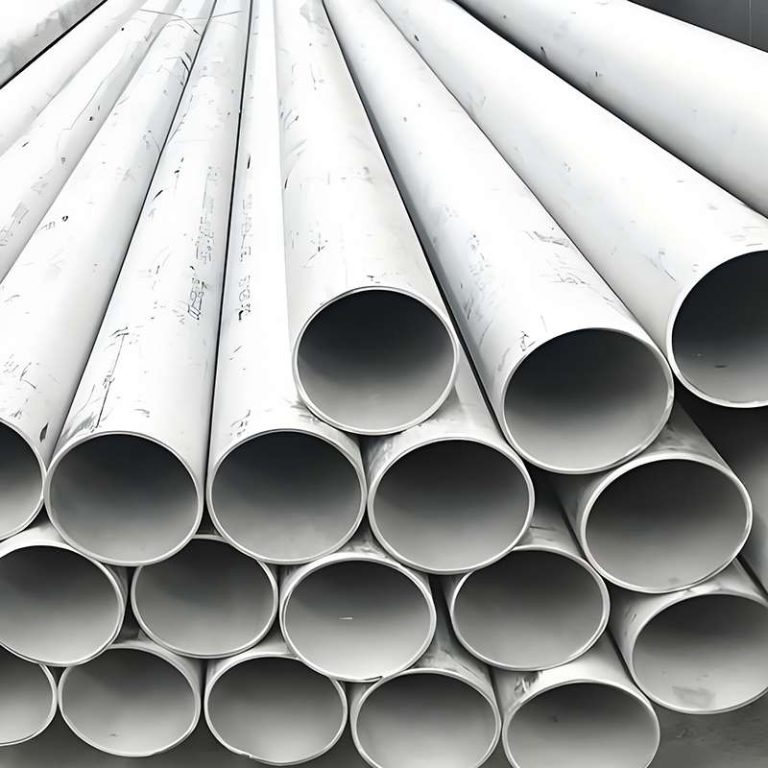
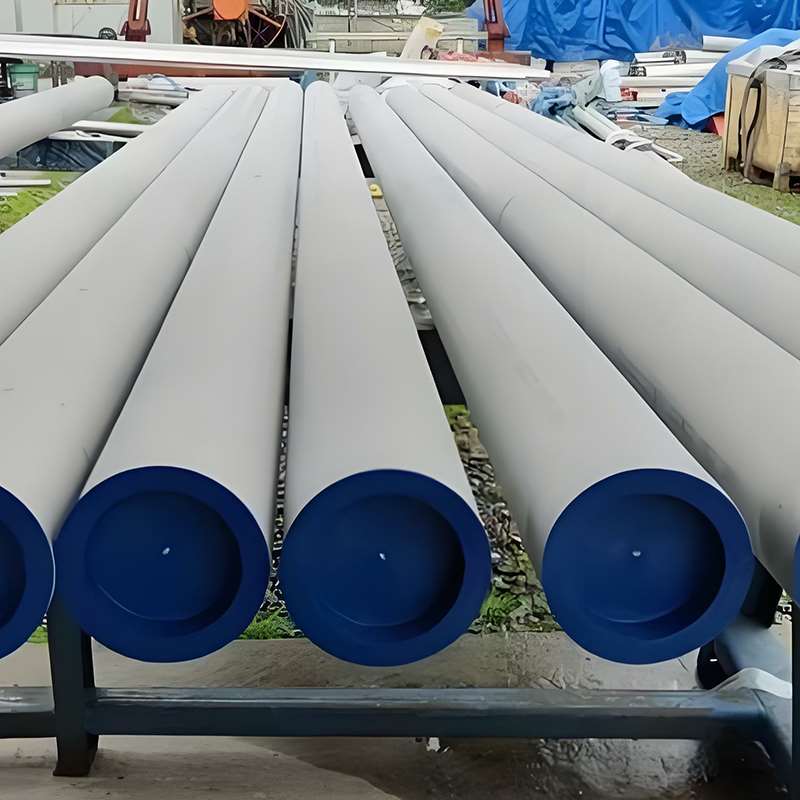
ASTM A312 stainless steel welded pipe is an industrial tubing manufactured using austenitic stainless steel strip (such as 304, 316, 316L) through high-frequency resistance welding (ERW) or other welding processes.
Compared to seamless pipe, welded pipe offers higher production efficiency and relatively lower costs, while delivering reliable performance in small-to-medium diameter pipeline applications. They feature corrosion resistance, high-temperature tolerance, dimensional stability, and smooth weld seams, making them widely used in industrial piping, chemical processing, food and beverage, and pharmaceutical industries.
II. Applicable Standards and Materials
- Applicable Standards: ASTM A312 / ASTM A554 / EN 10217-7 / GB/T 12771
- Common Materials: 304, 316, 316L Stainless Steel
- 304: Resistant to water, acids, alkalis, and general chemical corrosion; suitable for industrial pipelines and water supply/drainage systems.
- 316: Enhanced with molybdenum (Mo) for improved chloride corrosion resistance; suitable for chemical processing and seawater environments.
- 316L: Low-carbon design minimizes intergranular corrosion after welding; ideal for sanitary applications or pipelines requiring extensive welding.
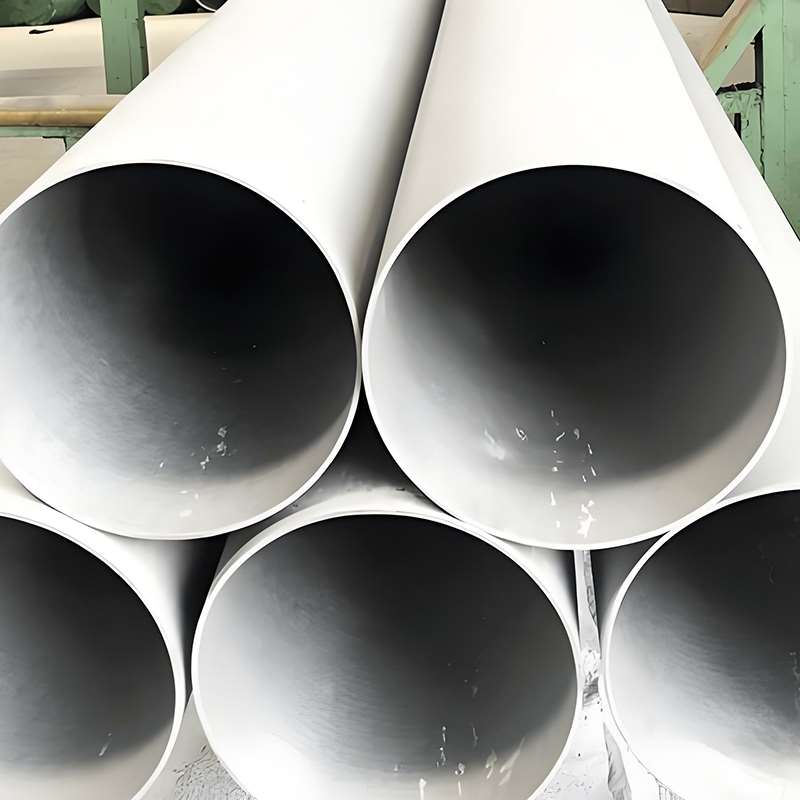
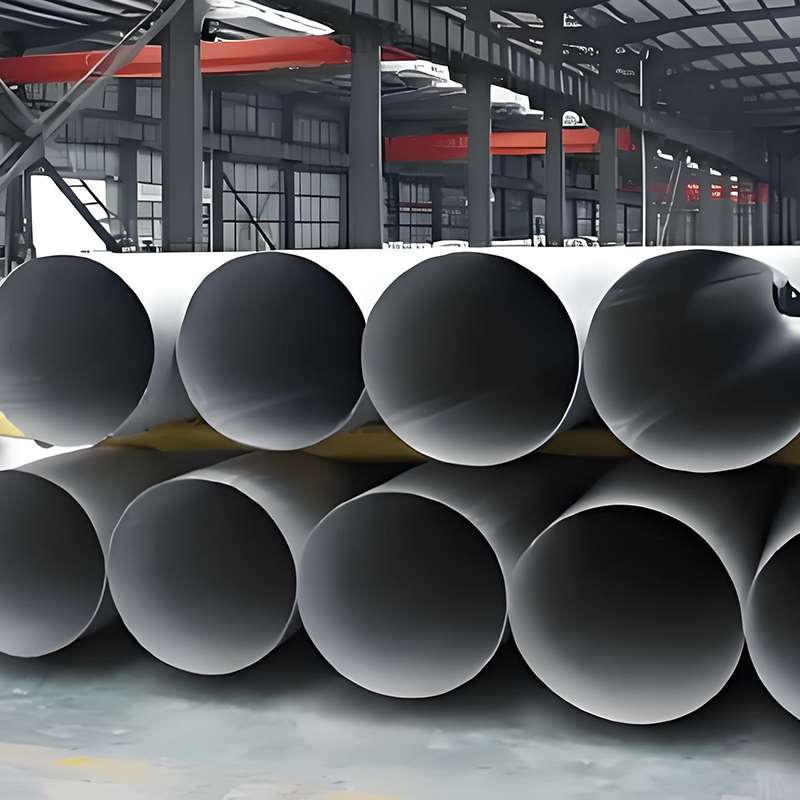
III. Chemical Composition and Mechanical Properties of ASTM A312 Stainless Steel Welded Pipes
i. Chemical Composition (%)
| Material | C | Si | Mn | P | S | Cr | Ni | Mo |
| 304 | ≤0.08 | ≤1.0 | ≤2.0 | ≤0.045 | ≤0.03 | 18–20 | 8–10.5 | — |
| 316 | ≤0.08 | ≤1.0 | ≤2.0 | ≤0.045 | ≤0.03 | 16–18 | 10–14 | 2–3 |
| 316L | ≤0.03 | ≤1.0 | ≤2.0 | ≤0.045 | ≤0.03 | 16–18 | 10–14 | 2–3 |
ii. Mechanical properties
| Material | Tensile Strength (MPa) | Yield Strength (MPa) | Elongation (%) | Hardness (HRB) |
|---|---|---|---|---|
| 304 | 515 – 750 | ≥ 205 | ≥ 40 | 70 – 90 |
| 316 | 515 – 700 | ≥ 205 | ≥ 40 | 70 – 90 |
| 316L | 485 – 690 | ≥ 170 | ≥ 40 | 70 – 90 |
IV. ASTM A312 Stainless Steel Welded Pipe Specifications and Dimensions Table
| Outer diameter(mm) | Wall thickness(mm) | Theoretical weight(kg/m) |
| 6 | 0.5,1.0,1.5,2.0 | 0.12,0.23,0.35,0.46 |
| 8 | 0.5,1.0,1.5,2.0 | 0.17,0.34,0.51,0.68 |
| 10 | 0.5,1.0,1.5,2.0,2.5 | 0.21,0.41,0.62,0.82,1.03 |
| 12 | 0.5,1.0,1.5,2.0,2.5 | 0.25,0.50,0.76,1.01,1.26 |
| 16 | 0.5,1.0,1.5,2.0,2.5,3.0 | 0.33,0.65,0.98,1.30,1.63,1.95 |
| 20 | 0.5,1.0,1.5,2.0,2.5,3.0 | 0.41,0.81,1.22,1.63,2.04,2.44 |
| 25 | 0.5,1.0,1.5,2.0,2.5,3.0,3.5 | 0.51,1.02,1.54,2.05,2.56,3.07,3.58 |
| 32 | 0.5,1.0,1.5,2.0,2.5,3.0,3.5,4.0 | 0.66,1.32,1.98,2.64,3.29,3.95,4.61,5.26 |
| 40 | 0.5,1.0,1.5,2.0,2.5,3.0,3.5,4.0 | 0.82,1.63,2.45,3.27,4.08,4.90,5.72,6.54 |
| 50 | 0.5,1.0,1.5,2.0,2.5,3.0,3.5,4.0,5.0 | 1.03,2.06,3.09,4.12,5.15,6.18,7.21,8.24,10.31 |
| 65 | 1.0,1.5,2.0,2.5,3.0,4.0,5.0 | 3.38,5.06,6.75,8.44,10.12,13.50,16.88 |
| 80 | 1.0,1.5,2.0,2.5,3.0,4.0,5.0,6.0 | 4.17,6.25,8.33,10.42,12.50,16.67,20.83,25.00 |
| 100 | 1.0,1.5,2.0,2.5,3.0,4.0,5.0,6.0 | 5.21,7.82,10.43,13.04,15.65,20.87,26.08,31.30 |
| 125 | 1.5,2.0,2.5,3.0,4.0,5.0,6.0,7.0,8.0 | 12.27,16.36,20.45,24.54,32.72,40.90,49.08,57.26,65.45 |
| 150 | 1.5,2.0,2.5,3.0,4.0,5.0,6.0,7.0,8.0 | 14.73,19.64,24.55,29.46,39.28,49.10,58.92,68.74,78.56 |
| 200 | 2.0,2.5,3.0,4.0,5.0,6.0,7.0,8.0,9.0,10.0 | 26.19,32.74,39.28,52.37,65.46,78.55,91.64,104.73,117.82,130.91 |
| 219 | 2.0,2.5,3.0,4.0,5.0,6.0,7.0,8.0,9.0,10.0 | 28.69,35.86,43.03,57.38,71.73,86.08,100.43,114.78,129.13,143.48 |
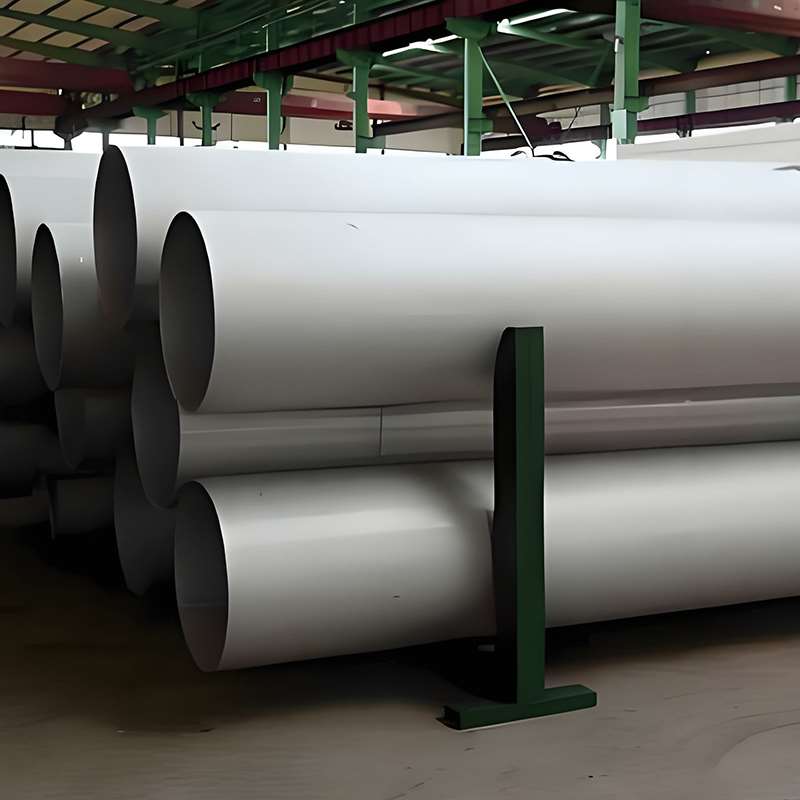
V. Production Processes and Welding Methods for ASTM A312 Stainless Steel Welded Pipes
i. Production Process Overview
- ERW (Electric Resistance Welded)
Principle: Generates heat at the edges of the pipe blank using high-frequency current, melting the metal and fusing it under pressure.
Applications: Suitable for small to medium diameters and moderately thick pipes. Produces smooth welds with high dimensional accuracy.
Advantages: High production efficiency, relatively low cost, uniform weld bead. - TIG Welding (Tungsten Inert Gas)
Principle: Uses a tungsten electrode to melt filler wire under shielding gas for welding.
Applications: Sanitary pipelines, thin-walled tubes, pipelines with stringent weld requirements.
Advantages: Aesthetically pleasing, smooth welds with minimal spatter; suitable for food, pharmaceutical, and chemical industries. - MIG/MAG Welding (Metal/Metal Active Gas)
Principle: Welding metal under shielding gas using continuous wire feed.
Applications: Medium-to-thick-walled pipes; widely used in industrial piping.
Advantages: Fast welding speed, high efficiency, and consistent weld quality. - SAW Welding (Submerged Arc Welding)
Principle: Forms an arc between the electrode and base metal, with the weld zone covered by flux for protection.
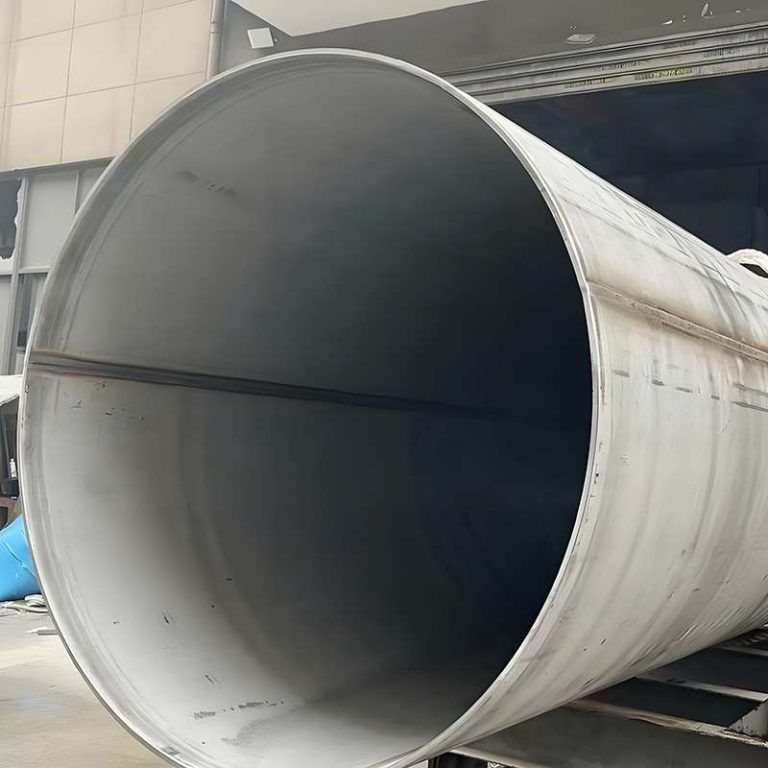
Applications: Thick-walled large-diameter pipes, high-pressure pipelines.
Advantages: Deep penetration and excellent fusion, suitable for high-strength and high-pressure pipelines.
ii. Comparison of the characteristics of different welding methods
| Welding Method | Applicable Pipe Diameter | Advantages | Disadvantages / Notes |
|---|---|---|---|
| ERW (Electric Resistance Welding) | Φ6 – Φ219 mm (standard) | High efficiency, uniform weld seam, low cost | Limited weld strength for large-diameter thick-wall pipes |
| TIG (GTAW, Tungsten Inert Gas) | Φ6 – Φ114 mm | Smooth, aesthetically pleasing welds; suitable for sanitary applications | Slow process, high production cost |
| MIG / MAG (GMAW / MAG) | Φ12 – Φ219 mm | Fast welding speed, stable weld quality | High gas shielding requirement |
| SAW (Submerged Arc Welding) | Φ50 – Φ219 mm (thick-wall) | Deep weld penetration, excellent fusion; suitable for high pressure | High equipment investment, requires skilled operation |
iii. Process Selection Recommendations
- Small-to-medium diameter industrial pipelines: ERW welded pipes, offering low cost and high production efficiency.
- Sanitary-grade or food/pharmaceutical industry pipelines: TIG welding or MIG welding, producing smooth welds that facilitate cleaning.
- Large-diameter, high-pressure pipelines: SAW welding, ensuring weld seam pressure-bearing capacity and structural strength.
- Special corrosion-resistant or high-temperature applications: Select suitable materials (316/316L) combined with appropriate welding processes.
VI. Application Fields and Selection Recommendations for Stainless Steel Welded Pipes
| Application Area | Operating Conditions | Selection Recommendation |
|---|---|---|
| Water Supply & Drainage Systems | Medium–low pressure, mild environment | 304 stainless steel, SCH5S–SCH10S, pickled or polished |
| Chemical Piping | Acidic, alkaline, or chloride-containing, highly corrosive | 316 / 316L, wall thickness selected according to pressure rating, pickled or mirror finish |
| Food, Beverage & Pharmaceutical | Sanitary, smooth welds for easy cleaning | 316L, mirror or electropolished finish, Ra ≤ 0.4 μm |
| Mechanical / Industrial Equipment | Medium–low pressure fluids or mechanical loads | 304, wall thickness selected based on pressure, pickled or polished |
| Architectural & Decorative | Aesthetic, corrosion-resistant, weather-resistant | 304 / 316, brushed or mirror finish |
| Seawater / Marine Engineering | High salt, highly corrosive environment | 316L, thick-wall, pickled or mirror finish to ensure corrosion resistance |
Selection Principles: Based on operating conditions → material → welding process → wall thickness → surface treatment, ensuring corrosion resistance, pressure resistance, and cost-effectiveness.
VII. Testing Standards and Quality Control
- Visual Inspection: Scratches, cracks, flash, weld defects
- Dimensional Inspection: Outer diameter, wall thickness, length, straightness, ovality
- Chemical Composition Testing: Ensures material compliance with ASTM/EN/GB standards
- Mechanical Properties Testing: Tensile strength, yield strength, elongation, hardness
- Non-Destructive Testing: Eddy current, ultrasonic, X-ray
- Pressure Testing: Hydrostatic or pneumatic pressure testing to verify pressure-bearing capacity