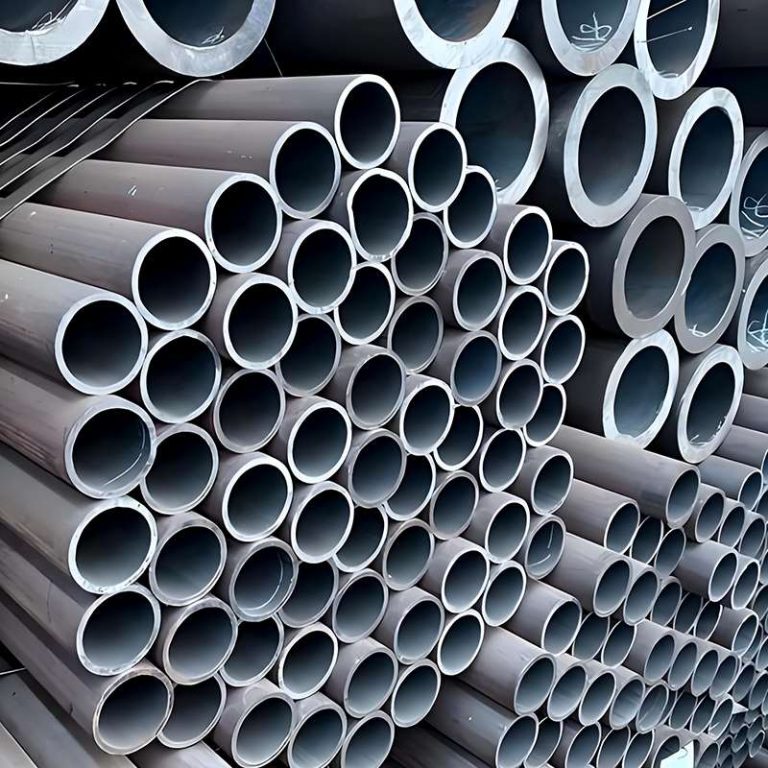
I. Overview of ASTM A335 P11 Alloy Steel Pipe
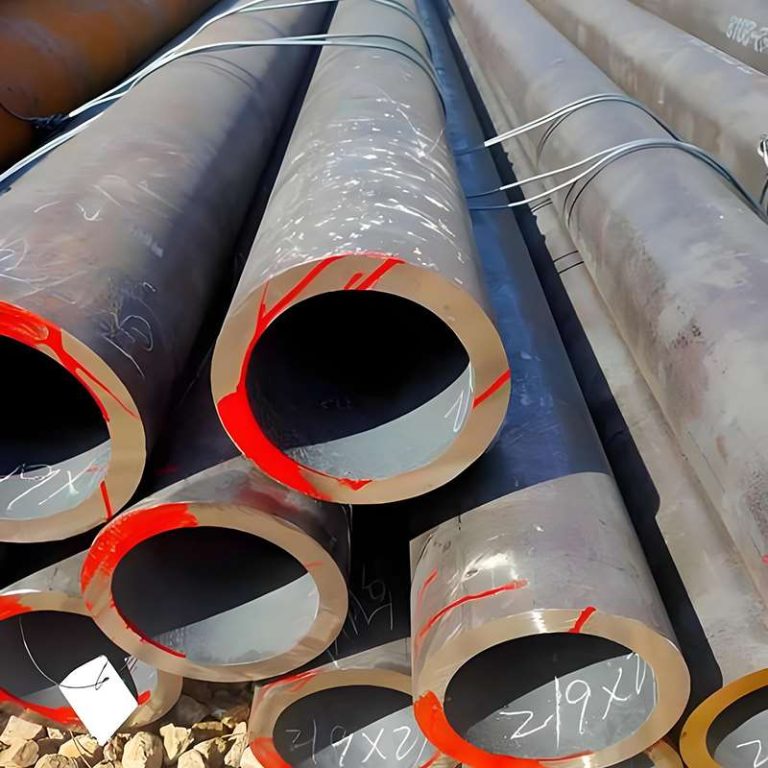
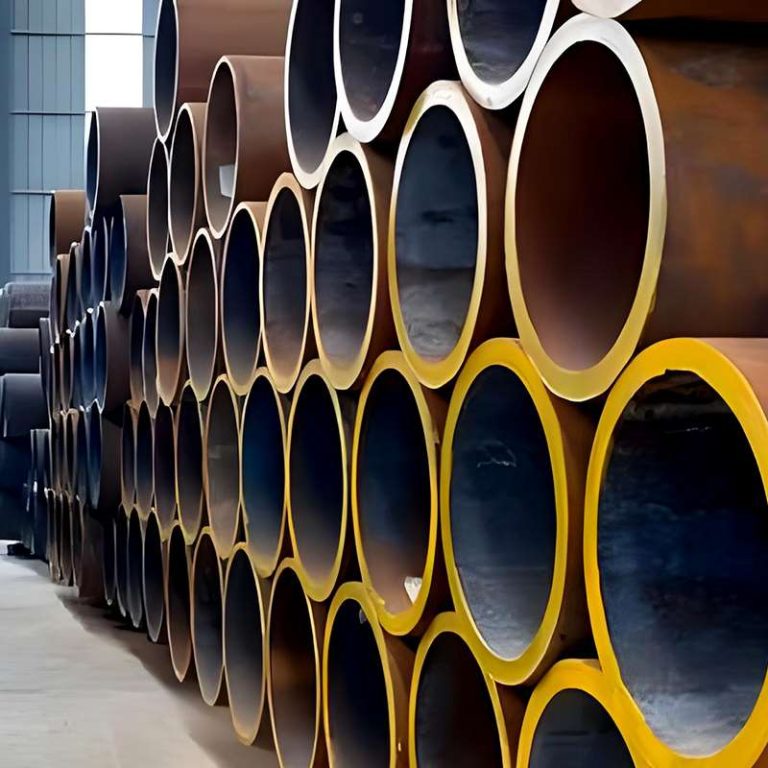
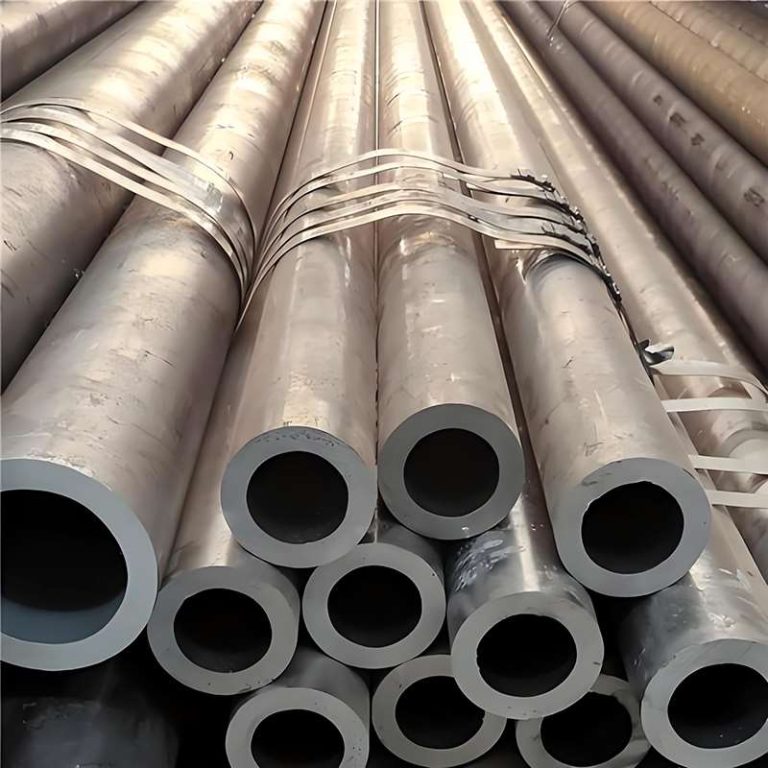
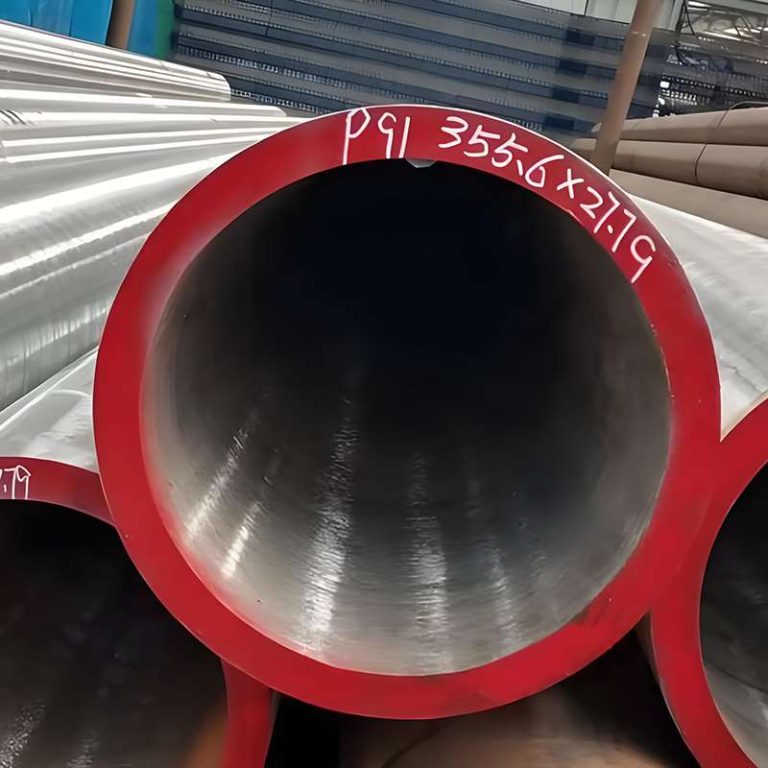
ASTM A335 P11 alloy steel pipe is a quintessential chromium-molybdenum (Cr-Mo) seamless alloy steel pipe, primarily utilized in service conditions involving moderate-to-high temperatures and pressures.
This material exhibits excellent strength stability and oxidation resistance within high-temperature environments, positioning it as a cost-effective solution situated between standard carbon steel and high-grade alloy steels (such as P22 and P91).
Compared to carbon steels (such as A106), P11 retains superior mechanical properties at temperatures exceeding 450°C; consequently, it is widely employed in systems requiring continuous high-temperature operation—such as those found in power plants and petrochemical facilities.
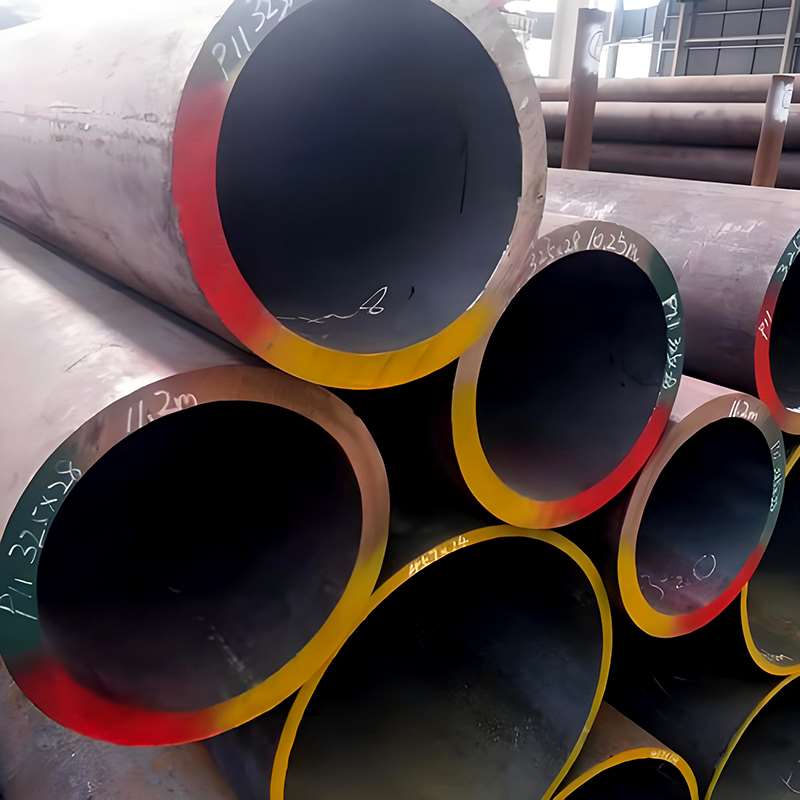
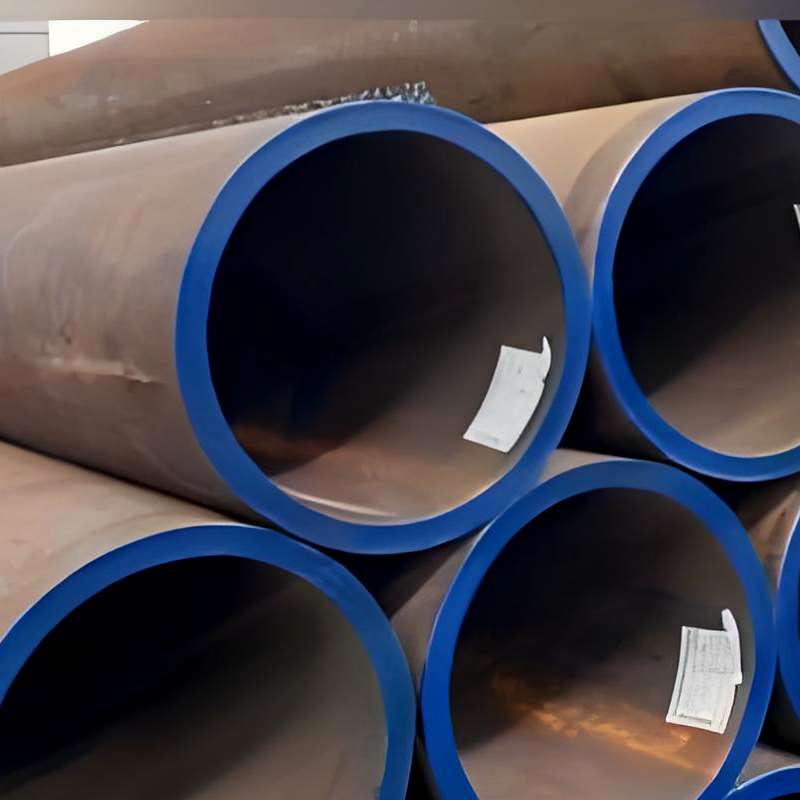
II. Chemical Composition and Mechanical Properties of ASTM A335 P11 Alloy Steel Pipe
| Category | Item | Requirement |
|---|---|---|
| Chemical Composition | Carbon (C) | 0.05 – 0.15 % |
| Manganese (Mn) | 0.30 – 0.60 % | |
| Silicon (Si) | 0.50 – 1.00 % | |
| Chromium (Cr) | 1.00 – 1.50 % | |
| Molybdenum (Mo) | 0.44 – 0.65 % | |
| Phosphorus (P) | ≤ 0.025 % | |
| Sulfur (S) | ≤ 0.025 % | |
| Mechanical Properties | Tensile Strength | ≥ 415 MPa |
| Yield Strength | ≥ 205 MPa | |
| Elongation | ≥ 30 % |
III. ASTM A335 P11 Alloy Steel Pipe Specifications and Dimensions
| NPS (inch) | Outside Diameter OD (mm) | SCH 40 (mm) | SCH 80 (mm) | SCH 160 (mm) | Common Length (m) | OD Tolerance | Wall Thickness Tolerance | Length Tolerance |
|---|---|---|---|---|---|---|---|---|
| 1/2″ | 21.3 | 2.77 | 3.73 | 4.78 | 6 / 12 | ±0.5% | -12.5% | +50 / 0 mm |
| 3/4″ | 26.7 | 2.87 | 3.91 | 5.56 | 6 / 12 | ±0.5% | -12.5% | +50 / 0 mm |
| 1″ | 33.4 | 3.38 | 4.55 | 6.35 | 6 / 12 | ±0.5% | -12.5% | +50 / 0 mm |
| 1-1/4″ | 42.2 | — | — | — | 6 / 12 | ±0.5% | -12.5% | +50 / 0 mm |
| 1-1/2″ | 48.3 | 3.68 | 5.08 | 7.14 | 6 / 12 | ±0.5% | -12.5% | +50 / 0 mm |
| 2″ | 60.3 | 3.91 | 5.54 | 8.74 | 6 / 12 | ±0.5% | -12.5% | +50 / 0 mm |
| 2-1/2″ | 73.0 | — | — | — | 6 / 12 | ±0.5% | -12.5% | +50 / 0 mm |
| 3″ | 88.9 | 5.49 | 7.62 | 11.13 | 6 / 12 | ±0.5% | -12.5% | +50 / 0 mm |
| 3-1/2″ | 101.6 | — | — | — | 6 / 12 | ±0.5% | -12.5% | +50 / 0 mm |
| 4″ | 114.3 | 6.02 | 8.56 | 13.49 | 6 / 12 | ±0.5% | -12.5% | +50 / 0 mm |
| 5″ | 141.3 | — | — | — | 6 / 12 | ±0.5% | -12.5% | +50 / 0 mm |
| 6″ | 168.3 | 7.11 | 10.97 | 18.26 | 6 / 12 | ±0.5% | -12.5% | +50 / 0 mm |
| 8″ | 219.1 | 8.18 | 12.70 | 23.01 | 6 / 12 | ±0.5% | -12.5% | +50 / 0 mm |
| 10″ | 273.0 | 9.27 | 15.09 | 28.58 | 6 / 12 | ±0.5% | -12.5% | +50 / 0 mm |
| 12″ | 323.9 | 10.31 | 17.48 | 33.32 | 6 / 12 | ±0.5% | -12.5% | +50 / 0 mm |
| 14″ | 355.6 | — | — | — | 6 / 12 | ±0.5% | -12.5% | +50 / 0 mm |
| 16″ | 406.4 | — | — | — | 6 / 12 | ±0.5% | -12.5% | +50 / 0 mm |
| 18″ | 457.0 | — | — | — | 6 / 12 | ±0.5% | -12.5% | +50 / 0 mm |
| 20″ | 508.0 | — | — | — | 6 / 12 | ±0.5% | -12.5% | +50 / 0 mm |
| 22″ | 559.0 | — | — | — | 6 / 12 | ±0.5% | -12.5% | +50 / 0 mm |
| 24″ | 609.6 | — | — | — | 6 / 12 | ±0.5% | -12.5% | +50 / 0 mm |
IV. ASTM A335 P11 Alloy Steel Pipe Manufacturing Process
Steel Billet → Heating → Piercing → Hot Rolling / Cold Drawing → Normalizing → Tempering → Straightening → Cutting → Inspection → Packaging
Manufacturing Process Description
| Process Stage | Process Name | Description | Key Control Points | Impact on Product Performance |
|---|---|---|---|---|
| Raw Material | Billet Selection | Use Cr-Mo alloy steel round billets | Chemical composition meets standards | Determines basic performance and stability |
| Heating | High-Temperature Heating | Heat the billet to plastic deformation temperature (approx. 1200°C) | Temperature uniformity, heating time | Prevents cracking and improves workability |
| Forming | Piercing | Convert solid billet into hollow shell | Inner surface quality control | Affects inner surface quality and structural integrity |
| Forming | Hot Rolling / Cold Drawing | Form steel pipe to target dimensions | Dimensional control, surface quality | Determines dimensional accuracy and surface finish |
| Heat Treatment | Normalizing | Refine grains and homogenize microstructure | Temperature and cooling control | Improves strength and structural uniformity |
| Heat Treatment | Tempering | Relieve stress and improve toughness | Tempering temperature and time | Enhances creep resistance and stability |
| Finishing | Straightening | Eliminate bending deformation | Straightness control | Ensures installation performance |
| Finishing | Cutting | Cut to fixed or multiple lengths as required | Length accuracy | Meets project requirements |
| Inspection | Quality Inspection | Dimensional, mechanical, and non-destructive testing | Compliance with testing standards | Ensures product meets standards |
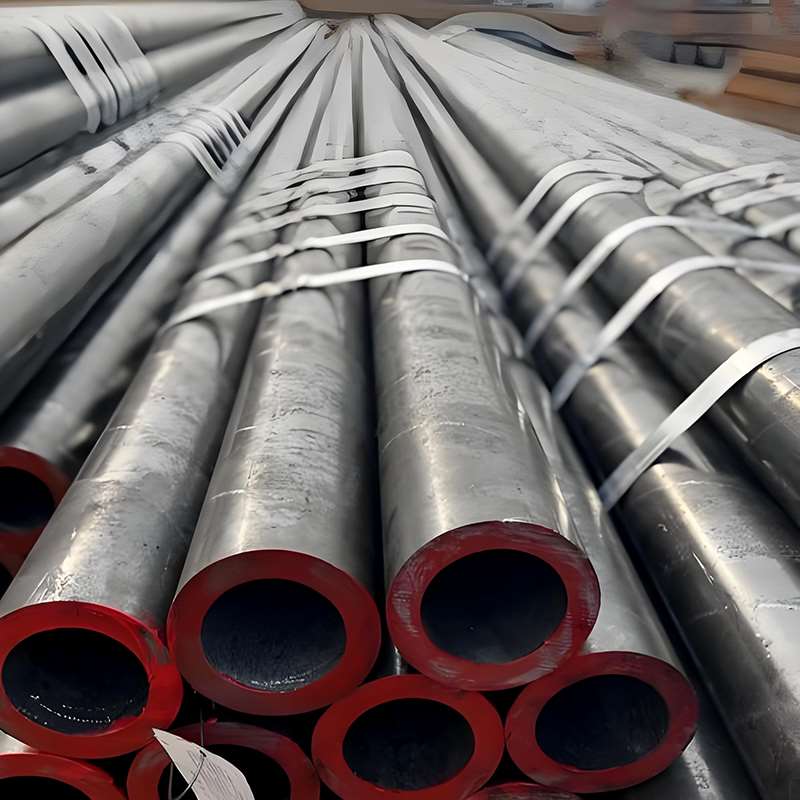
| Packaging | Protective Packaging | Anti-rust treatment and transport packaging | Anti-corrosion and moisture protection | Prevents damage and corrosion during transportation |
V. Application Fields and Selection Recommendations for ASTM A335 P11 Alloy Steel Pipe
i. Application Fields
- Power Plant Boilers and Steam Systems
P11 is widely utilized in power plant boilers for components such as superheater tubes and main steam lines; these areas are continuously exposed to high-temperature environments ranging from 450°C to 550°C.
Reason for Suitability:
It possesses excellent resistance to high-temperature oxidation and creep, enabling stable, long-term operation. - High-Temperature Petrochemical Facilities
In the petrochemical industry, P11 is frequently employed in cracking units and high-temperature reactor piping.
Reason for Suitability:
It is capable of withstanding high-temperature process media while also offering a certain degree of corrosion resistance. - Oil Refining and Oil & Gas Transmission Systems
Used in piping systems designed for the conveyance of high-temperature oil and gas media.
Reason for Suitability:
Under conditions involving high temperatures combined with specific pressure levels, it offers greater safety and reliability compared to carbon steel. - Heat Exchangers and Heat Transfer Systems
Used for heat exchanger tube bundles or high-temperature heat exchange equipment.
Reason for Suitability:
It exhibits excellent thermal stability, ensuring that its performance does not degrade significantly during prolonged operation. - Pressure Vessels and Industrial Piping
Suitable for medium-to-high temperature pressure piping systems.
Reason for Suitability:
While ensuring safety standards are met, it offers a lower cost alternative compared to higher-grade alloy steels (such as P22 or P91).
ii. Selection Recommendations
- Selection Based on Temperature
≤450°C → Carbon steel (e.g., A106) is recommended due to its lower cost.
450–550°C → P11 is recommended.
≥550°C → Upgrading to P22 or a higher grade is recommended.
Core Principle: Once the temperature exceeds the limits of carbon steel, alloy steel must be considered. - Selection Based on Operating Duration
Short-term or intermittent operation → A lower material grade may be appropriate.
Long-term continuous operation (e.g., power plants) → P11 or a higher grade must be selected.
Key Point: For long-term, high-temperature operating conditions, creep resistance must be a primary consideration. - Selection Based on Safety Classification
If the operating conditions involve a combination of:
High temperature
High pressure
Continuous operation
It is recommended to prioritize P11 or higher-grade materials to avoid safety risks caused by material failure. - Balancing Cost and Performance
The cost of P11 is higher than that of carbon steel, but significantly lower than that of P22 or P91.
For medium-to-high temperature applications, it represents one of the most cost-effective solutions.
Procurement Advice:
If the operating conditions fall within the applicable range of P11, there is no need to blindly select a higher-grade material. - Common Selection Pitfalls
Pitfall 1: Focusing solely on room-temperature strength while ignoring high-temperature performance.
In high-temperature environments, material failure is often caused by creep rather than a lack of tensile strength.
Pitfall 2: Substituting carbon steel for P11 in an attempt to reduce costs.
This carries an extremely high risk at temperatures exceeding 450°C.
Pitfall 3: Neglecting heat treatment requirements.
The performance of P11 cannot be guaranteed if it has not undergone the proper normalizing and tempering processes.
iii. Practical Summary
If your project meets the following criteria:
Temperatures between 450–550°C
Long-term continuous operation
A need to balance both cost and performance
Then:
ASTM A335 P11 is typically the most reasonable and economical choice.
VI. Frequently Asked Questions (FAQ)
1. How exactly should one choose between P11 and carbon steel (e.g., A106)? Can carbon steel be used as a substitute to reduce costs?
Answer:
This is one of the most common—and highest-risk—questions encountered in procurement.
- There is only one core criterion for making this determination: the operating temperature.
- When the temperature is ≤ 450°C: Carbon steel (e.g., A106) meets the requirements and offers lower costs.
- When the temperature is > 450°C: P11 or a higher-grade alloy steel must be selected.
Why is substitution not permissible?
At high temperatures, carbon steel exhibits the following issues:
- Reduced strength
- Long-term deformation (creep)
- Drastically shortened service life
Conclusion:
- At temperatures above 450°C, substituting P11 with carbon steel may appear unproblematic in the short term; however, it poses serious safety hazards during long-term operation.
2. How does one choose between P11 and P22? Is there a simple criterion for making this decision?
Answer:
A highly practical method can be used to make this determination:
- 450–550°C → Select P11
- 550–600°C → Select P22
- ≥600°C → Select a higher grade (e.g., P91)
Further Decision Logic:
- Temperature approaching the upper limit (e.g., above 540°C) → It is recommended to select P22 directly.
- Long-term continuous operation (e.g., power plants) → Prioritize the selection of a higher-grade material.
Key Point:
- When selecting a material, do not focus solely on whether it is “usable”; instead, consider “how long it can be used safely.”
3. Why is there such a significant price disparity for P11 material? How can one assess its quality?
Answer:
Price variations typically stem from the following key factors:
- 1) Adherence to Heat Treatment Standards
Was the “Normalizing + Tempering” process genuinely executed?
Are complete heat treatment records available? - 2) Raw Material Quality
Were compliant steel billets utilized?
Is the chemical composition stable? - 3) Thoroughness of Testing
Was Non-Destructive Testing (NDT)—specifically Ultrasonic Testing (UT)—performed?
Is a Material Test Certificate (MTC) provided?
Purchasing Advice:
Do not focus solely on price; you must verify the following:
- Is an MTC (Material Test Certificate) provided?
- Is third-party inspection (e.g., SGS, BV) supported?
- Can PMI testing (Positive Material Identification/on-site material verification) be performed?
In Summary:
- Low prices often result from compromises in manufacturing processes or a lack of comprehensive testing.
4. Is heat treatment mandatory for P11 material? What are the consequences if it is omitted?
Answer:
It is mandatory—and absolutely critical.
- The P11 standard explicitly requires:
Normalizing + Tempering - If the specified heat treatment is not performed, the following issues may arise:
Failure to meet strength requirements
Non-uniform material microstructure
Creep deformation at elevated temperatures
Cracking or failure during service
Practical Risks:
- Many quality issues stem not from “using the wrong material,” but rather from “improper heat treatment.”
Procurement Recommendation:
- It is essential to explicitly specify the following in your purchase order:
- “Heat Treatment: Normalized and Tempered”
5. How do I determine the appropriate wall thickness (SCH rating)? Is it acceptable to select it based solely on experience?
Answer:
It is not recommended to select the wall thickness based solely on experience; instead, it should be determined based on the following factors:
- 1) Operating Pressure (The most critical factor)
Higher pressure → Thicker wall - 2) Operating Temperature
Higher temperature → Reduced material strength → Requires a thicker wall - 3) Safety Factor
Critical piping systems must incorporate a safety margin.
Common References:
- General Service Conditions → SCH 40
- Medium-to-High Pressure → SCH 80 (Most commonly used)
- High Pressure / High Temperature → SCH 160 or higher
Professional Advice:
- Ideally, the wall thickness should be calculated by an engineer based on the design pressure, or determined by referencing relevant ASME design codes.
6. When procuring P11 material, which tests are mandatory, and which are optional?
Answer:
This is a critical issue for ensuring project safety.
Mandatory Tests:
- Chemical Composition Analysis
- Tensile Testing (Mechanical Properties)
- Dimensional Inspection
- Visual Inspection
Strongly Recommended Additions:
- Ultrasonic Testing (UT) → To detect internal defects
- Hydrostatic Testing → To verify pressure-bearing capacity
Recommendations for High-End Projects:
- PMI Testing (Material Spectroscopic Analysis)
- Third-Party Inspection (SGS / BV)
Procurement Principles:
- Standard Projects: Basic testing is sufficient.
- Critical Projects (Power Plants / Petrochemical Facilities): Non-destructive testing (NDT) must be included.
In Summary:
- Testing is not a cost; it is risk management.