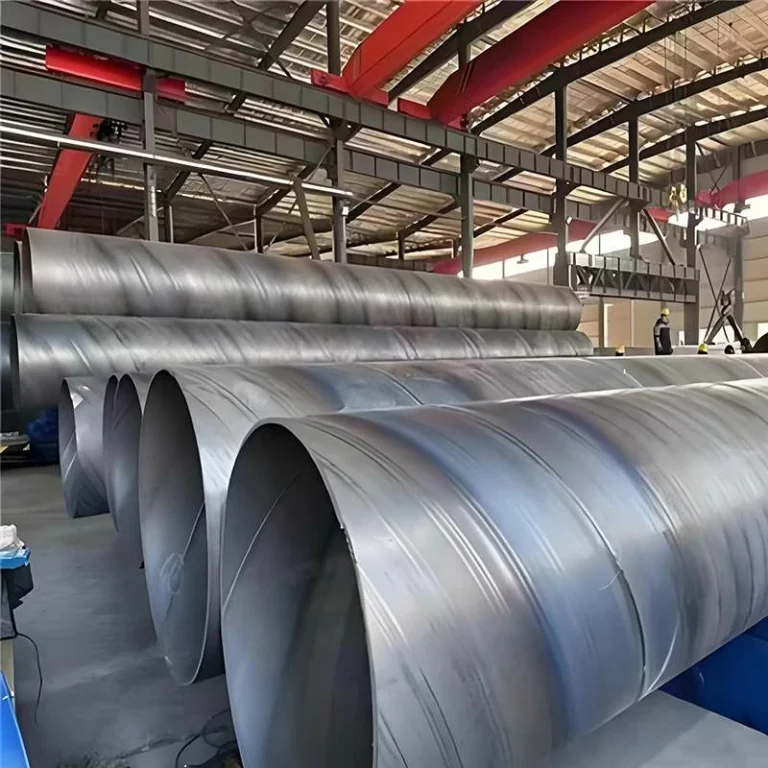
I. Overview of High-Strength Galvanized Carbon Steel Pipes
i. Product Introduction
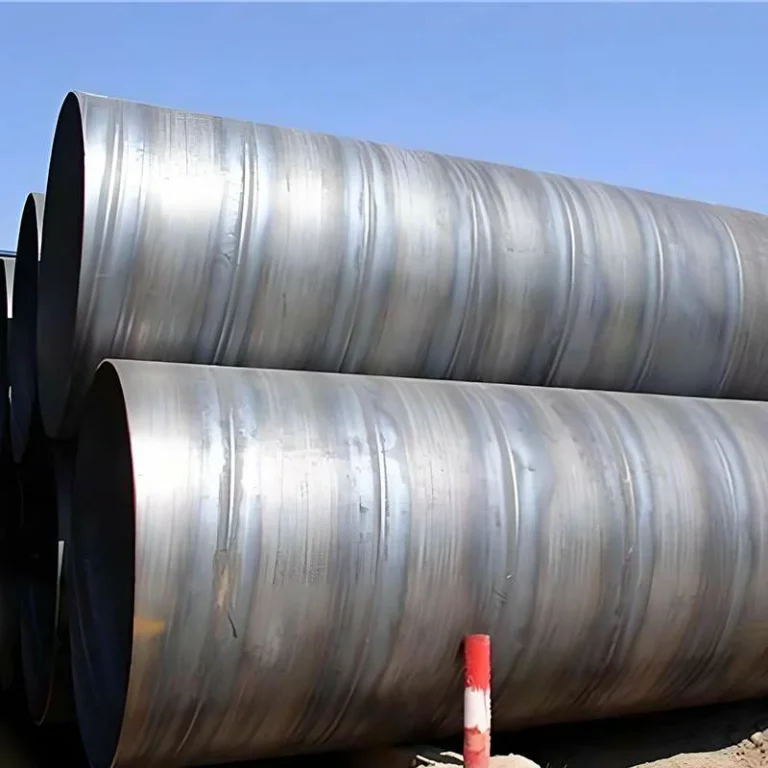
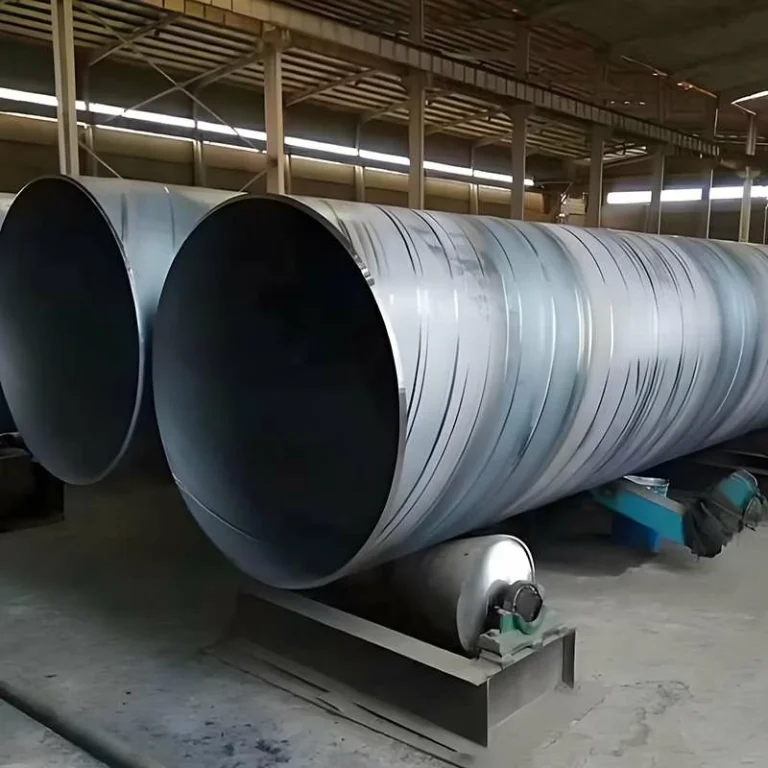
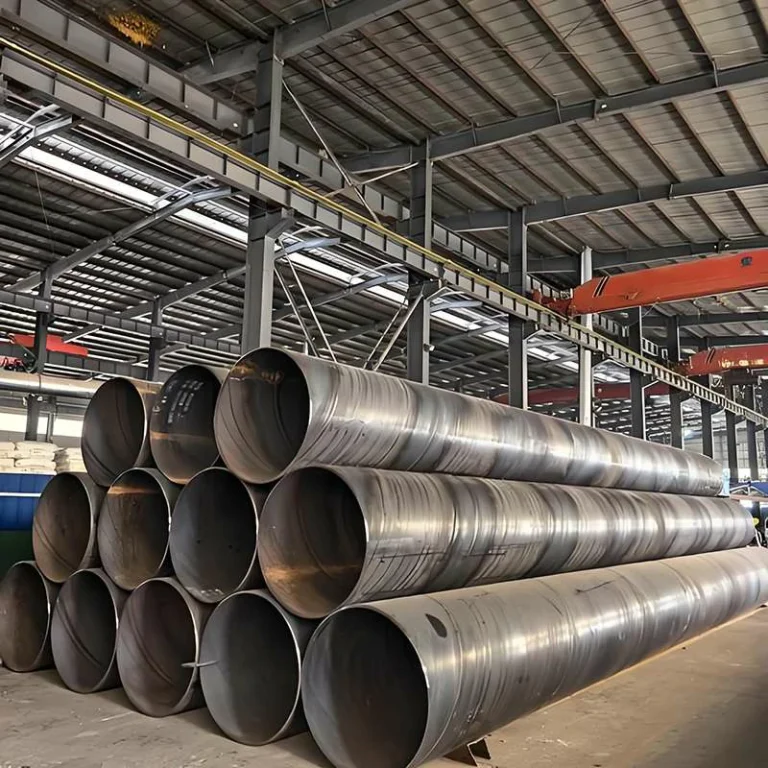
- High-strength galvanized carbon steel pipes are manufactured from high-quality carbon structural steel.
- The inner and outer surfaces of the steel pipes are treated with hot-dip galvanizing.
- The zinc coating is uniform, dense, and has strong adhesion.
- While ensuring strength, it significantly improves corrosion resistance.
- It is a common and mature galvanized carbon steel pipe solution.
ii. Strength and Performance Advantages
- The product has good yield strength and tensile strength.
- It can withstand large structural loads and external impacts.
- Suitable for medium to high-strength applications.
- Meets the requirements for long-term stable operation.
iii. Corrosion Protection and Service Life
- The hot-dip galvanized zinc layer covers the inner and outer surfaces of the steel pipe.
- Effectively prevents oxidation and corrosion.
- Extends the service life of the pipeline.
- Reduces future maintenance and replacement costs.
II. Standards and Materials for High-Strength Galvanized Carbon Steel Pipes
| Item | Description |
|---|---|
| Product Name | High-Strength Galvanized Carbon Steel Pipe |
| Standards (ASTM) | ASTM A53 Gr.B (structural and general use); ASTM A500 Gr.B / Gr.C (structural); ASTM A106 Gr.B (pressure-bearing and high-temperature use) |
| Standards (EN) | EN 10219 S235JR / S355JR (structural); EN 10240 (technical requirements for galvanized steel pipes) |
| Standards (GB) | GB/T 3091 Q235B / Q355B (welded galvanized steel pipe); GB/T 8162 20# / Q345B (structural) |
| Common Materials / Grades | Q235B, Q355B; 20#; ASTM A53 Gr.B; ASTM A500 Gr.B / Gr.C; S235JR, S355JR |
| Pipe Type | ERW Welded Steel Pipe; Seamless Steel Pipe (optional) |
| Galvanization Process | Hot-Dip Galvanization (HDG); Electro-Galvanization (optional) |
| Zinc Layer Requirement | ≥ 70 μm (standard); 85–120 μm (customizable) |
| Target Market | North America, Europe, Middle East, Southeast Asia, and other international engineering projects |
| Typical Applications | Building structures, steel structure projects, municipal facilities, guardrails, scaffolding, general industrial pipelines |
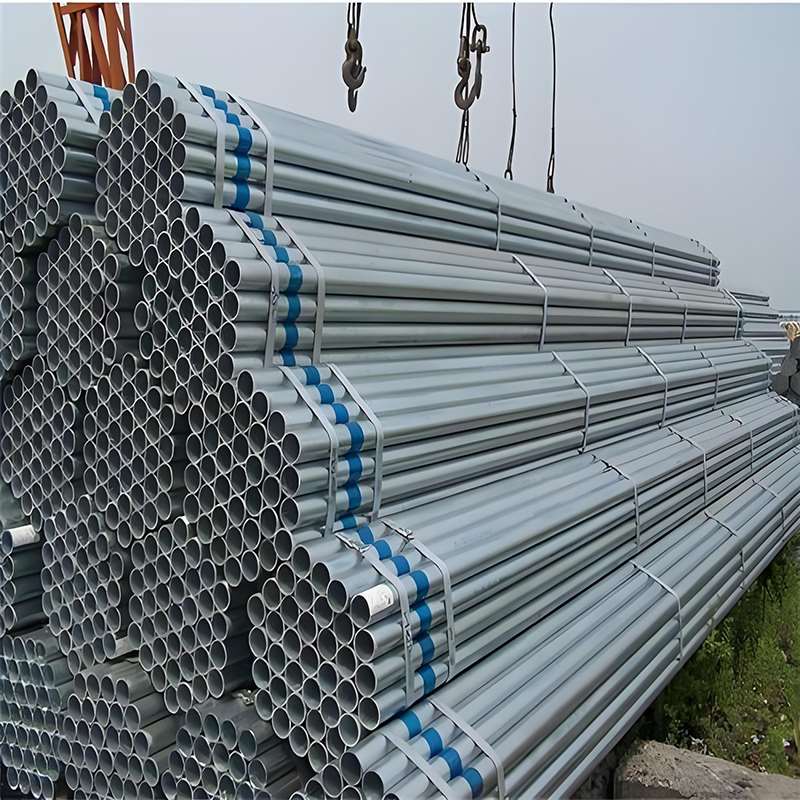
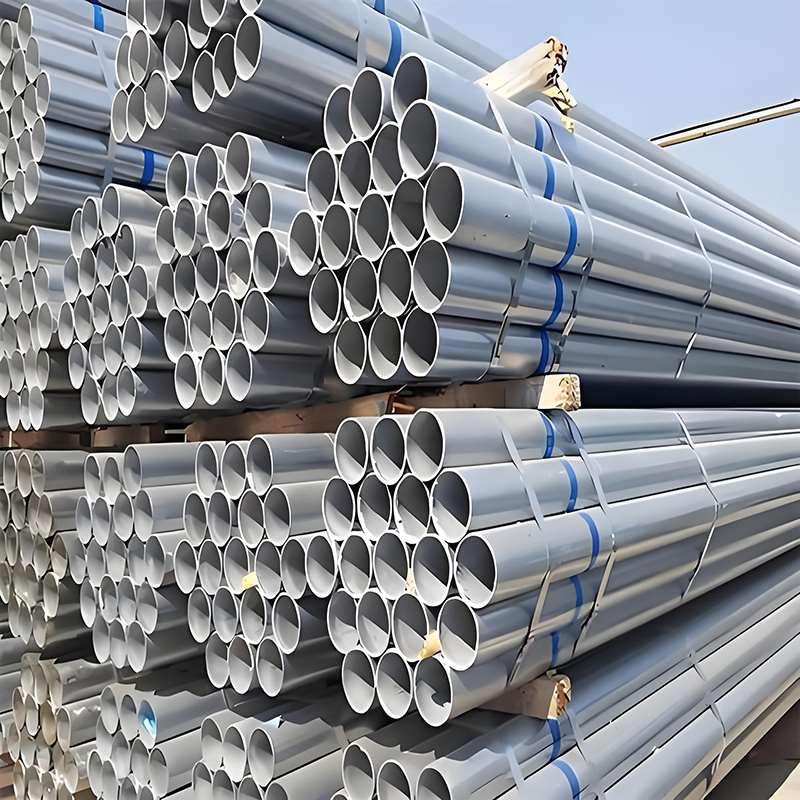
III. Manufacturing Process Flow of High-Strength Galvanized Carbon Steel Pipes
Raw Material Inspection → Steel Coil/Pipe Blank Preparation → Forming (ERW High-Frequency Welding or Seamless Forming) → Weld Seam Treatment/Overall Shaping → Size Correction and Length Cutting → Surface Pre-treatment (Degreasing → Pickling → Water Washing) → Fluxing Treatment (Immersion in Flux Solution) → Hot-Dip Galvanizing → Cooling and Surface Finishing → Zinc Layer Thickness Testing → Size, Appearance, and Performance Inspection → Pipe End Processing (Plain End/Chamfering/Threading, Optional) → Finished Product Protection and Packaging → Warehousing or Shipment
IV. Typical Working Conditions and Product Recommendations for High-Strength Galvanized Carbon Steel Pipes
i. Heavy-Duty Structural Support Applications
Working Condition Characteristics:
Subject to long-term static or dynamic loads.
High requirements for structural strength and stability.
Product Recommendation:
It is recommended to use high-strength galvanized carbon steel pipes with thicker walls.
Steel grades can be selected from Q355B, ASTM A500 Gr.C, or S355JR.
The main forming method is hot-dip galvanized welded carbon steel pipe, balancing strength and cost.
ii. Long-Term Outdoor Exposure Applications
Working Condition Characteristics:
Long-term exposure to rain, moisture, and ultraviolet radiation.
Prone to surface corrosion, with limited maintenance opportunities.
Product Recommendation:
Prioritize hot-dip galvanized products.
Pay attention to whether the zinc layer thickness meets the service life requirements.
Suitable for guardrails, fences, and municipal facilities.
iii. Frequent Disassembly or Re-use Applications
Working Condition Characteristics:
Repeated installation and disassembly.
The pipe surface is prone to wear and tear.
Product Recommendation:
Choose specifications with moderate strength and uniform wall thickness.
The galvanized layer should have good adhesion and not easily peel off.
Commonly used in scaffolding and temporary structural systems.
iv. General Industrial Equipment and Framework Applications
Working Condition Characteristics:
Medium load requirements.
Requirements for dimensional accuracy and welding performance.
Product Recommendation:
Use industrial galvanized carbon steel pipes with stable dimensions and good processing performance.
The wall thickness can be reasonably selected according to the load conditions to avoid over-engineering.
Suitable for equipment supports, platform structures, and mechanical frames.
v. Low-Pressure Fluid Transport and Auxiliary Piping Applications
Working Condition Characteristics:
Transporting water or general industrial media.
Relatively low working pressure.
Product Recommendation:
Use galvanized carbon steel pipes that meet the relevant standards.
Focus on calculating wall thickness and pressure bearing capacity.
Ensure that the connection method matches the actual working conditions.
V. Testing Standards for High-Strength Galvanized Carbon Steel Pipes
| Inspection Item | Inspection Content | Reference Standard | Main Requirement / Description |
|---|---|---|---|
| Chemical Composition Analysis | Content of C, Mn, Si, P, S, and other elements | ASTM A53 / A500; EN 10219; GB/T 700 | Chemical composition must meet the corresponding steel grade requirements |
| Mechanical Properties Test | Yield strength, tensile strength, elongation | ASTM A370; EN ISO 6892-1; GB/T 228 | Must meet the minimum performance requirements specified in the standards |
| Outer Diameter & Wall Thickness | OD, WT, tolerances, ovality | ASTM A53; EN 10219; GB/T 3091 | Dimensional deviations must be within allowable limits |
| Weld Quality Inspection | Weld appearance and continuity | ASTM A53; EN 10219 | Welds should be uniform, free of cracks or lack of fusion |
| Non-Destructive Testing (Optional) | Ultrasonic / Eddy current testing | ASTM A450 / A530; EN ISO 10893 | Used for critical or export projects |
| Surface Quality | Surface defects, galvanization integrity | ASTM A53; EN 10240 | Surface should be free of major scratches or peeling |
| Galvanized Coating Thickness | Measurement of average zinc layer thickness | ASTM A123 / A153; EN 10240; GB/T 13912 | Typically ≥ 70 μm, customizable on request |
| Galvanized Coating Adhesion | Bonding strength of zinc layer | ASTM A123; EN 10240 | No large-area peeling allowed |
| Bend Test (Optional) | Pipe bending performance | ASTM A53; GB/T 244 | No cracks after bending |
| Hydrostatic Test (Optional) | Pressure-bearing performance test | ASTM A53; GB/T 241 | Applicable to pipeline use |
| Appearance & Marking | Marking, printing, labels | ASTM A53; EN 10219 | Clear markings and complete information |
| Final Factory Inspection | Document and physical verification | Customer Technical Agreement | Must meet contract and technical requirements |
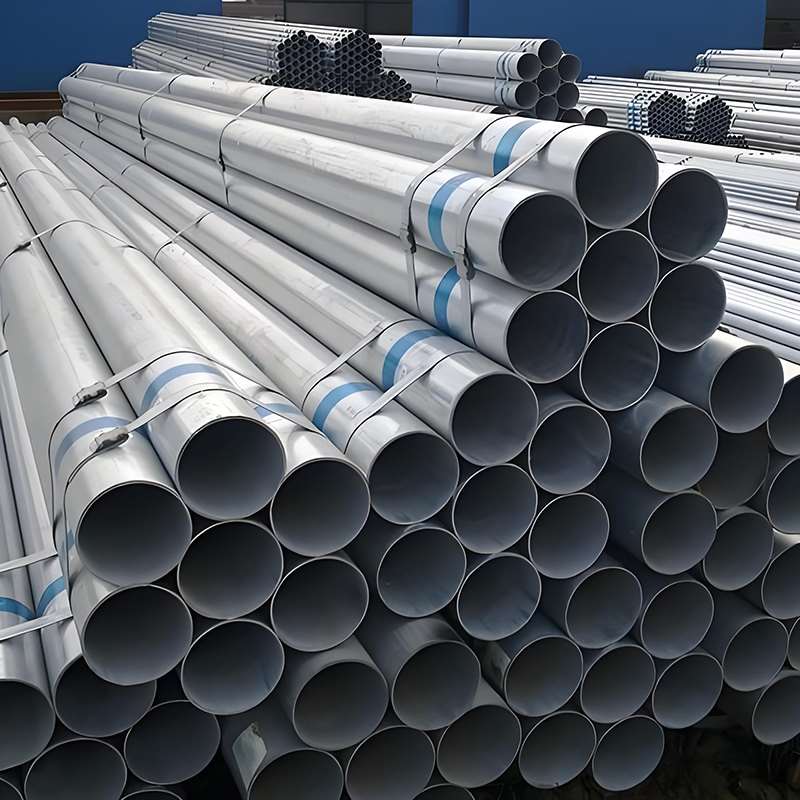
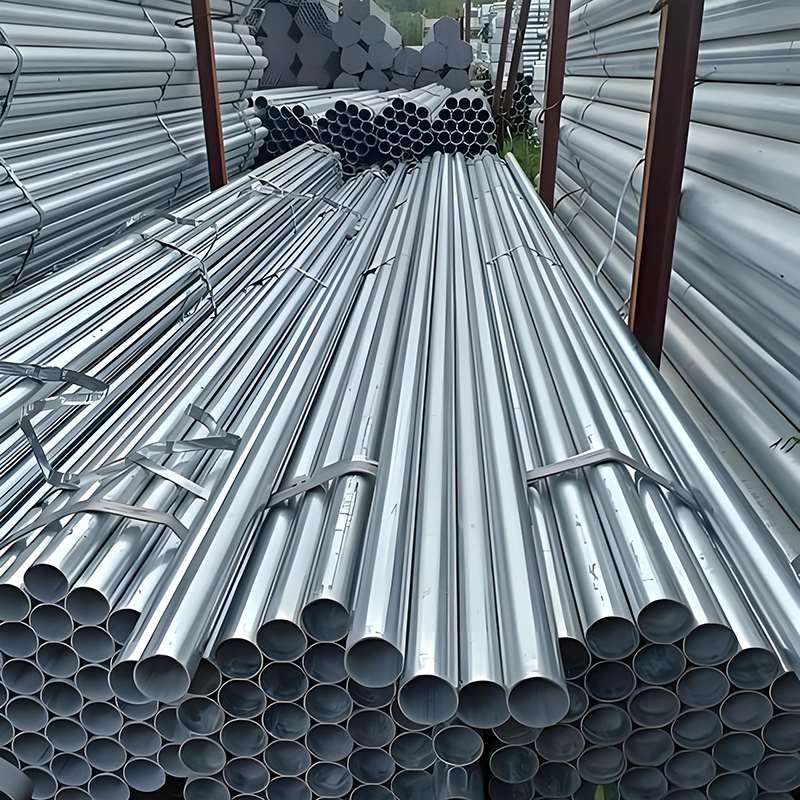
VI. Export Packaging and Transportation of High-Strength Galvanized Carbon Steel Pipes
- Export Packaging Principles
Export packaging focuses on rust prevention, moisture protection, and collision prevention.
Ensuring that steel pipes are not damaged during long-distance sea transport and multiple loading and unloading processes.
While also considering container loading efficiency and ease of unloading. - Standard Bundling Method
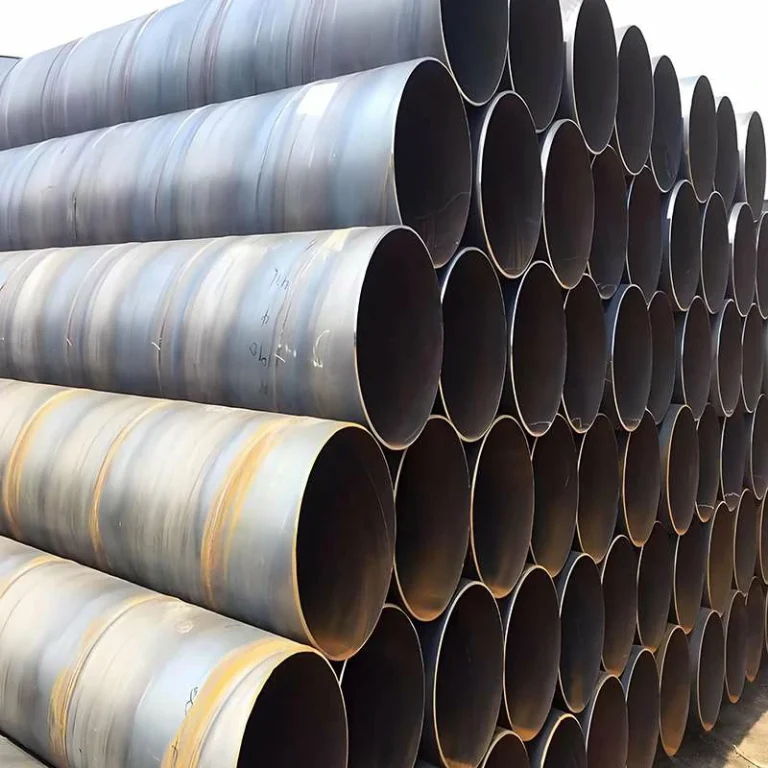
Steel pipes are usually bundled with steel straps.
The weight and quantity of each bundle are reasonably controlled according to specifications.
Bundling is secure to prevent loosening or rolling during transportation.
Suitable for full container load (FCL) or less than container load (LCL) exports. - Pipe End Protection Measures
Plastic protective caps can be added to the ends of each steel pipe.
Preventing deformation of the pipe ends during transportation and handling.
Reducing the risk of damage to threaded or beveled ends.
More convenient for subsequent installation and connection. - Moisture and Rust Prevention Treatment
Simple rust prevention treatment can be performed before export.
Moisture-proof film or woven bags are used when necessary.
Especially important for high-humidity shipping routes or during the rainy season.
Helps maintain the surface condition of the galvanized layer. - Container Loading Method
20GP, 40GP, or 40HC containers can be used for shipment.
Short-length steel pipes can be loaded horizontally to improve loading efficiency.
Long-length steel pipes are usually loaded vertically.
Padding and securing measures are taken during loading to prevent displacement. - Bulk and Project Transportation
For extra-long or large-diameter steel pipes,
Bulk carriers or frame containers can be used for transportation.
Suitable for engineering projects or bulk orders.
Port and loading/unloading conditions need to be confirmed in advance. - Marking and Documentation
Each bundle of steel pipes can be clearly marked with labels or stencils.
Including specifications, steel grade, quantity, and order number.
Facilitating customs clearance, warehousing, and on-site management.
Packing list, invoice, and material certificates are provided. - Export Transportation Suggestions
For long-distance sea transport, moisture-proof packaging is a priority.
For project orders, it is recommended to confirm the container loading plan in advance.
For special specifications, transportation restrictions need to be communicated in advance.
VII. Export Packaging Method Comparison Table
| Specification Range (OD) | Common Wall Thickness Range | Single Length | Recommended Packaging Method | Pipe End Protection | Applicable Transport |
|---|---|---|---|---|---|
| Φ21.3 – Φ48.3 mm | 1.8 – 3.5 mm | 6 m | Steel strap bundling (multiple pipes per bundle) | Plastic pipe caps | 20GP / 40GP containers |
| Φ60.3 – Φ114.3 mm | 2.5 – 5.0 mm | 6 / 12 m | Steel strap bundling + moisture-proof film | Plastic pipe caps | 40GP / 40HC containers |
| Φ139.7 – Φ219.1 mm | 4.0 – 8.0 mm | 6 / 12 m | Steel strap bundling + wooden spacers | Pipe end protection caps | 40HC / bulk cargo |
| Φ273 – Φ355.6 mm | 6.0 – 10.0 mm | 6 / 12 m | Single or small bundle | Pipe end protection caps | Bulk ship / frame container |
| ≥ Φ406 mm | 8.0 – 12.7 mm | Customized | Single pipe packaging + wooden fixing | Reinforced pipe end protection | Bulk ship / special transport |
| Fixed Length ≤ 3 m | As required | ≤ 3 m | Steel strap bundling or pallets | Optional | 20GP container |
| Threaded Steel Pipe | 2.0 – 6.0 mm | 6 m | Bundling + moisture-proof packaging | Thread protection sleeve | Container |