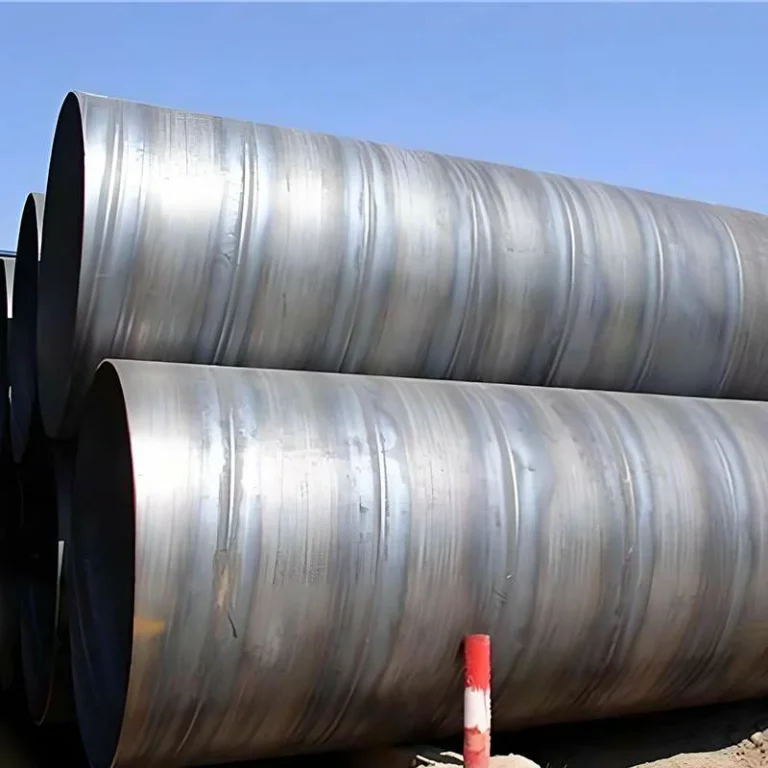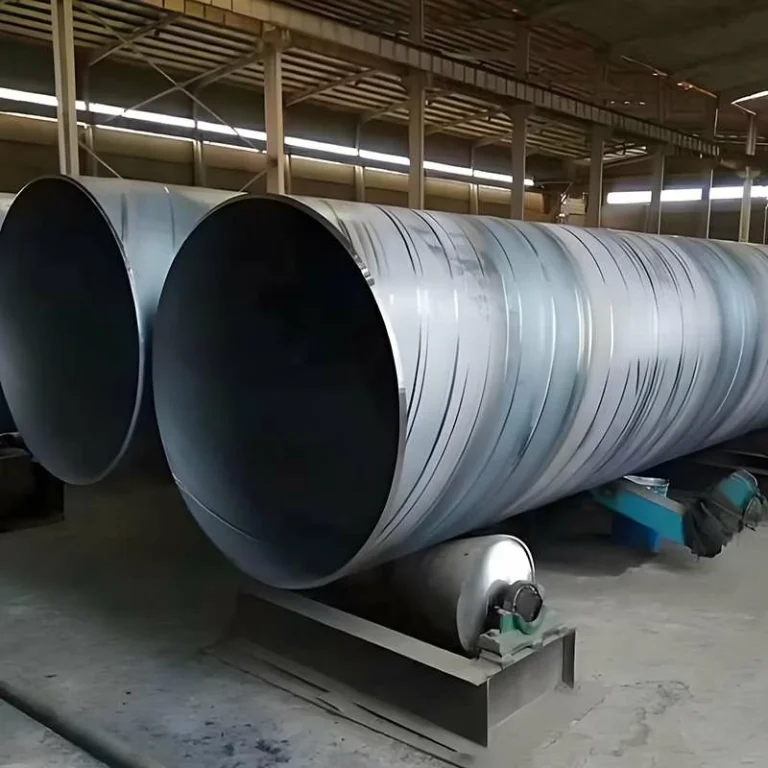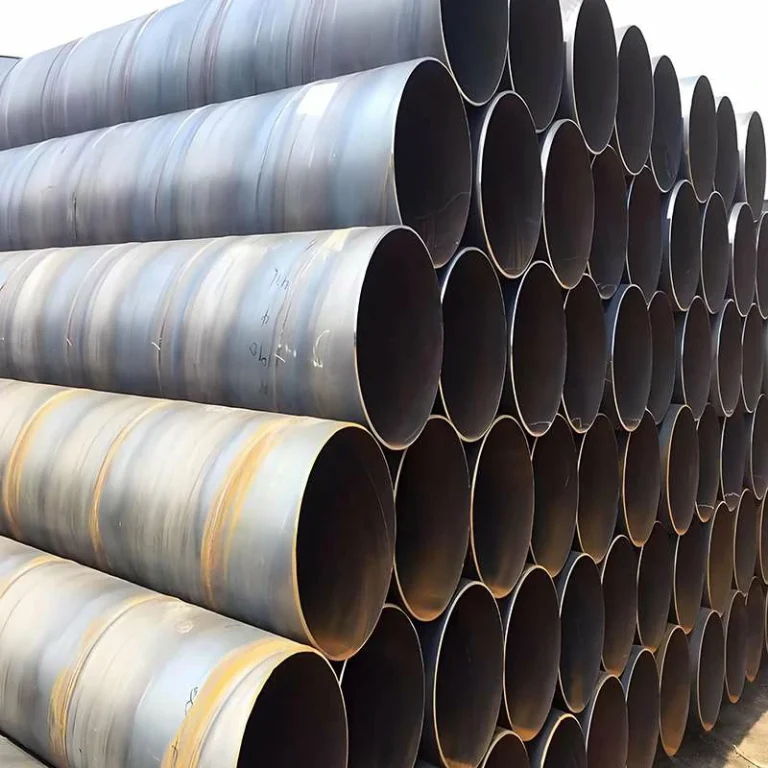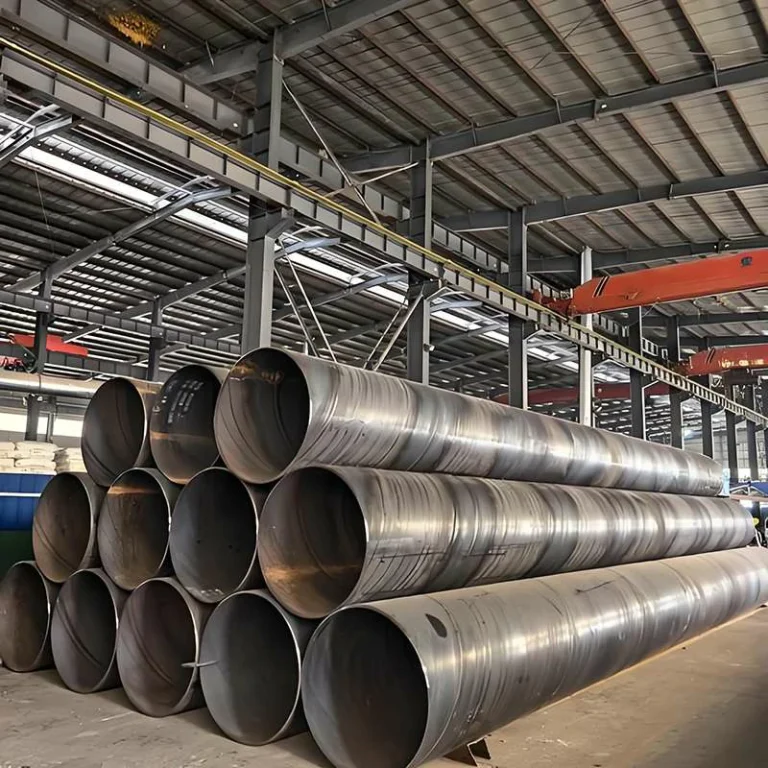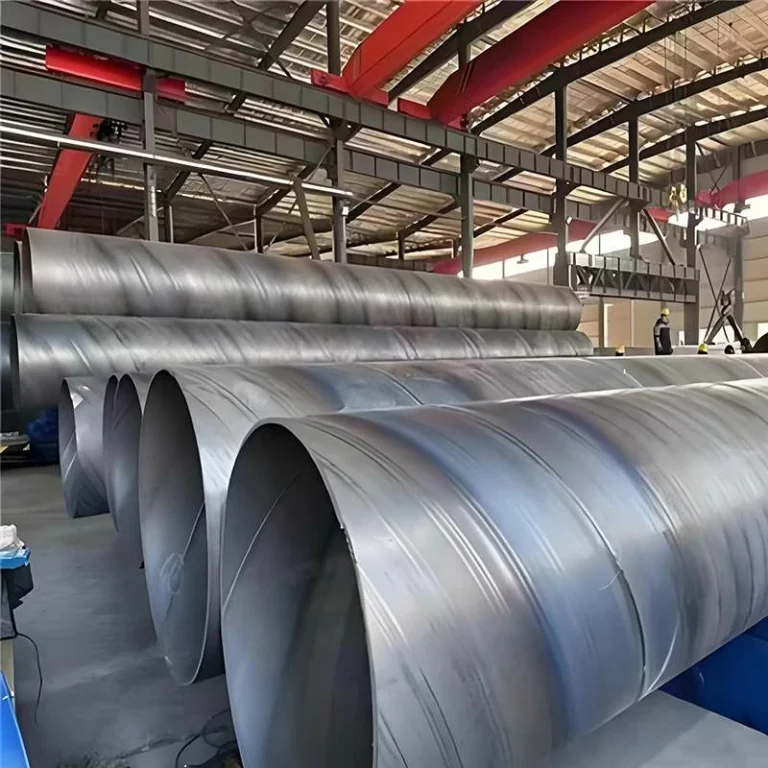
I. Overview of High-Pressure Welded Carbon Steel Pipes
i. Product Introduction
- High-pressure welded carbon steel pipes are steel pipes manufactured using a high-frequency resistance welding process.
- After continuous forming of the steel strip, the edges of the pipe blank are rapidly heated by high-frequency current and welded together by extrusion.
- The weld seam is dense and has a uniform structure, ensuring the pressure resistance and reliability of the pipeline.
- This type of pipe is commonly referred to as HFW carbon steel pipe (High-Frequency Welded) in the industry.
ii. Product Features
- High-pressure welded carbon steel pipes have uniform wall thickness, high dimensional accuracy, and good surface finish.
- They offer high production efficiency and are suitable for large-scale, continuous production.
II. Commonly Used Standards and Steel Grades for High-Pressure Welded Carbon Steel Pipes
| Standard | Common Steel Grade / Material | Description |
|---|---|---|
| ASTM A53 | Gr.B | Used for general industrial and municipal pipelines, suitable for low to medium pressure conditions. |
| ASTM A106 | Grade B | Suitable for high-temperature and high-pressure fluid transportation, with good heat resistance. |
| API 5L | Gr.B / X42 / X52 | Used for oil and gas pipelines, with high pressure-bearing capacity. |
| EN 10219 | S235 / S275 / S355 | Welded structural carbon steel pipe, suitable for construction and mechanical structures. |
| GB/T 8163 | Q235 / Q345 | Common domestic pipeline standard, suitable for industrial and water supply pipelines. |
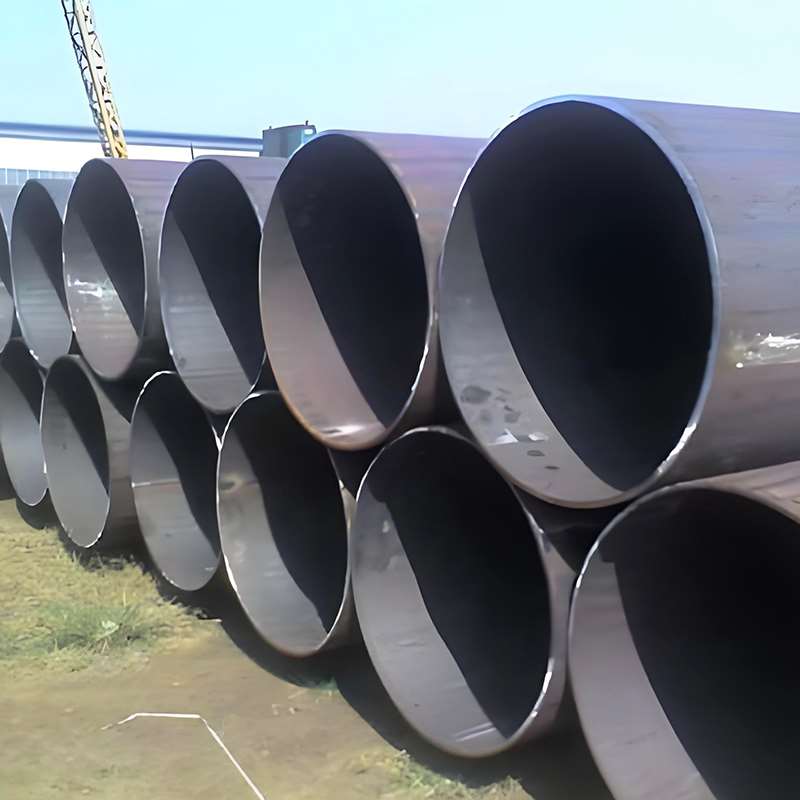
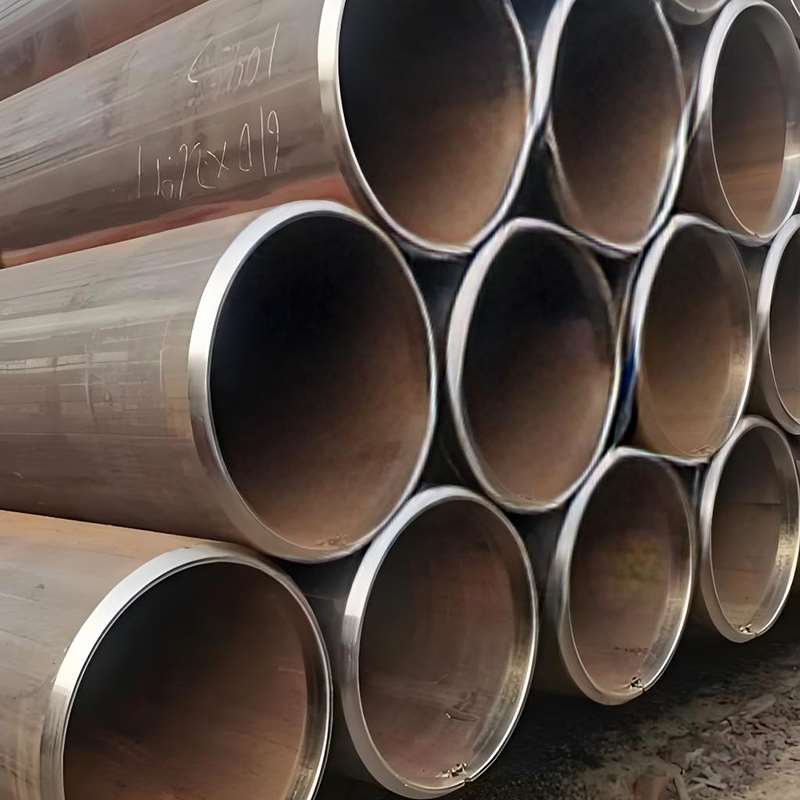
III. Chemical Composition and Mechanical Properties of High-Pressure Welded Carbon Steel Pipes
i. Chemical Composition Comparison Table of High-Pressure Welded Carbon Steel Pipes
| Standard | Steel Grade / Material | C | Si | Mn | P | S |
| ASTM A53 | Gr.B | 0.25 max | 0.10–0.30 | 0.29–1.06 | 0.06 max | 0.05 max |
| ASTM A106 | B级 | 0.30 max | 0.10–0.40 | 0.29–1.06 | 0.035 max | 0.035 max |
| API 5L | Gr.B | 0.26 max | 0.30 max | 1.03 max | 0.035 max | 0.035 max |
| API 5L | X42 | 0.26 max | 0.30 max | 1.20 max | 0.035 max | 0.035 max |
| API 5L | X52 | 0.26 max | 0.30 max | 1.40 max | 0.035 max | 0.035 max |
| EN 10219 | S235 | 0.17 max | 0.55 max | 1.40 max | 0.035 max | 0.035 max |
| EN 10219 | S355 | 0.20 max | 0.55 max | 1.70 max | 0.035 max | 0.035 max |
| GB/T 8163 | Q235 | 0.22 max | 0.35 max | 1.40 max | 0.045 max | 0.045 max |
| GB/T 8163 | Q345 | 0.20–0.25 | 0.35 max | 1.00–1.60 | 0.035 max | 0.035 max |
Notes:
- Carbon (C) content affects strength and weldability.
- Manganese (Mn) and silicon (Si) are used to improve strength and heat resistance.
- Phosphorus (P) and sulfur (S) content are kept at low levels to ensure toughness and weldability.
- For high-pressure pipelines and high-temperature applications, ASTM A106 Grade B seamless carbon steel pipes or API 5L carbon steel pipes are preferred.
- For construction or structural applications, EN 10219 S235–S355 or GB/T Q235–Q345 pipes can be selected.
ii. Mechanical Properties Table of High-Pressure Welded Carbon Steel Pipes
| Standard | Steel Grade / Material | Yield Strength ReH (MPa) | Tensile Strength Rm (MPa) | Elongation A (%) |
|---|---|---|---|---|
| ASTM A53 | Gr.B | 205 min | 330–480 | 25 min |
| ASTM A106 | Grade B | 240 min | 415–550 | 25 min |
| API 5L | Gr.B | 241 min | 415–550 | 25 min |
| API 5L | X42 | 290 min | 415–535 | 25 min |
| API 5L | X52 | 345 min | 450–585 | 22 min |
| EN 10219 | S235 | 235 min | 360–510 | 26 min |
| EN 10219 | S355 | 355 min | 470–630 | 22 min |
| GB/T 8163 | Q235 | 235 min | 375–500 | 26 min |
| GB/T 8163 | Q345 | 345 min | 470–630 | 22 min |
IV. Manufacturing Process Flow of High-Pressure Welded Carbon Steel Pipes
Raw Material Inspection → Steel Coil Uncoiling → Leveling Treatment → Continuous Forming → High-Frequency Resistance Welding → Weld Seam Extrusion Forming → Internal and External Weld Bead Removal → Online Weld Seam Inspection → Sizing and Rounding → Straightening Treatment → Heat Treatment (as needed) → Fixed-Length Cutting → End Processing → Finished Product Inspection → Surface Treatment / Anti-Corrosion Coating → Packaging and Shipment
V. Core Differences Between High-Pressure Welded Carbon Steel Pipes and Seamless Pipes
| Comparison Item | HFW Carbon Steel Pipe | Seamless Pipe |
|---|---|---|
| Manufacturing Process | Formed from steel strip and welded by high-frequency resistance welding | Made by piercing and rolling from solid round steel or billets |
| Pipe Structure | Has longitudinal weld seam, welded and formed by extrusion | Entirely seamless structure |
| Dimensional Accuracy | High control over outer diameter and wall thickness | Dimensional accuracy is relatively lower |
| Wall Thickness Uniformity | Wall thickness distribution is uniform and stable | Wall thickness uniformity depends on rolling process |
| Pressure Capacity | Suitable for medium to high-pressure applications, meets most engineering needs | Suitable for very high-pressure and severe conditions |
| High-Temperature Adaptability | Can be used in medium to high-temperature environments | Better suited for simultaneous high-temperature and high-pressure conditions |
| Welding & Machining | Good weldability, easy for on-site processing | Good machinability, but higher cost |
| Cost Level | High manufacturing efficiency, lower overall cost | Longer production cycle, higher cost |
| Delivery Lead Time | Strong mass production capacity, stable delivery | Limited specifications, relatively longer lead time |
| Typical Applications | Industrial pipelines, municipal projects, structural uses | High-temperature and high-pressure pipelines, critical pressure systems |
| Selection Suggestion | Preferable when design pressure requirements are met | Choose seamless carbon steel pipe when extremely high safety margin is required |
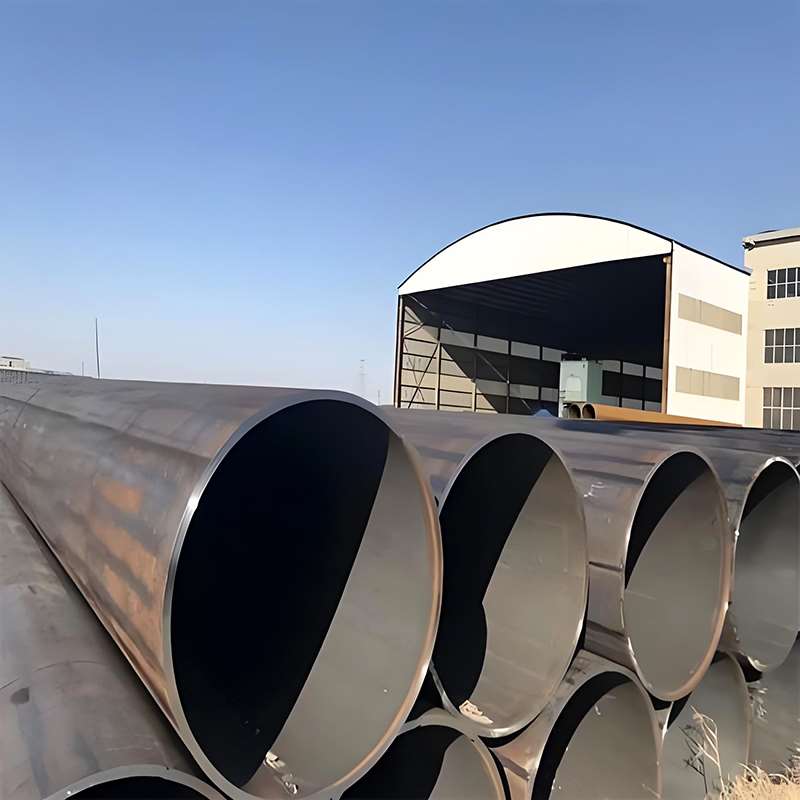
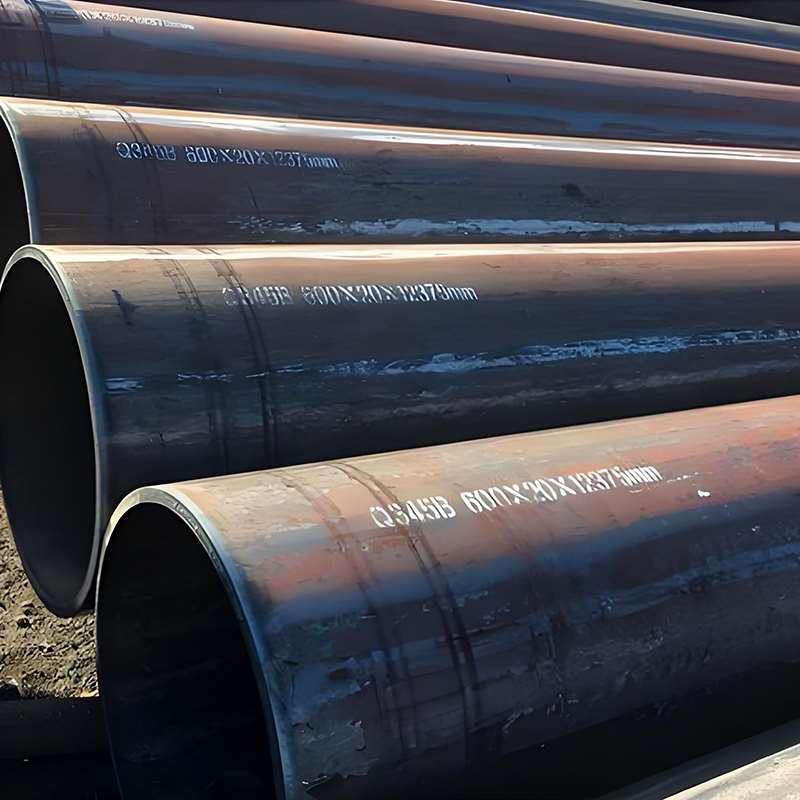
VI. Specifications and Dimensions Table for High-Pressure Welded Carbon Steel Pipes
| Nominal Outer Diameter OD (mm) | Common OD Range (mm) | Common Wall Thickness WT (mm) | Recommended Pressure Rating (Reference) | Typical Supply Length |
|---|---|---|---|---|
| 21.3 | 21–22 | 2.0 – 3.2 | Low Pressure | 6 m / 12 m |
| 33.4 | 33–34 | 2.6 – 4.0 | Low–Medium Pressure | 6 m / 12 m |
| 48.3 | 48–49 | 2.6 – 5.0 | Medium Pressure | 6 m / 12 m |
| 60.3 | 60–61 | 3.0 – 6.0 | Medium Pressure | 6 m / 12 m |
| 76.1 | 76–77 | 3.2 – 6.3 | Medium–High Pressure | 6 m / 12 m |
| 88.9 | 88–90 | 3.2 – 8.0 | Medium–High Pressure | 6 m / 12 m |
| 114.3 | 114–115 | 4.0 – 10.0 | High Pressure | 6 m / 12 m |
| 139.7 | 139–140 | 4.0 – 12.0 | High Pressure | 6 m / 12 m |
| 168.3 | 168–170 | 5.0 – 14.0 | High Pressure | 6 m / 12 m |
| 219.1 | 219–220 | 6.0 – 16.0 | High Pressure | 6 m / 12 m |
| 273.1 | 273–274 | 6.0 – 18.0 | High Pressure | 6 m / 12 m |
| 323.9 | 324–325 | 6.0 – 20.0 | High Pressure | 6 m / 12 m |
| 355.6 | 355–356 | 8.0 – 22.0 | High Pressure | 6 m / 12 m |
| 406.4 | 406–407 | 8.0 – 25.0 | High Pressure | 6 m / 12 m |
| 508.0 | 508–509 | 10.0 – 25.0 | High Pressure | 6 m / 12 m |
| 610.0 | 610–611 | 10.0 – 25.0 | High Pressure | 6 m / 12 m |
VII. Frequently Asked Questions about High-Pressure Welded Carbon Steel Pipes
Q1: What pressure range are high-pressure welded carbon steel pipes suitable for?
- High-pressure welded carbon steel pipes are suitable for medium to high-pressure applications.
- The specific usable pressure must be determined based on the applicable standards, steel grade, outer diameter, and wall thickness.
- They should not be selected solely based on the term “high-pressure.”
Q2: Can high-pressure welded carbon steel pipes replace seamless pipes?
- Yes, under conditions permitted by the standards.
- If the design pressure, temperature, and medium meet the specifications, welded pipes can be a viable option.
- Seamless pipes are usually preferred in extremely high-pressure or high-temperature applications.
Q3: How is the weld quality ensured for pressure safety?
- The weld is formed by high-frequency resistance welding.
- The finished product undergoes non-destructive testing and dimensional inspection.
- The mechanical properties of qualified welds meet the design requirements.
Q4: What are the most critical technical parameters for selection?
- Design pressure.
- Operating temperature.
- Outer diameter and wall thickness.
- These parameters collectively determine the pressure capacity and service life of the pipeline.
Q5: Are high-pressure welded carbon steel pipes suitable for high-temperature applications?
- Some steel grades can be used in medium to high-temperature environments.
- High temperatures reduce material strength.
- Selection should be evaluated in conjunction with the temperature range permitted by the standards.
Q6: Is corrosion protection necessary for high-pressure welded carbon steel pipes?
- Whether corrosion protection is needed depends on the operating environment.
- Humid, underground, or corrosive media environments usually require a protective coating.
- The main purpose of corrosion protection is to extend the service life, not to increase the pressure capacity.