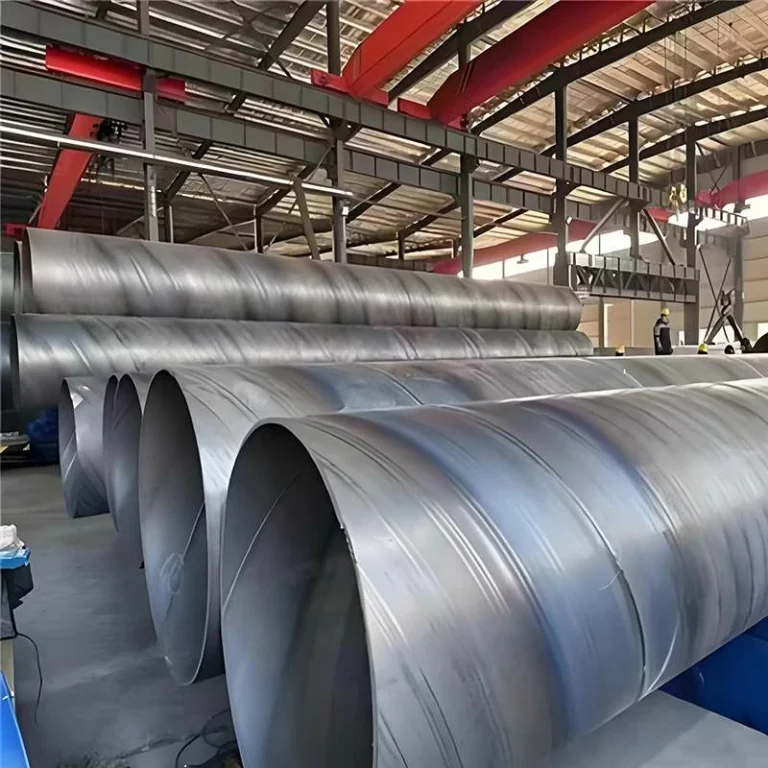
I. Introduction to ASTM A106 SCH40 Seamless Carbon Steel Pipe
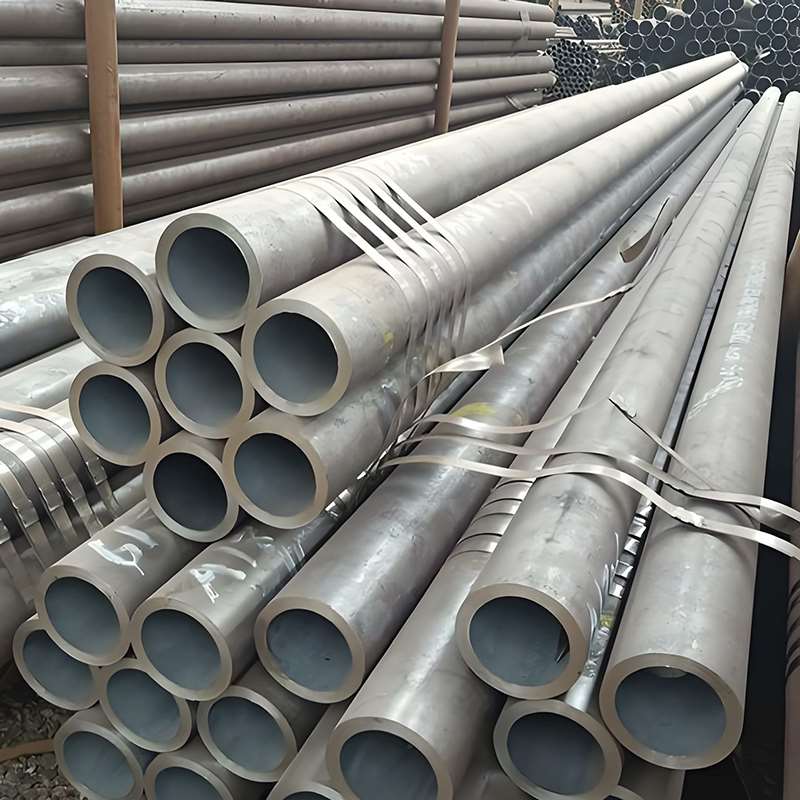
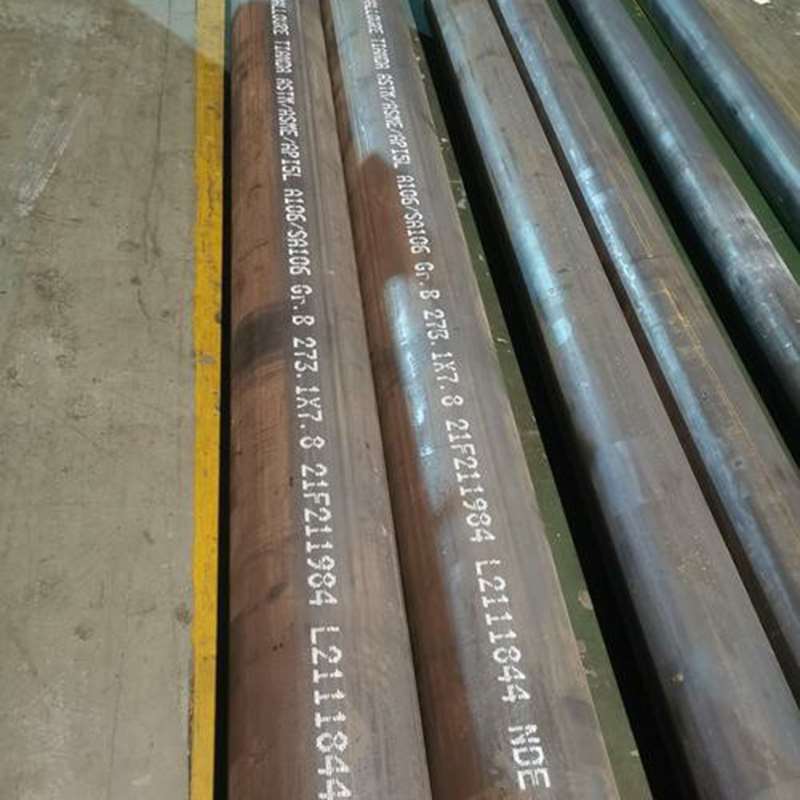
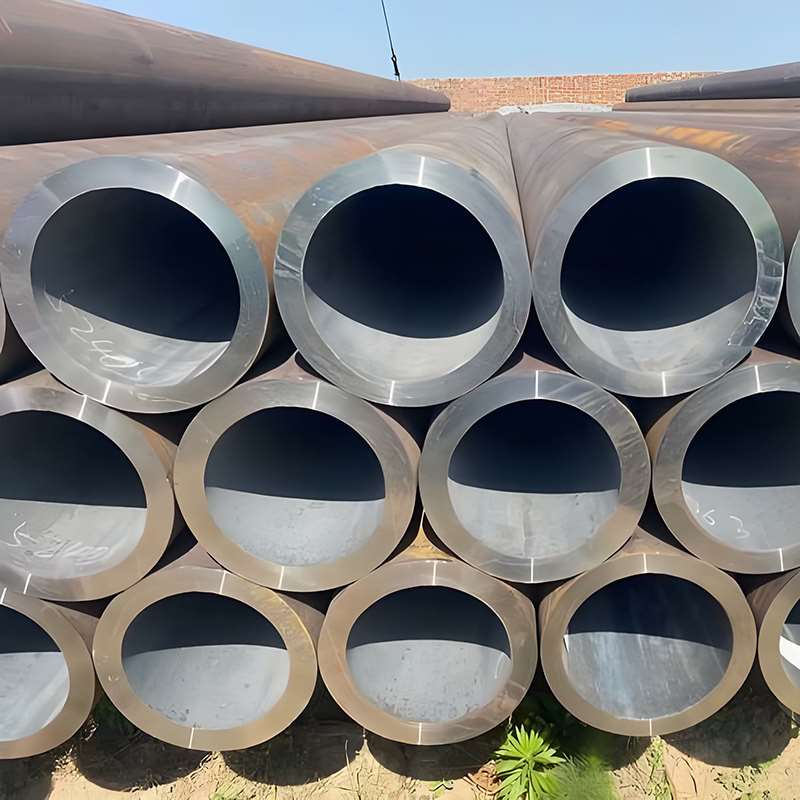
ASTM A106 SCH40 seamless carbon steel pipe complies with the American standard for seamless carbon steel pipes. This standard primarily includes two commonly used grades: A106 Grade A (A106-A) and A106 Grade B (A106-B). ASTM A106 seamless steel pipes can be manufactured using either hot-rolled or cold-drawn production processes. Due to their differing forming methods, hot-rolled pipes and cold-drawn pipes exhibit significant differences in multiple aspects, including dimensional accuracy, surface quality, minimum producible specifications, mechanical properties, and metallographic microstructure.
II. ASTM A106 SCH40 Seamless Carbon Steel Pipe Chemical Composition and Mechanical Properties
i. Chemical Composition (%)
Applicable to ASTM A106 Grade A / Grade B / Grade C
Element
Grade A
Grade B
Grade C
Carbon (C), max
0.25
0.30
0.35
Manganese (Mn), max
0.93
1.06
1.20
Phosphorus (P), max
0.035
0.035
0.035
Sulfur (S), max
0.035
0.035
0.035
Silicon (Si), min
0.10
0.10
0.10
Chromium (Cr), max
0.40
0.40
0.40
Copper (Cu), max
0.40
0.40
0.40
Nickel (Ni), max
0.40
0.40
0.40
Molybdenum (Mo), max
0.15
0.15
0.15
Vanadium (V), max
0.08
0.08
0.08
ii. Mechanical Properties (Minimum Guaranteed Values)
Pipe Standard
Grade
Tensile Strength (MPa)
Yield Strength (MPa)
Elongation (%)
ASTM A106
Grade A
≥ 330
≥ 205
≥ 20
Grade B
≥ 415
≥ 240
≥ 20
Grade C
≥ 485
≥ 275
≥ 20
Supplementary Technical Notes: SCH40 is a commonly used wall thickness grade, balancing pressure resistance and economy. ASTM A106 SCH40 seamless carbon steel pipe is suitable for high-temperature, high-pressure fluid transportation. Common delivery conditions: Hot Rolled or Cold Drawn. Common operating temperature range: -20℃ to 425℃
III. ASTM Standard Seamless Steel Pipe Dimensional Tolerances
i. Cold-drawn ASTM Standard Seamless Steel Pipe
Item
Size Range
Permissible Tolerance
Outside Diameter (OD)
≤ 50 mm
±0.5%
Outside Diameter (OD)
> 50 mm
±0.8%
Wall Thickness (WT)
≤ 25 mm
±10%
ii. Hot-rolled seamless steel pipes conforming to American standards
Item
Size Range
Permissible Tolerance
Outside Diameter (OD)
6 – 168 mm
±1.0%
Wall Thickness (WT)
≤ 25 mm
−10% to +12.5%
IV. Comparison Table of ASTM A106 and ASTM A53 Seamless Steel Pipes
Comparison Item
ASTM A106
ASTM A53
Standard Type
American standard for seamless carbon steel pipe for high-temperature service
American standard for carbon steel pipe for general service
Applicable Temperature
High-temperature service (up to approx. 425 °C)
Ambient or low to medium temperature service
Primary Use
High-temperature and high-pressure fluid transmission
Structural use and low-pressure fluid transmission
Typical Applications
Oil & gas, petrochemical, boilers, steam pipelines, power plants
Water supply & drainage, structural pipes, low-pressure gas
Pipe Type
Seamless pipe only
Seamless pipe and welded pipe
Manufacturing Process
Hot finished or cold drawn
Seamless / ERW / furnace-welded
Grades
Grade A / B / C
Grade A / B
Commonly Used Grade
Grade B (most commonly used)
Grade B
Tensile Strength (Minimum)
Grade B: ≥ 415 MPa
Grade B: ≥ 415 MPa
Yield Strength (Minimum)
Grade B: ≥ 240 MPa
Grade B: ≥ 240 MPa
Chemical Composition Requirements
More stringent, suitable for high-temperature performance control
Relatively less stringent
Wall Thickness Schedule
SCH 10 / SCH 40 / SCH 80, etc.
SCH 10 / SCH 40 / SCH 80, etc.
Dimensional Standard
ASME B36.10M
ASME B36.10M
High-Temperature Performance Requirement
Mandatory
No specific high-temperature requirement
Quality Positioning
Engineering-grade, process piping applications
General-grade, structural and low-pressure service
Price Level
Relatively higher
Relatively lower
V. Comparison of wall thicknesses under commonly used nominal dimensions
Nominal Size (NPS)
Outside Diameter (OD, mm)
SCH10 Wall Thickness (mm)
SCH40 Wall Thickness (mm)
SCH80 Wall Thickness (mm)
Typical Application / Selection Guide
1/2″
21.34
1.65
2.77
3.73
Small-diameter instrumentation / branch lines
1″
33.40
2.77
3.38
4.55
Auxiliary fluid piping
2″
60.33
2.77
3.91
5.54
Process fluids, steam
3″
88.90
3.05
5.49
7.62
Chemical / steam main lines
4″
114.30
3.05
6.02
8.56
High-temperature fluid transport
6″
168.28
3.40
7.11
10.97
Main transmission pipelines
8″
219.08
3.76
8.18
12.70
Oil & chemical pipelines
10″
273.05
4.19
9.27
15.09
Industrial trunk lines
12″
323.85
4.57
9.53
17.48
Long-distance transmission
VI. ASTM A106 SCH40 Seamless Carbon Steel Pipe Selection Guide
ASTM A106 SCH40 seamless carbon steel pipe is one of the most commonly used American standard seamless carbon steel pipes in industrial fluid conveyance systems, offering a balance of pressure resistance, temperature tolerance, and cost-effectiveness. To help users quickly determine suitability for specific operating conditions, we have compiled this selection guide and common pitfalls, enabling more scientific and safer pipe selection.
i. Key Application Scenario Assessment
Key Parameter
Applicable Range / Specification
Design Pressure
1.6 – 4.0 MPa
Operating Temperature
−20 ℃ to 425 ℃
Conveyed Media
Oil, steam, water, gas, general chemical fluids
Service Mode
Continuous operation or long-term stable service
ii. Quick Reference for Industry Applicability
Industry / Field
Recommendation / Reason
Oil & Gas
High safety for high-pressure, high-temperature pipelines
Chemical Plants
Suitable for medium- to high-temperature process fluids
Boilers & Steam Systems
Reliable for long-term operation
Power Plants
High safety factor for process piping
Refinery Piping Networks
Suitable for medium- to high-pressure crude oil and steam transport
Industrial Fluid Piping
Highly versatile and easy to maintain
iii. Common Selection Misconceptions
Misconception
Reality
Recommendation
Misconception 1: All medium- and low-pressure pipelines must use SCH40
In fact, for low-pressure non-critical lines, SCH10 or A53 is sufficient; SCH40 only increases cost
Select wall thickness according to design pressure to avoid unnecessary costs
A53 pipes have lower temperature resistance than A106; long-term high-temperature use may cause weld leakage or pipe wall failure
For high-temperature steam pipelines, prioritize ASTM A106 SCH40 or SCH80
Misconception 3: Thicker walls are always safer
While SCH80 or SCH160 can handle higher pressure, pipeline weight and cost increase significantly
Upgrade wall thickness only when actual pressure or safety factor requires it
Misconception 4: Cold-drawn and hot-finished pipes are largely similar
Cold-drawn pipes have higher precision and smoother surface but are difficult for large diameters; hot-finished pipes are suitable for large diameter and thick walls
Choose manufacturing process based on pipe diameter and installation requirements
Misconception 5: Material grade can be freely substituted
A106-B, A53-B, and domestic 20# steel are not fully equivalent; high-temperature performance differs significantly
For high-temperature or high-pressure pipelines, use A106-B to ensure reliability