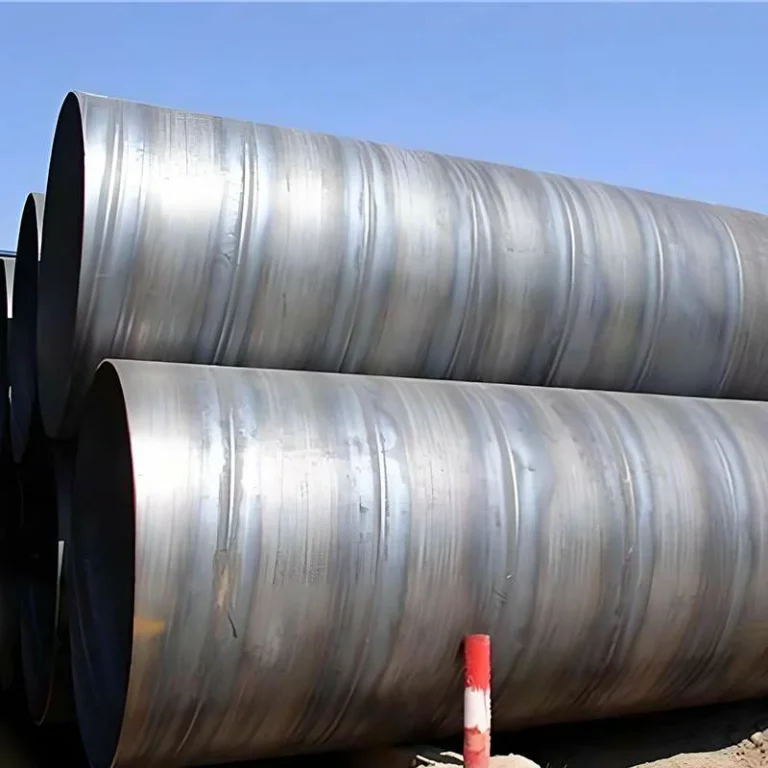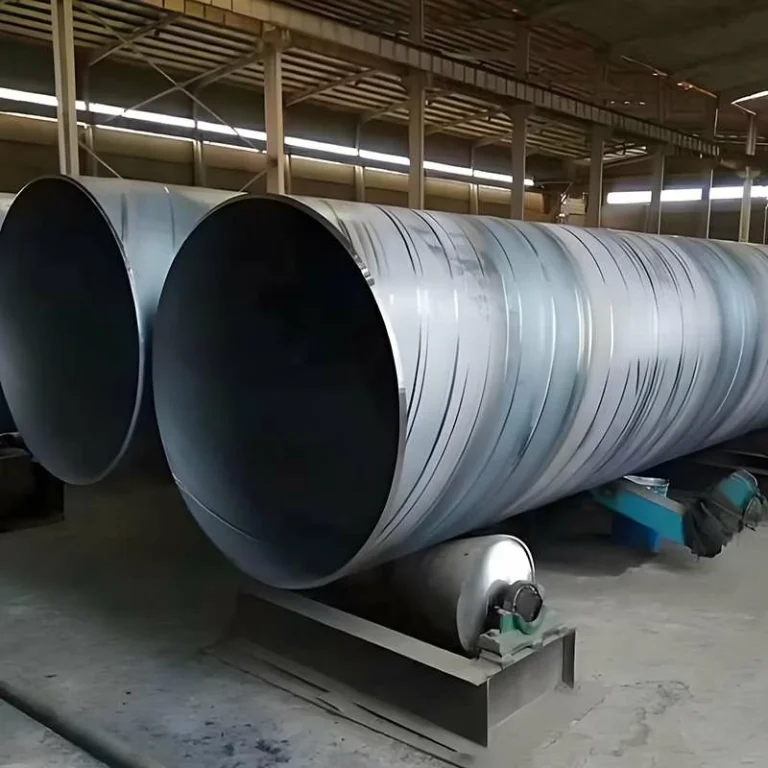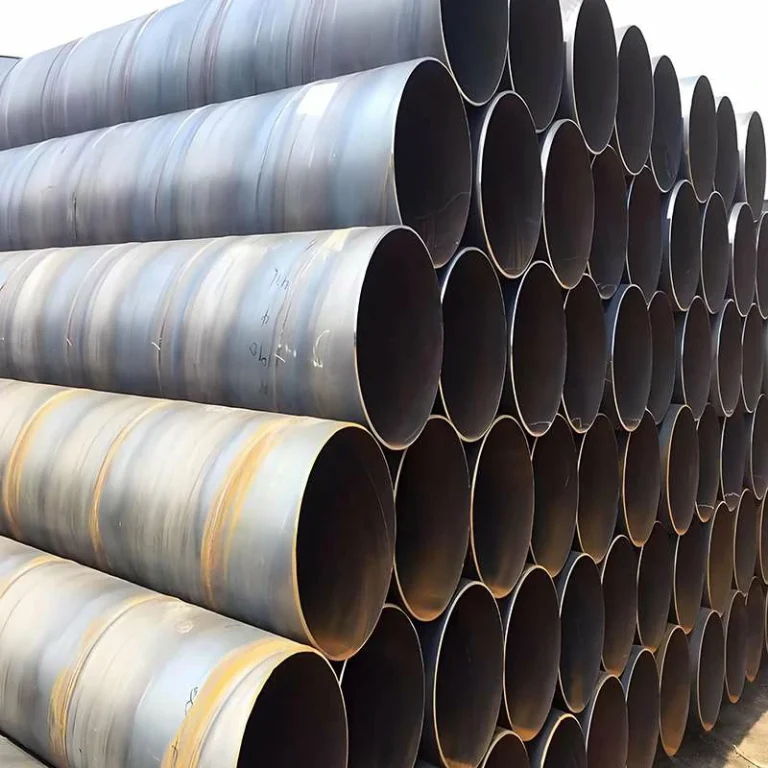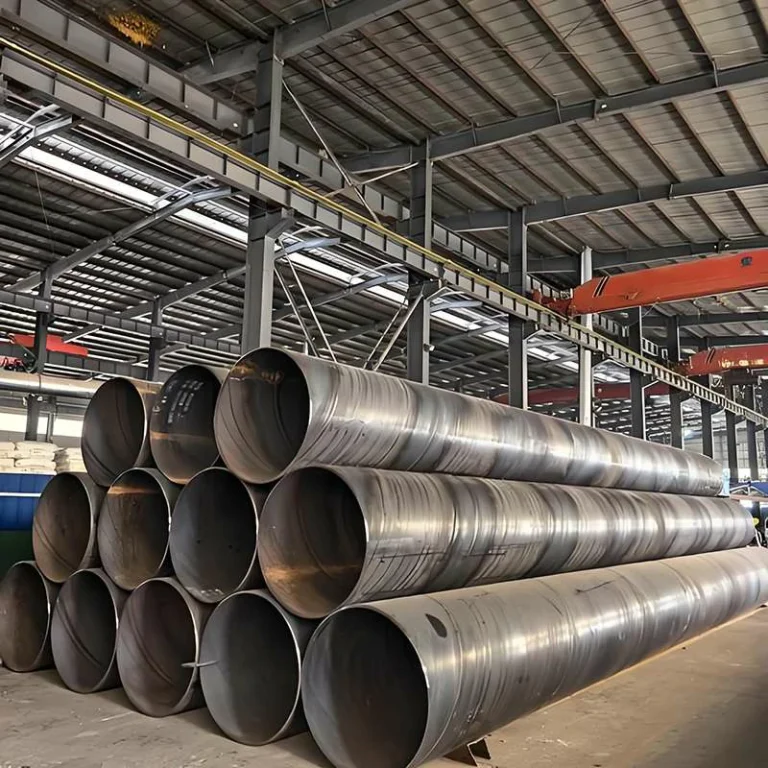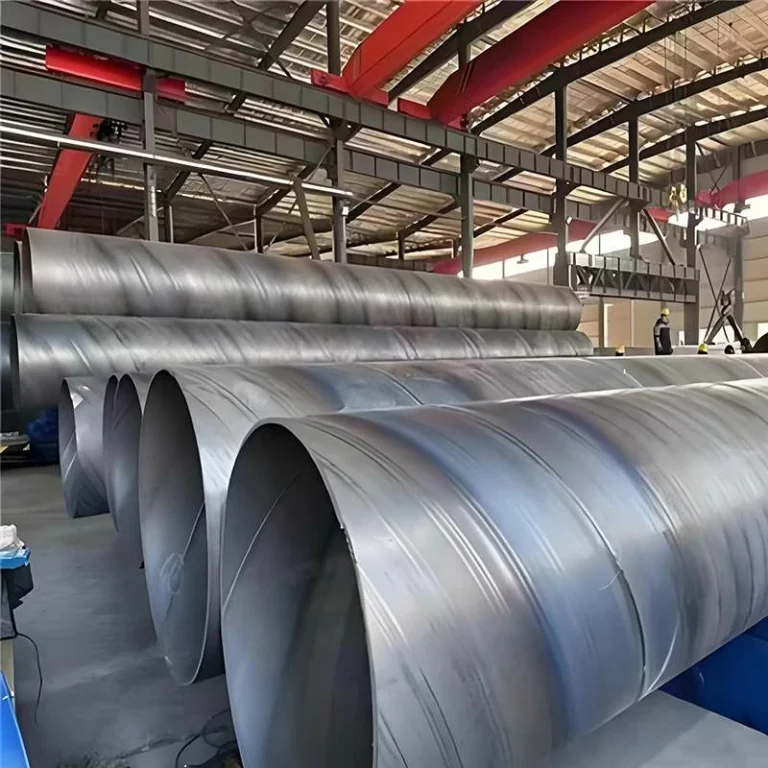
I. Overview of Galvanized Carbon Steel Pipes for Water Supply
i. Product Introduction
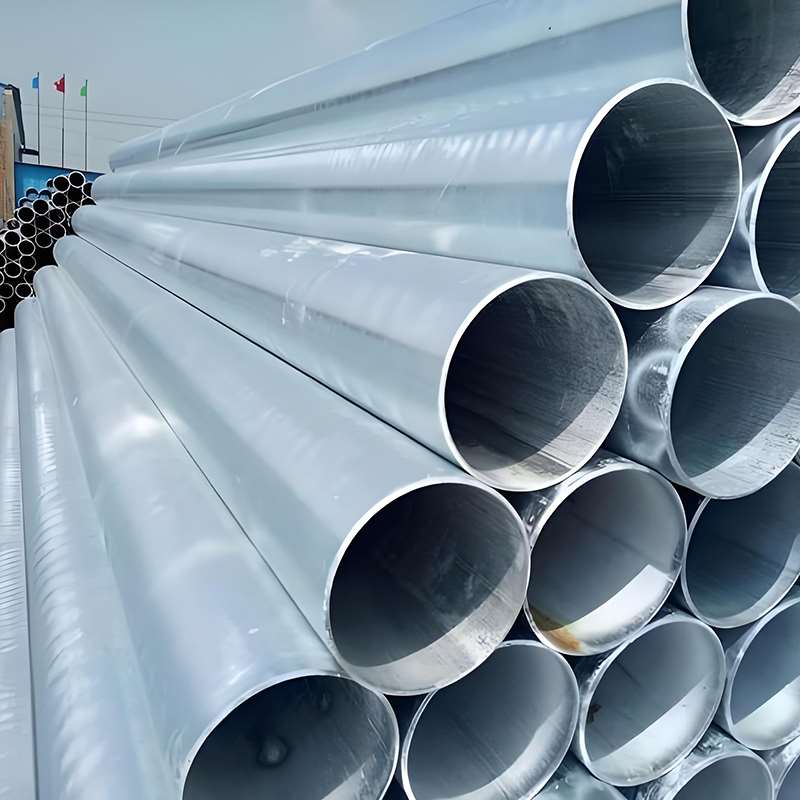
- Galvanized carbon steel pipes for water supply are a type of steel pipe commonly used in domestic and municipal water supply systems.
- They are made from high-quality carbon steel.
- Processed through a hot-dip galvanizing process.
- A uniform zinc layer is formed on the surface of the steel pipe.
- This enhances corrosion resistance.
- Suitable for long-term transportation of clean water and general industrial water.
ii. Product Features
- Uniform galvanizing on both inner and outer surfaces.
- Stable rust prevention performance.
- High mechanical strength.
- Good pressure resistance.
- Suitable for indoor and outdoor installation.
- Can be connected by threading or welding.
- Flexible construction methods.
iii. Product Advantages
- Galvanized carbon steel pipes for water supply are suitable for conventional water supply pressure conditions.
- Superior durability compared to ordinary black pipes.
- Low maintenance costs.
- Long service life.
- Higher cost-effectiveness compared to stainless steel.
- More reliable structure compared to plastic pipes.
- As a mature galvanized carbon steel pipe, it is widely used in building and municipal water supply fields.
II. Common Standards and Steel Grade Comparison Table for Galvanized Steel Pipes for Water Supply
| Standard | Common Steel Grade | Applicable Scope | Main Features |
|---|---|---|---|
| ASTM A53 / A53M | Gr.B | Municipal water supply, industrial water pipelines, export projects | Stable strength, internationally recognized, suitable for pressure-bearing water supply |
| BS 1387 | Ordinary Carbon Steel | Building water supply, low-pressure water systems | Mature standard, suitable for threaded connections |
| EN 10255 | S195 / S235 | Building and municipal water supply pipelines | Good weldability, commonly used in European projects |
| GB/T 3091 | Q195 / Q235 | Domestic water supply projects, low-pressure fluid transport | Cost-effective, stable supply |
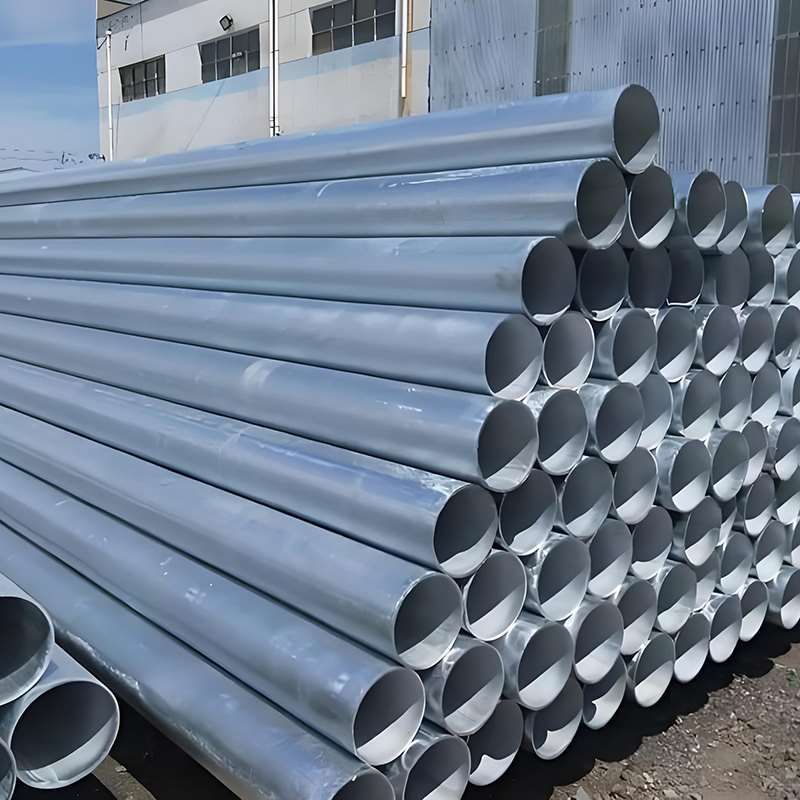
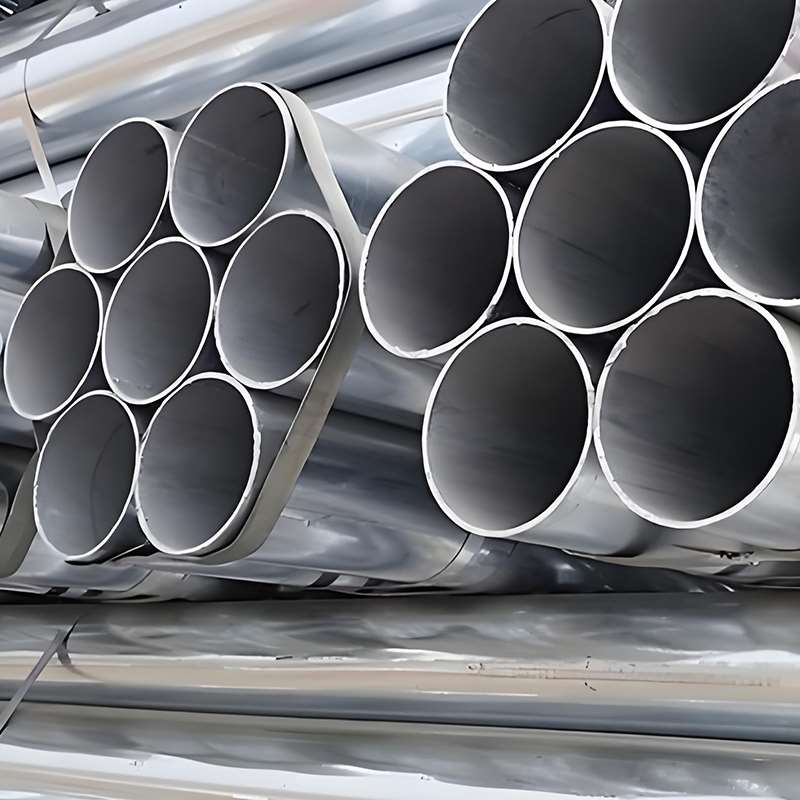
III. Table of Common Specifications and Dimensions for Galvanized Carbon Steel Pipes Used for Water Supply
| Nominal Diameter DN | Imperial Size | Outer Diameter OD (mm) | Common Wall Thickness (mm) | Theoretical Weight (kg/m) | Typical Applications |
|---|---|---|---|---|---|
| DN15 | 1/2″ | 21.3 | 2.3 | 1.26 | Indoor water branch pipe |
| DN20 | 3/4″ | 26.9 | 2.3 | 1.63 | Residential water supply |
| DN25 | 1″ | 33.7 | 3.2 | 2.50 | Building water supply |
| DN32 | 1-1/4″ | 42.4 | 3.2 | 3.09 | Building water distribution |
| DN40 | 1-1/2″ | 48.3 | 3.2 | 3.56 | Domestic water supply |
| DN50 | 2″ | 60.3 | 3.6 | 5.10 | Main water branch line |
| DN65 | 2-1/2″ | 76.1 | 3.6 | 6.44 | Building main pipeline |
| DN80 | 3″ | 88.9 | 4.0 | 8.38 | Municipal water supply |
| DN100 | 4″ | 114.3 | 4.0 | 10.88 | Municipal main supply line |
| DN125 | 5″ | 139.7 | 4.5 | 15.00 | Water supply trunk pipe |
| DN150 | 6″ | 168.3 | 4.5 | 18.99 | Municipal water supply |
| DN200 | 8″ | 219.1 | 6.0 | 31.52 | Main water supply pipeline |
| DN250 | 10″ | 273.0 | 6.0 | 39.95 | High-flow water supply |
| DN300 | 12″ | 323.9 | 6.3 | 49.58 | Municipal main water supply |
Selection Tips:
DN15–DN50: Internal building water supply and branch pipe systems
DN65–DN150: Main water supply lines for buildings or small municipal areas
DN200–DN300: Municipal water supply trunk lines
Wall thickness can be adjusted according to SCH 10 / SCH 40 / STD standards
Galvanizing method is usually hot-dip galvanizing
IV. Galvanized Steel Pipes for Water Supply Systems: Galvanizing Layer and Surface Quality
- Description of Galvanizing Method
Galvanized carbon steel pipes for water supply typically use the hot-dip galvanizing process.
The steel pipe is immersed entirely in the zinc bath after forming.
The zinc layer forms a metallurgical bond with the steel substrate.
It has strong adhesion and is not easy to peel off.
Some projects may also use pre-galvanized welded carbon steel pipes, which are suitable for water supply systems that are more sensitive to cost. - Requirements for Galvanizing Layer Thickness and Weight
The thickness of the galvanizing layer is an important indicator of corrosion resistance.
The requirements for conventional water supply projects are as follows:
DN15–DN150:
Galvanizing layer thickness ≥ 70 μm
Galvanizing layer weight ≥ 200 g/m²
DN200 and above:
Galvanizing layer thickness ≥ 85 μm
Galvanizing layer weight ≥ 255 g/m²
The relevant indicators meet the requirements of ISO 1461 / EN ISO 1461 standards. - Surface Quality Control Points
The zinc layer should be continuous, uniform, and dense.
No exposed iron or uncoated areas are allowed.
Large areas of zinc nodules and zinc dross are not allowed.
Both the inner and outer walls must be completely covered with galvanizing.
The cut ends and threaded parts should be treated with zinc coating. - Rust Prevention and Durability Description
The zinc layer provides sacrificial anode protection.
In humid or water supply environments, the zinc layer corrodes preferentially.
This effectively delays the rusting of the steel substrate.
Under normal operating conditions, galvanized carbon steel pipes for water supply have good rust resistance and long-term stability.
V. Types and Applicable Working Conditions of Galvanized Steel Water Supply Pipes
| Application / Service | Recommended Pipe Type | Specification / Features | Description |
|---|---|---|---|
| Residential Water Supply | Galvanized Carbon Steel Pipe (cold-rolled or hot-rolled) | OD: 15–50 mm, WT: 1.5–3.5 mm, Length: 6–12 m, Standard: GB/T 13793, GB/T 3091 | Suitable for residential complexes and building water supply systems. Requires safe drinking water, corrosion resistance, and easy installation. Can use threaded or socket-weld connections. |
| Municipal Water Supply | Hot-Dip Galvanized Welded Steel Pipe / Spiral Welded Pipe | OD: 50–200 mm, WT: 2.5–6 mm, Standard: GB/T 13793, API 5L | Suitable for city main water networks or regional transmission pipelines. Requires high pressure resistance, thicker galvanized coating, and corrosion resistance. Typically uses flange or welded connections. |
| Industrial Domestic or Process Water | High-Strength Galvanized Carbon Steel Pipe (SCH40 / SCH80) | OD: 20–100 mm, WT: 2–5 mm, Standard: GB/T 3091 / ASTM A53 | Suitable for factory or workshop domestic water or process cooling water. Requires high pressure capacity, corrosion resistance, and can handle medium to low-pressure environments. Installation can be welded or threaded. |
| High-Rise Building Water Supply | Threaded Galvanized Steel Pipe / Light Galvanized Steel Pipe | OD: 20–100 mm, WT: 1.5–3.5 mm, Standard: GB/T 13793 | Vertical water supply pipes inside high-rise buildings. Relatively low pressure, but pipes should be lightweight and easy to install. Threaded or socket connections can be used. |
| Temporary Construction or Low-Pressure Water Supply | Light Galvanized Pipe / Threaded Pipe | OD: 15–50 mm, WT: 1–2.5 mm | Used for temporary construction water supply or low-pressure water distribution. Cost-effective and quick to install, but not suitable for long-term use. |
| Hot & Cold Water Piping | Hot-Dip Galvanized Steel Pipe / High-Strength Galvanized Pipe | OD: 20–50 mm, WT: 2–4 mm | Can handle hot water up to 95°C, suitable for residential hot & cold water pipelines or industrial hot water systems. Requires uniform galvanized coating and good temperature resistance. |
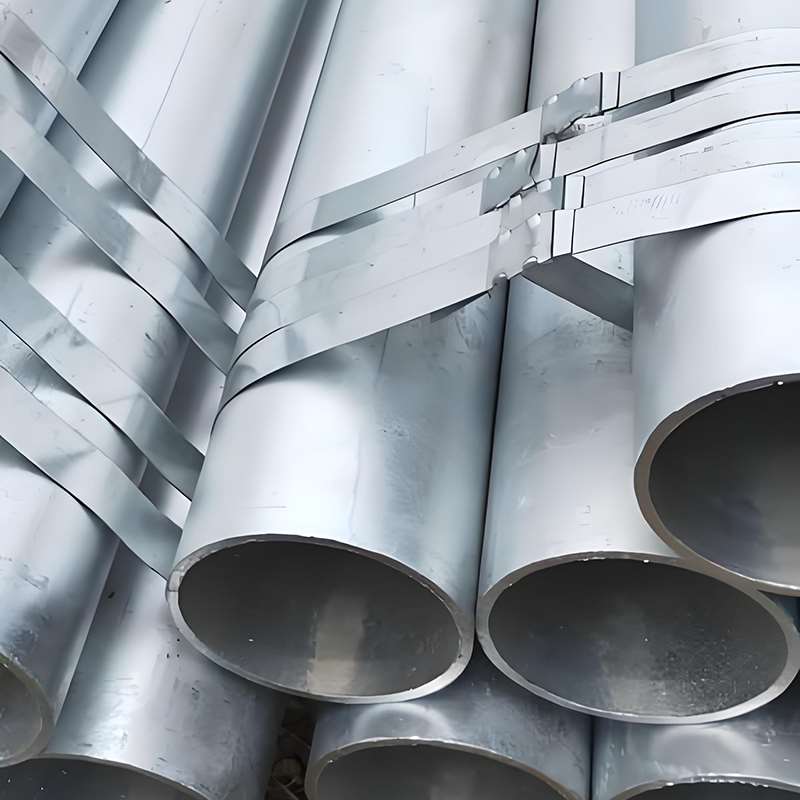
VI. Selection Principles for Galvanized Carbon Steel Pipes for Water Supply
i. Pressure Requirements
Low-pressure domestic pipelines: Lightweight galvanized carbon steel pipes can be selected to meet the needs of small diameters and low pressure.
Medium-pressure systems, factories, or high-rise buildings: SCH40/SCH80 galvanized carbon steel pipes are recommended, offering high pressure resistance and suitability for vertical pipelines or process water.
Municipal main pipelines: Thick-walled pipes with flange welding are recommended to ensure long-term safety and pressure resistance.
ii. Water Quality Requirements
Drinking water: The inner wall of the pipe should be smooth, with uniform galvanizing to prevent rust or scaling and ensure water quality safety.
Industrial circulating water: High-strength galvanized carbon steel pipes can be selected, offering good corrosion resistance, even allowing for slight oxidation without affecting the process.
iii. Construction Method
Small-diameter pipes can use threaded connections for easy installation.
Large-diameter or high-pressure pipes should use socket welding or flange connections to ensure reliable sealing.
iv. Operating Environment
Indoor, dry environments: Lightweight galvanized pipes are sufficient.
Outdoor or buried environments: Thick-galvanized or hot-dip galvanized pipes should be used to improve corrosion resistance and service life.
VII. Frequently Asked Questions (FAQ) about Galvanized Carbon Steel Water Pipes
Q1: What is the typical lifespan of galvanized carbon steel pipes used for water supply?
A1: Generally, galvanized carbon steel pipes have a lifespan of 15–25 years under normal indoor use. In outdoor or buried environments, using thick-walled or hot-dip galvanized pipes with proper anti-corrosion protection can extend the lifespan to over 20 years. Lifespan is affected by water quality, pipe diameter, and galvanizing layer thickness. Regular inspection of the pipe’s inner wall for corrosion or scaling is recommended.
Q2: How do I choose the right type of galvanized carbon steel pipe for my project?
A2: When choosing, consider four factors based on the working conditions:
Pressure requirements: Lightweight galvanized pipes can be used for low-pressure domestic water, SCH40/SCH80 galvanized carbon steel pipes for medium pressure or high-rise buildings, and thick-walled pipes with flange welding are recommended for high-pressure municipal pipelines.
Water quality requirements: Pipes for drinking water should have a smooth and uniform inner wall; high-strength galvanized carbon steel pipes can be used for industrial circulating water.
Construction method: Small-diameter pipes can be connected with threads; for large-diameter or high-pressure pipes, socket welding or flanges are recommended.
Usage environment: Lightweight pipes can be used in dry indoor environments; thick-walled or hot-dip galvanized pipes are needed for outdoor or buried applications.
Q3: Do galvanized carbon steel pipes rust? Will they affect water quality?
A3: The galvanizing layer is a protective layer against corrosion. If the galvanizing is uniform and thick enough, the pipe will not rust easily. Minor corrosion mainly occurs after prolonged use or with acidic or alkaline water, but it generally does not significantly affect drinking water quality. Regular flushing and water quality monitoring are recommended, especially for older pipes.
Q4: Is pipe installation convenient? Are there any connection limitations?
A4: Small-diameter pipes can be connected using threads, making installation convenient; large-diameter or high-pressure pipes usually use socket welding or flange connections, which offer better sealing and pressure resistance. Before construction, confirm the pipe diameter, connection type, and pipe length for smooth installation.
Q5: Can galvanized carbon steel pipes be used for hot and cold water systems?
A5: Yes, but pay attention to the pipe’s temperature resistance. Generally, domestic hot water temperatures do not exceed 95℃, so hot-dip galvanized or high-strength galvanized carbon steel pipes are sufficient for cold and hot water transportation. In high-temperature environments, it is recommended to avoid thin-walled, lightweight pipes to prevent premature aging of the galvanized layer.
Q6: What quality and certifications should be considered when purchasing galvanized carbon steel pipes?
A6: When purchasing, you should pay attention to the following points:
Standard certifications: such as GB/T 13793, GB/T 3091, ASTM A53, etc.
Galvanized layer thickness: To ensure corrosion resistance, the hot-dip galvanized layer is generally 50–100 μm thick.
Quality certificate: The manufacturer should provide a material certificate and test report.
Transportation and after-sales service: Check whether the packaging is intact, whether there is any transportation damage, and understand the after-sales warranty service.