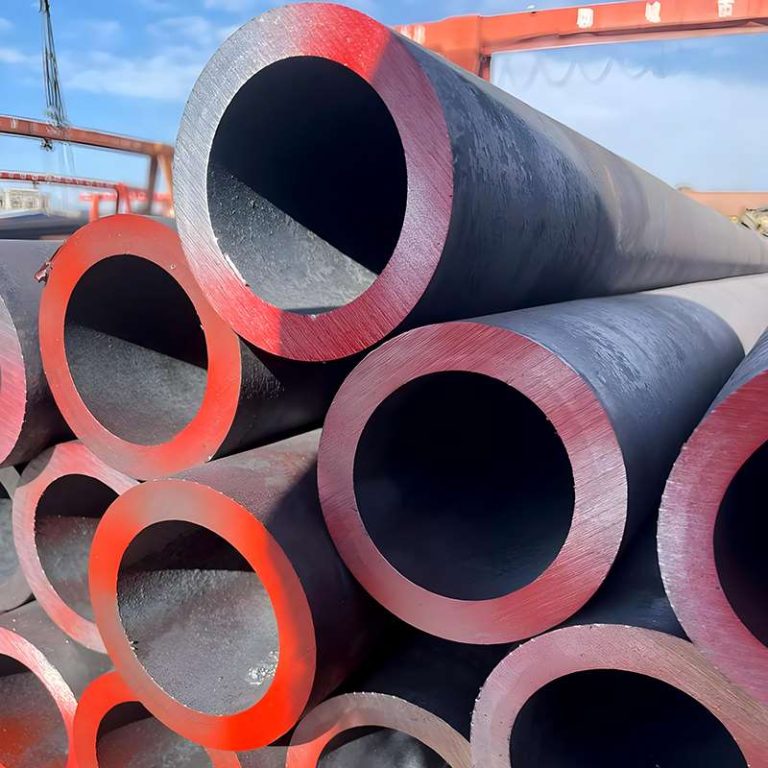
I. Overview of Large-Diameter Alloy Steel Pipes
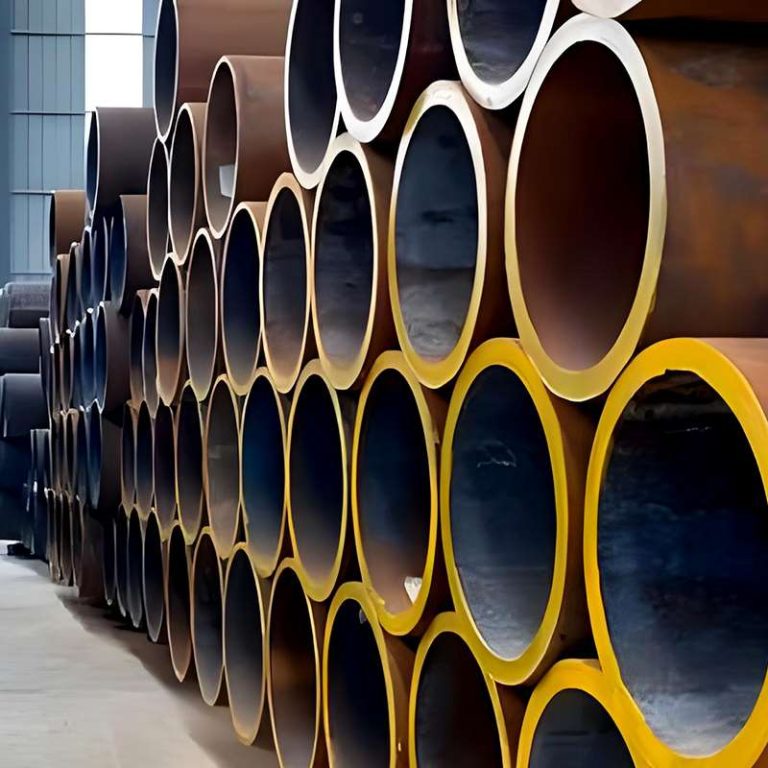
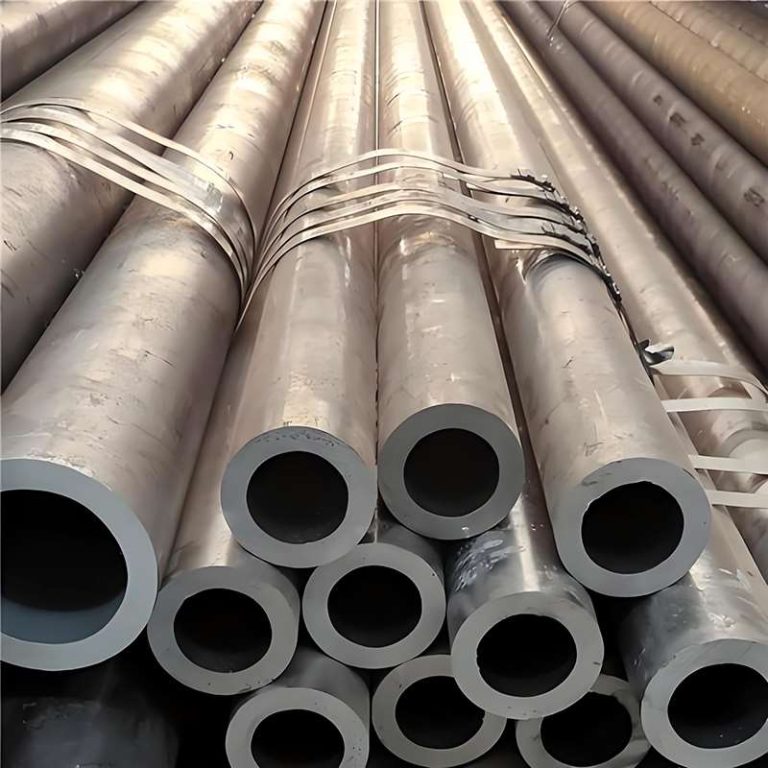
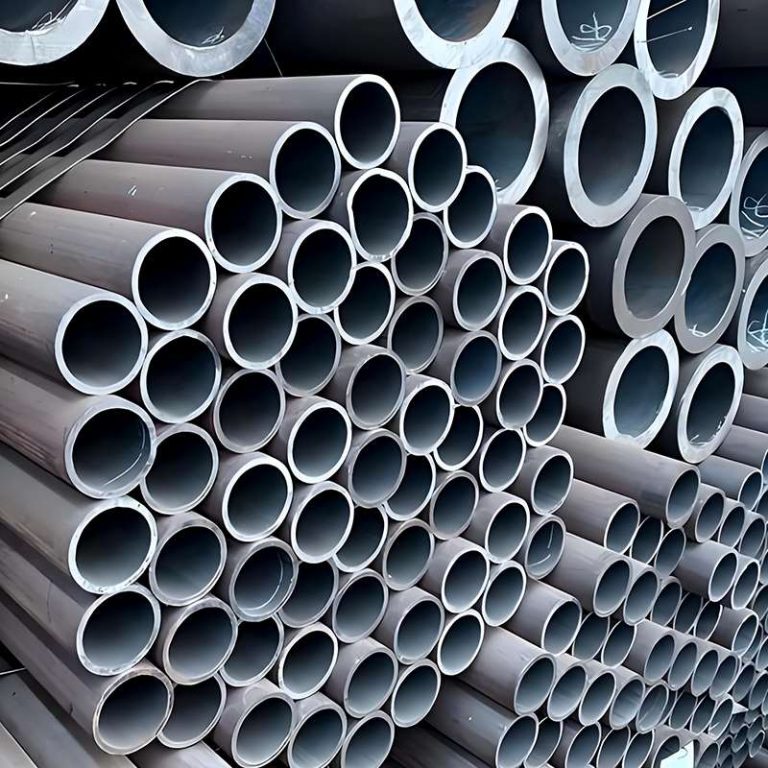
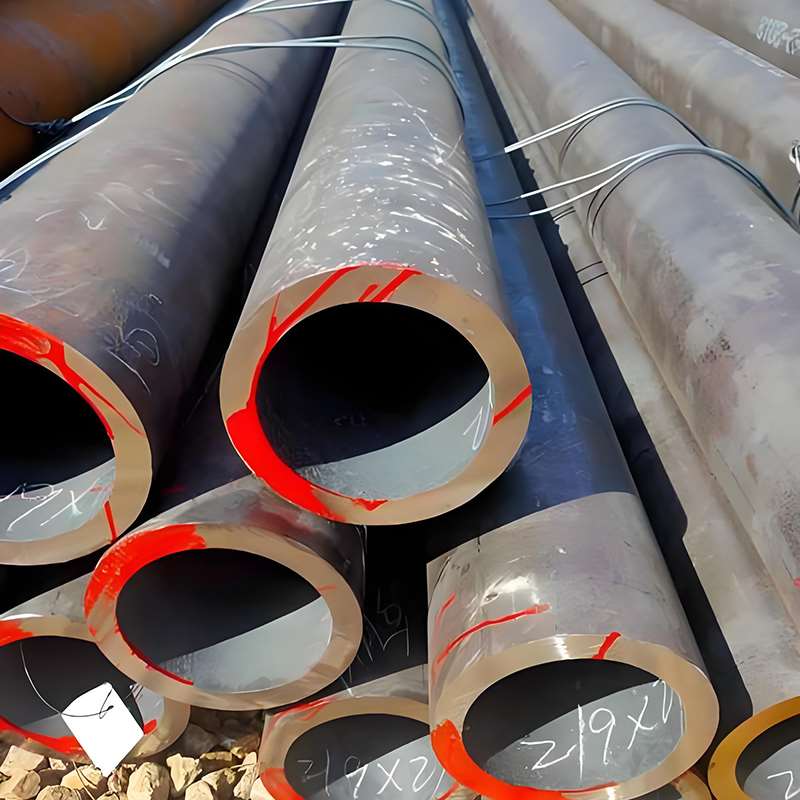
Large-diameter alloy steel pipes are pipelines specifically designed for the conveyance of fluids under conditions of high temperature, high pressure, and high flow rates. They are primarily utilized in chemical plants, oil and gas pipelines, power stations, and industrial fluid transport systems.
Manufactured from high-quality alloy steel, these pipes possess exceptional mechanical properties, corrosion resistance, and high-temperature performance, enabling them to meet the demands of rigorous operating environments.
II. Large-Diameter Alloy Steel Pipe — Classified by Manufacturing Process
i. Seamless Pipe
Definition: Pipes formed directly from a solid steel billet via hot rolling or hot extrusion, containing no internal or external welds.
Common Processes:
- Hot Rolled Seamless Pipe
- Hot Extruded Seamless Pipe
- Cold Drawn Seamless Pipe — Used for piping applications requiring precise dimensions and high accuracy.
Characteristics:
- Uniform structure and high strength
- Strong pressure-bearing capacity; resistant to high temperatures and high pressures
- Commonly used in boilers, high-temperature and high-pressure chemical pipelines, and oil and gas transmission.
ii. Welded Pipes
Definition: Pipes formed by rolling steel plates or steel strips into a tubular shape, followed by welding to create the pipe body.
Common Processes:
- Electric Resistance Welded (ERW) Pipes
- Longitudinal Submerged Arc Welded (LSAW) Pipes
- Helical Submerged Arc Welded (HSAW) Pipes
Characteristics:
- Capable of producing large-diameter pipes
- Lower cost; allows for easy customization of length and wall thickness
- Commonly used for oil and gas transmission, water conservancy projects, and industrial fluid pipelines
Summarize:
| Type | Manufacturing Process | Main Features | Applicable Fields |
|---|---|---|---|
| Seamless Pipe | Hot Rolling / Hot Extrusion / Cold Drawing | High strength, pressure- and temperature-resistant, uniform structure | Boilers, high-temperature/high-pressure chemical pipelines, oil & gas pipelines |
| Welded Pipe | ERW / LSAW / HSAW | Large diameter customizable, lower cost, easy installation | Oil & gas transportation, water supply, and industrial pipelines |
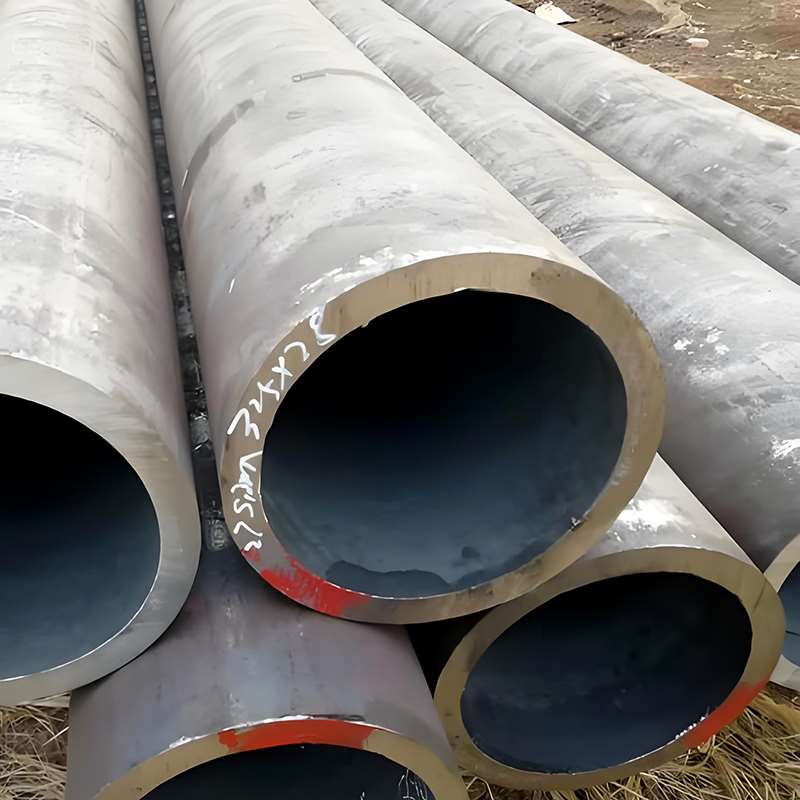
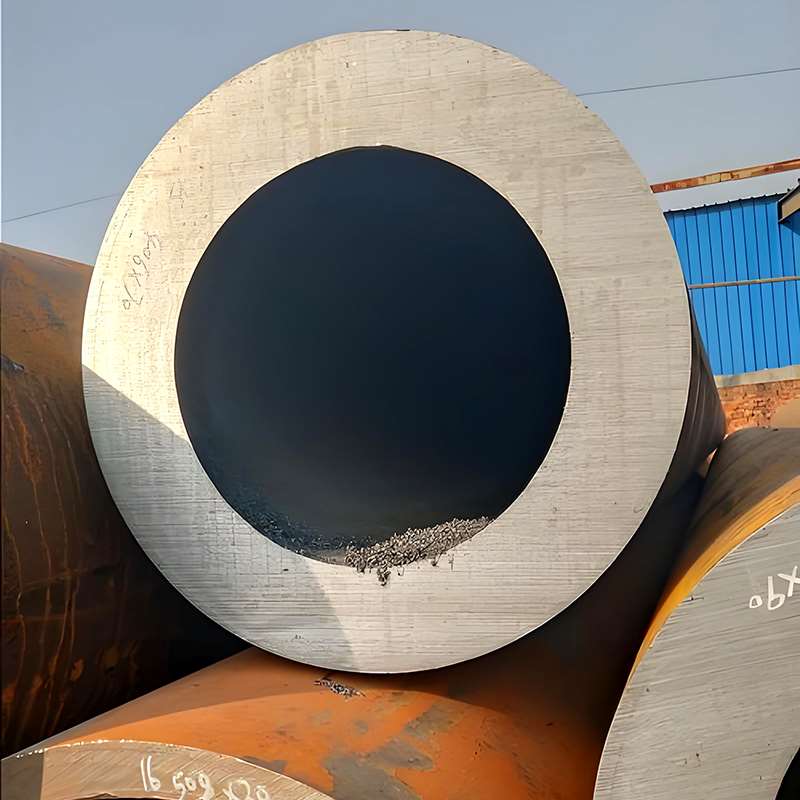
III. Production Process Flow for Large-Diameter Alloy Steel Pipes
i. Seamless Pipe Production Process
Steel Billet → Heating → Piercing → Hot Rolling/Forming → Cold Drawing / Hot Rolling Finishing → Cutting → Inspection → Anti-Corrosion Treatment → Packaging & Shipment
Process Explanation:
- Steel Billet: Selection of alloy steel round billets.
- Heating: Heating the billet to a plastic deformation temperature.
- Piercing: Using a piercing mill to create a hollow shell (tube billet).
- Hot Rolling & Forming: Rolling the billet into a tube of standard dimensions.
- Cold Drawing / Hot Rolling Finishing: Enhancing dimensional precision and surface quality.
- Cutting: Cutting the tubes to specific lengths according to customer requirements.
- Inspection: Verification of dimensions, mechanical properties, non-destructive testing, etc.
- Anti-Corrosion Treatment: Application of oil, anti-rust paint, or other internal/external anti-corrosion coatings.
- Packaging & Dispatch: End capping, securing on wooden pallets, and wrapping with anti-rust paper.
ii. Welded Pipe Production Process
Steel Plate/Strip → Forming & Rolling → Welding (Straight Seam / Spiral) → Heat Treatment → Cutting → Inspection → Anti-corrosion Treatment → Packaging & Dispatch
Process Explanation:
- Steel Plate/Strip: Selection of high-quality steel plates or strips based on specifications.
- Forming & Rolling: Rolling the sheet material into a tubular shape.
- Welding: Securing the pipe body via Longitudinal Submerged Arc Welding (LSAW) or Helical Submerged Arc Welding (HSAW).
- Heat Treatment: Relieving welding stresses and enhancing strength and toughness.
- Cutting: Cutting the pipe sections to the required lengths.
- Inspection: Non-destructive testing of welds, dimensional checks, and mechanical property testing.
- Anti-Corrosion Treatment: Application of internal and external coatings or hot-dip galvanizing.
- Packaging & Dispatch: End capping + wooden pallet securing + rust-preventive packaging.
IV. Standards for Large-Diameter Alloy Steel Pipes
| Standard Number | Standard Name | Applicable Description |
|---|---|---|
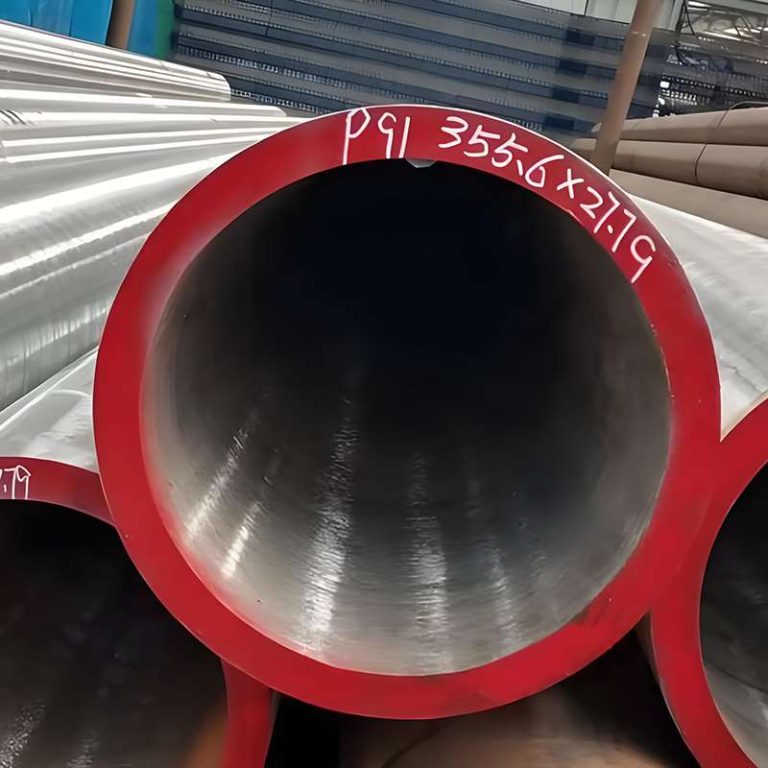
| ASTM A335 | Standard Specification for Seamless Ferritic Alloy-Steel Pipe for High-Temperature Service | High-temperature, high-pressure seamless alloy steel pipes for boilers, chemical, and power plant pipelines; common material grades: P5, P11, P22, P91 |
| EN 10216-2 | Seamless Steel Tubes for Pressure Purposes, Alloy Steel | European standard for high-temperature, high-pressure seamless pipes; suitable for chemical, petroleum, and power plant high-temperature pipelines |
| EN 10217-2 | Welded Steel Tubes for Pressure Purposes, Alloy Steel | European welded pipe standard; suitable for transporting oil, gas, water, and industrial fluids |
| GB/T 5310 | Alloy Steel Pipe for High-Pressure Boilers | Chinese standard for seamless alloy steel pipes for high-pressure boilers and chemical pipelines; common grades: P5, P11, P22, P91 |
| GB/T 9711 | Steel Pipes for Pipeline Transportation | Chinese standard for large-diameter pipelines for oil, gas, and industrial fluid transportation; applicable to both welded and seamless pipes |
V. Large-Diameter Alloy Steel Pipe: Operating Condition Selection Table
| Service Condition Type | Temperature Range | Pressure Rating | Recommended Material / Grade | Recommended Standard | Pipe Type | Notes |
|---|---|---|---|---|---|---|
| General high-temperature steam / chemical liquids | ≤450℃ | Medium | P5 | ASTM A335 / EN10216-2 / GB/T 5310 | Seamless | Suitable for chemical plants and low-temperature boiler pipelines |
| High-temperature steam / thermal medium | 450–520℃ | Medium-High | P11 | ASTM A335 / EN10216-2 / GB/T 5310 | Seamless | Power plant boilers and high-temperature steam pipelines |
| High-temperature, high-pressure steam | 520–550℃ | High | P22 | ASTM A335 / EN10216-2 / GB/T 5310 | Seamless | Main steam and heat exchanger systems in power plants |
| Ultra-high-temperature, high-pressure, corrosive media | 550–600℃ | High | P91 | ASTM A335 / EN10216-2 / GB/T 5310 | Seamless | Supercritical boilers in power plants; petrochemical high-temp high-pressure pipelines |
| Industrial fluid transport (oil, water, gas) | Ambient–200℃ | Medium-Low | P5 / P11 | EN10217-2 / GB/T 9711 | Welded (LSAW / HSAW) | Large diameter and flexible length; cost-effective |
| Long-distance oil & gas transport | Ambient–120℃ | Medium | P5 / P11 | EN10217-2 / GB/T 9711 | Welded (LSAW / HSAW) | Large diameter suitable for long-distance transport; requires corrosion protection |
| Chemical corrosive liquid transport | Ambient–300℃ | Medium | P11 / P22 | ASTM A335 / EN10216-2 / GB/T 5310 | Seamless or Welded | Internal and external anti-corrosion coatings to improve durability |
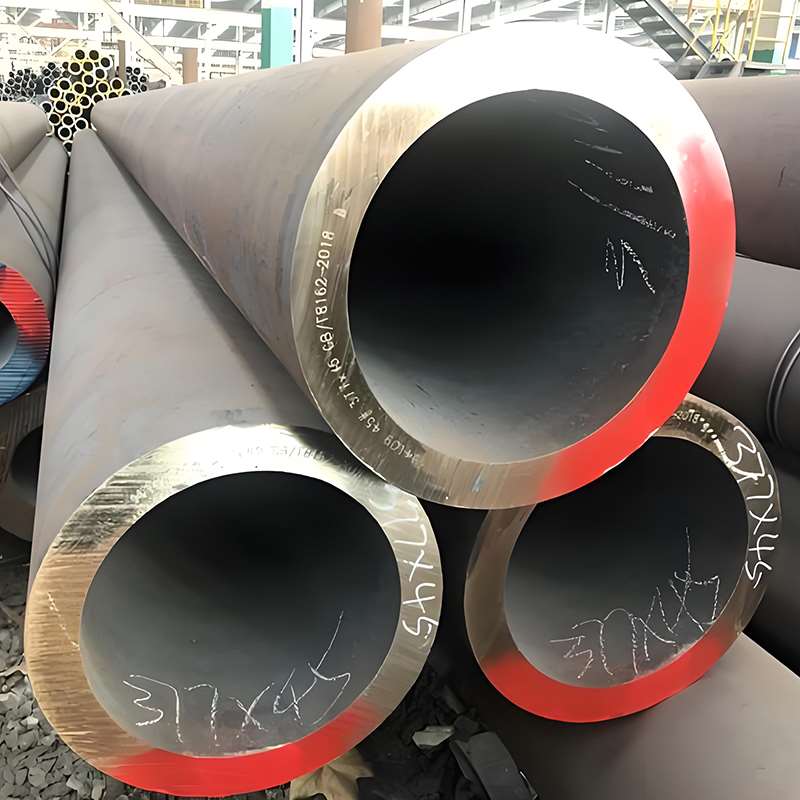
VI. Large Diameter Alloy Steel Pipe: Frequently Asked Questions (FAQ)
1. How do I select the appropriate material grade (P5, P11, P22, P91)?
Answer:
The selection of a material grade is primarily determined by the operating temperature and pressure:
- P5: ≤ 450°C; medium-to-low pressure conditions.
- P11: 450–520°C; medium-to-high pressure conditions.
- P22: 520–550°C; high-pressure, high-temperature conditions.
- P91: 550–600°C; ultra-high temperature and pressure conditions, or applications involving corrosive media.
Selection should be made in conjunction with specific operating conditions to ensure the safety and reliability of the piping system.
2. What types of applications are suitable for this large-diameter piping?
Answer:
It is primarily used in the following applications:
- Chemical Plants: Transporting high-temperature steam and liquid chemicals.
- Oil & Gas Pipelines: Long-distance transport of crude oil and natural gas.
- Power Plants / Boilers: High-temperature steam lines and heat exchange piping.
- Industrial Fluid Transport: Conveying water, gases, and corrosive liquids.
The specific material grade and applicable standards should be selected based on the particular operating conditions of each application.
3. Should I choose seamless pipes or welded pipes?
Answer:
- Seamless Pipes: Offer high resistance to temperature and pressure, along with superior mechanical properties; suitable for boilers and high-temperature piping in chemical plants.
- Welded Pipes (LSAW/HSAW/ERW): Suitable for large-diameter applications and long-distance transmission; offer lower costs.
When making a selection, a comprehensive assessment should be made based on factors such as pressure, temperature, pipe diameter, and budget.
4. Which piping standard should I use?
Answer:
Select the appropriate standard based on the material and intended application:
- Seamless Pipes: ASTM A335 / EN10216-2 / GB/T 5310
- Welded Pipes: EN10217-2 / GB/T 9711
When selecting a standard, it is essential to consider the specific operating conditions (temperature, pressure, and medium) as well as relevant regional regulations.
5. How do I select the appropriate pipe length, wall thickness, and diameter?
Answer:
- Outer Diameter Range: 219–1420 mm (larger sizes available upon request)
- Wall Thickness Range: 6–60 mm (selected based on pressure rating)
- Length: 6–12 m (customizable according to project requirements)
Proper selection requires calculations that take into account flow rate, pressure, and the specific pipe layout.
6. What options are available for pipe surface treatments or coatings?
Answer:
Options are selected based on operating conditions and the conveyed medium:
- Anti-rust Oil Coating: Provides protection during transport and storage.
- Hot-dip Galvanizing or Paint Finish: Offers corrosion protection for outdoor environments.
- Epoxy Coating / Polyethylene (PE) Coating: Provides high corrosion resistance, suitable for chemical media or long-distance transmission applications.
The choice of coating should be determined based on the characteristics of the conveyed medium and the operating environment.