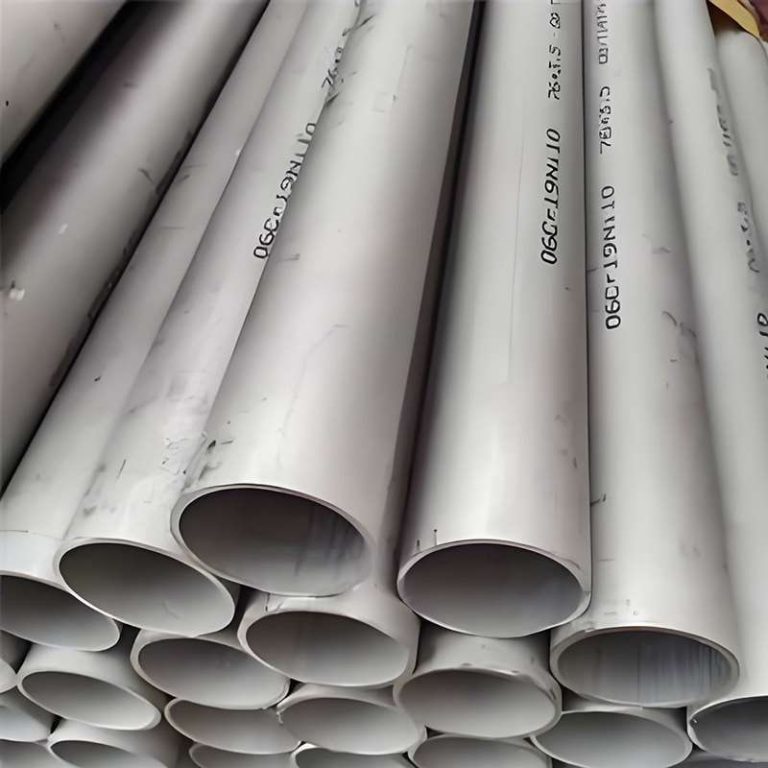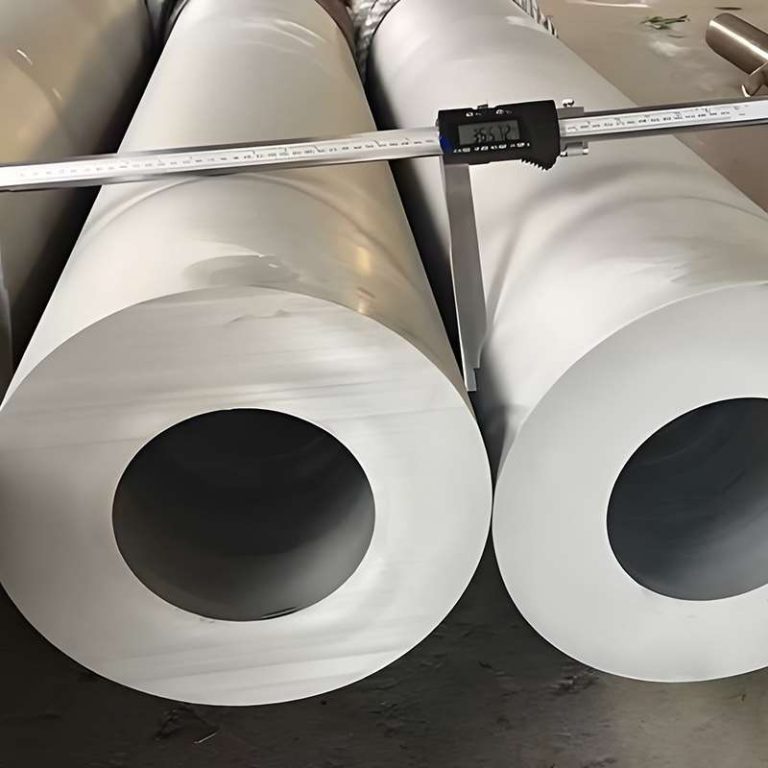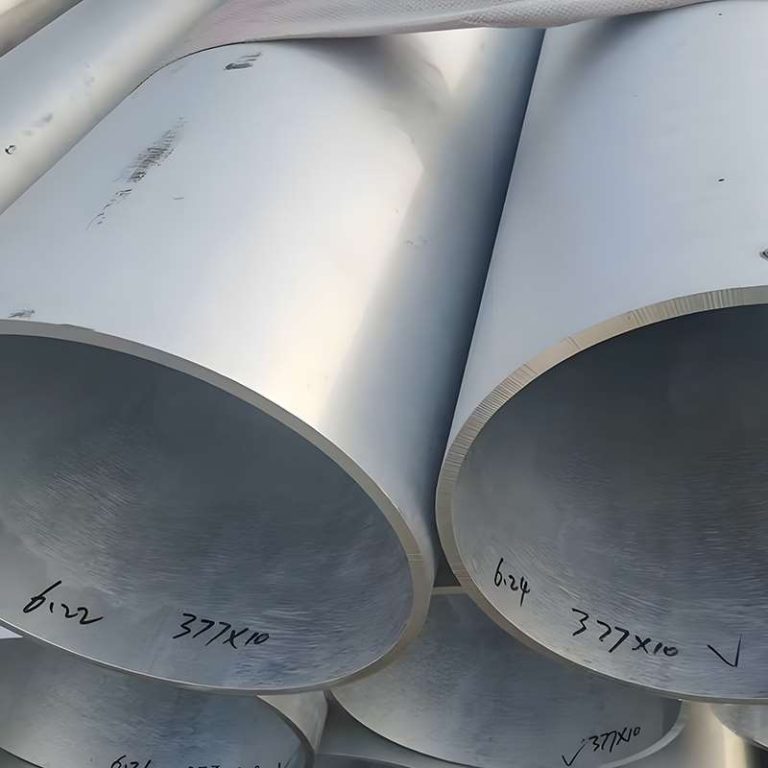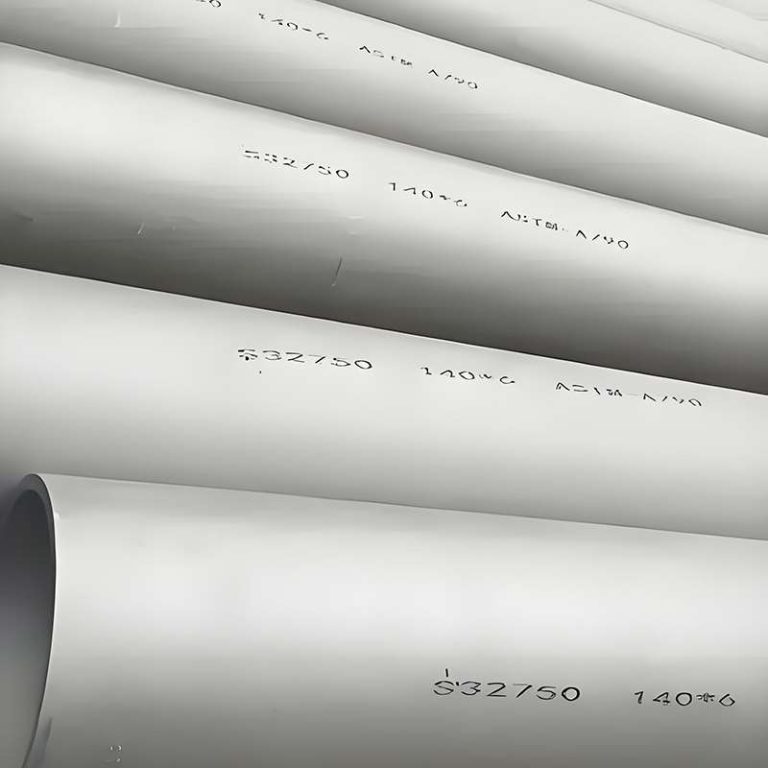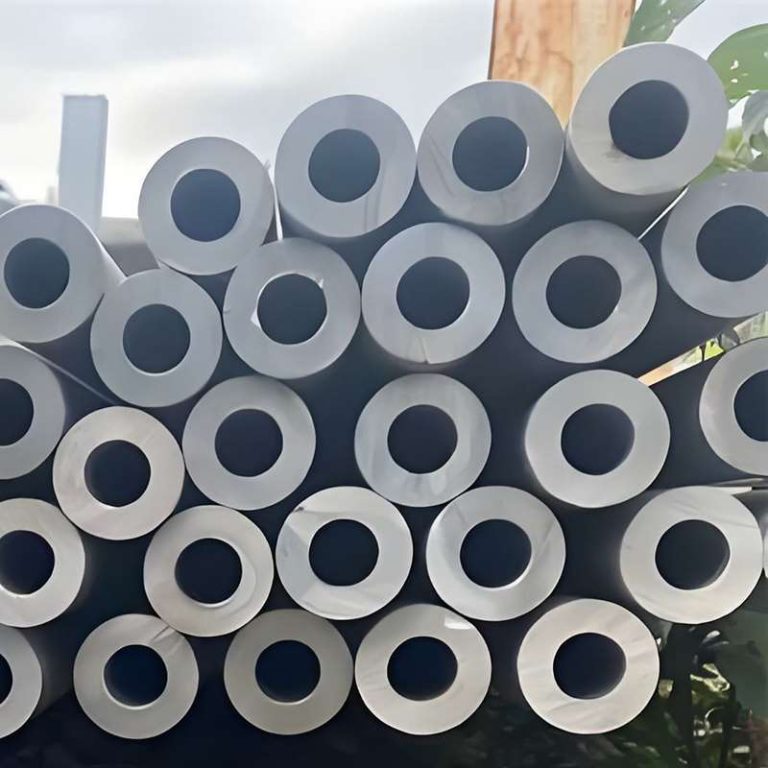
I. 2205 Duplex Stainless Steel Pipe Overview
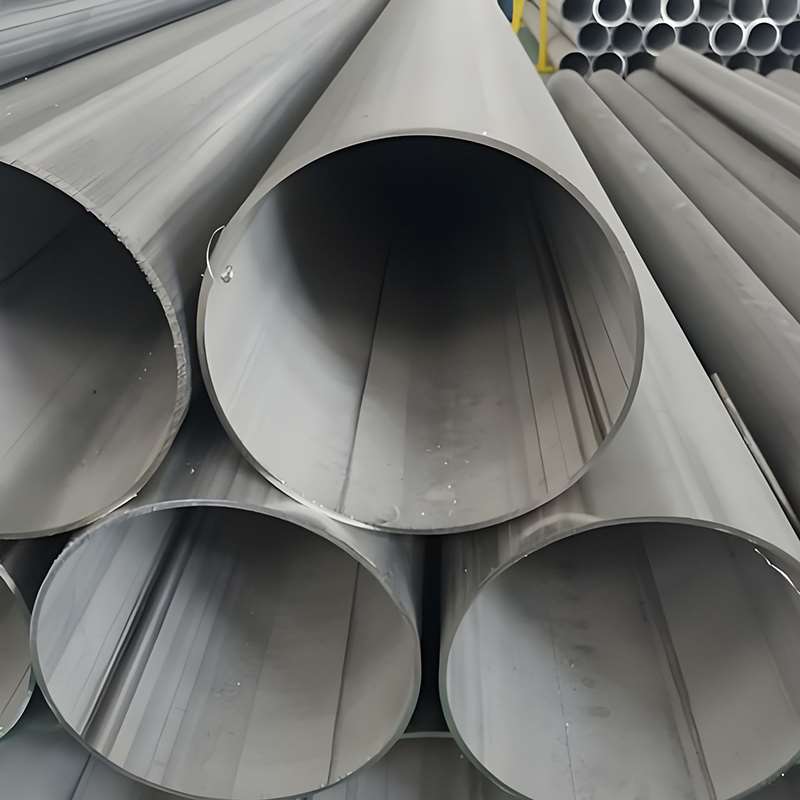
Duplex 2205 stainless steel pipe is a duplex austenitic-ferritic stainless steel, combining the corrosion resistance of austenite with the high strength of ferrite.
It features high corrosion resistance, high strength, and resistance to stress corrosion cracking.
It is widely used in highly corrosive environments such as chemical, petrochemical, marine, oil and gas, pharmaceutical, and food processing industries.
II. 2205 Duplex Stainless Steel Pipe Common Standards
| Standard Type | Standard No. / Name | Application / Notes |
|---|---|---|
| ASTM (USA) | ASTM A789 / A789M | For seamless and welded duplex stainless steel pipes; used in chemical, seawater, and petrochemical piping |
| ASTM (USA) | ASTM A790 / A790M | Welded duplex stainless steel pipes; suitable for corrosion-resistant and high-pressure pipelines |
| EN (Europe) | EN 10216-5 | Seamless steel pipes for general corrosive environments and high-temperature service |
| ASME / SA | ASME SA789 | Duplex stainless steel seamless pipe standard; commonly used for boilers and pressure vessels |
| DIN (Germany) | DIN 1.4462 / 1.4410 | Equivalent to Duplex 2205; suitable for chloride corrosion environments |
III. Chemical Composition and Mechanical Properties
i. Chemical Composition of 2205 Duplex Stainless Steel Pipe (Weight Percentage)
| Element | C | Si | Mn | P | S | Cr | Ni | Mo | N |
| Content | ≤0.03 | ≤0.8 | 1.2–2.0 | ≤0.03 | ≤0.02 | 21–23 | 4.5–6.5 | 2.5–3.5 | 0.08–0.20 |
ii. Mechanical properties of 2205 duplex stainless steel pipes
| Mechanical Property | Value Range | Unit | Notes |
|---|---|---|---|
| Tensile Strength | 620 – 880 | MPa | Meets ASTM / EN standard requirements |
| Yield Strength (0.2% offset) | ≥ 450 | MPa | Complies with high-strength piping requirements |
| Elongation | ≥ 25 | % | Ensures pipe formability and weldability |
| Hardness (Brinell) | 220 – 280 | HB | Facilitates inspection and quality control |
| Impact Toughness (Charpy V-Notch, 20°C) | ≥ 60 | J | Ensures resistance to low-temperature impact and mechanical vibration |
IV. 2205 Duplex Stainless Steel Pipe Dimensions and Tolerances
| Parameter | Range / Size | Tolerance |
|---|---|---|
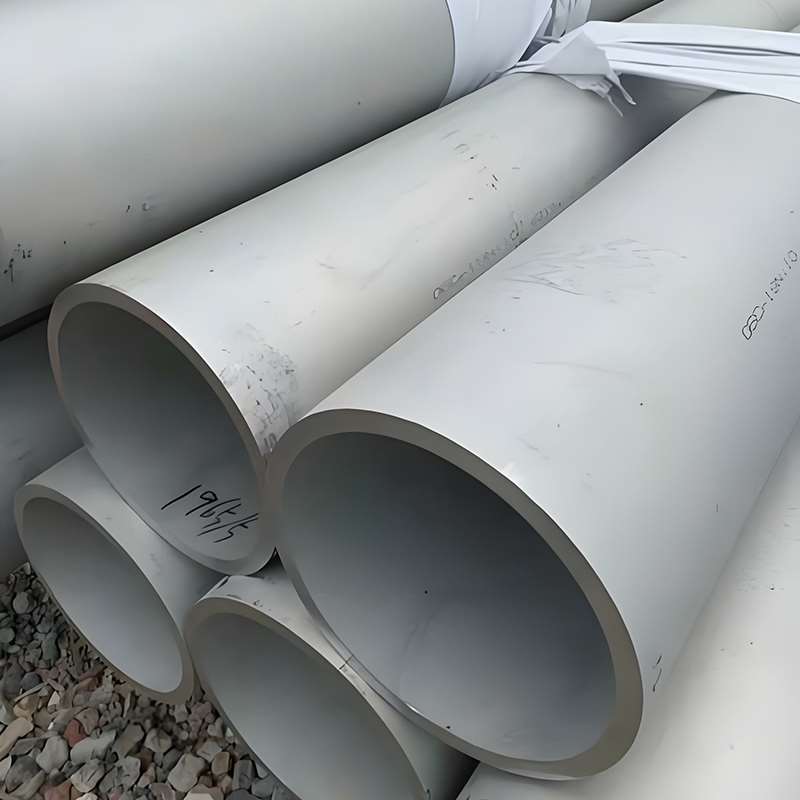
| Outside Diameter (OD) | 12.7 mm – 508 mm | ±0.5% or ±0.1 mm (for small diameters) |
| Wall Thickness (WT) | 1.0 mm – 25 mm | ±10% or ±0.1 mm (for small diameters) |
| Length | 6 m / 12 m (custom lengths available) | ±50 mm |
| Straightness | — | ≤ 0.5% of length (for 6 m pipes) |
| Roundness Deviation | — | ≤ 1% OD |
| Concentricity | — | Inner and outer walls concentricity ≤ 1% |
V. 2205 Duplex Stainless Steel Pipe Surface Quality Specifications
| Item | Requirement / Value | Test Standard | Notes |
|---|---|---|---|
| Internal Surface Roughness (Ra) | ≤ 0.8 μm (standard) / ≤ 0.6 μm (high hygiene grade) | ISO 4287 / ASTM A967 | For sanitary pipelines used in CIP/SIP cleaning |
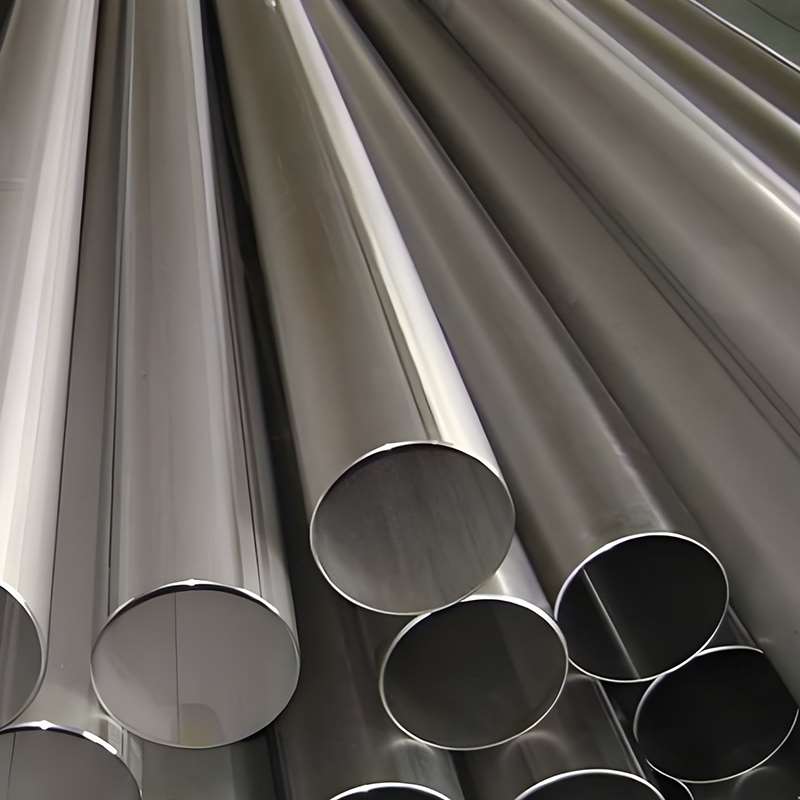
| External Surface Finish | Pickled & bright (BA), polished, brushed | ASTM A967 / EN 10088 | Surface free of cracks, scratches, or oxidation spots |
| Defects | No cracks, porosity, folds, or pits allowed | ASTM A789 / A790 | Ensures weld quality and pressure resistance |
| Weld Surface Quality | Smooth, free of weld spatter; polish if necessary | ASTM A789 / ISO 5817 | Meets sanitary-grade requirements |
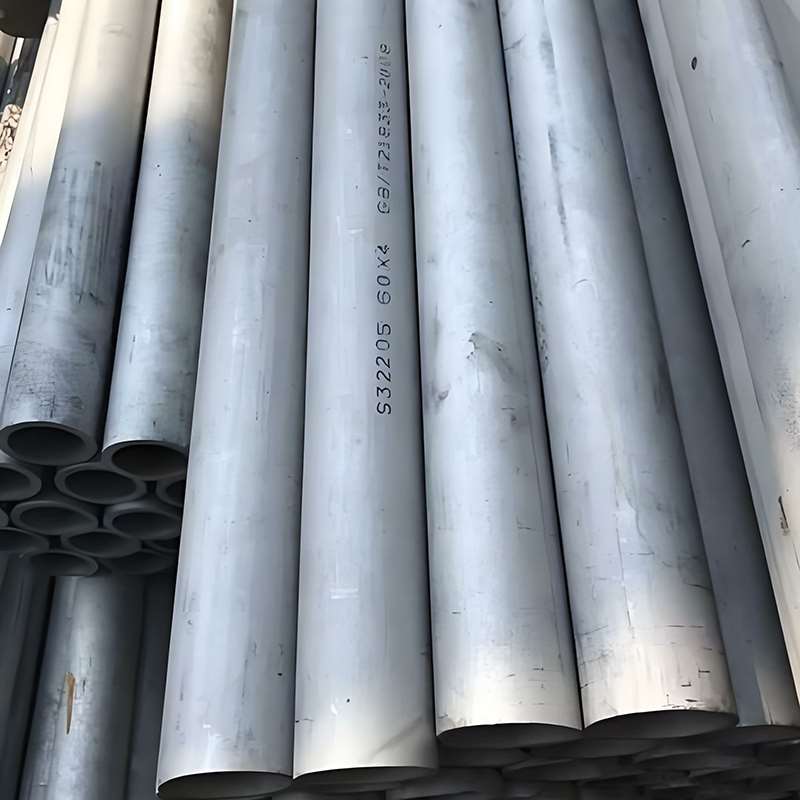
| Identification & Marking | Pipe grade, material, standard, production batch clearly visible | ASTM / EN standards | Facilitates quality traceability |
| Corrosion Resistance (Surface) | Surface must resist chloride corrosion and acid pickling | ASTM A262 / EN 10088 | Ensures long-term rust-free service |
VI.2205 Duplex Stainless Steel Pipe Applications and Selection
1. Seawater Desalination and Offshore Engineering
Application Area / Operating Conditions:
Used in seawater desalination plants, seawater intake pipelines, and offshore platforms. The pipes are in constant contact with seawater and are subject to high chloride corrosion, temperature variations, and pressure fluctuations.
Selection Guide:
Material Selection: Duplex 2205 (UNS S32205), resistant to chloride corrosion, high strength.
Pipe Diameter and Wall Thickness: Calculated based on flow rate and design pressure; wall thickness is generally 2–10 mm.
Surface Treatment: Inner and outer surfaces are acid-pickled and polished, Ra ≤0.8 μm.
End Connections: Welded ends are preferred for high-pressure or long pipelines for better sealing.
Precautions:
Avoid dead ends at welds, elbows, and connections to prevent corrosion.
Maintain reasonable support spacing to prevent fatigue cracking caused by vibration.
Regular inspection and cleaning are necessary to maintain the smoothness of the inner surface.
2. Chemical and Petrochemical Pipelines
Application Areas / Operating Conditions:
Suitable for pipelines and storage tank connections in acidic, alkaline, chloride, and highly corrosive chemical environments. May withstand high temperatures, high pressures, and corrosive media.
Selection Guide:
Material Selection: Duplex 2205, resistant to pitting corrosion, crevice corrosion, and stress corrosion cracking.
Pipe Diameter and Wall Thickness: Wall thickness is determined according to the design pressure and media corrosion rate, typically 3–15 mm.
Surface Treatment: Inner surface is acid-pickled and polished to ensure smooth fluid flow and easy cleaning.
Standard Requirements: ASTM A789 / A790 or EN 10216-5, ensuring compliance with industrial acceptance standards.
Precautions:
Welding process must comply with standards, and welds must be smooth and defect-free.
A corrosion allowance is required under high-temperature and high-pressure conditions.
Pipe support and installation must consider thermal expansion and vibration effects.
3. Oil and Natural Gas
Application Areas / Operating Conditions:
Used in refineries, petrochemical plants, and natural gas pipelines, where pipes are subjected to high pressure, hydrogen sulfide environments, and corrosive media.
Selection Guide:
Material Selection: Duplex 2205, compliant with NACE MR0175/ISO 15156 for resistance to hydrogen sulfide corrosion.
Pipe Diameter and Wall Thickness: Designed according to process pressure and the nature of the conveyed medium.
Surface Treatment: Pickled and brightened finish, ensuring corrosion resistance at the welded ends.
Precautions:
Welding requires strict control of heat input to prevent imbalance in the duplex phase ratio.
Confirm that the pipe material and welding materials meet the hydrogen sulfide resistance requirements.
Long-distance pipelines require pressure testing and corrosion inspection.
4. Pharmaceutical and Food Processing
Application Areas / Operating Conditions:
Used in pharmaceutical plants, food processing pipelines, and systems requiring high hygiene standards. The medium demands high hygiene and corrosion resistance.
Selection Guide:
Material Selection: Duplex 2205, offering high corrosion resistance and high strength, suitable for sanitary pipelines.
Internal Surface Roughness: Ra ≤0.6 μm, ensuring efficient CIP/SIP cleaning.
End Connections: Quick-connect clamp or welded ends, selected based on maintenance and cleaning requirements.
Precautions:
Avoid dead ends and blind spots to ensure cleaning covers all internal surfaces.
Regularly inspect the internal surface to prevent residue and microbial adhesion.
Welds and bends must be smooth and comply with hygiene standards.
5. Heat Exchanger and Storage Tank Systems
Application Areas / Operating Conditions:
Used in heat exchangers, reactors, and storage tank piping systems requiring corrosion resistance, pressure resistance, and temperature resistance.
Selection Guide:
Material Selection: Duplex 2205, balancing corrosion resistance and strength.
Wall Thickness and Pipe Diameter: Calculated based on design pressure and temperature to ensure pipe safety.
Surface Treatment: Pickling or polishing to ensure corrosion resistance.
Precautions:
Welded ends must be smooth and defect-free to ensure sealing and corrosion resistance.
Pay attention to stress concentration caused by thermal expansion and pressure fluctuations.
Regular maintenance and inspection are necessary to ensure long-term safe operation.
VII. 2205 Duplex Stainless Steel Pipe Procurement – Frequently Asked Questions
1. What international standards are available for 2205 duplex stainless steel pipes?
Main standards: ASTM A789 / A790 (American standard), EN 10216-5 (European standard), ASME SA789, DIN 1.4462 / 1.4410 (German standard).
The standard must be clearly specified during procurement to ensure that the pipe’s chemical composition, mechanical properties, and dimensional tolerances meet project requirements.
2. How to confirm that the pipe material is indeed 2205 duplex stainless steel?
Confirm the chemical composition and mechanical properties through the material certificate (MTC / Mill Test Certificate).
On-site sampling can be performed for optical metallographic analysis or chemical composition testing to verify that the duplex structure ratio is approximately 40–60%.
3. What are the requirements for internal and external surface roughness and surface treatment?
Internal surface Ra ≤0.8 μm (general piping) or Ra ≤0.6 μm (high-hygiene/pharmaceutical piping).
Surface treatment options include bright annealing (BA), polishing, or brushing to ensure corrosion resistance and ease of cleaning.
4. How to select pipe diameter, wall thickness, and length?
The outer diameter and wall thickness are determined based on process flow rate, design pressure, and media properties.
Standard lengths are generally 6 m or 12 m, and can be cut to specific lengths.
Pay attention to wall thickness tolerance and straightness to ensure proper pipe installation and pressure resistance.
5. How to choose welding and end connections?
Welded ends are suitable for high-pressure, long-distance pipelines or pipeline systems requiring high corrosion resistance.
Quick-connect clamps are suitable for pipelines in pharmaceutical and food processing industries that require frequent disassembly or cleaning.
When purchasing, the end type and welding requirements must be clearly specified to avoid mismatched connections or leaks during use.