I.What Is Carbon Steel Pipe?
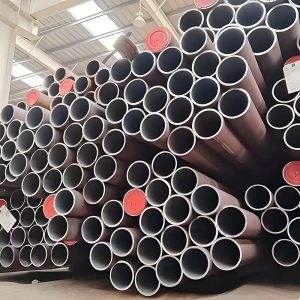
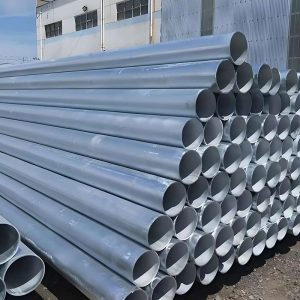
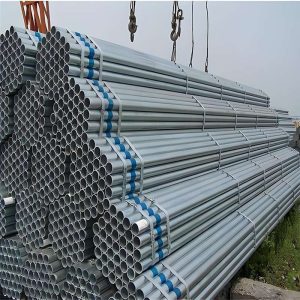
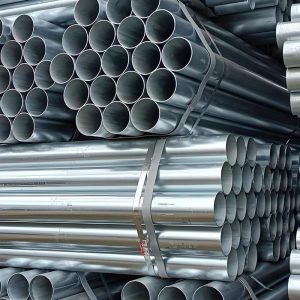
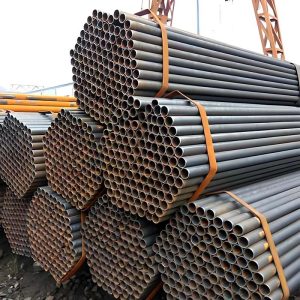
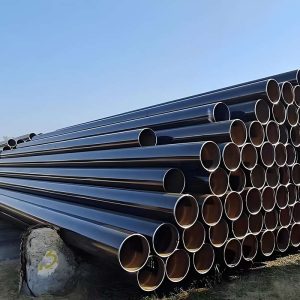
Carbon steel pipe is a type of steel pipe with iron as its primary matrix and carbon as its main alloying element. By controlling the carbon content and manufacturing process, it achieves an optimal balance between strength, toughness, and cost, making it widely used in construction, oil and gas, water supply, and industrial conveyance systems.
Based on carbon content, carbon steel pipes are typically classified into three categories:
- Low-carbon steel pipes: Carbon content is generally less than 0.30%. These pipes offer good toughness and are easy to weld and machine; they are commonly used for general fluid conveyance.
- Medium-Carbon Steel Pipes: Carbon content ranges from 0.30% to 0.60%. These pipes offer increased strength and hardness, but their ductility and weldability are slightly reduced.
- High-Carbon Steel Pipes: Carbon content exceeds 0.60%. These pipes are extremely hard, but due to their high brittleness and difficulty in machining, they are rarely used for manufacturing general-purpose piping.
Advantages of Carbon Steel Pipes:
- 1. High Strength
The addition of carbon significantly enhances the strength of the steel, enabling carbon steel pipes to withstand high mechanical loads and external pressure, making them suitable for high-strength engineering environments.
- 2. Good Pressure Resistance
Carbon steel pipes possess excellent structural stability and perform reliably in high-pressure transmission systems, making them commonly used in pipelines for transporting oil, natural gas, and industrial fluids.
- 3. Cost-Effective
Compared to stainless steel or alloy steel pipes, carbon steel pipes benefit from mature manufacturing processes and lower raw material costs, resulting in a more competitive overall price. They are one of the most common choices for engineering projects.
II. Types of Carbon Steel Pipes
Carbon steel pipes are mainly divided into three categories based on their manufacturing process and structural form: spiral welded steel pipe (SSAW), seamless steel pipe, and straight seam resistance welded steel pipe (ERW).
Different types of steel pipes are suitable for different engineering environments and each has its own advantages in terms of strength, pressure rating, and cost.
1. Spiral Steel Pipe (SSAW)
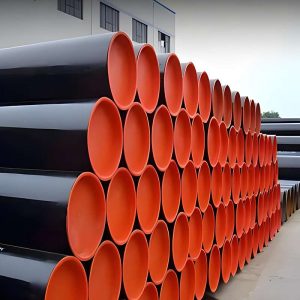
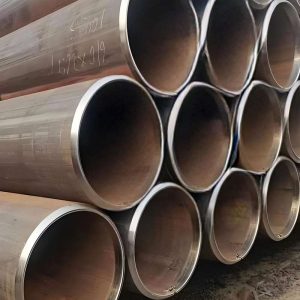
Spiral steel pipe is a large-diameter steel pipe manufactured by continuously winding steel strips at a spiral angle and welding them using the submerged arc welding (SAW) process.
A key feature of this process is the ability to produce large-diameter pipes using relatively narrow steel strips, making it very common in large-scale engineering projects.
Structural and Process Characteristics:
- Utilizes the Spiral Forming and Welding (SSAW) process
- Weld seams are distributed in a spiral pattern
- Capable of producing ultra-large-diameter pipes
- High material utilization and relatively low production costs
- Main Application Areas
Spiral steel pipes are widely used in large-diameter transportation and structural engineering:
- Oil & Gas (Oil and Gas Transmission Pipelines)
- Water Transmission (Long-Distance Water Supply Projects)
- Piling (Piling and Foundation Engineering)
2. Seamless Steel Pipe
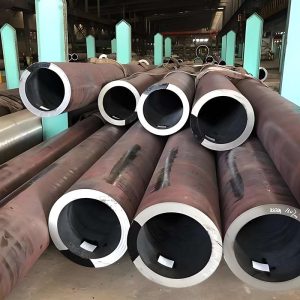
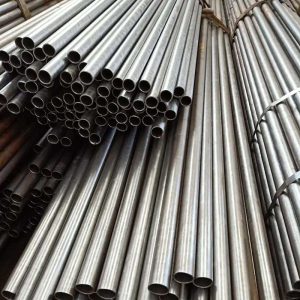
Seamless steel pipes are manufactured by piercing solid round steel bars and then forming them through hot rolling or cold drawing; the entire pipe body has no weld seams.
Structural Features:
- Seamless Structure
- Uniform microstructure and stable mechanical properties
- Capable of withstanding higher pressures and temperatures
Main Applications:
Seamless steel pipes are typically used in industrial systems with high safety requirements:
- High-pressure transportation systems
- Boiler systems
- Petrochemical industry
- High-temperature, high-pressure piping systems
3. Electric Resistance Welded (ERW) Steel Pipe
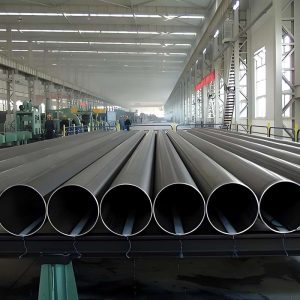
ERW steel pipes are manufactured by rolling steel plates into a tube shape and then welding them longitudinally using the Electric Resistance Welding (ERW) process.
Process Characteristics:
- Electric Resistance Welding (ERW Process)
- Longitudinal weld
- High production efficiency and excellent dimensional control
- Good surface quality
Main Applications:
ERW steel pipes are primarily used for structural and general transport applications:
- Construction and Structural Engineering
- General Fluid Conveyance
- Machinery Manufacturing and Support Structures
- Low- and Medium-Pressure Pipeline Systems
III. Applications of Carbon Steel Pipes
1. Oil and Natural Gas Pipelines
- Crude Oil Transmission Pipelines
- Long-Distance Natural Gas Pipelines
- Gathering Systems
In the oil and gas industry, seamless steel pipes or spiral-welded steel pipes are typically selected based on pressure and corrosion conditions.
2. Urban Water Supply Systems
- Urban water distribution networks
- Water transmission pipelines from water treatment plants to end users
- Industrial recirculating water systems
In water supply projects, the primary focus is on corrosion resistance and service life.
3. Architectural and Structural Applications
- Support columns for steel structures
- Bridges and large-scale building structures
- Scaffolding systems
ERW steel pipes are widely used in this field due to their low cost and precise dimensional control.
4. Piling Projects
- Bridge foundation piles
- Offshore platform pile foundations
- High-rise building foundation projects
Spiral-welded steel pipes (SSAW) are particularly common in piling projects because they can be manufactured in large diameters and long lengths.
5. Industrial Fluid Transport
- Chemical Fluid Transport Systems
- Plant Process Piping
- Compressed Air and Steam Piping
- Cooling Water and Circulation Systems
Seamless steel pipes are typically used in high-pressure or high-temperature industrial environments to ensure operational safety.
IV. Common International Standards for Carbon Steel Pipes
| Standard Specification |
Standard Name |
Main Application |
Common Pipe Types |
| API 5L |
Line Pipe Specification |
Oil & Gas Pipeline Transportation |
Seamless / ERW / SSAW |
| ASTM A53 |
Pipe, Steel, Black and Hot-Dipped, Zinc-Coated |
General Fluid Transportation & Structural Use |
Seamless / ERW |
| ASTM A106 |
Seamless Carbon Steel Pipe for High-Temperature Service |
High-Temperature & High-Pressure Systems |
Seamless |
| ASTM A795 |
Steel Pipe for Fire Protection |
Fire Sprinkler Systems |
ERW / Seamless |
| ASTM A252 |
Welded and Seamless Steel Pipe Piles |
Piling & Foundation Projects |
SSAW / Seamless |
| EN 10217 |
Welded Steel Tubes for Pressure Purposes |
European Pressure Pipeline Systems |
ERW / SSAW |
| EN 10219 |
Cold Formed Welded Structural Hollow Sections |
Construction & Structural Applications |
ERW |
| ISO 3183 |
Steel Pipe for Pipeline Transportation Systems |
International Oil & Gas Pipeline Standards |
Seamless / ERW / SSAW |
| JIS G3454 |
Carbon Steel Pipes for Pressure Service |
Japanese Pressure Piping Systems |
Seamless / ERW |
| DIN 2448 |
Seamless Steel Tubes |
German Industrial Pipeline Systems |
Seamless |
How to choose the appropriate carbon steel pipe standard?
| Application Scenario |
Recommended Standards |
| Oil & Gas Transportation |
API 5L / ISO 3183 |
| High-Temperature & High-Pressure Systems |
ASTM A106 |
| Construction & Structural Engineering |
EN 10219 / ASTM A53 |
| Fire Protection Systems |
ASTM A795 |
| Piling & Foundation Projects |
ASTM A252 |
| General Fluid Transportation |
ASTM A53 |
V.Carbon Steel Pipe Sizes & Specifications
| Item |
Common Range |
Description |
| Outer Diameter |
1/2" – 120" (21.3 mm – 3048 mm) |
Small diameters are commonly used for construction and industrial piping, while large diameters are mainly used for water transmission, oil & gas pipelines, and piling projects |
| Wall Thickness |
Sch 10 / Sch 20 / Sch 40 / Sch 80 / Sch 160 / XXS |
Different wall thicknesses correspond to different pressure ratings; thicker walls provide higher pressure resistance |
| Length Options |
5.8m / 6m / 11.8m / 12m |
The most common export lengths are 6 meters and 12 meters, with custom fixed lengths also available |
| Seamless Steel Pipe Size Range |
1/2" – 24" |
Mainly used for high-pressure, high-temperature, and petrochemical systems |
| ERW Steel Pipe Size Range |
1/2" – 24" |
Commonly used for structural applications, fluid transportation, and medium-to-low pressure systems |
| SSAW Spiral Steel Pipe Size Range |
20" – 120" |
Suitable for large-diameter water transmission, oil & gas pipelines, and foundation piling projects |
| Standards |
API 5L / ASTM A53 / ASTM A106 / ASTM A252 |
Different standards are suitable for different engineering applications |
| Steel Grade |
Gr.B / X42 / X52 / X60 / X70 |
Different grades correspond to different strength requirements |
| Surface Treatment |
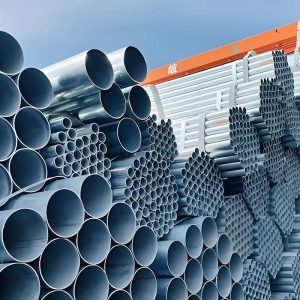
Black / Galvanized / 3PE / FBE |
Different coatings can be selected based on corrosion protection requirements |
| Custom Sizes |
Available |
Outer diameter, wall thickness, length, and coating can be customized according to project requirements |
VI. FAQ
Q1: What are carbon steel pipes primarily used for?
Carbon steel pipes are primarily used for transporting various fluids and in structural engineering, with a very wide range of applications, including:
- Oil and natural gas transmission pipelines
- Municipal water supply and drainage systems
- Building structures and steel structure supports
- Transportation of industrial fluids (steam, cooling water, chemical media)
- Pile foundations and foundation engineering
Due to their high strength, low cost, and versatility, carbon steel pipes are among the most widely used industrial pipes globally.
Q2: What is the difference between seamless steel pipes and welded steel pipes?
The main difference between the two lies in their manufacturing processes and structural designs:
Seamless Steel Pipes:
- Seamless structure
- Manufactured by piercing solid steel billets
- Higher pressure-bearing capacity
- Suitable for high-pressure and high-temperature systems (e.g., boilers, petrochemical plants)
Welded Steel Pipes:
- Formed by welding steel plates or steel strips
- High production efficiency and lower cost
- Suitable for medium- and low-pressure transportation and structural applications
In simple terms:
- Seamless pipes = Safer for high-pressure systems
- Welded pipes = More economical for large-scale projects
Q3: What is spiral welded steel pipe (SSAW)?
SSAW (Spiral Submerged Arc Welded Pipe) is a type of steel pipe manufactured using a spiral forming and submerged arc welding process.
Its features include:
- Capable of producing extra-large diameter pipes
- High material utilization and lower costs
- Welds are distributed in a spiral pattern, ensuring uniform strength
Main applications:
- Long-distance water transmission projects
- Oil and natural gas pipelines
- Pile foundations and bridge foundation engineering
Its advantages: Suitable for projects requiring “large diameter + long distance + low cost”
Q4: What type of carbon steel pipe is best suited for oil and gas pipelines?
The oil and gas industry typically selects different types based on operating conditions:
- Long-distance transmission pipelines: API 5L SSAW / ERW
- High-pressure critical pipelines: API 5L seamless steel pipes
- Projects with high safety requirements: API 5L grades X52 / X60 / X70, etc.
Summary and recommendations:
- Cost-priority → SSAW spiral welded steel pipes
- Safety and high pressure → Seamless steel pipes
- Comprehensive projects → ERW steel pipes
Q5: What are the commonly used standards for carbon steel pipes?
Internationally recognized standards for carbon steel pipes include:
API 5L — Oil and gas transmission pipelines
ASTM A53 — General-purpose fluid and structural pipes
ASTM A106 — Seamless high-temperature, high-pressure steel pipes
ASTM A795 — Fire sprinkler systems
ASTM A252 — Piling and foundation engineering
ISO 3183 — International standard for oil and gas pipelines
EN 10219 / EN 10217 — European standards for structural and pressure pipes
Q6: Do you offer custom sizes?
Yes, carbon steel pipes are typically available in fully customized specifications, including:
- Custom outer diameter (OD)
- Custom wall thickness (WT)
- Custom lengths (6m / 12m / or project-specific)
- Steel grades (Gr.B / X42 / X52 / X60, etc.)
- Corrosion protection (3PE / FBE / galvanized, etc.)
Advantages of Customization:
- Better alignment with engineering design requirements
- Reduced material waste
- Improved construction efficiency
- Lower overall project costs