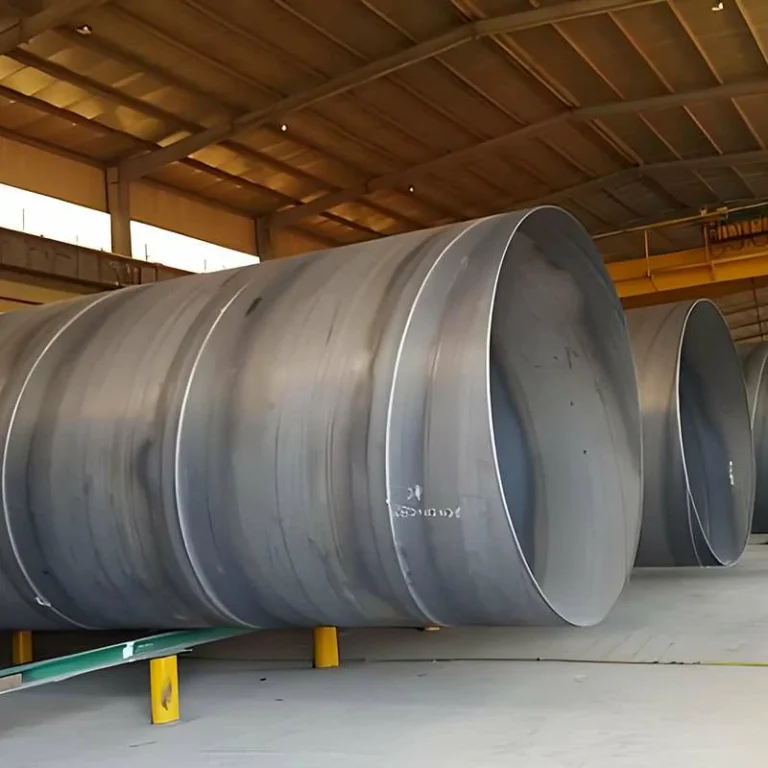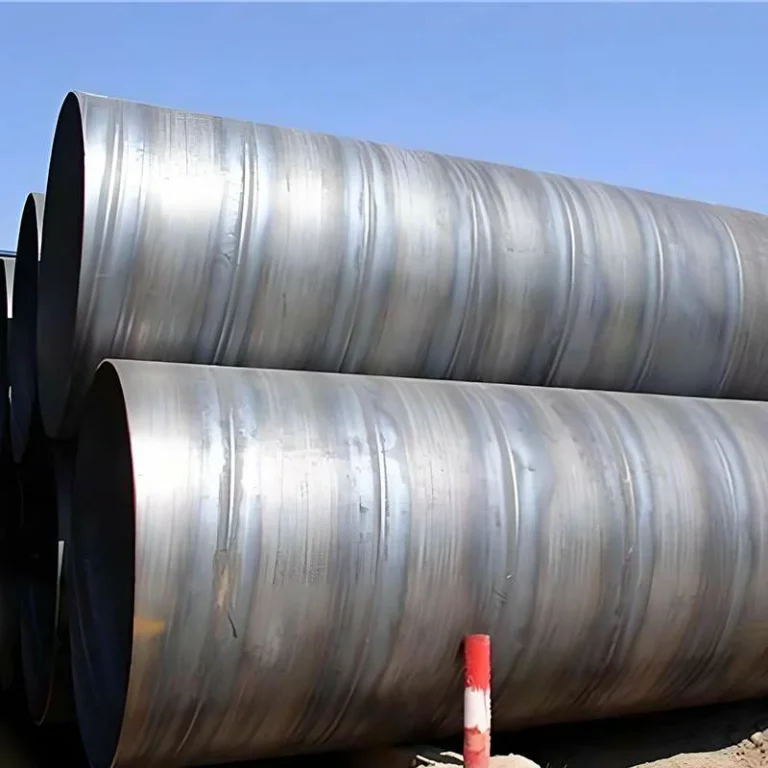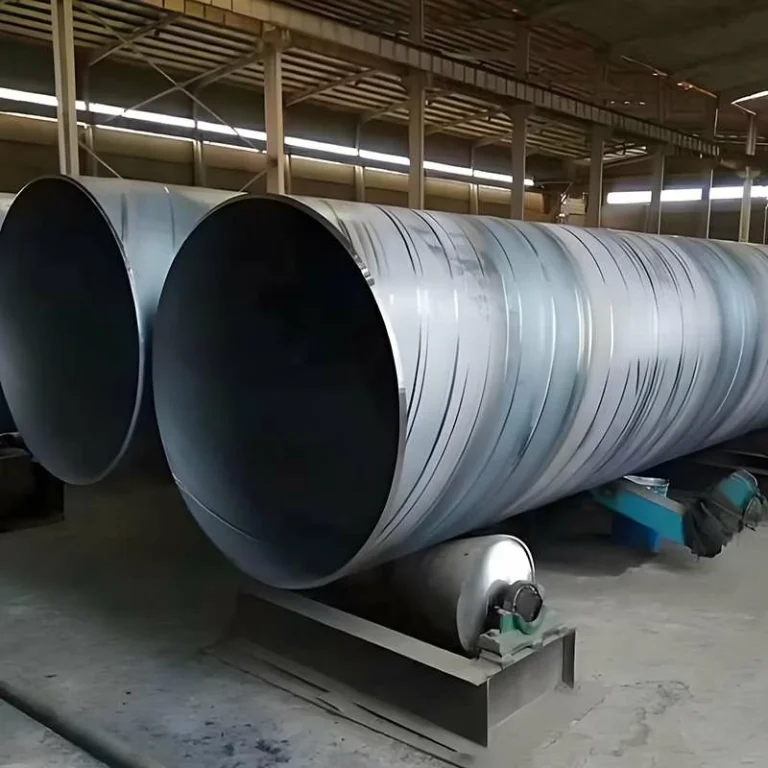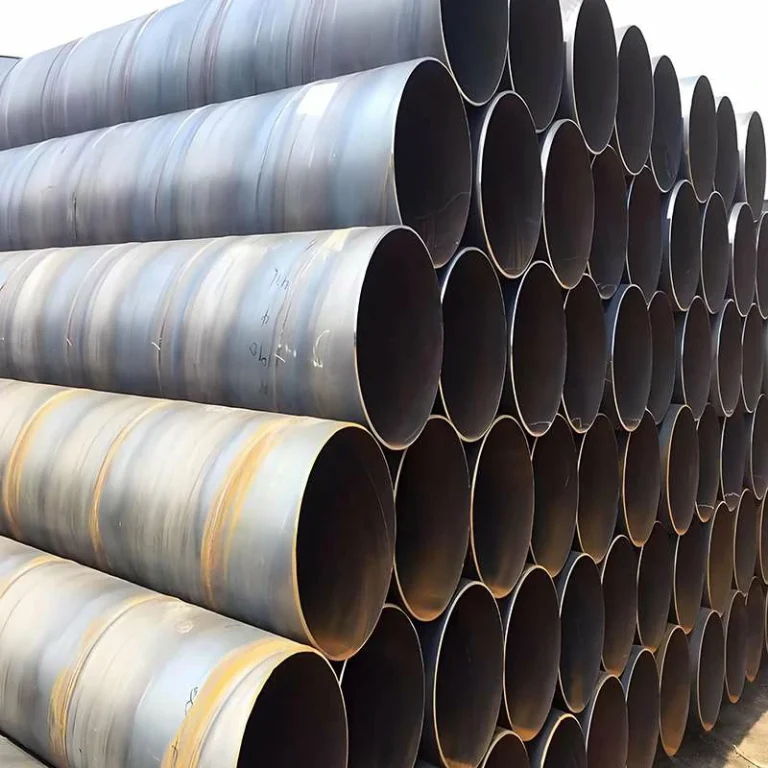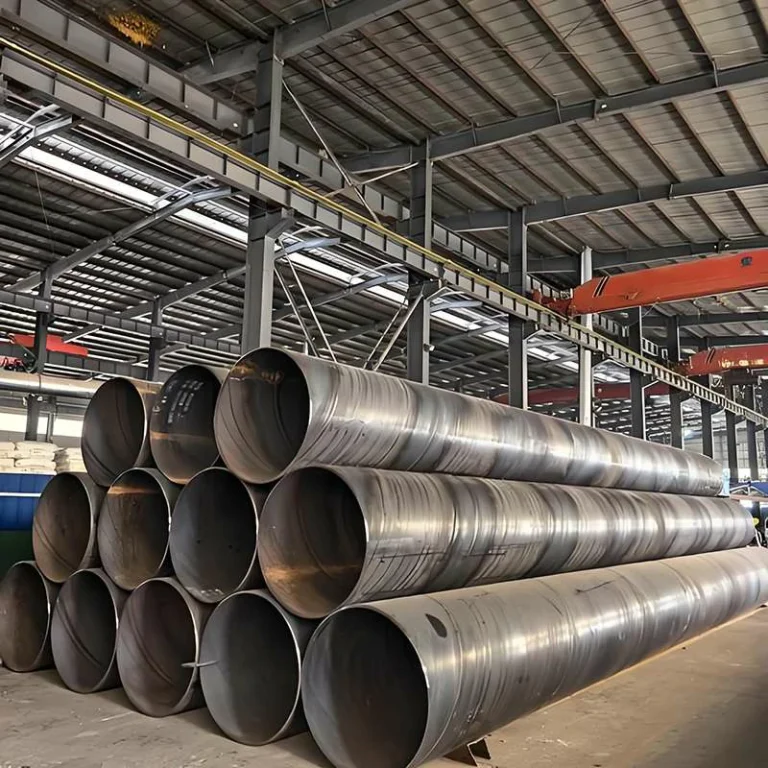
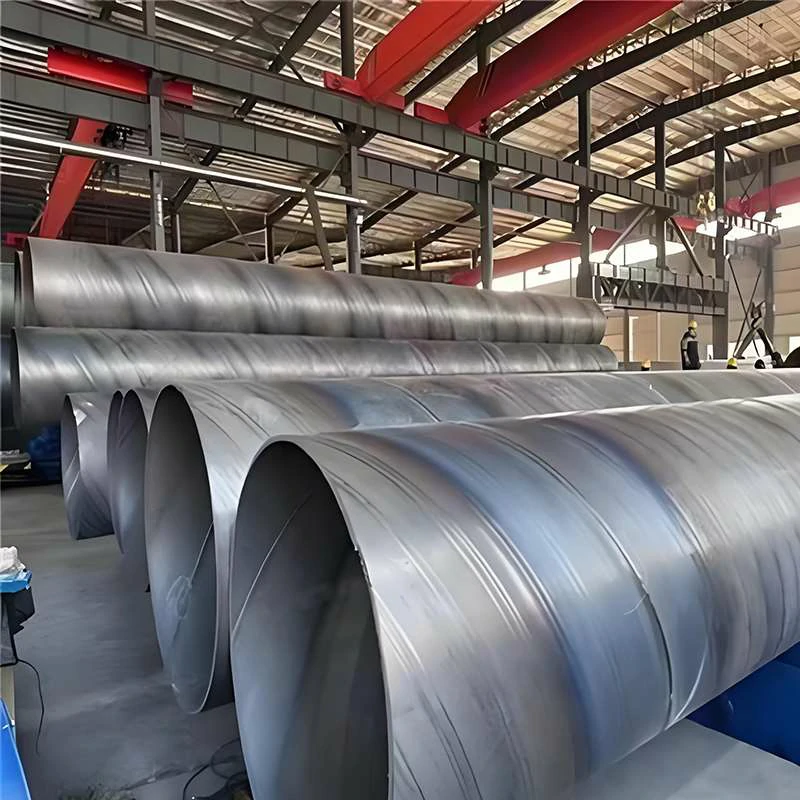
I. Overview of DSAW Spiral Steel Pipe
Double Submerged Arc Welded (DSAW) spiral steel pipe is a high-strength welded steel pipe made from hot-rolled steel strip or coil as raw material. It is formed into a pipe blank through a spiral forming process, and then welded on both the inner and outer sides using submerged arc welding technology. Its weld seams are distributed in a spiral shape, combining structural stability and production flexibility.
II. Typical Production Process of DSAW Spiral Steel Pipe:
Steel coil preparation → Uncoiling → Leveling → Edge trimming → Forming → Inner welding → Outer welding → Inspection → Sizing → Cutting → Finished product inspection → Anti-corrosion treatment → Warehousing
III. Commonly Used Materials and Standards for Double Submerged Arc Welded (DSAW) Spiral Steel Pipe:
| Standard | Common Grades | Application Scope |
|---|---|---|
| API 5L | Gr.B, X42, X52, X60, X65, X70 | Long-distance oil and natural gas transmission pipelines |
| ASTM A53 | Gr.B | General low-pressure pipelines and structural applications |
| ASTM A252 | Gr.1, Gr.2, Gr.3 | Piling works, bridges, and foundation structures |
| ASTM A139 | Gr.A, Gr.B | General welded steel pipes and low-pressure fluid transmission |
| GB/T 9711 | L245, L290, L360, L415, L450 | Oil and gas pipeline engineering in China |
| EN 10219 | S235, S275, S355 | Structural applications and European standard engineering |
| Q235 / Q355 | Q235B, Q355B | Municipal engineering, structural support, and general applications |
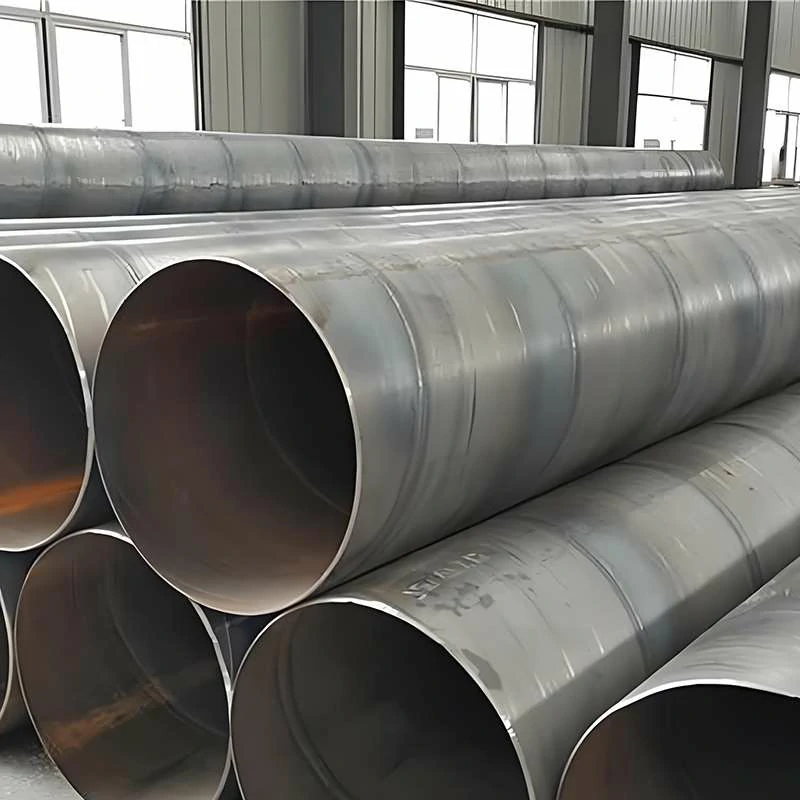
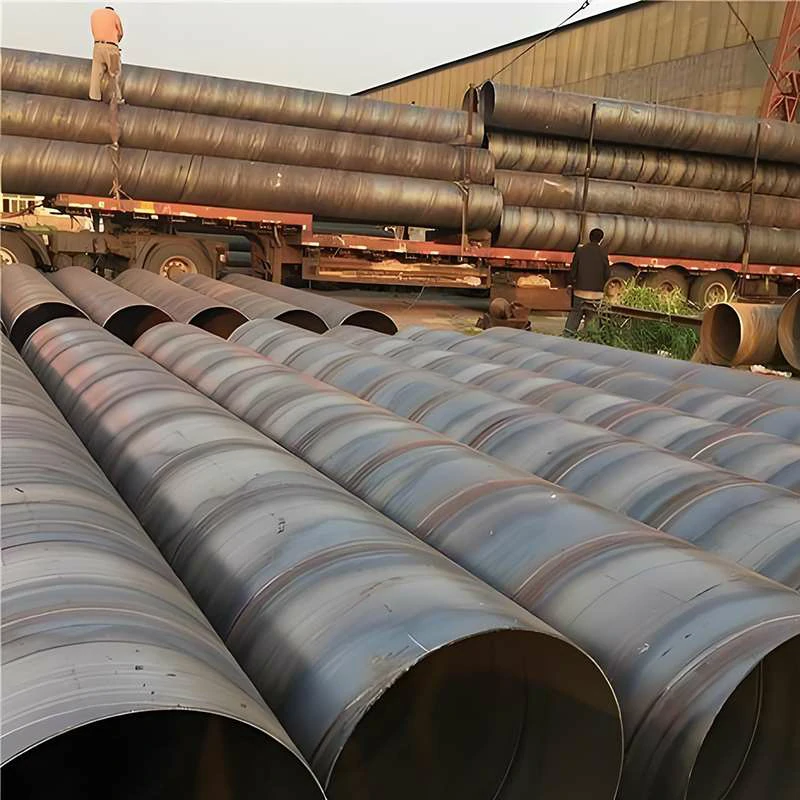
IV. Application Areas of Double-Sided Submerged Arc Welding (DSAW) Spiral Steel Pipes
1. Oil & Gas Transmission Pipelines
In long-distance oil and gas transmission projects, DSAW spiral steel pipes are an important choice for medium-low pressure to medium-high pressure pipelines, especially suitable for inland trunk lines and areas with complex terrain.
Typical Operating Characteristics:
- Transported Media: Crude oil, natural gas, refined oil
- Operating Pressure: Medium to high pressure (typically 2.5–10 MPa)
- Environmental Conditions: Deserts, mountains, permafrost regions
Selection Considerations:
- High-grade steel preferred (API 5L X52 – X70)
- Thick-walled design (enhanced pressure resistance)
- 3PE or FBE external corrosion protection (corrosion protection + soil stress resistance)
2. Municipal Water Supply and Drainage Engineering
In urban water supply and drainage systems, DSAW spiral steel pipes are mainly used for large-diameter water transmission trunk lines and pressure drainage systems.
Typical Operating Characteristics:
- Transporting Medium: Tap water, reclaimed water, sewage
- Operating Pressure: Low or medium pressure
- Environmental Conditions: Underground installation, long-term humid environment
Selection Considerations:
- Common Steel Grades: API 5L Gr.B / Q235B / Q355B
- Internal corrosion protection preferred (cement mortar lining or epoxy coating)
- Large diameter preferred (to improve water transmission efficiency)
3. Hydraulic & Irrigation Systems
Suitable for inter-regional water transfer projects, farmland irrigation, and reservoir water conveyance systems.
Typical operating characteristics:
- Transporting medium: Raw water, irrigation water
- Transporting distance: Long-distance continuous transport
- Terrain: Applicable to both plains and mountainous areas
Selection considerations:
- Emphasis on a balance between corrosion resistance and cost-effectiveness
- Selection options include medium to low grade steel (Gr.B / Q235B)
- Inner wall drag-reducing coating (improves water conveyance efficiency)
4. Piling & Foundation Works
DSAW spiral steel pipes are used as load-bearing piles in bridge, port, and high-rise building foundation engineering, possessing extremely high load-bearing capacity.
Typical Working Conditions:
- Stress Mode: Axial compression and impact loads
- Construction Methods: Driven piles, bored piles with casing
- Environment: Marine, soft soil, sandy layers
Selection Considerations:
- High-strength steel grade (API 5L X60 or higher or ASTM A252 Gr.3)
- Thickened wall design (improves compressive and impact resistance)
- External or temporary anti-corrosion treatment (for seawater corrosion protection)
5. Industrial & Structural Use
Used in chemical plants, power plants, and general industrial piping systems; also suitable as structural support components.
Typical Operating Characteristics:
- Transporting Media: Industrial water, gas, mildly corrosive fluids
- Pressure Rating: Medium to low pressure
- Application Environment: Plant areas, indoor and outdoor structures
Selection Considerations:
- Select corrosion resistance grade based on the media
- Common Steel Grades: Gr.B / Q235 / S355
- Custom sizes available to meet structural requirements
V. Quality Inspection Standards for Double-Sided Submerged Arc Welding (DSAW) Spiral Steel Pipes
| Inspection Item | Test Method | Standard / Requirement | Purpose |
|---|---|---|---|
| Chemical Composition Analysis | Spectrometer analysis | Complies with API 5L / ASTM A53 / GB/T 9711 | Ensure material meets steel grade requirements |
| Mechanical Properties Testing | Tensile test, impact test | API 5L / ASTM A370 | Verify strength, toughness, and ductility |
| Surface Quality | Visual inspection (VT) | No cracks, porosity, or folds on surface | Ensure surface integrity |
| Dimensional Inspection | Calipers, ultrasonic thickness gauge | OD ±1%, WT ±10% | Ensure installation accuracy |
| Weld Ultrasonic Testing | UT (Ultrasonic Testing) | API 5L / ISO 10893 | Detect internal defects (cracks, slag inclusion) |
| Radiographic Testing | RT (Radiographic Testing) | API 5L / ASME standards | Check internal weld integrity |
| Hydrostatic Test | Hydrostatic testing | Maintain standard test pressure ≥ 5 seconds | Verify pressure resistance and sealing performance |
| Impact Test | Charpy V-Notch | API 5L specified temperature requirements | Evaluate low-temperature toughness |
| Hardness Test | Brinell / Rockwell | ASTM E10 / E18 | Control material hardness uniformity |
| Weld Appearance Inspection | Visual + magnified inspection | No undercut, cracks, or lack of fusion | Ensure welding quality |
| Coating Inspection | Holiday test (spark test) | 3PE / FBE standards | Check coating integrity |
| Adhesion Test | Peel test | ISO 21809 / DIN standards | Ensure coating adhesion (no peeling) |
VI. Common Questions (FAQ) about Double-Sided Submerged Arc Welded (DSAW) Spiral Steel Pipes
Q1: What is the difference between DSAW spiral steel pipes and straight seam steel pipes?
A:
The main difference lies in the weld seam type and stress distribution. The weld seam of DSAW spiral steel pipes is spirally distributed, which can more evenly distribute circumferential stress, thus providing better structural stability in large-diameter pipelines. Straight seam steel pipes, on the other hand, have a straight weld seam, resulting in more significant stress concentration under high pressure or large-diameter conditions.
In short: spiral pipes are more suitable for large-diameter, long-distance transportation, while straight seam pipes are more suitable for small-to-medium diameter, high-pressure applications.
Q2: What pressure ranges are DSAW spiral welded steel pipes suitable for?
A:
DSAW spiral welded steel pipes are generally suitable for medium-low pressure to medium-high pressure transmission systems, depending on the steel grade and wall thickness design.
- Low pressure systems: Municipal water supply and drainage
- Medium pressure systems: Industrial fluids, general water transmission
- Medium-high pressure systems: Oil and gas transmission (API 5L X52–X70)
Key point: Pressure capacity is not a fixed value, but is determined by “steel grade + wall thickness + standard design”.
Q3: Are the welds of DSAW spiral welded steel pipes safe? Are they prone to cracking?
A:
DSAW uses a double-sided submerged arc welding process, ensuring complete weld penetration. It undergoes rigorous non-destructive testing (UT, RT) and hydrostatic testing, resulting in high overall safety.
Furthermore, the spiral weld effectively distributes stress, reducing the likelihood of concentrated cracks.
Conclusion: As long as it is manufactured in accordance with API 5L or ASTM standards, the weld reliability fully meets engineering requirements.
Q4: How to choose the appropriate steel grade (API 5L X42 / X52 / X60, etc.)?
A:
The choice of steel grade mainly depends on the engineering pressure and the operating environment:
| Working Condition | Recommended Steel Grades |
|---|---|
| Municipal water supply / drainage | Gr.B / X42 |
| General industrial transmission | X42 / X52 |
| Medium to high-pressure oil & gas pipelines | X60 / X65 / X70 |
Selection principle: Higher pressure, longer distance, more complex environment → higher steel grade
Q5: What are the maximum diameters of DSAW spiral welded steel pipes?
A:
One of the advantages of DSAW spiral welded steel pipes is their suitability for large-diameter production. Common ranges are:
- Small diameter: 219 mm
- Standard large diameter: 508 – 1829 mm
- Extra-large diameter: 2000 – 3000 mm and above (custom production)
Conclusion: The larger the diameter, the more obvious the economic advantages of the DSAW spiral process.
Q6: How to ensure the corrosion resistance and service life of DSAW spiral steel pipes?
A:
Corrosion resistance is mainly achieved through a combination of external and internal corrosion protection:
- External corrosion protection: 3PE, FBE, epoxy coal tar
- Internal corrosion protection: Cement mortar lining, liquid epoxy coating
- Auxiliary measures: Cathodic protection system (for buried or marine environments)
Practical engineering experience:
- Under normal corrosion protection design, the service life can reach 20–50 years or even longer.