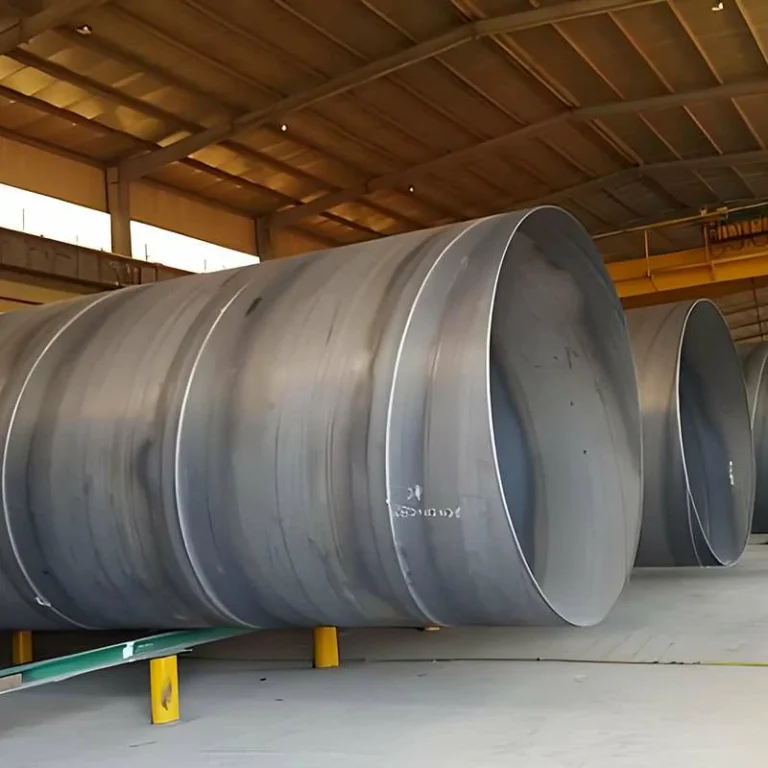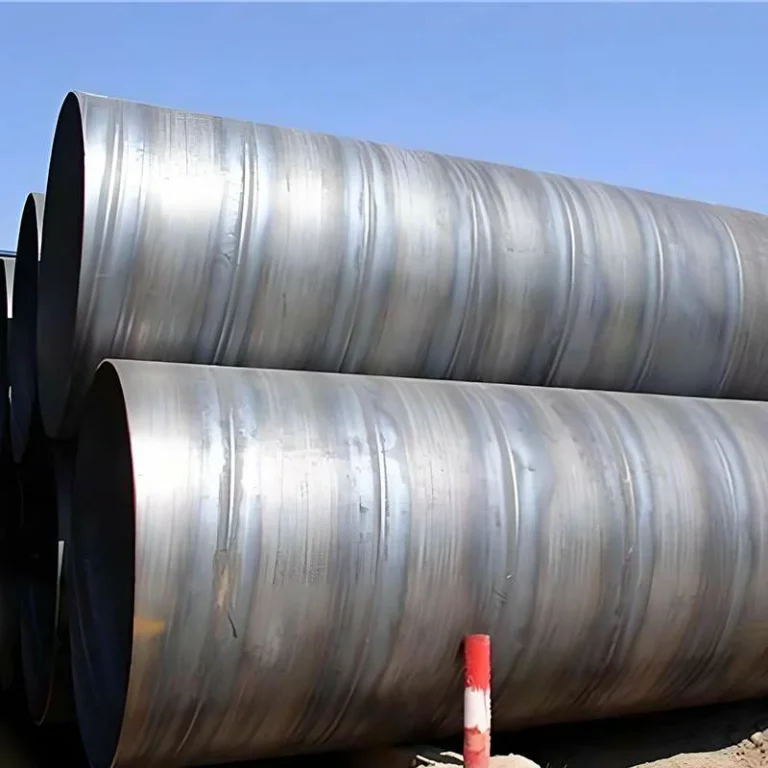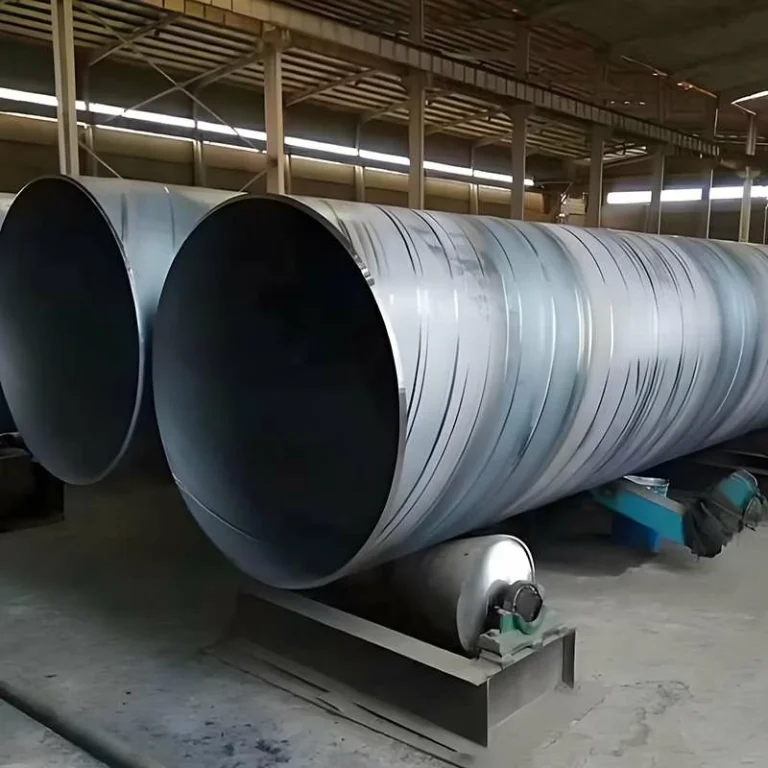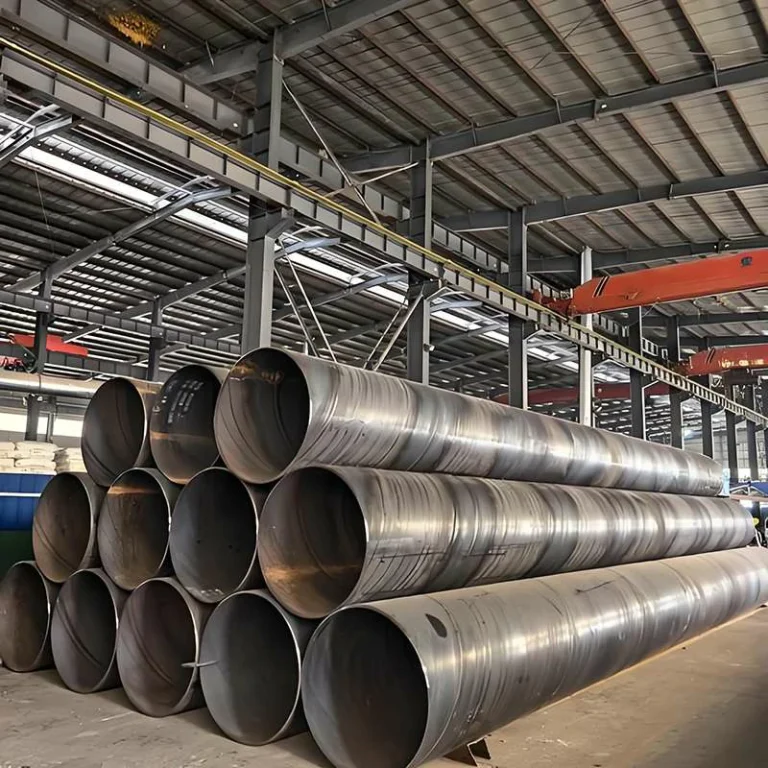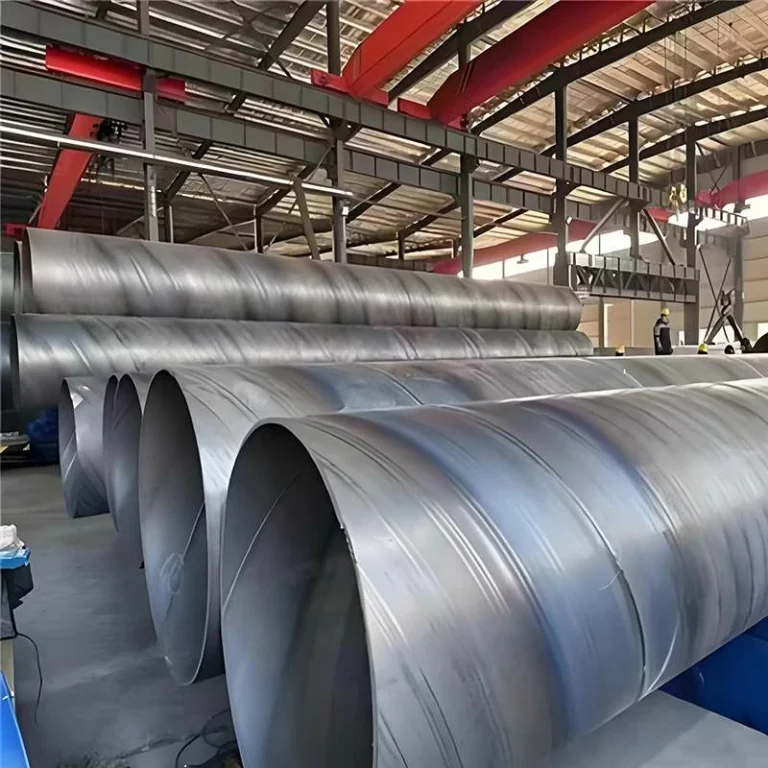
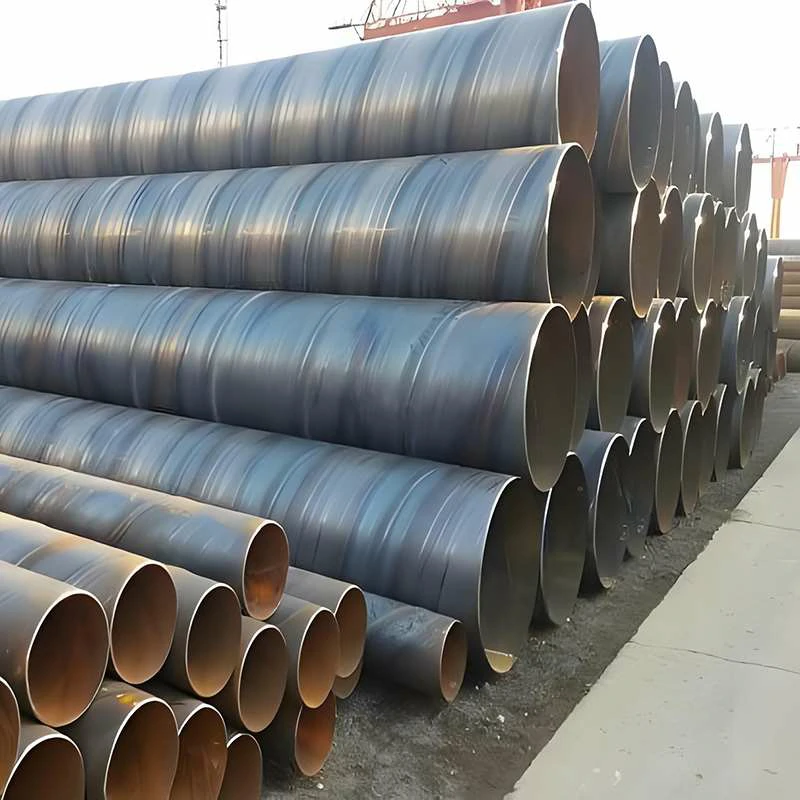
In modern infrastructure construction, ASTM A252 Spiral Welded Piling Pipe is more than just a material specification; it is the lifeline ensuring the long-term stability of landmark buildings. Foundation engineering is hailed as the “backbone” of a building, and its quality directly determines the success or failure of the entire project.
I. What is ASTM A252 Spiral Welded Pipe?
1. Introduction to ASTM A252 Standard
ASTM A252 is a standard specification for welded and seamless steel pipes used in piling, published by the American Society for Testing and Materials (ASTM). Unlike other pipe standards (such as API 5L), ASTM A252 does not emphasize the pressure seal of the pipe, but focuses on structural strength.
- Core Function: This pipe is primarily used as a permanent load-bearing pile or as the casing for cast-in-place concrete piles.
- Physical Grades: Grades are divided into Grade 1, Grade 2, and Grade 3. Grade 3 has the highest yield strength (310 MPa / 45,000 psi) and is currently the most commonly used grade in large-scale international infrastructure projects.
2. SSAW Manufacturing Process: Spiral Forming + Submerged Arc Welding
The development of Spiral Welded Pipe (SSAW) combines aesthetic mechanics with industrial efficiency:
- Raw Materials: Hot-rolled coils are used as the base material.
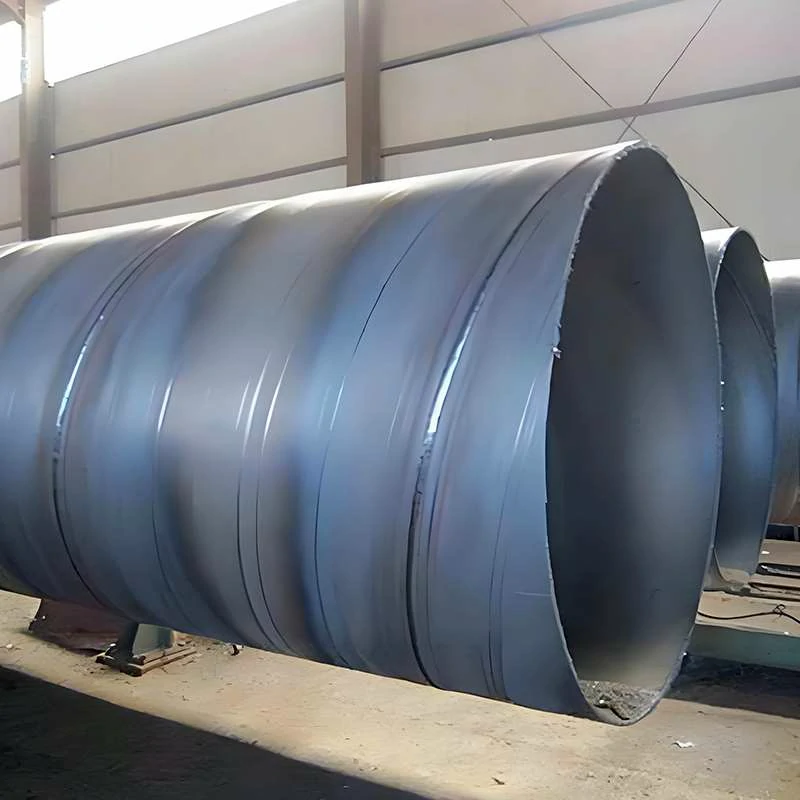
- Spiral Forming: The coils are rolled into a cylindrical shape at a specific spiral angle (forming angle).
- Submerged Arc Welding: Double-sided submerged arc welding technology is employed. The electric arc burns beneath the flux layer, without exposure, resulting in a dense, deep-penetrating weld that ensures the joint strength is even higher than that of the steel pipe body.
II. ASTM A252 Grade and Performance Comparison Table
| Grade | Yield Strength | Tensile Strength | Applicable Engineering Type | Selection Recommendation |
|---|---|---|---|---|
| Grade 1 | ≥ 205 MPa (30,000 psi) | ≥ 345 MPa (50,000 psi) | Light structures, temporary works, small pile foundations | Cost priority, suitable for projects with low load requirements |
| Grade 2 | ≥ 240 MPa (35,000 psi) | ≥ 415 MPa (60,000 psi) | Conventional building foundations, medium-load structures | Best cost-performance, most commonly used grade |
| Grade 3 | ≥ 310 MPa (45,000 psi) | ≥ 455 MPa (66,000 psi) | Heavy-duty structures, bridge pile foundations, port engineering | High strength requirements, high safety factor needed |
Practical Selection Summary:
- Limited budget + low load requirements → Choose Grade 1
- Most engineering projects → Prioritize Grade 2
- High-risk/high-load projects (bridges, marine engineering) → Grade 3 is a must
III. Application scenarios of ASTM A252 spiral welded piling pipe
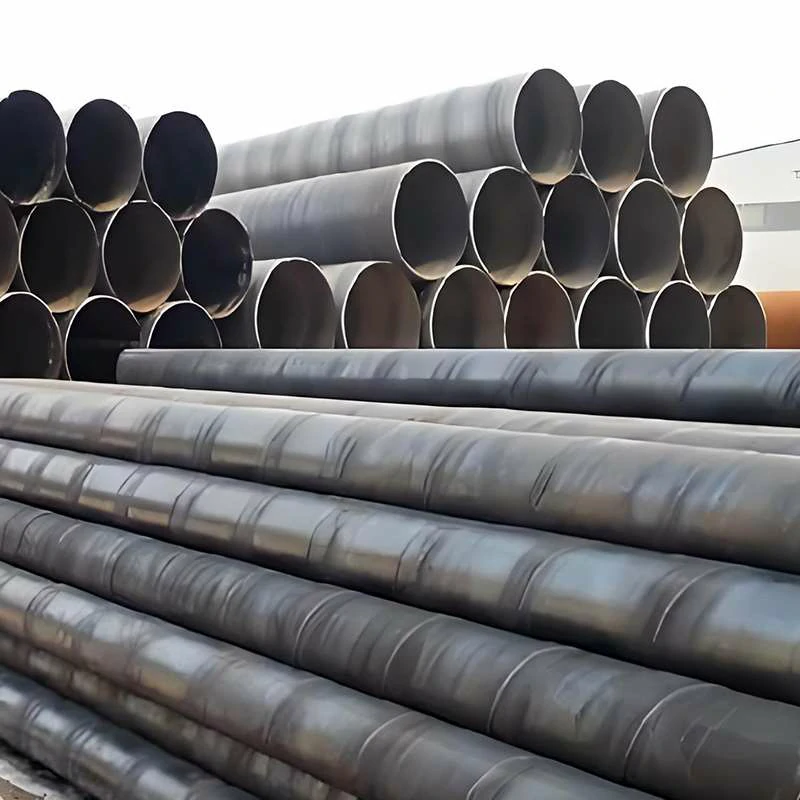
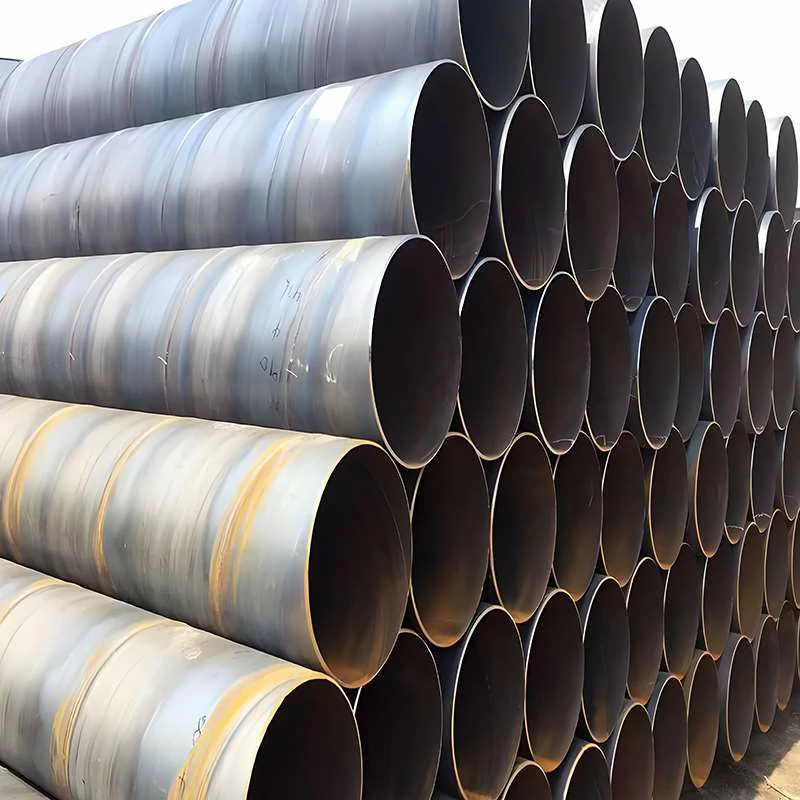
ASTM A252 spiral welded piling pipes are primarily used in various foundation and structural support projects. Their value lies not only in “where they are used,” but also in “what engineering problems they solve.”
Bridge Pile Foundation Engineering – Solving High Load-Bearing and Stability Problems
In bridge construction, pile foundations need to withstand enormous concentrated loads from the superstructure. ASTM A252 spiral welded piling pipes provide high-strength axial load-bearing capacity, effectively transferring the load to a deep, stable foundation, thus solving the problems of insufficient foundation load-bearing capacity and uneven settlement risks in bridges.
Port and Marine Engineering – Solving Corrosion and Wave Impact Problems
In environments such as port terminals and offshore platforms, steel structures are constantly exposed to seawater corrosion and wave impact. This product, used in conjunction with anti-corrosion coatings, can improve corrosion resistance while ensuring structural strength, thereby solving the problems of rapid corrosion and lateral stress failure in marine environments.
Bridge Pile Foundation Engineering – Solving High Load-Bearing Capacity and Stability Problems
In bridge construction, pile foundations need to withstand enormous concentrated loads from the superstructure. ASTM A252 spiral welded piling pipes effectively transfer loads to deep, stable ground by providing high-strength axial load-bearing capacity, thus solving the problems of insufficient load-bearing capacity and uneven settlement risks in bridge foundations.
Port and Marine Engineering – Solving Corrosion and Wave Impact Problems
In environments such as port terminals and offshore platforms, steel structures are constantly exposed to seawater corrosion and wave impact. This product, used in conjunction with anti-corrosion coatings, can improve corrosion resistance while ensuring structural strength, thereby solving the problems of rapid corrosion and lateral stress failure in marine environments.
Building Foundation Engineering – Solving the Problem of Insufficient Bearing Capacity in Soft Soil Foundations
High-rise buildings and large industrial facilities often encounter geological conditions such as soft soil or insufficient bearing capacity. ASTM A252 pile pipes, through deep foundation design, transfer building loads to more stable soil layers, thereby solving the problems of insufficient foundation bearing capacity and uneven building settlement.
Power and Petrochemical Structures – Solving the Problem of Long-Term Stability and Safe Operation
In the foundations of transmission towers, substations, and petrochemical plants, the structures need to withstand long-term static loads and complex environmental influences. This product has excellent structural stability and deformation resistance, effectively solving the risk of foundation loosening and structural instability under long-term loads.
IV. Inspection Standard Table for Spiral Welded Piling Pipes
| Inspection Item | Test Method / Standard | Inspection Content | Technical Requirements / Acceptance Criteria |
|---|---|---|---|
| Chemical Composition Analysis | Spectral analysis / ASTM standards | Analyze chemical composition (C, Mn, P, S, etc.) | Must comply with ASTM A252 grade requirements |
| Tensile Test | ASTM A370 | Test yield strength, tensile strength, elongation | Must meet Grade 1 / 2 / 3 specified values |
| Weld NDT (UT) | Ultrasonic Testing | Detect internal weld defects (porosity, slag inclusion, etc.) | No defects affecting structural performance are allowed |
| Weld NDT (RT) | Radiographic Testing (optional) | Inspect internal weld integrity | Weld quality must comply with relevant standards |
| Dimensional & Visual Inspection | Vernier caliper / visual inspection | Check OD, wall thickness, length, ovality | Must meet ASTM A252 dimensional tolerances |
| Hydrostatic Test (optional) | Hydraulic testing equipment | Verify sealing and pressure resistance | No leakage or deformation |
| Coating Inspection (if applicable) | Coating thickness gauge / holiday test | Check coating thickness and integrity | Must meet coating standards (e.g., 3PE) |
| Impact Test (optional) | Charpy impact test | Evaluate low-temperature toughness (if required) | Must meet project or contract requirements |
| Third-Party Inspection | SGS / BV / TUV | Independent quality verification | Inspection report provided |
V. ASTM A252 Spiral Welded Piling Pipe Selection FAQ
1. How to select ASTM A252 Grade 1 / Grade 2 / Grade 3?
A:
Grade selection mainly depends on the load-bearing requirements of the project.
- Grade 1: Suitable for light structures or temporary works with lower load-bearing requirements.
- Grade 2: Suitable for most conventional foundation works; the most commonly used grade, offering the best cost-effectiveness.
- Grade 3: Suitable for high-load or high-safety-requirement projects, such as bridges, ports, and marine engineering.
General projects should prioritize Grade 2; high-risk or heavy-load projects should choose Grade 3.
2. How to determine the appropriate pile pipe diameter and wall thickness?
A:
Pile pipe dimensions depend on the superstructure load, geological conditions, and pile length design.
- Larger loads → require larger diameters or thicker walls.
- Soft soil or deep foundations → typically use larger diameter pile pipes to increase stability.
Specific parameters are usually calculated and determined by structural engineers based on the geological survey report.
It is recommended to provide project load and geological data for supplier assistance in selection.
3. Are spiral welded pipe piles suitable for load-bearing structures? Are they safe?
A:
Yes, they are perfectly suitable for load-bearing structures.
ASTM A252 spiral welded pipes utilize double-sided submerged arc welding (SAW) technology, resulting in high weld strength and excellent overall structural continuity, meeting the requirements for axial load bearing and lateral stability.
There are numerous successful application cases in bridge, port, and high-rise building foundations.
4. What soil conditions can ASTM A252 spiral welded pipe be used in?
Answer:
Suitable for a variety of complex geological conditions, including:
- Soft soil layers (requiring deep foundation support)
- Mixed clay and sand layers
- Coastal backfill areas
- High groundwater levels
In extreme geological conditions, it is typically used in conjunction with larger diameter and higher grade steel.
5. Is anti-corrosion treatment required? How to choose?
A:
Whether anti-corrosion treatment is needed depends on the usage environment:
- Ordinary soil environment: Black paint or basic rust prevention is sufficient.
- High humidity or groundwater environment: Epoxy coating or asphalt coating is recommended.
- Marine or port engineering: 3PE or heavy-duty anti-corrosion system is recommended.
Anti-corrosion design directly affects service life, especially for marine engineering projects.
6. How to determine if a supplier’s ASTM A252 pipe piles are reliable?
A:
You can judge from the following aspects:
- Does the supplier provide a complete material certificate (MTC)?
- Do they have third-party testing reports (SGS/BV/TUV)?
- Do they perform UT/RT weld inspection?
- Do they have real-world engineering project application examples?
- Do they support customized sizes and coatings?
A qualified supplier should be able to provide a complete quality traceability system, not just a product quote.