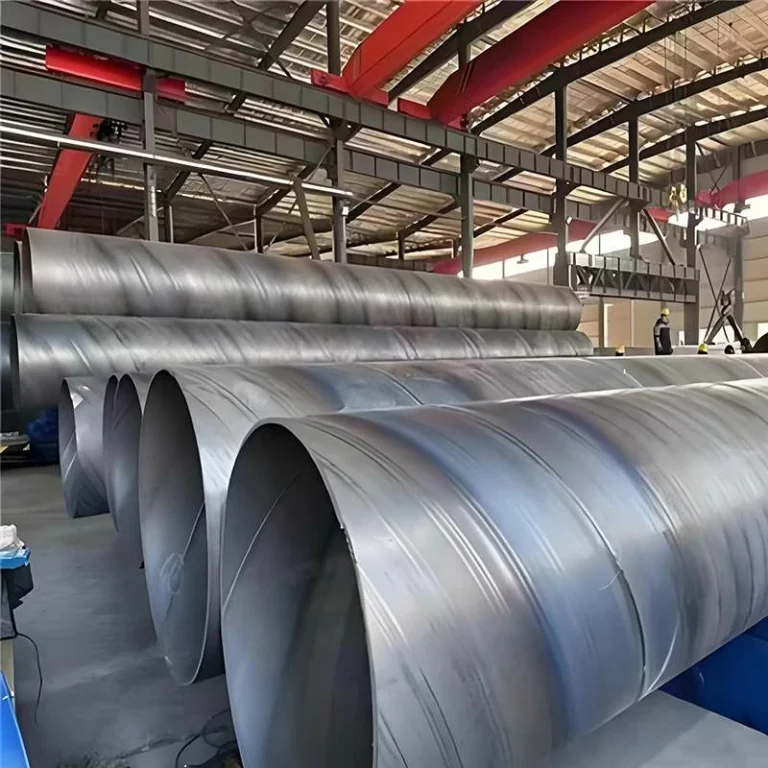
I. Definition of API 5L LSAW Carbon Steel Pipe
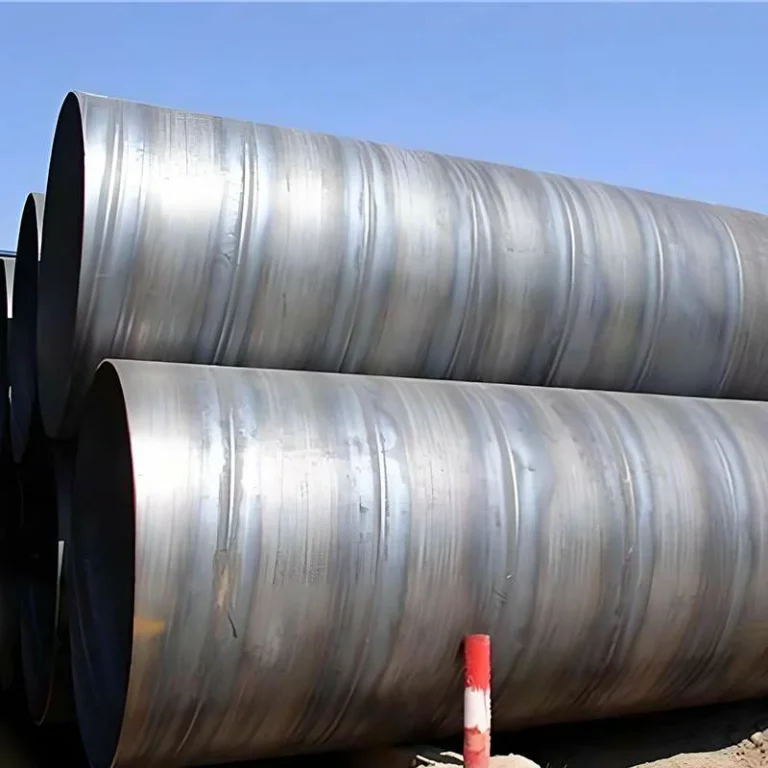
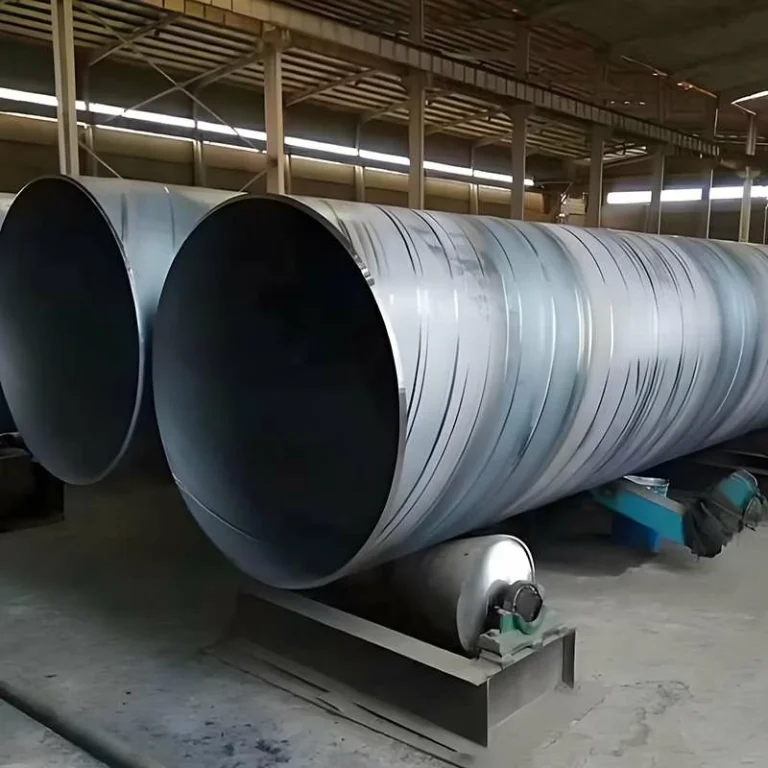
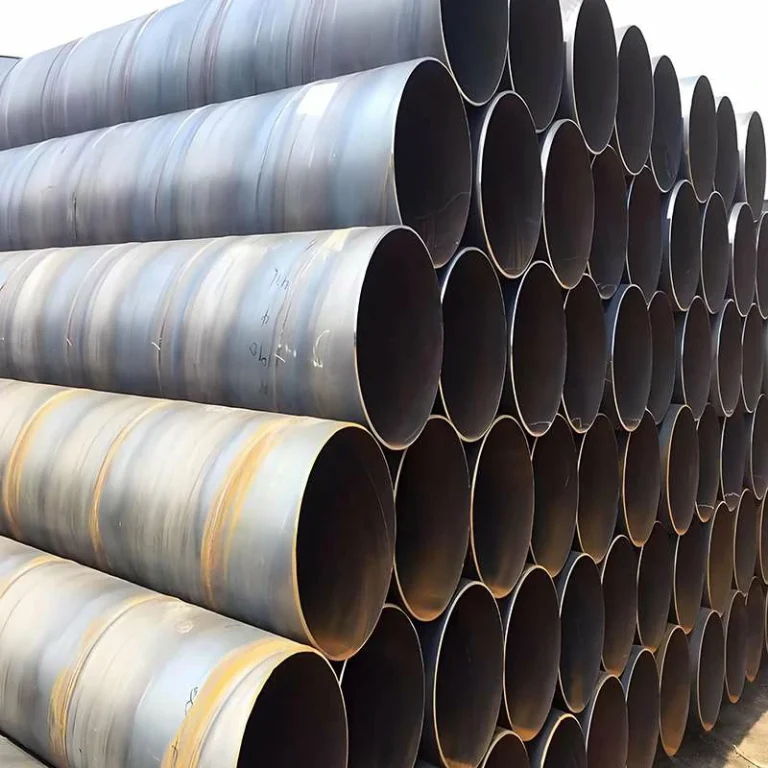
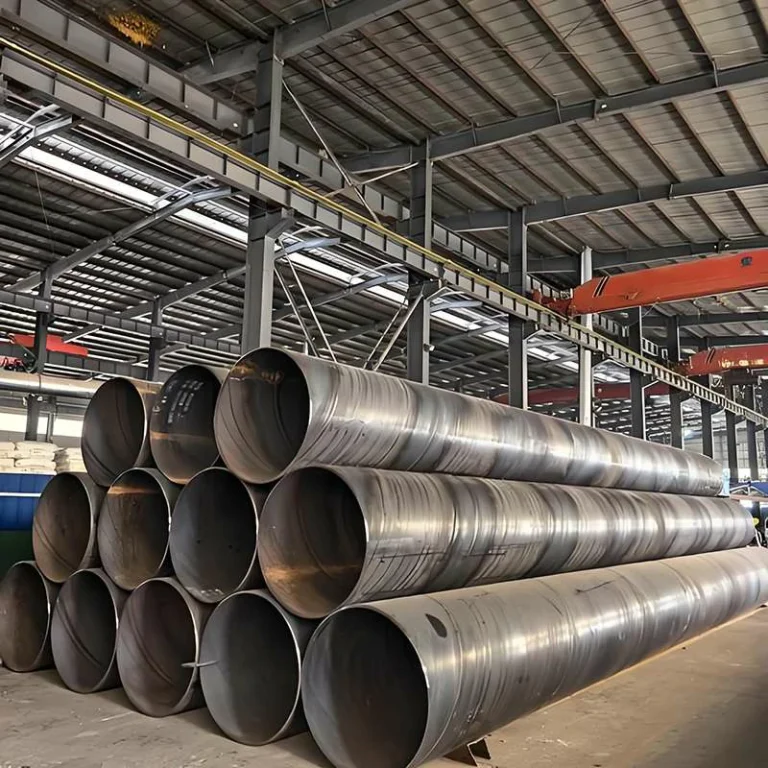
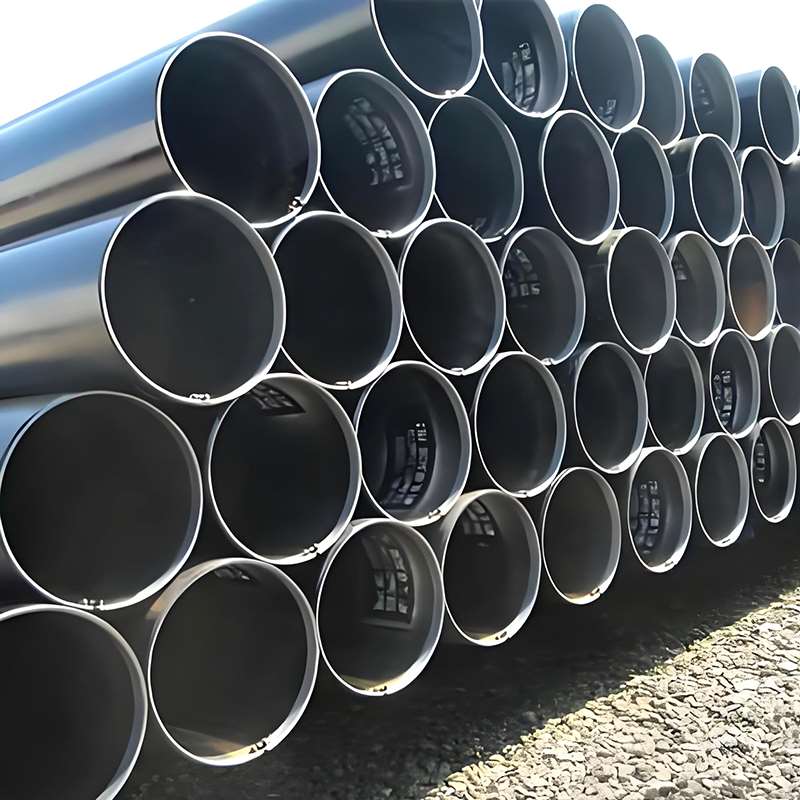
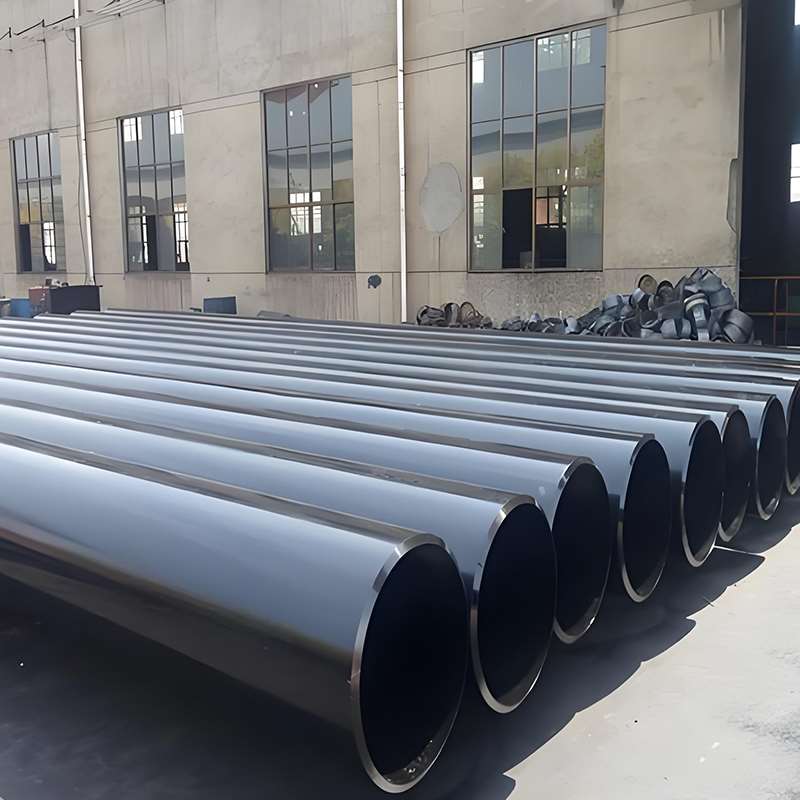
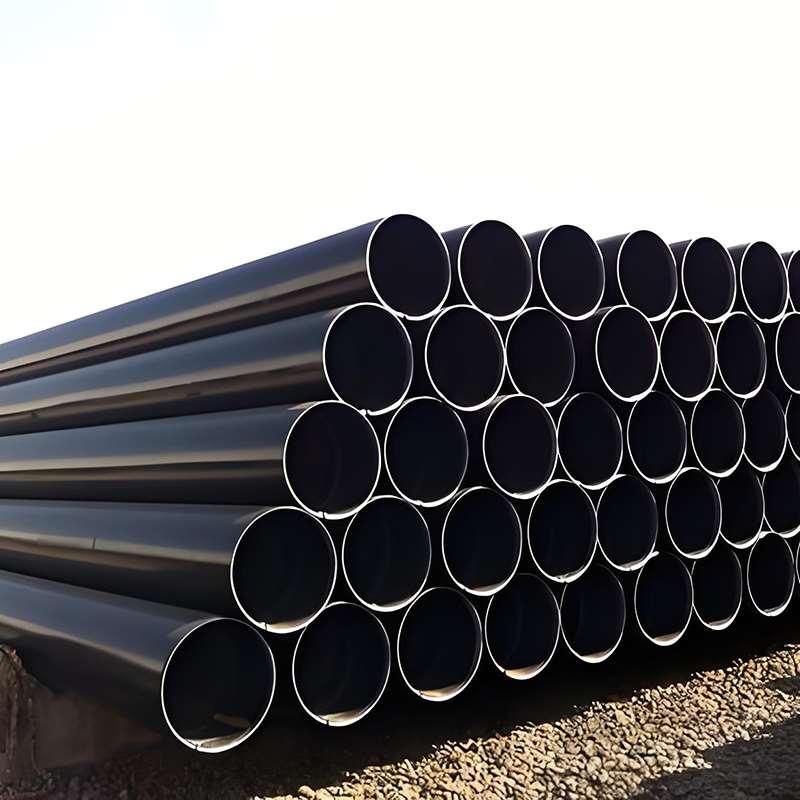
API 5L LSAW carbon steel pipe refers to longitudinally submerged arc welded (LSAW) carbon steel pipes for pipelines manufactured according to the API 5L standard. They are primarily used in medium-to-high pressure pipeline systems for oil, natural gas, and other fluids.
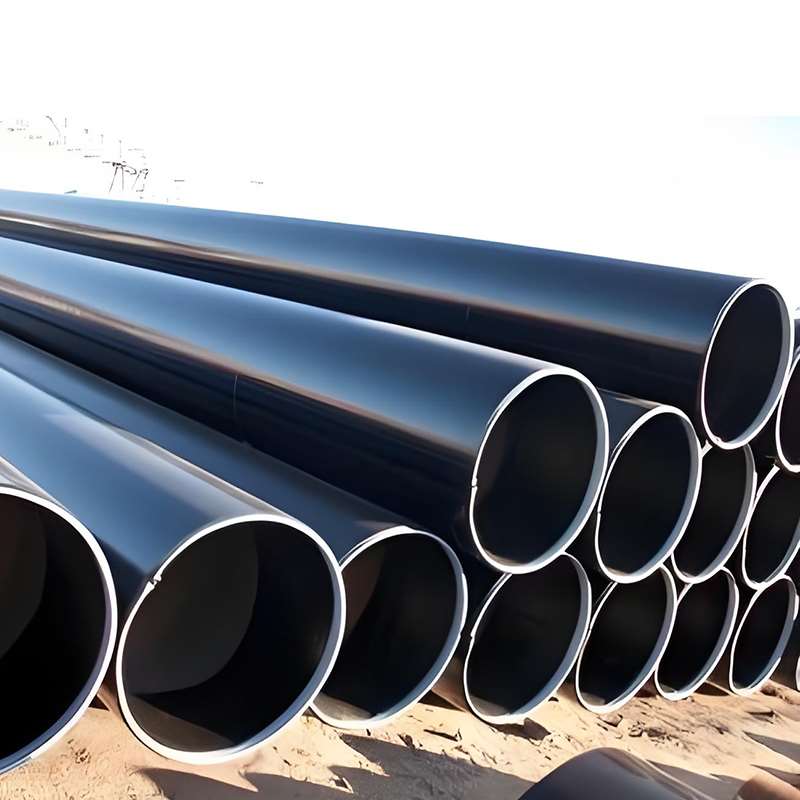
These steel pipes are made from medium-thick steel plates and formed using the UOE or JCOE forming process, with internal and external submerged arc welding along the longitudinal direction of the pipe body.
They feature stable weld quality and high dimensional accuracy, meeting the requirements for strength, toughness, and welding reliability in large-diameter, high-pressure, and long-distance pipeline projects.
II. Comparison of API 5L LSAW Carbon Steel Pipe Grades
i. Common API 5L LSAW Carbon Steel Pipe Grades
In the API 5L standard, common LSAW (longitudinal submerged arc welded) steel pipe grades include:
PSL1: B, X42, X46, X52, X56
PSL2: B, X42, X46, X52, X56, X60, X65, X70
Among these, X46 is a medium-to-low strength grade with very wide applicability in engineering projects.
ii. API 5L LSAW Carbon Steel Pipe Grade Comparison Table
| Grade | Minimum Yield Strength (MPa) | Minimum Tensile Strength (MPa) | Strength Level | Typical Applications | Notes / Features |
|---|---|---|---|---|---|
| API 5L B | 245 | 415 | Low | Water supply and drainage, low-pressure pipelines | Low cost, limited pressure capacity |
| API 5L X42 | 290 | 415 | Lower | General transportation pipelines | Strength slightly higher than Grade B |
| API 5L X46 | 320 | 435 | Medium | Oil, gas, and industrial pipelines | Good balance between strength and cost |
| API 5L X52 | 360 | 460 | Medium-High | Medium- and high-pressure transmission pipelines | Widely used in engineering applications |
| API 5L X56 | 390 | 490 | High | Long-distance pipelines | Higher requirements for welding and inspection |
| API 5L X60 | 415 | 520 | Higher | High-pressure oil and gas pipelines | Requires strict quality control |
| API 5L X65 | 450 | 535 | High | Main gas transmission pipelines | High strength, lightweight |
| API 5L X70 | 485 | 570 | Very High | Large-scale long-distance pipelines | High cost, strict manufacturing requirements |
iii. Comparison of PSL1 and PSL2 steel grades
| Comparison Item | PSL1 | PSL2 |
|---|---|---|
| Chemical Composition Control | Looser | Strict |
| Impact Testing | Not mandatory | Mandatory |
| Nondestructive Testing (NDT) | Basic requirements | Stricter (UT/RT) |
| Toughness Requirements | General | Higher |
| Typical Applications | General industrial pipelines | Oil, gas, and critical engineering projects |
Note: Although both are API 5L X46, PSL2 offers significantly higher safety and engineering reliability than PSL1.
III. API 5L LSAW Carbon Steel Pipe Grade Selection Guide
1. Determine the required pressure rating.
| Pipeline Pressure Rating | Recommended Grade |
|---|---|
| Low Pressure (≤4.0 MPa) | API 5L B / X42 |
| Medium Pressure (4.0–8.0 MPa) | API 5L X46 (Recommended) |
| Medium-High Pressure (8.0–12.0 MPa) | API 5L X52 |
| High Pressure (≥12.0 MPa) | X56 / X60 / X65 |
Note: Under the same outer diameter and wall thickness conditions, the higher the steel grade, the greater the allowable working pressure.
2. Confirm the purpose and medium of the pipeline.
| Transport Medium | Selection Recommendation |
|---|---|
| Tap Water / Industrial Water | B / X42 |
| Crude Oil | X46 / X52 |
| Natural Gas | X46 PSL2 / X52 PSL2 |
| Corrosive Media | X46 or higher + Anti-corrosion Coating |
| Long-Distance Pipelines | X52 or higher |
For natural gas pipelines, it is recommended to choose at least PSL2 grade to ensure impact toughness and welding safety.
3. Is it a critical project (PSL1 vs PSL2)?
| Comparison Item | PSL1 | PSL2 |
|---|---|---|
| Chemical Composition Control | Standard | Strict |
| Impact Testing | Not mandatory | Mandatory |
| Nondestructive Testing (NDT) | Basic | Stricter |
| Applicable Projects | General industrial | Oil & gas, high-pressure pipelines |
Selection Recommendations:
General industrial projects → PSL1
Oil, gas, government, or large-scale engineering projects → PSL2
4. Environmental and Service Conditions
| Service Environment | Recommended Grade |
|---|---|
| Normal Temperature, Indoor | B / X42 / X46 |
| Low-Temperature Regions | X46 PSL2 or higher |
| Underground Burial | X46 / X52 + Anti-corrosion Coating |
| Overseas / Coastal Areas | X52 + Enhanced Anti-corrosion |
| Seismic Zones | X46 or higher, with emphasis on toughness |
IV. API 5L LSAW Carbon Steel Pipe Application Scenarios and Corrosion Protection Requirements
- Oil and Gas Transmission Pipelines
- Operating conditions: Long-distance, high-pressure crude oil or natural gas transmission, medium to high internal pipe pressure, variable ambient temperature
- Recommended pipe material: X46 / X52, SCH40 / SCH80 / SCH160, ends can be plain or flanged
- Corrosion protection requirements: 3LPE, 3PP or FBE epoxy powder coating, suitable for buried or offshore pipelines
- Petrochemical and Chemical Industry Pipelines
- Operating conditions: High temperature, high pressure, corrosive media transmission
- Recommended pipe material: API 5L X46 / X52 high-strength carbon steel pipe, wall thickness SCH80 / SCH100
- Corrosion protection requirements: Epoxy coating or anti-corrosion paint, resistant to chemical corrosion
- Industrial Water, Steam and Thermal Pipelines
- Operating conditions: Medium temperature, medium pressure steam or hot water transmission, long-term pipeline operation
- Recommended pipe material: X46, wall thickness SCH40 / SCH80, ends can be threaded or flanged
- Corrosion protection requirements: Black finish with paint for rust prevention, meeting general industrial corrosion protection needs
- High-Pressure Long-Distance Pipeline Projects
- Operating conditions: Long-distance transmission of oil and natural gas, high-pressure environment, low or high temperature fluctuations
- Recommended pipe material: API 5L X46 / X52 / X60, wall thickness SCH80 / SCH160 / XXS
- Corrosion protection requirements: 3LPE, 3PP or hot-dip galvanizing plus coating, ensuring corrosion resistance and long-term use
- Offshore or Coastal Special Environment Pipelines
- Operating conditions: Offshore platforms or coastal oil and gas pipelines, high pressure, high corrosion, humid and hot environment
- Recommended pipe material: X46 carbon steel pipe, wall thickness SCH80 or higher
- Corrosion protection requirements: Hot-dip galvanizing, 3LPE, FBE or epoxy anti-corrosion coating, resistant to humidity, heat and salt spray corrosion
- Urban Gas and Water Supply Pipelines
- Operating conditions: Medium and low pressure gas or water transmission
- Recommended pipe material: API 5L LSAW or galvanized carbon steel pipe, wall thickness SCH40 / SCH80
- Corrosion protection requirements: Internal and external epoxy lining plus external anti-corrosion paint, providing waterproofing, rust prevention, and corrosion resistance.
V. Common Misconceptions in Selecting API 5L LSAW Carbon Steel Pipes
Misconception 1: Higher steel grade is always better.
Explanation: Many customers believe that choosing a higher steel grade is safer, but in reality, higher steel grades lead to increased welding difficulty and construction costs.
Correct approach: Select the appropriate steel grade based on pipeline pressure, medium, and operating conditions. For example, X46 is commonly used for medium-pressure transportation, while X52/X60 is chosen for high-pressure pipelines.
Misconception 2: Only considering the steel grade, ignoring the PSL level.
Explanation: Even with the same X46 grade, PSL1 and PSL2 differ significantly in chemical composition, toughness, and non-destructive testing requirements.
Correct approach: For critical pipelines and oil and gas projects, prioritize PSL2 to ensure safety and engineering reliability.
Misconception 3: Ignoring the wall thickness grade and design pressure matching.
Explanation: Focusing only on the steel grade while ignoring the wall thickness can easily lead to insufficient pressure resistance or material waste.
Correct approach: Select the appropriate SCH40 / SCH80 / SCH160 / XXS wall thickness based on the design pressure and pipe diameter.
Misconception 4: Ignoring environmental factors.
Explanation: Directly applying ordinary steel grades or insufficient anti-corrosion measures in low-temperature, high-temperature, or corrosive environments.
Correct approach: Select the steel grade and anti-corrosion type based on operating conditions. For example, underground pipelines or coastal projects can be equipped with 3LPE / FBE / hot-dip galvanizing.
Misconception 5: Only considering price, ignoring the manufacturing process.
Explanation: Choosing only low-priced products while ignoring the applicable conditions of seamless, LSAW, and SSAW pipes may lead to insufficient pipeline lifespan or pressure resistance.
Correct approach: Select LSAW straight seam pipes or seamless pipes based on pipe diameter and pressure rating to ensure project safety.
Misconception 6: Ignoring third-party testing and quality certification.
Explanation: Some projects only rely on manufacturer certificates without third-party testing, which is risky.
Correct approach: For medium-to-high pressure or export projects, require reports on chemical composition, mechanical properties, and UT/RT non-destructive testing to ensure that the pipe material meets API 5L standards and project requirements.
VI. API 5L LSAW Carbon Steel Pipe Inspection Standards
| Inspection Item | PSL1 | PSL2 | Remarks |
|---|---|---|---|
| Chemical Composition (%) | C: ≤0.26, Mn: 0.60–1.50, P: ≤0.030, S: ≤0.030, Si: 0.10–0.50 | C: ≤0.26, Mn: 0.60–1.50, P: ≤0.030, S: ≤0.030, Si: 0.10–0.50, Nb/V/Ti: optional trace | PSL2 has stricter control over trace elements and inclusions |
| Yield Strength σy (MPa) | X46: ≥ 320 | X46: ≥ 320 | Selected according to grade: X42/X46/X52/X56/X60, etc. |
| Tensile Strength σb (MPa) | X46: 435–580 | X46: 435–580 | PSL2 requires stricter verification of chemical and mechanical properties |
| Elongation δ5 (%) | ≥ 22 | ≥ 22 | Ensures ductility and toughness of the pipe |
| Impact Toughness (Charpy V-notch, J) | 20℃ ≥ 27 | 0℃ ≥ 27 | PSL2 requires low-temperature impact toughness |
| Wall Thickness Schedule | SCH40 / SCH80 / SCH160 / XXS | SCH40 / SCH80 / SCH160 / XXS | Selected based on design pressure |
| Outer Diameter Tolerance | ±1% (≤609.6 mm), ±0.5% (>609.6 mm) | ±1% (≤609.6 mm), ±0.5% (>609.6 mm) | Ensures welding and installation accuracy |
| Wall Thickness Tolerance | ±12.5% | ±12.5% | According to API 5L standard |
| Length Tolerance | ±50 mm | ±50 mm | Can be custom cut to length |
| End Finish | Plain End / Beveled End / Flanged End | Plain End / Beveled End / Flanged End | Suitable for welding or field installation |
| Nondestructive Testing (NDT) | UT / RT | UT / RT + stricter ultrasonic/radiographic inspection | PSL2 has higher requirements for welds and pipe body |