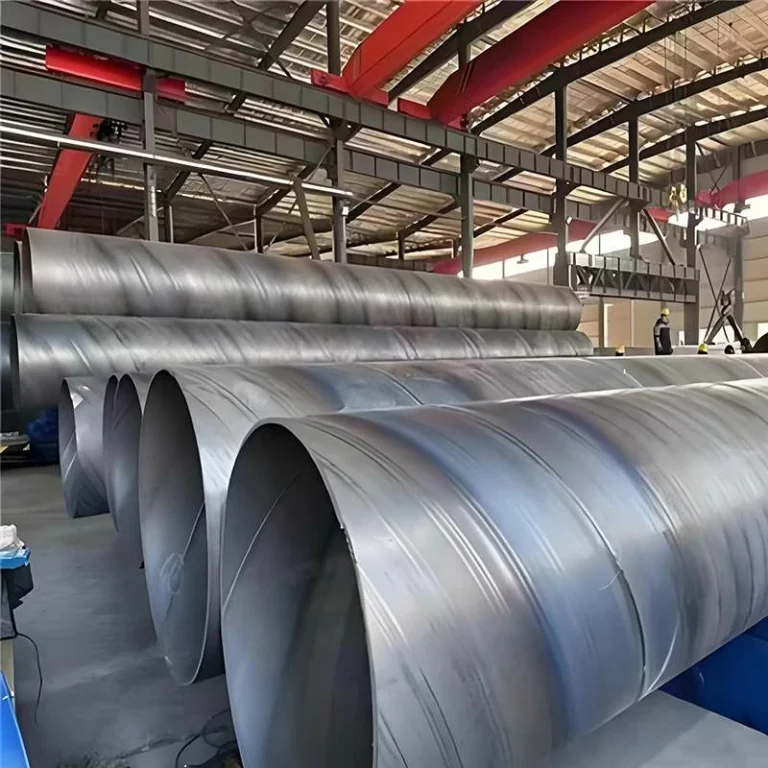
I. Overview of API 5L Carbon Steel Seamless Pipes
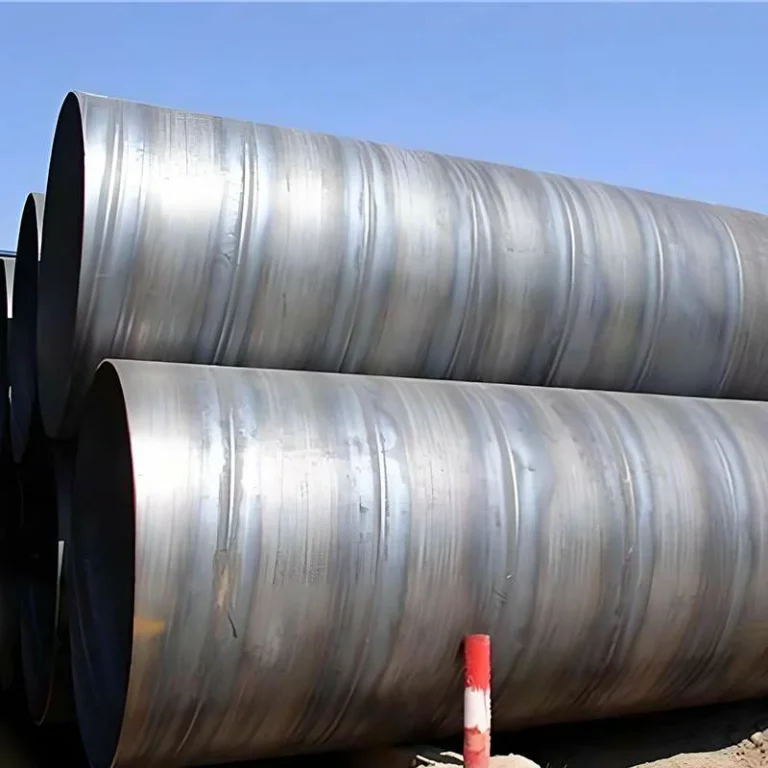
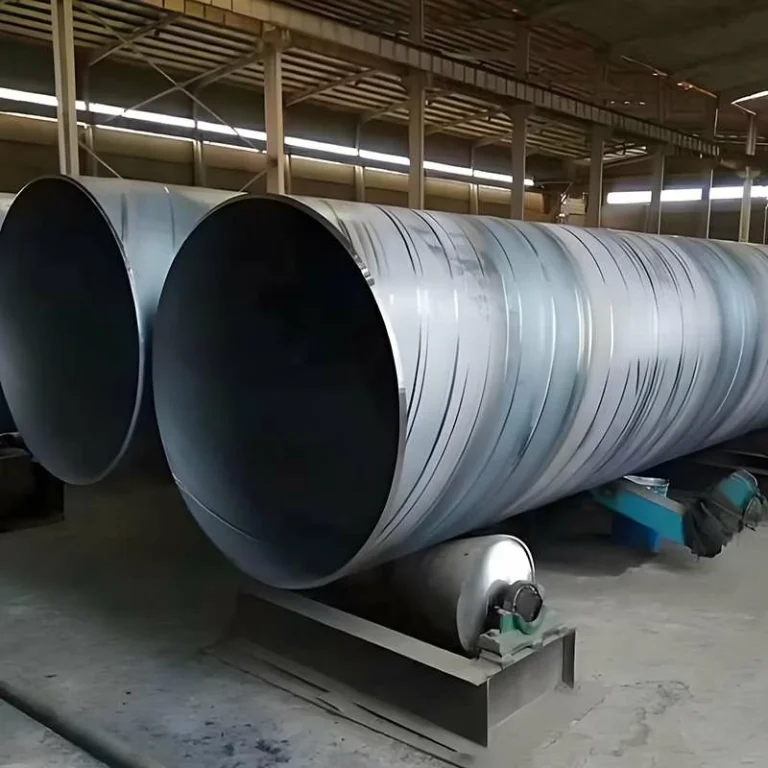
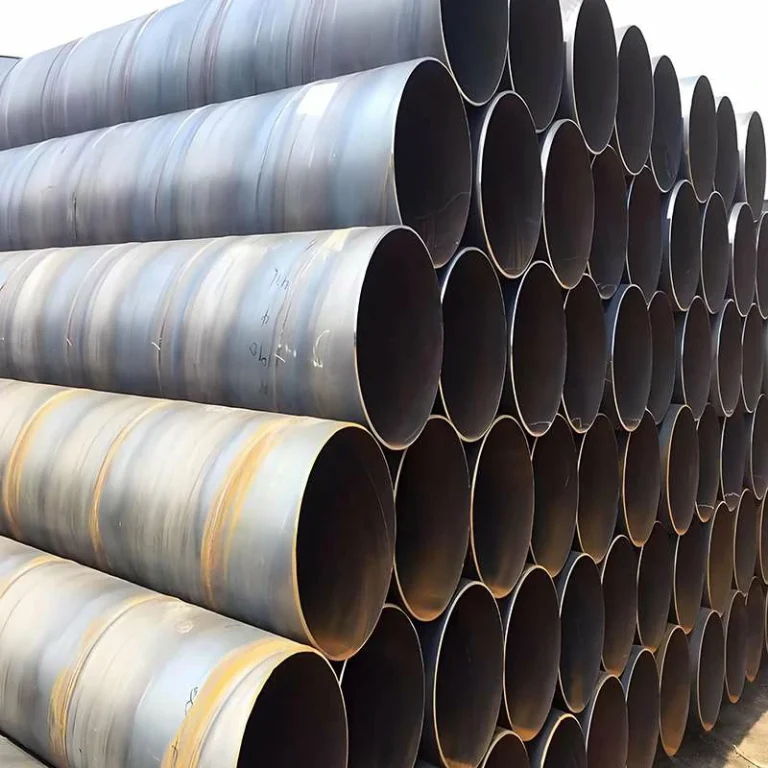
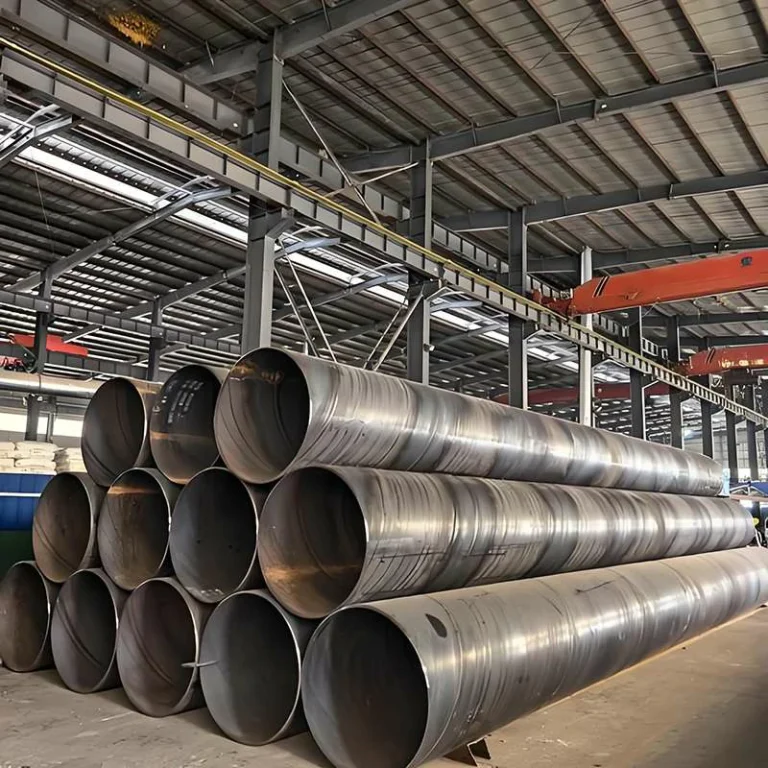
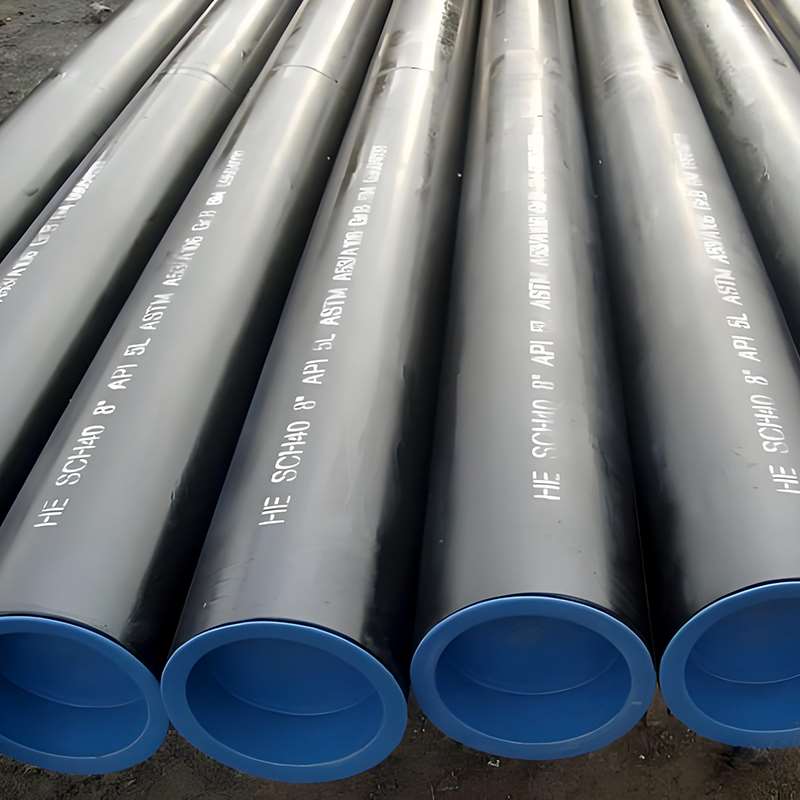
API 5L carbon steel seamless pipes are steel pipes manufactured according to the American Petroleum Institute (API) API 5L standard, primarily used for the transportation of oil, natural gas, and other fluids in onshore, offshore, and subsea pipeline systems.
Based on product quality grade, API 5L seamless steel pipes are divided into two grades: PSL1 and PSL2. PSL2 has stricter requirements for chemical composition, mechanical properties, non-destructive testing, and impact performance.
II. Common Classification Table of API 5L Carbon Steel Seamless Pipes
| Classification Dimension | Classification Method | Specific Categories | Description |
|---|---|---|---|
| Product Specification Level | By quality and inspection requirements | PSL1 / PSL2 | PSL2 has more stringent requirements and is suitable for high-risk service conditions |
| Steel Grade | By strength level | Grade B, X42, X52, X60, X65, X70 | Higher steel grades provide higher pressure-bearing capacity |
| Manufacturing Type | By forming process | Seamless steel pipe | Uniform structure, suitable for high-pressure pipelines |
| Application Scenario | By service environment | Onshore pipelines, offshore pipelines, subsea pipelines | Offshore and subsea projects typically require PSL2 and higher steel grades |
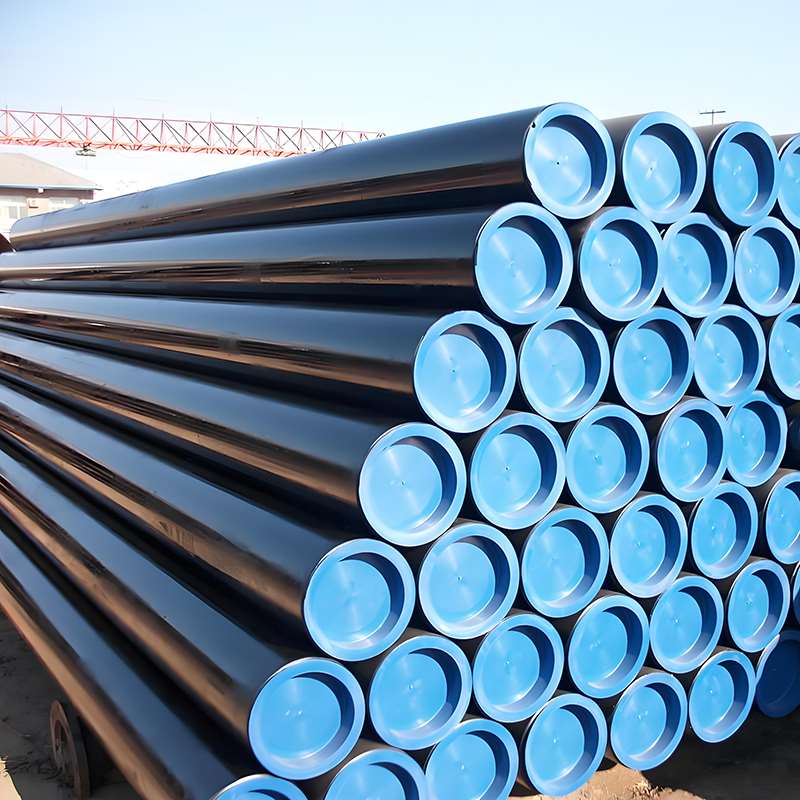
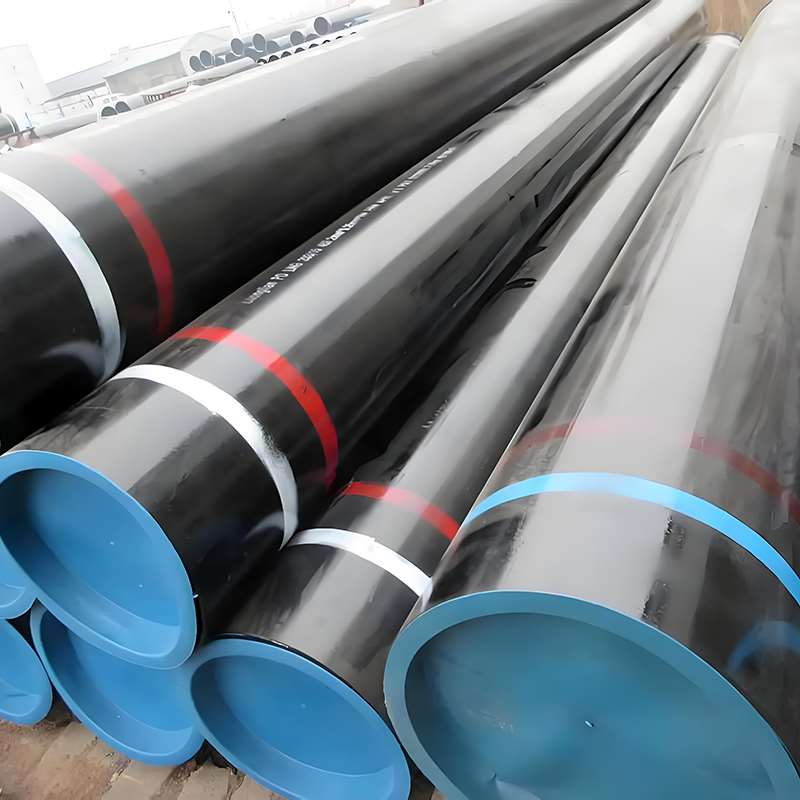
III. API 5L Carbon Steel Seamless Pipe PSL2 Chemical Composition and Mechanical Properties Table
i. API 5L PSL2 Chemical Composition Table
| Steel Grade | C (%) | Mn (%) | Si (%) | P (%) | S (%) | Nb (%) | V (%) | Ti (%) | Carbon Equivalent CE (%) |
|---|---|---|---|---|---|---|---|---|---|
| Grade B PSL2 | ≤ 0.24 | ≤ 1.40 | ≤ 0.45 | ≤ 0.025 | ≤ 0.015 | — | — | — | ≤ 0.43 |
| X42 PSL2 | ≤ 0.22 | ≤ 1.40 | ≤ 0.45 | ≤ 0.025 | ≤ 0.015 | 0.01–0.03 | ≤ 0.05 | ≤ 0.03 | ≤ 0.43 |
| X52 PSL2 | ≤ 0.20 | ≤ 1.40 | ≤ 0.45 | ≤ 0.025 | ≤ 0.015 | 0.02–0.05 | 0.03–0.08 | ≤ 0.03 | ≤ 0.43 |
| X60 PSL2 | ≤ 0.18 | ≤ 1.30 | ≤ 0.45 | ≤ 0.025 | ≤ 0.015 | 0.03–0.06 | 0.05–0.10 | ≤ 0.03 | ≤ 0.43 |
| X65 PSL2 | ≤ 0.17 | ≤ 1.30 | ≤ 0.45 | ≤ 0.025 | ≤ 0.015 | 0.03–0.06 | 0.05–0.10 | ≤ 0.03 | ≤ 0.43 |
| X70 PSL2 | ≤ 0.16 | ≤ 1.25 | ≤ 0.45 | ≤ 0.025 | ≤ 0.015 | 0.03–0.06 | 0.05–0.10 | ≤ 0.03 | ≤ 0.43 |
ii. API 5L PSL2 Mechanical Properties
| Steel Grade | Minimum Yield Strength (MPa) | Tensile Strength (MPa) | Yield Ratio (YS/TS) |
|---|---|---|---|
| Grade B PSL2 | ≥ 245 | 415 – 565 | ≤ 0.93 |
| X42 PSL2 | ≥ 290 | 415 – 565 | ≤ 0.93 |
| X52 PSL2 | ≥ 360 | 460 – 760 | ≤ 0.93 |
| X60 PSL2 | ≥ 415 | 520 – 760 | ≤ 0.93 |
| X65 PSL2 | ≥ 450 | 535 – 760 | ≤ 0.93 |
| X70 PSL2 | ≥ 485 | 570 – 760 | ≤ 0.93 |
iii. Key additional requirements for PSL2
| Item | PSL2 Requirements |
|---|---|
| Impact Test | Mandatory (commonly at −20°C / −40°C) |
| Non-Destructive Testing (NDT) | Full-body UT / RT |
| Chemical Composition | Heat analysis + product analysis required |
| Dimensional Tolerances | Stricter control |
| Typical Applications | High-pressure, offshore, subsea, and long-distance pipelines |
IV. Manufacturing Process Flow of API 5L Seamless Steel Pipes
Raw Material Preparation → Billet Heating → Piercing/Rolling into Pipe → Heat Treatment (Normalizing or Annealing) → Cooling and Cutting to Length → Dimensional Accuracy Correction → Surface Treatment/Coating → Non-destructive Testing and Inspection → Packaging and Shipment
V. Application Areas of API 5L Seamless Line Pipes
| Application | Description |
|---|---|
| Onshore Oil Pipelines | Used for the transportation of crude oil, natural gas, and chemical liquids; suitable for medium- and low-pressure pipelines |
| Long-Distance Transmission Pipelines | High-strength steel grades (X52–X70) are used for long-distance transmission to improve pressure-bearing capacity |
| Offshore Oil & Gas Platforms | High-grade PSL2 with X60–X70 steel grades to meet offshore high-pressure and complex operating conditions |
| Subsea / Deepwater Pipelines | Used for subsea oil and gas transportation in combination with anti-corrosion coatings (FBE / 3LPE / 3LPP) |
| City Gas & Water Treatment Projects | Small-diameter pipes can also be used for gas distribution, water supply, and industrial fluid transportation |
| Petrochemical & Industrial Piping Systems | Applied in chemical plants, refineries, and industrial piping systems requiring pressure resistance and corrosion resistance |
VI. API 5L Carbon Steel Seamless Pipe Selection Guide
When selecting API 5L carbon steel seamless pipes, it is necessary to consider multiple factors, including steel grade, product specification level (PSL), dimensions, manufacturing process, and application environment, to ensure the safety and economic efficiency of the pipeline system.
- Determining the Steel Grade
Low pressure/general purpose: Grade B, X42
Medium pressure pipelines: X52, X60
High pressure or offshore/subsea engineering: X65, X70
High-grade steel pipes have high strength but low carbon content, usually requiring strengthening with microalloying elements (Nb, V, Ti). Welding performance still needs to be confirmed. - Selecting the Product Specification Level (PSL)
PSL1: Suitable for ordinary onshore oil and natural gas pipelines
PSL2: Suitable for offshore, subsea, high-pressure, or long-distance pipeline projects, with strict requirements for chemical composition, impact testing, and non-destructive testing.
Note: Steel grade and PSL level are independent; high-grade steel can have either PSL1 or PSL2. - Pipe Diameter and Wall Thickness Selection
Outer Diameter (OD): 21.3 mm – 660 mm (1/2″ – 26″)
Wall Thickness (WT): 2.77 mm – 40 mm (SCH 10 – SCH XXS)
Select the appropriate steel grade and wall thickness based on working pressure and pipeline length to ensure a safety margin. - Manufacturing Process Considerations
Hot-rolled seamless carbon steel pipes: Suitable for large-diameter, high-pressure pipelines, with high pressure bearing capacity.
Hot-expanded/extruded pipes: Suitable for small diameters or specific specifications.
Surface treatment/coating: Such as FBE, 3LPE, 3LPP anticorrosion coatings, selected according to environmental corrosion conditions. - Application Environment Matching
Onshore pipelines: Ordinary Grade B / X42 + PSL1 is sufficient.
Long-distance pipelines / high-pressure projects: X52–X60 + PSL2
Offshore/subsea pipelines: X65–X70 + PSL2 + anticorrosion coating
Low-temperature environments: Impact performance (Charpy-V test) needs to be considered.
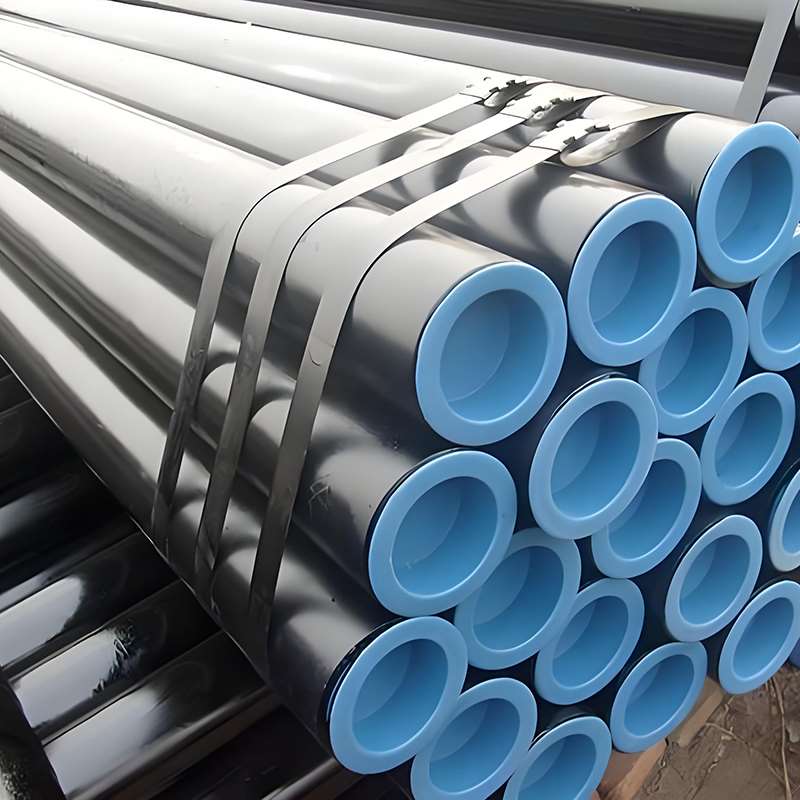
VII. Complete Inspection Items for API 5L Seamless Carbon Steel Pipes (PSL1/PSL2)
- Chemical Composition Testing
Elements: C, Mn, Si, P, S, Cr, Mo, Ni, Nb, V, Ti (depending on steel grade and customer requirements)
Carbon Equivalent (CE) calculation
Chemical analysis per heat + finished product chemical analysis - Mechanical Properties
Tensile test (yield strength, tensile strength, elongation, reduction of area)
Impact test (Charpy-V, low-temperature requirements)
Bending test (pipe toughness and weldability)
Hardness test (if necessary) - Dimensional Accuracy and Appearance
Outer diameter, wall thickness, length, end condition (plain end/beveled end)
Surface defects: cracks, pores, inclusions, scale, scratches, unevenness - Non-Destructive Testing (NDT)
Radiographic testing (RT)
Ultrasonic testing (UT)
Magnetic particle testing (MT) / Penetrant testing (PT, optional) - Surface Treatment and Corrosion Protection Layer
Black pipe rust preventive oil, light oil rust prevention
Coating thickness, adhesion, wear resistance (FBE / 3LPE / 3LPP)
Coating defect detection - Special Items (High-grade steel or special applications)
Metallographic analysis
Cooling rate/normalizing heat treatment control
Weldability testing
Pressure testing
Length and bending tolerance measurement
VIII. API 5L Carbon Steel Seamless Pipe Selection – Frequently Asked Questions
Q1: What pipeline systems are suitable for API 5L Seamless Carbon Steel Pipe?
A1:
API 5L seamless carbon steel pipes are widely used in oil, natural gas, water supply, and industrial fluid transportation pipelines. They are suitable for onshore, offshore, and subsea engineering projects. Their high strength and pressure resistance can meet the needs of different working conditions.
Q2: How to choose the appropriate steel grade?
A2:
The steel grade selection should be determined based on the pipeline’s working pressure, temperature, and length. X42/X52 can be selected for low-pressure pipelines, while API 5L X46 carbon steel pipes are recommended for high-pressure or long-distance pipelines to ensure that the pressure bearing capacity and toughness meet the requirements.
Q3: What are the differences between different grades (PSL1/PSL2)?
A3:
PSL1 is the basic grade, suitable for general onshore pipelines; PSL2 has stricter testing and chemical composition requirements, suitable for high-pressure, offshore, or subsea pipelines. Steel grade and PSL grade are independent concepts and can be used in combination.
Q4: What are the differences between seamless pipes and welded pipes?
A4:
Seamless carbon steel pipes have no welds, the pipe body is uniform, and they have stronger pressure bearing capacity, making them suitable for high-pressure pipelines and offshore/subsea pipelines; welded pipes are more suitable for low-pressure or non-critical engineering projects.
Q5: What is the relationship between ASTM A106 high-pressure seamless carbon steel pipes and API 5L carbon steel pipes?
A5:
ASTM A106 high-pressure seamless carbon steel pipes are an internationally used standard, similar to API 5L, both used for high-pressure oil and gas pipelines. The difference lies in slightly different specific chemical composition and mechanical property requirements. Selection should be based on engineering specifications.
Q6: How to choose the pipe diameter and wall thickness?
A6:
The pipe diameter and wall thickness should be determined based on the working pressure, pipeline length, and flow rate requirements, combined with the steel grade and corrosion protection layer selection. For long-distance or subsea pipelines, thick-walled, high-grade pipes should be selected, and corrosion protection coatings should be considered.