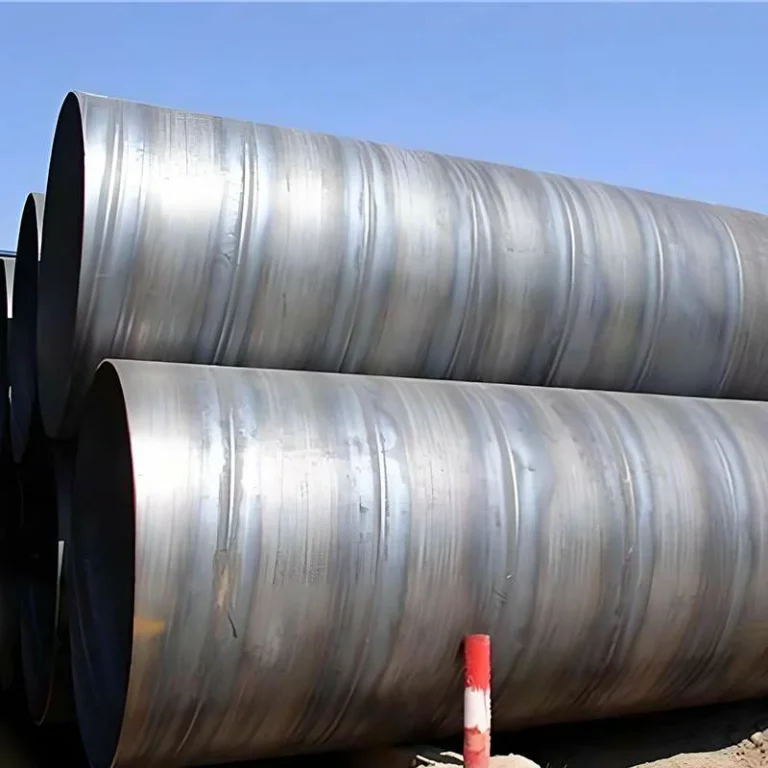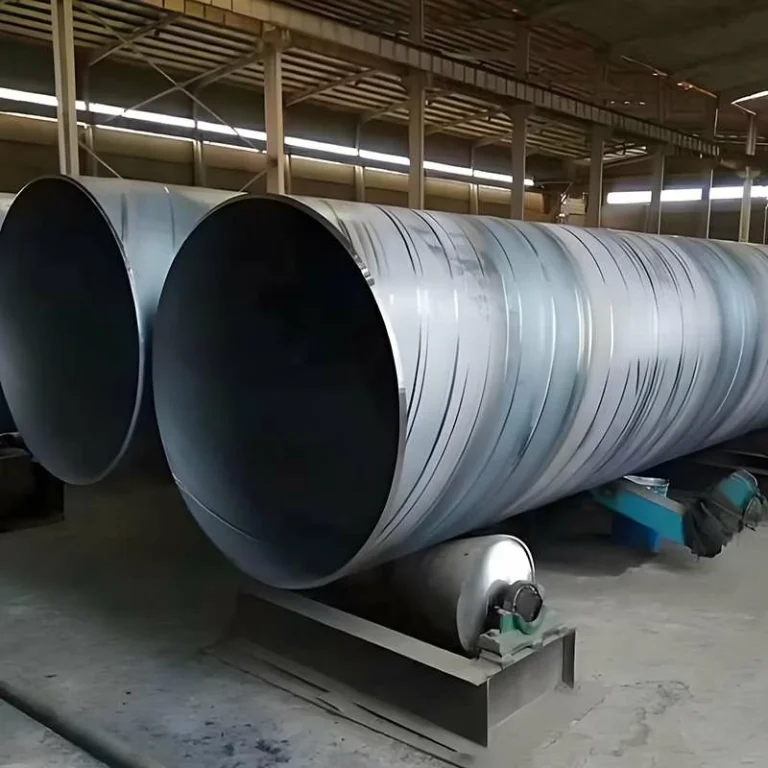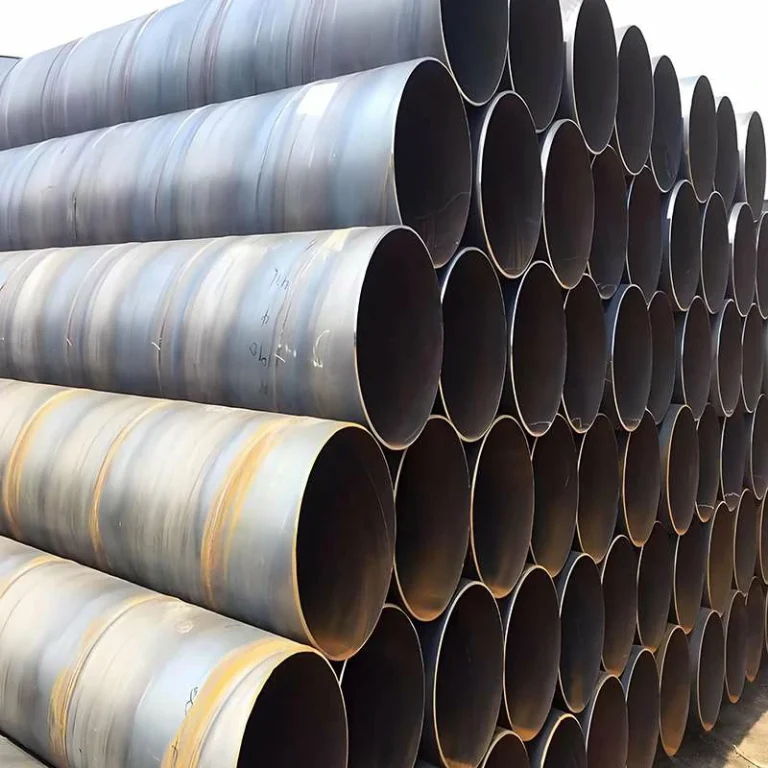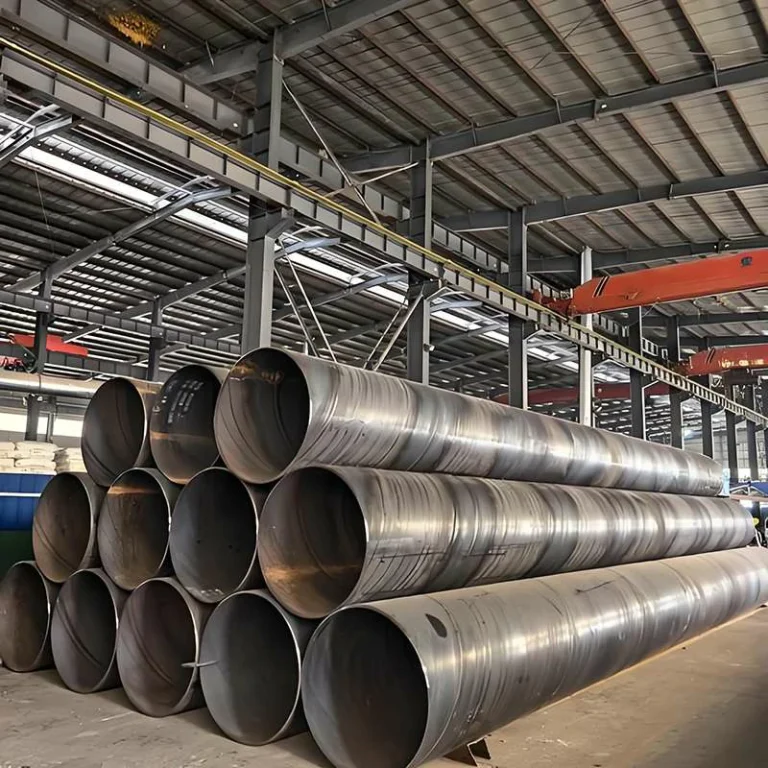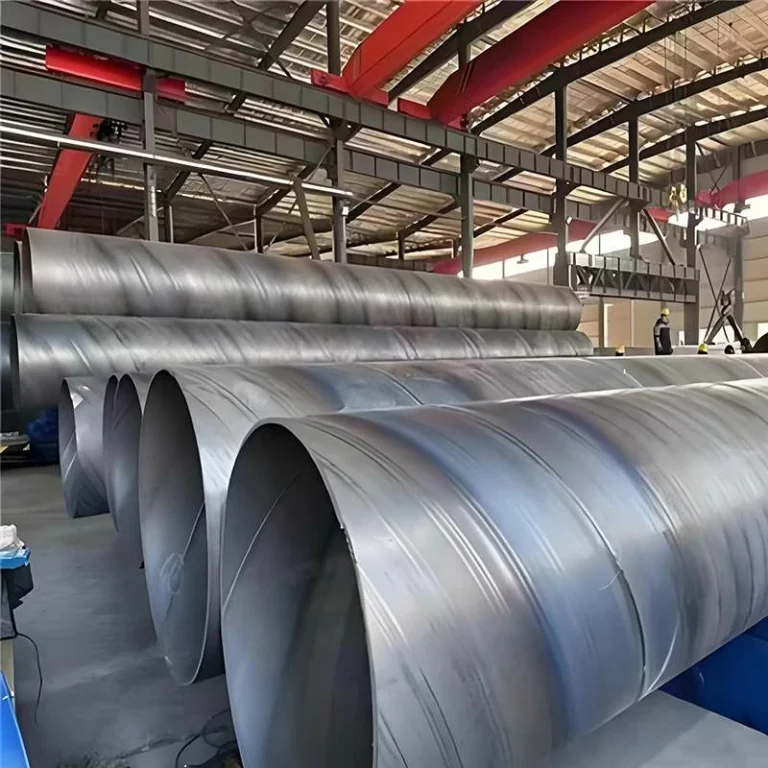
I. Overview of API 5L Grade B Carbon Steel Pipe for Oil and Gas Pipelines
In the exploration, transportation, and distribution of oil and natural gas, API 5L Grade B carbon steel pipe stands as the preferred material for ensuring pipeline system safety and reliability due to its exceptional strength and durability.
This pipe is extensively used in onshore and offshore oil, gas, and water transmission pipelines, providing stable support for medium- and low-pressure industrial pipelines.
What is API 5L?
API 5L is an industry standard for pipeline steel pipes established by the American Petroleum Institute (API), covering both seamless and welded steel pipes specifically designed for oil and gas pipelines.
Its “Grade B” material grade is renowned for its reliable tensile strength, excellent weldability, and cost-effectiveness, making it a widely chosen option for medium-to-low pressure transmission systems.
Application Value:
Supports onshore and offshore oil and gas transportation
Suitable for medium- and low-pressure pipeline systems
Provides long-term stable pipeline safety performance
Compatible with flanges, valves, and other standard pipe fittings
-4.jpg)
-3.jpg)
II. API 5L Carbon Steel Pipe Selection Comprehensive Comparison Table
| PSL Grade | Steel Grade | SCH Wall Thickness (Common) | Yield Strength (MPa), min | Tensile Strength (MPa), min | Applicable Working Pressure (MPa) | Typical Applications |
|---|---|---|---|---|---|---|
| PSL1 | Grade B | SCH10 – SCH40 | ≥ 240 | ≥ 415 | 1.6 – 2.5 | Medium- to low-pressure oil & gas pipelines, city gas, chemical pipelines |
| PSL1 | X42 | SCH10 – SCH40 | ≥ 290 | ≥ 415 | 2.0 – 3.0 | Medium- to low-pressure long-distance pipelines, general industrial piping |
| PSL2 | Grade B | SCH40 – SCH80 | ≥ 240 | ≥ 415 | 1.6 – 4.0 | Medium- to low-pressure critical pipelines, high-reliability projects |
| PSL2 | X42 | SCH40 – SCH80 | ≥ 290 | ≥ 415 | 2.0 – 4.0 | High-pressure oil & gas transport, long-distance pipelines |
| PSL2 | X46 | SCH40 – SCH80 | ≥ 317 | ≥ 415 | 2.5 – 4.5 | High-pressure oil & gas pipelines, offshore pipelines |
| PSL2 | X52 | SCH40 – SCH80 | ≥ 359 | ≥ 455 | 3.0 – 5.0 | High-pressure main oil and gas transmission projects |
| PSL2 | X56 | SCH40 – SCH120 | ≥ 386 | ≥ 485 | 3.5 – 5.5 | Long-distance high-pressure oil & gas pipelines |
| PSL2 | X60 | SCH40 – SCH160 | ≥ 414 | ≥ 485 | 4.0 – 6.0 | High-pressure, high safety factor critical pipelines, large-scale projects |
Instruction Manual:
PSL1 → Suitable for general engineering projects and medium-low pressure pipelines, offering lower cost.
PSL2 → Designed for high-safety, long-distance transmission, or critical pipelines, with strict control over chemical composition and mechanical properties.
SCH Wall Thickness → Greater wall thickness provides higher pressure resistance; select based on design pressure and safety factor.
Steel Grade Selection → Grade B offers moderate properties; X42~X60 grades provide high strength for high-pressure or long-distance pipelines.
III. Comparison Table of Chemical Composition of Carbon Steel Pipes of Various API 5L Grades (Grade B / X42 / X46 / X52 / X56 / X60)
| Element | Grade B | X42 | X46 | X52 | X56 | X60 |
|---|---|---|---|---|---|---|
| Carbon (C) | 0.26–0.28 | ≤ 0.26 | ≤ 0.26 | ≤ 0.26 | ≤ 0.26 | ≤ 0.26 |
| Manganese (Mn) | 0.60–1.00 | ≤ 1.20 | ≤ 1.20 | ≤ 1.30 | ≤ 1.30 | ≤ 1.35 |
| Silicon (Si) | 0.10–0.35 | ≤ 0.55 | ≤ 0.55 | ≤ 0.55 | ≤ 0.55 | ≤ 0.55 |
| Sulfur (S) | ≤ 0.035 | ≤ 0.035 | ≤ 0.035 | ≤ 0.035 | ≤ 0.035 | ≤ 0.035 |
| Phosphorus (P) | ≤ 0.035 | ≤ 0.035 | ≤ 0.035 | ≤ 0.035 | ≤ 0.035 | ≤ 0.035 |
| Nickel (Ni) | ≤ 0.40 | ≤ 0.40 | ≤ 0.40 | ≤ 0.40 | ≤ 0.40 | ≤ 0.40 |
| Chromium (Cr) | ≤ 0.30 | ≤ 0.30 | ≤ 0.30 | ≤ 0.30 | ≤ 0.30 | ≤ 0.30 |
| Molybdenum (Mo) | ≤ 0.10 | ≤ 0.10 | ≤ 0.10 | ≤ 0.10 | ≤ 0.10 | ≤ 0.10 |
| Vanadium (V) | ≤ 0.08 | ≤ 0.08 | ≤ 0.08 | ≤ 0.08 | ≤ 0.08 | ≤ 0.08 |
| Copper (Cu) | ≤ 0.40 | ≤ 0.40 | ≤ 0.40 | ≤ 0.40 | ≤ 0.40 | ≤ 0.40 |
IV. Selection Process for API 5L Grade B Carbon Steel Pipes for Oil and Gas Pipelines
- Determine Pipeline Operating Conditions
Conveyed Medium: Crude oil, natural gas, steam, or water
Operating Pressure: Medium-low pressure pipelines (1.6–4.0 MPa)
Operating Temperature: -20°C to 425°C
Pipeline Length and Diameter: Determined per design requirements - Select Steel Grade and PSL Class
Steel Grade: Grade B (Economical, reliable, suitable for medium-low pressure pipelines)
PSL Class:
PSL1: Standard pipelines, meeting basic chemical and mechanical properties
PSL2: Critical pipelines or high safety requirements, with strict chemical composition and inspection - Determine Wall Thickness (SCH)
Common SCH40: Most frequently used for medium-low pressure pipelines, offering high cost-effectiveness
Special pressure requirements: SCH80 or SCH160 may be selected
Note: Wall thickness selection must balance pressure, safety factor, and economy - Match Pipe Diameter and Length
Nominal Diameter: Determined by flow rate and design pressure
Standard Length: 6 m / 12 m, customizable per project
End Finishing: Plain ends, flanged ends, or threaded ends to ensure compatibility with valves and flanges - Verify Surface Treatment and Coating
Surface Treatment: Protected with rust-preventive oil or white paint
Coating Options: Epoxy resin internal/external coating, galvanization, anti-corrosion paint—selected based on medium and environment - Verify Standards and Inspection Requirements
Compliance with API 5L, ASME B36.10M, or ASTM A106
Inspection Requirements: Ultrasonic, Eddy Current, Pressure Testing
PSL2 pipes require additional impact test reports - Final Confirmation and Procurement
Select appropriate specifications based on pressure, diameter, wall thickness, and operating conditions
Confirm supplier can provide material certificates, inspection reports, and customized lengths
-2.jpg)
-1.jpg)
V. API 5L Grade B Carbon Steel Pipe Specifications and Dimensions Table
| Nominal Diameter (NPS) | Outside Diameter (OD, mm) | Common SCH Wall Thickness | Wall Thickness (mm) | Reference Working Pressure (MPa) | Remarks |
|---|---|---|---|---|---|
| 1/2″ | 21.34 | SCH10, SCH40 | 2.77 / 3.91 | 1.6 – 2.5 | Medium- to low-pressure pipelines |
| 3/4″ | 26.67 | SCH10, SCH40 | 2.87 / 3.91 | 1.6 – 2.5 | General transport |
| 1″ | 33.40 | SCH10, SCH40 | 3.38 / 4.55 | 1.6 – 2.5 | Standard projects |
| 1 1/4″ | 42.16 | SCH10, SCH40 | 3.56 / 4.85 | 1.6 – 2.5 | General oil & gas pipelines |
| 1 1/2″ | 48.26 | SCH10, SCH40 | 3.68 / 4.85 | 1.6 – 2.5 | Transport pipelines |
| 2″ | 60.33 | SCH10, SCH40 | 3.91 / 5.54 | 1.6 – 2.5 | Medium- to low-pressure pipes |
| 2 1/2″ | 73.03 | SCH10, SCH40 | 4.19 / 6.02 | 1.6 – 2.5 | Standard pipelines |
| 3″ | 88.90 | SCH10, SCH40 | 4.78 / 6.35 | 1.6 – 2.5 | General projects |
| 3 1/2″ | 101.60 | SCH10, SCH40 | 5.16 / 7.11 | 1.6 – 2.5 | Oil & gas transport |
| 4″ | 114.30 | SCH10, SCH40 | 5.49 / 7.11 | 1.6 – 2.5 | Medium- to low-pressure pipelines |
| 5″ | 141.30 | SCH10, SCH40 | 5.54 / 7.62 | 1.6 – 2.5 | General oil & gas |
| 6″ | 168.30 | SCH10, SCH40 | 6.35 / 7.62 | 1.6 – 2.5 | Medium- to low-pressure long-distance |
| 8″ | 219.08 | SCH10, SCH40 | 6.35 / 9.27 | 1.6 – 2.5 | Medium-pressure transport |
| 10″ | 273.05 | SCH10, SCH40 | 7.11 / 9.27 | 1.6 – 2.5 | Standard projects |
| 12″ | 323.85 | SCH10, SCH40 | 7.62 / 10.31 | 1.6 – 2.5 | Oil & gas trunk lines |
| 14″ | 355.60 | SCH10, SCH40 | 8.18 / 10.97 | 1.6 – 2.5 | Long-distance pipelines |
| 16″ | 406.40 | SCH10, SCH40 | 8.56 / 11.13 | 1.6 – 2.5 | High-reliability pipelines |
| 18″ | 457.20 | SCH10, SCH40 | 9.27 / 12.70 | 1.6 – 2.5 | High-pressure long-distance |
| 20″ | 508.00 | SCH10, SCH40 | 9.27 / 12.70 | 1.6 – 2.5 | High-pressure projects |
| 24″ | 609.60 | SCH10, SCH40 | 9.27 / 12.70 | 1.6 – 2.5 | Large-diameter pipelines |
| 30″ | 762.00 | SCH10, SCH40 | 12.70 / 15.09 | 1.6 – 2.5 | Oil transmission trunk lines |
| 36″ | 914.40 | SCH10, SCH40 | 12.70 / 15.09 | 1.6 – 2.5 | High-pressure long-distance pipelines |
| 42″ | 1066.80 | SCH10, SCH40 | 14.27 / 16.67 | 1.6 – 2.5 | Large-diameter oil pipelines |
| 48″ | 1219.20 | SCH10, SCH40 | 14.27 / 16.67 | 1.6 – 2.5 | High-pressure critical pipelines |
VI. API 5L Grade B Carbon Steel Pipe Quality Inspection Standard
| Inspection Item | Test Method / Standard Requirement | Description |
|---|---|---|
| Chemical Composition | Spectroscopy / Chemical Analysis | Complies with API 5L Grade B; C ≤ 0.28%, Mn 0.60–1.00%, Si 0.10–0.35%, S ≤ 0.035%, P ≤ 0.035% |
| Yield Strength | Tensile Testing Machine | ≥ 240 MPa, ensures the pipe can withstand working pressure |
| Tensile Strength | Tensile Testing Machine | ≥ 415 MPa, ensures overall pipe strength |
| Elongation | Tensile Test | ≥ 20%, ensures toughness and weldability |
| Impact Test | Charpy Impact Test | Required for PSL2 or special applications, ensures low-temperature toughness |
| Dimensional Tolerance | Measurement of OD, wall thickness, length | OD deviation per ASME B36.10M; wall thickness tolerance ±10% (cold drawn) or -10%~+12.5% (hot rolled) |
| Roundness Deviation | Dimensional Inspection | ≤ 0.5%, ensures proper fit of pipe joints |
| Surface Quality | Visual Inspection / Magnetic Particle / Eddy Current | No cracks, folds, slag inclusions, or other defects |
| Non-Destructive Testing (NDT) | Ultrasonic / Radiographic Testing | Mandatory for PSL2 or high-safety projects; checks internal defects |
| Hydrostatic Test | Static Pressure Test | Tested at 1.5–1.6 times design pressure to ensure strength |
| Material Certification | Mill Test Report / Chemical & Mechanical Certificates | PSL1: basic material certificate; PSL2: full chemical composition, mechanical properties, and impact test report |
| Packaging Inspection | Appearance and Protection Measures | Wooden pallets or steel banding; waterproof and rustproof for long-distance transport |