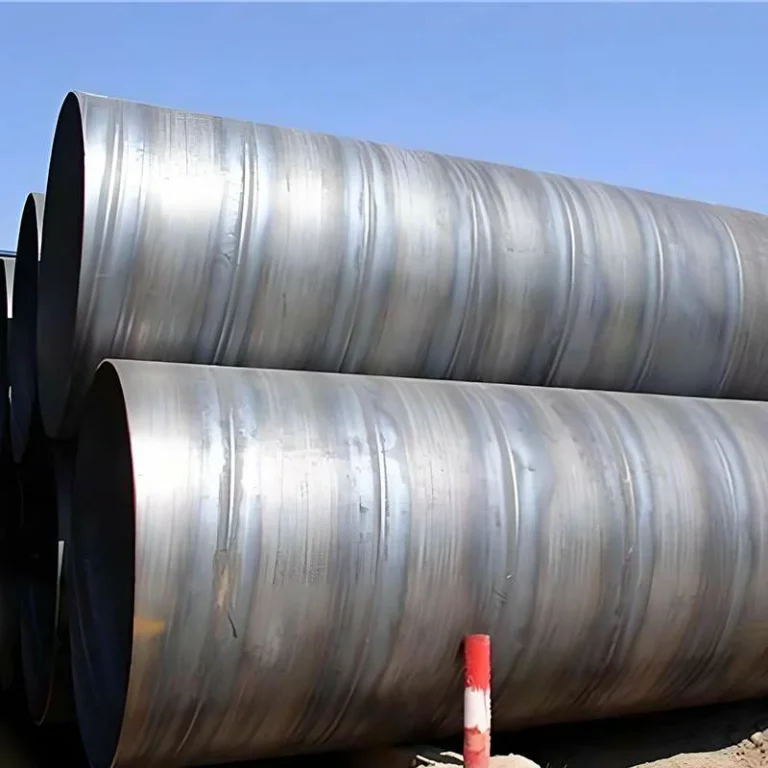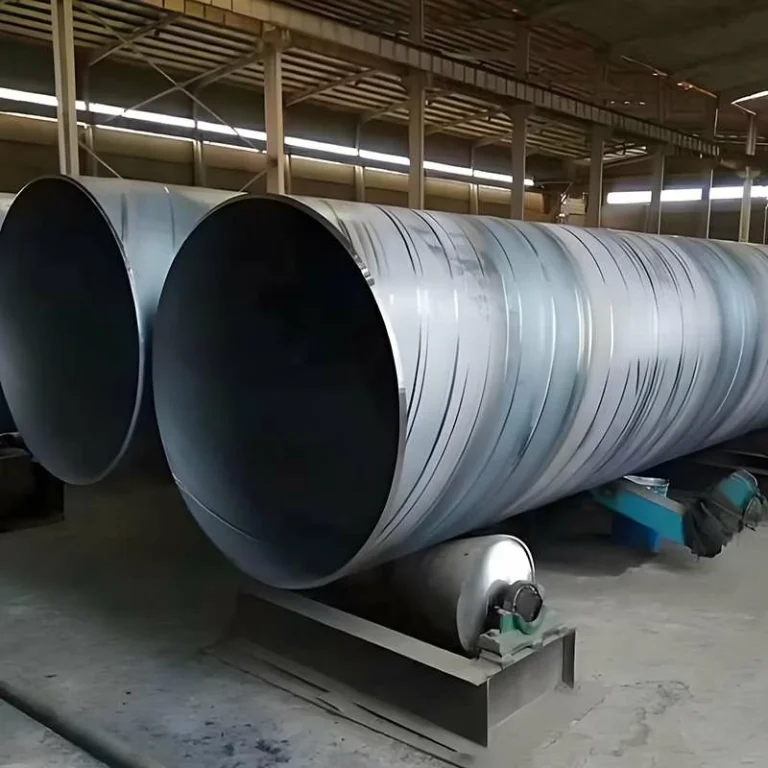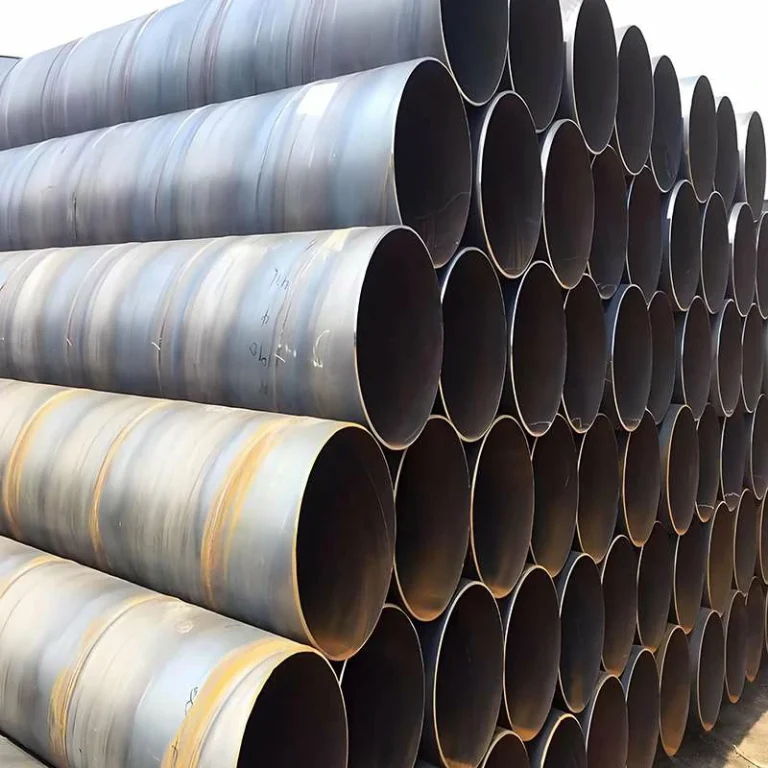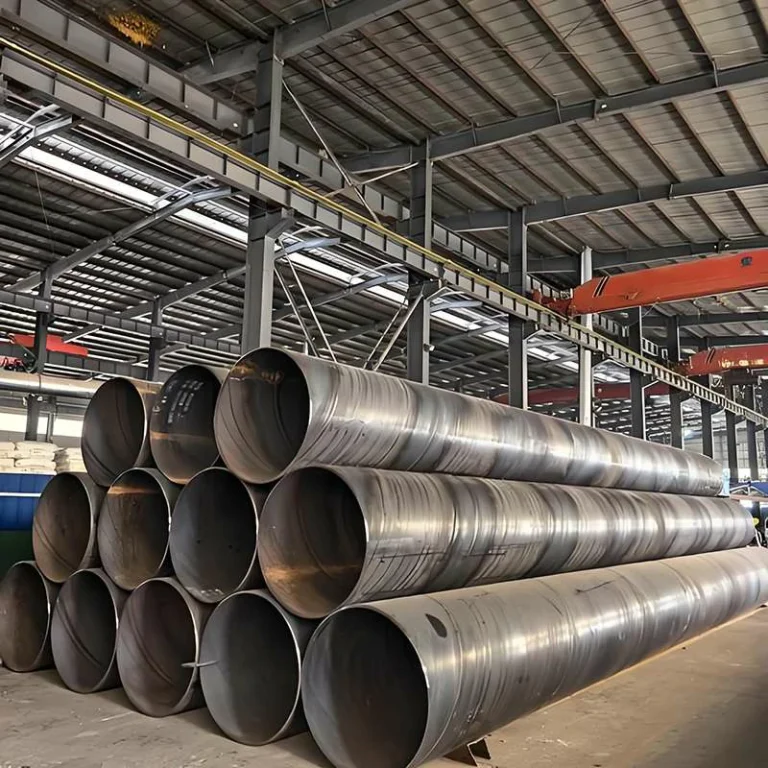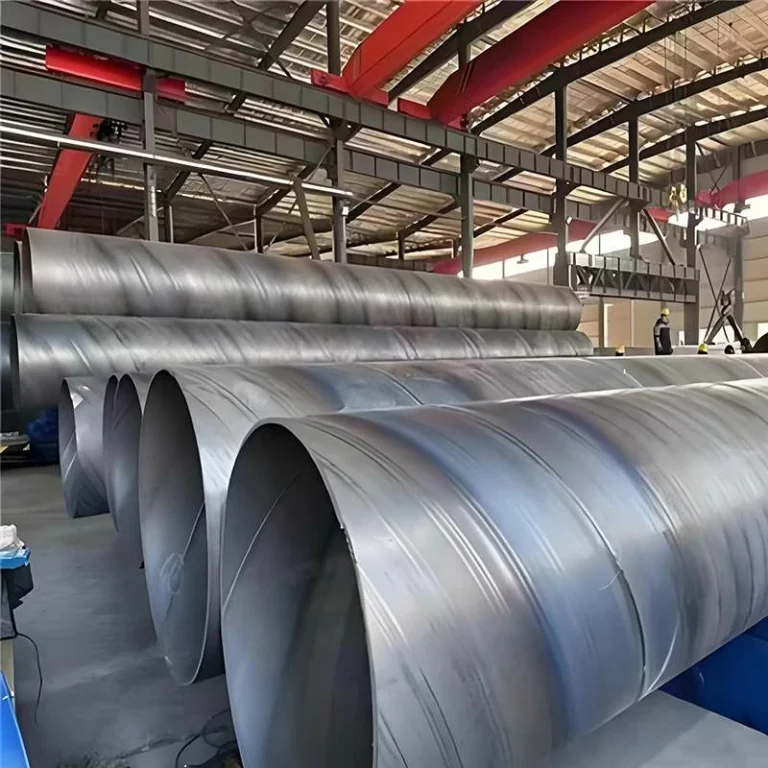
I. What are Seamless Carbon Steel Pipes?
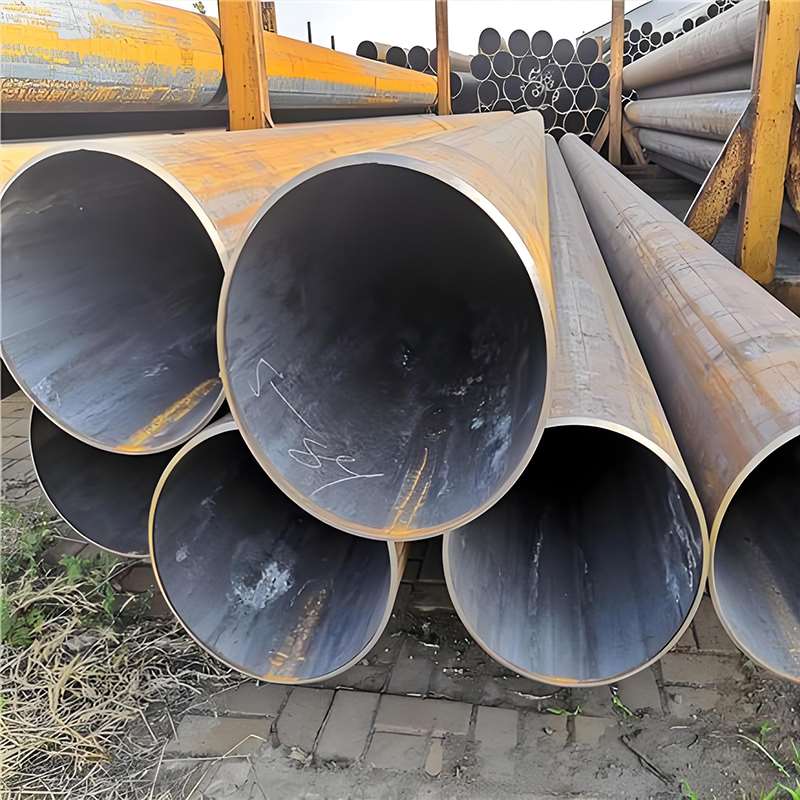
Seamless Carbon Steel Pipe for Oil and Gas refers to steel pipes without welds. They are manufactured from a single steel billet through hot rolling, hot drawing, or cold working, resulting in a continuous pipe structure without welds or joints, making them especially suitable for demanding oil and gas applications where strength and reliability are critical.
Features:
- High pressure resistance: The seamless pipe body is subjected to uniform stress, making it suitable for high-pressure environments.
- Good high-temperature resistance: It maintains stable mechanical properties under high-temperature conditions.
- High fatigue and impact resistance: Safer and more reliable for long-term operation.
- Wide range of applications: Widely used in industrial high-pressure pipelines, boiler pipes, oil and gas transportation, and oilfield casing.
Differences from Welded Carbon Steel Pipe:
- Seamless pipes: The pipe body is formed as a whole, without welds, offering high pressure resistance and suitability for high-pressure and high-temperature conditions.
- Welded pipes: The pipe body is formed through welding, resulting in lower cost and suitability for medium-to-low pressure or auxiliary pipelines.
II. Steel Grades and Material Selection for Seamless Carbon Steel Pipe for Oil and Gas Applications
1. ASTM / ASME Series (International Industrial and Oil and Gas Projects)
| Standard | Common Steel Grade | Key Features | Typical Applications |
|---|---|---|---|
| ASTM A106 / ASME SA106 | Gr.B | Balanced strength and toughness | High-temperature steam, high-pressure piping |
| ASTM A106 / ASME SA106 | Gr.C | Higher strength | High-pressure, high-temperature conditions |
| ASTM A53 (Seamless) | Gr.B | General-purpose carbon steel | Medium- to low-pressure industrial piping |
| ASTM A333 | Gr.6 | Good low-temperature toughness | Low-temperature or cold-region oil & gas pipelines |
2. API Series (Specifically for the oil and gas industry)
| Standard | Common Steel Grade | Key Features | Typical Applications |
|---|---|---|---|
| API 5L (Seamless) | B | Basic strength level | Onshore and offshore oil & gas pipelines |
| API 5L (Seamless) | X42 / X52 | Incrementally higher strength | Medium- to high-pressure oil & gas pipelines |
| API 5CT | J55 / K55 | Cost-effective | Oil well casing and tubing |
| API 5CT | N80 | High strength | Deeper well conditions |
3. Chinese GB Standard (commonly used in domestic projects)
| Standard | Common Steel Grade | Key Features | Typical Applications |
|---|---|---|---|
| GB/T 8163 | 20# | General-purpose carbon steel | General industrial and oil & gas pipelines |
| GB/T 3087 | 20G | Boiler and medium-pressure systems | Oil & gas pipelines |
| GB/T 5310 | 20G / 15CrMoG | Good high-temperature performance | High-pressure boilers and energy equipment |
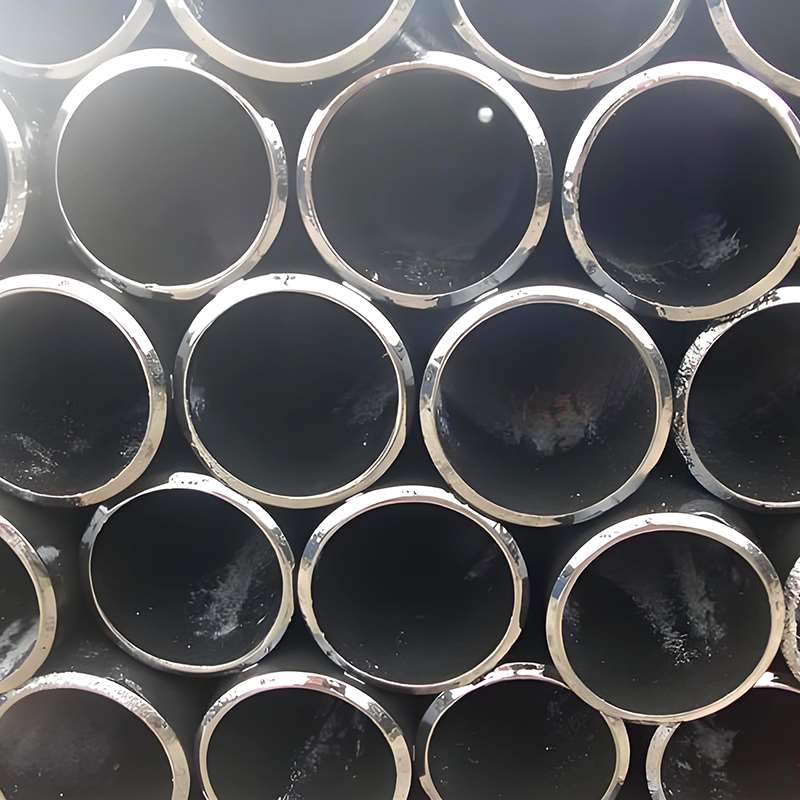
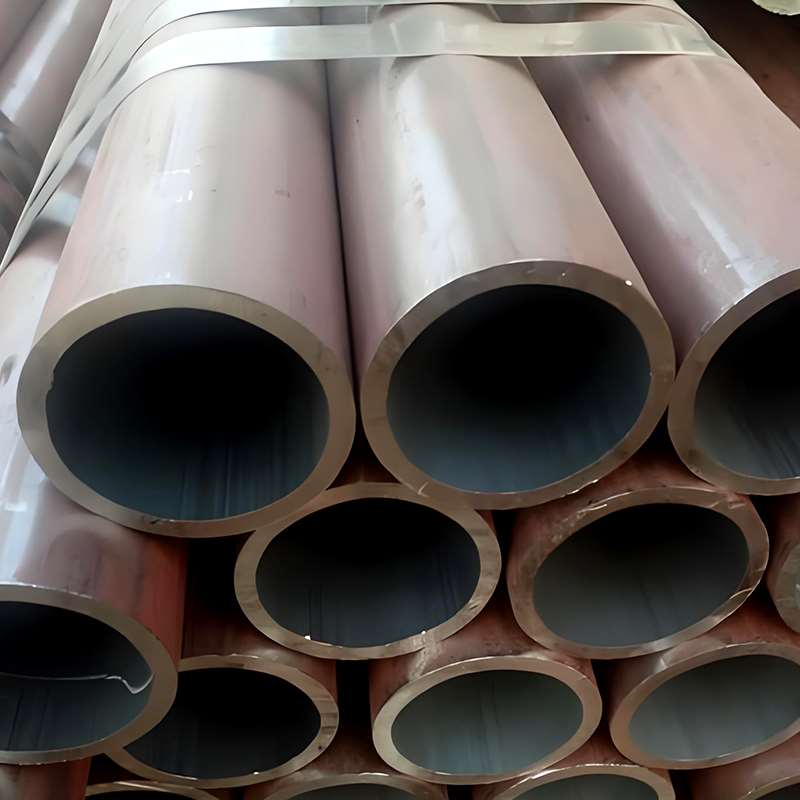
III. Common Specifications and Dimensions of Seamless Carbon Steel Pipe for Oil and Gas Applications
| Nominal Diameter (Inch) | Outer Diameter (mm) | Wall Thickness (mm) | Theoretical Weight (kg/m) | Standard Length (m) |
| 1/2″ | 21.3 | 2.11, 2.77, 3.73 | 1.0 – 1.6 | 6 / 12 |
| 3/4″ | 26.7 | 2.11, 2.87, 3.91 | 1.3 – 2.2 | 6 / 12 |
| 1″ | 33.4 | 2.77, 3.91, 5.54 | 2.2 – 3.6 | 6 / 12 |
| 1 1/4″ | 42.2 | 2.87, 3.91, 5.54, 6.02 | 3.2 – 5.0 | 6 / 12 |
| 1 1/2″ | 48.3 | 3.91, 5.54, 6.02 | 4.5 – 6.8 | 6 / 12 |
| 2″ | 60.3 | 3.91, 5.54, 6.02, 7.11 | 5.8 – 9.3 | 6 / 12 |
| 2 1/2″ | 73.0 | 4.55, 5.54, 7.11 | 7.9 – 12.0 | 6 / 12 |
| 3″ | 88.9 | 4.55, 6.02, 7.11 | 10.2 – 15.2 | 6 / 12 |
| 4″ | 114.3 | 4.55, 6.02, 7.11, 9.53 | 14.5 – 22.5 | 6 / 12 |
| 6″ | 168.3 | 6.02, 7.11, 9.53 | 23.0 – 32.5 | 6 / 12 |
| 8″ | 219.1 | 6.02, 7.11, 9.53, 12.70 | 31.5 – 48.0 | 6 / 12 |
| 10″ | 273.0 | 7.11, 9.53, 12.70 | 45.0 – 65.5 | 6 / 12 |
| 12″ | 323.9 | 9.53, 12.70, 15.88 | 60.0 – 87.5 | 6 / 12 |
| 14″ | 355.6 | 9.53, 12.70, 15.88 | 68.0 – 102.0 | 6 / 12 |
| 16″ | 406.4 | 12.70, 15.88, 19.05 | 90.0 – 130.0 | 6 / 12 |
| 18″ | 457.2 | 12.70, 15.88, 19.05 | 105.0 – 155.0 | 6 / 12 |
| 20″ | 508.0 | 12.70, 15.88, 19.05 | 125.0 – 185.0 | 6 / 12 |
| 24″ | 610.0 | 15.88, 19.05, 22.23 | 180.0 – 260.0 | 6 / 12 |
IV. Selection recommendations for Seamless Carbon Steel Pipe for Oil and Gas
1. Selecting Pipe Type Based on Operating Conditions
- High-pressure and high-temperature sections: Prioritize hot rolled seamless carbon steel pipes, which have strong pressure resistance and are suitable for oil and gas transmission main lines and high-pressure water/gas injection systems.
- Medium- and low-pressure auxiliary sections: ERW carbon steel pipes can be used to meet pressure requirements while reducing costs.
- Special operating conditions: For offshore platforms or low-temperature environments, steel grades with good low-temperature toughness or corrosion resistance should be selected to ensure long-term safety.
2. Selecting Materials Based on Steel Grade
- Oil and gas transmission pipelines: API 5L B / X42 / X52 or ASTM A106 Gr.B/C
- Oil well casing/tubing: API 5CT J55 / K55 / N80
- Domestic projects: GB/T 8163 20#, GB/T 3087 20G, GB/T 5310 20G
- Note: Steel grade selection should consider pressure, temperature, media corrosiveness, and design safety factor.
3. Selecting Wall Thickness Based on Pressure and Temperature
- High-pressure sections: Use thick-walled pipes to ensure pressure resistance and safety margin.
- Medium and low-pressure sections: Wall thickness can be appropriately reduced to lower costs and simplify construction.
- Selection principle: Wall thickness must meet the pipeline design pressure, temperature, and long-term operational safety requirements.
4. Selecting Specifications Based on Pipe Diameter and Length
- Pipe diameter: Selected according to design flow rate, flow velocity, and operating pressure; common range: 21.3 mm – 610 mm.
- Length: Standard 6 m or 12 m; can be custom-cut according to project requirements for easier transportation and installation.
5. Applicable Standards
- International Standards: ASTM A106 / A53, API 5L / 5CT
- Domestic Standards: GB/T 8163, GB/T 3087, GB/T 5310
It is recommended to strictly select according to the standards and ensure that the pipe material supplier provides complete inspection certificates and quality documents.
6. Corrosion Protection and Surface Treatment
- Internal and external corrosion protection: Epoxy coating, polyethylene (PE) coating, hot-dip galvanizing, or anti-rust oil coating can be selected according to the medium and environment.
- For offshore or acidic media: Enhanced internal and external corrosion protection measures are required to ensure long-term safe use.
7. Selection Considerations
- Clearly define the operating pressure, temperature, and media characteristics.
- Verify that the selected steel grade matches the applicable standards, and confirm with the carbon steel pipe manufacturer their actual production capacity and quality control system.
- Select appropriate wall thickness, outer diameter, and length, considering both safety and cost.
- Check the inspection documents accompanying the pipe (chemical composition, mechanical properties, non-destructive testing).
- Select the appropriate end type (plain end, threaded end, or flanged end) based on construction, transportation, and maintenance conditions.
V. Frequently Asked Questions about Seamless Carbon Steel Pipe for Oil and Gas
1. How much pressure can a seamless carbon steel pipe withstand?
Answer:
The pressure bearing capacity of a seamless carbon steel pipe depends on its outer diameter, wall thickness, steel grade, and applicable standards.
There is no fixed value; each application requires calculation based on the design pressure and safety factor.
In high-pressure oil and gas transmission pipelines, hot-rolled seamless pipes are preferred because their overall structure provides uniform pressure resistance, making them safer and more reliable.
2. Can ordinary carbon steel pipes be used on offshore oil and gas platforms?
Answer:
Ordinary carbon steel pipes are prone to rusting in high-salt spray, high-humidity, and corrosive environments.
For offshore oil and gas platforms, it is recommended to use seamless carbon steel pipes with corrosion-resistant protective coatings, such as epoxy or polyethylene coatings, and to perform regular maintenance to ensure long-term stable operation.
3. Which is more suitable for oil and gas transportation: seamless carbon steel pipes or ERW pipes?
Answer:
Seamless pipes: Used for high-pressure, high-temperature, and critical pipeline sections; offer high pressure resistance and high safety.
ERW pipes: Suitable for medium and low-pressure applications, auxiliary pipelines, or non-critical sections; lower cost and faster delivery.
Selection principle: The choice depends on the pipeline pressure rating, importance, and budget.
4. Why do pipelines experience leaks or corrosion during long-term operation?
Answer:
Common reasons include:
Internal corrosion from the transported medium (acidic oil and gas or water)
External environmental corrosion (seawater spray, underground soil corrosion)
Improper design or installation
Solutions: Select appropriate steel grades and anti-corrosion coatings, conduct regular inspections, and perform timely maintenance or replacement.
5. What technical documents should be reviewed during procurement?
Answer:
Ensure that each pipe comes with complete inspection documents:
Steel grade certificate (Chemical Composition)
Mechanical properties report (Tensile, Yield, Elongation)
Non-destructive testing report (UT, RT, or eddy current testing)
Dimensional and tolerance inspection
These documents are crucial for ensuring that the pipes meet the design conditions and standards.
6. How to ensure the long-term safe operation of oilfield pipelines?
Answer:
Proper selection: Steel grade, wall thickness, outer diameter, and standards must match the operating conditions.
Standardized installation: Welding quality, support, fixation, and flange connections must strictly adhere to standards.
Corrosion protection: Internal and external coatings, rust-inhibiting oil, or polyethylene wrapping.
Regular inspections: Check for leaks, corrosion, and pressure fluctuations, and perform timely maintenance.