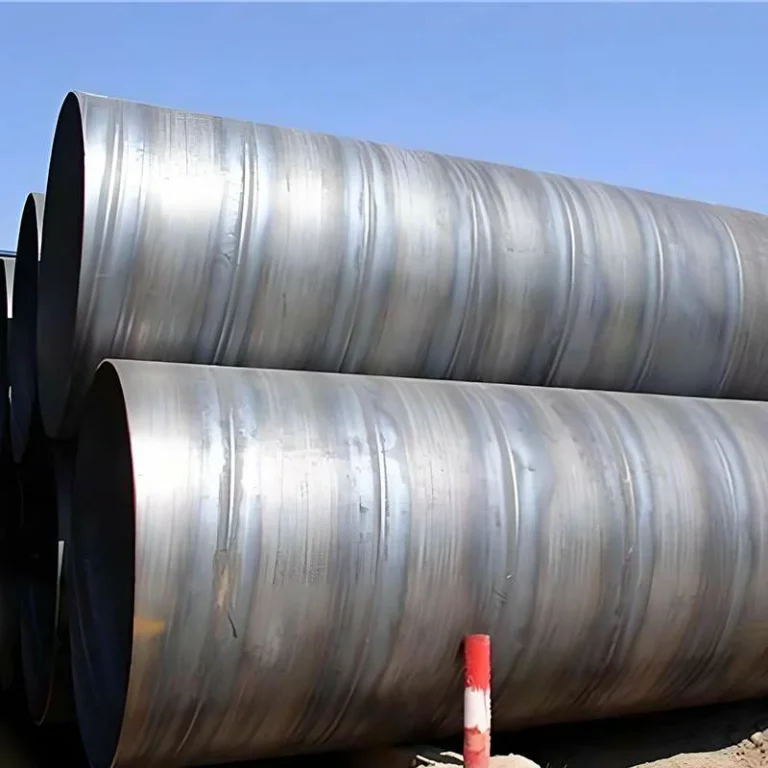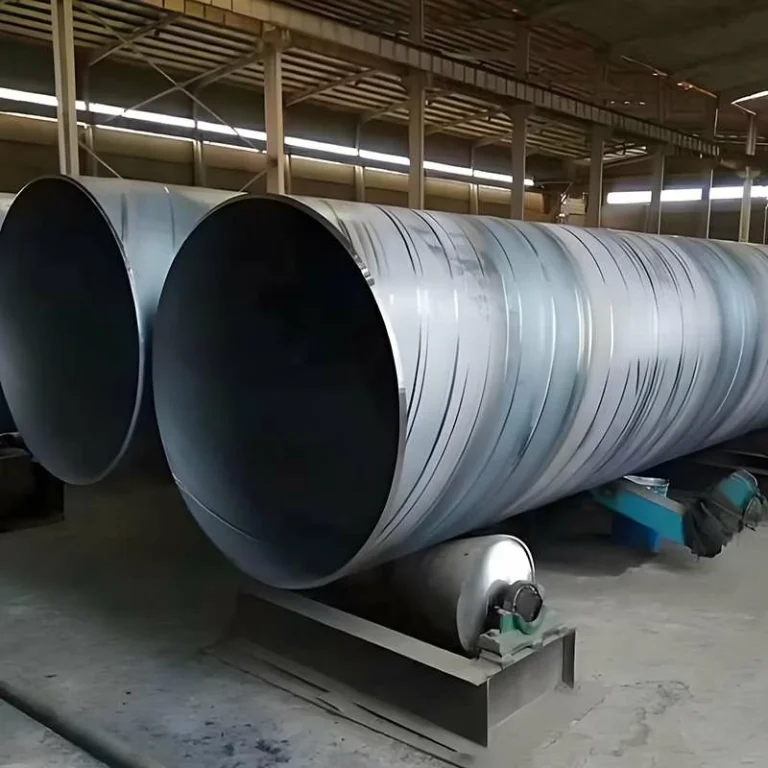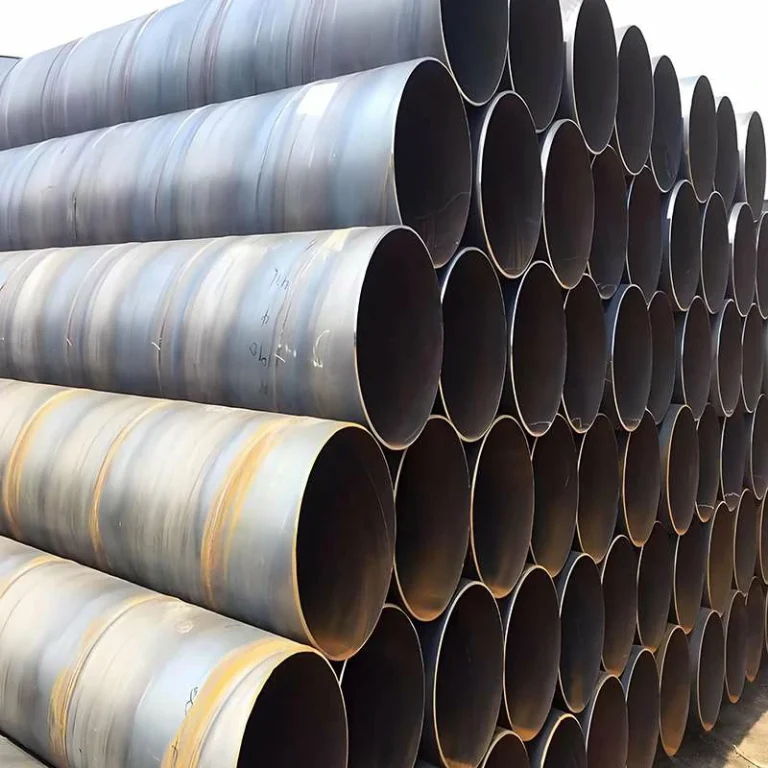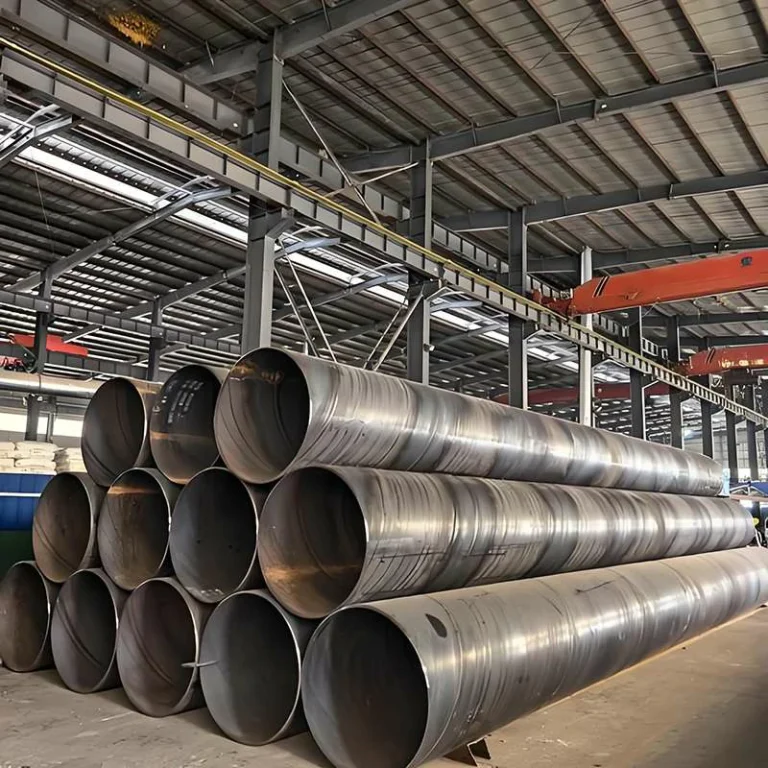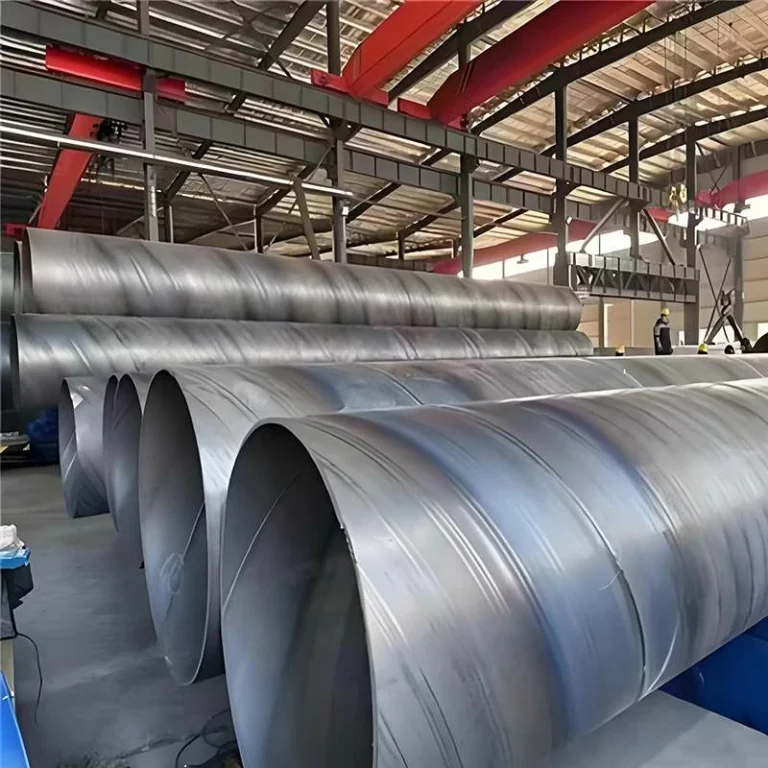
I. Overview of Hot Rolled Seamless Carbon Steel Pipes
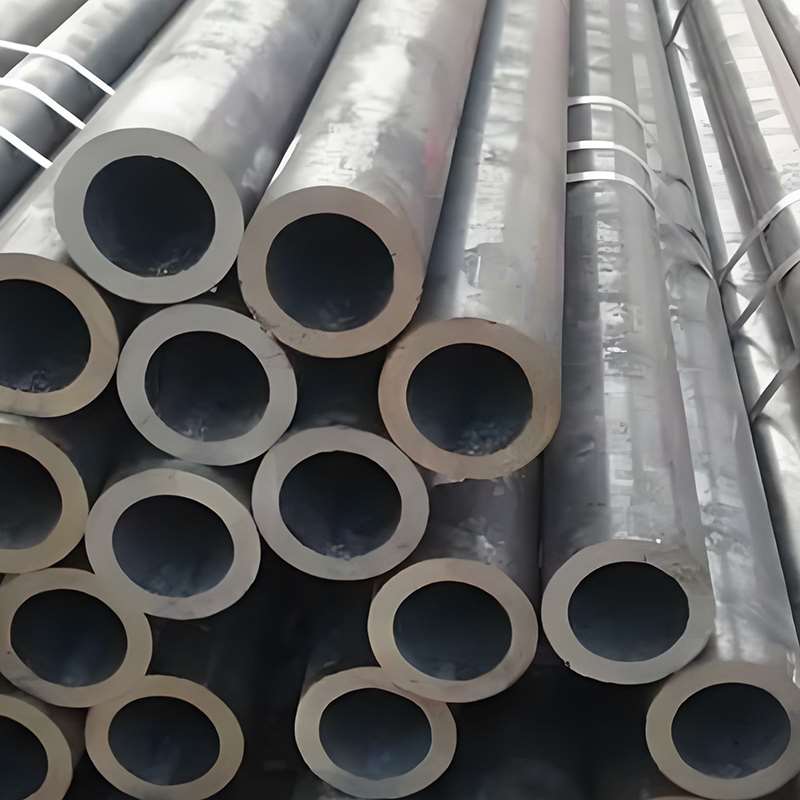
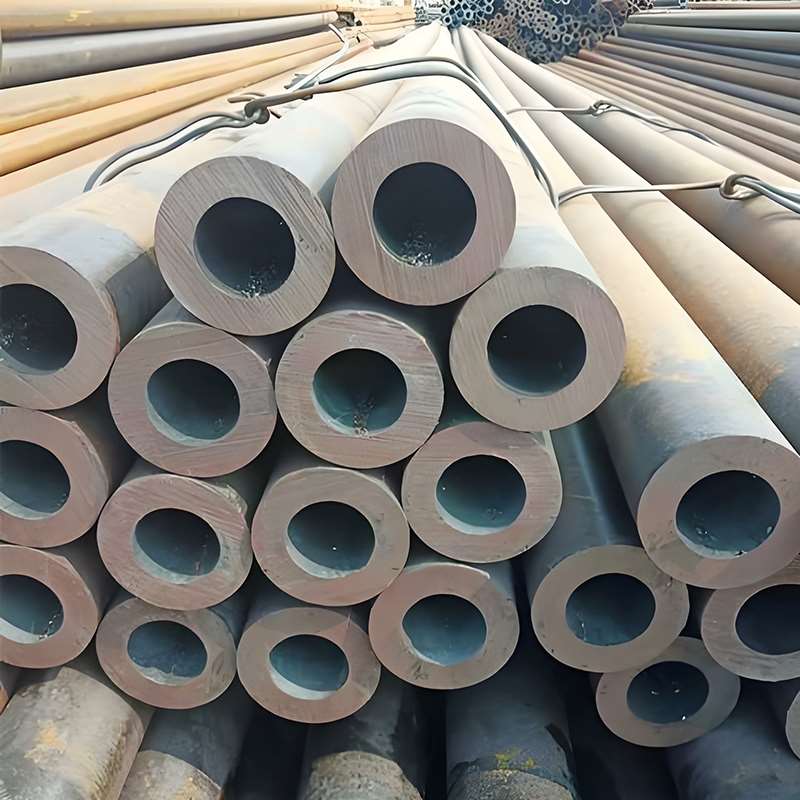
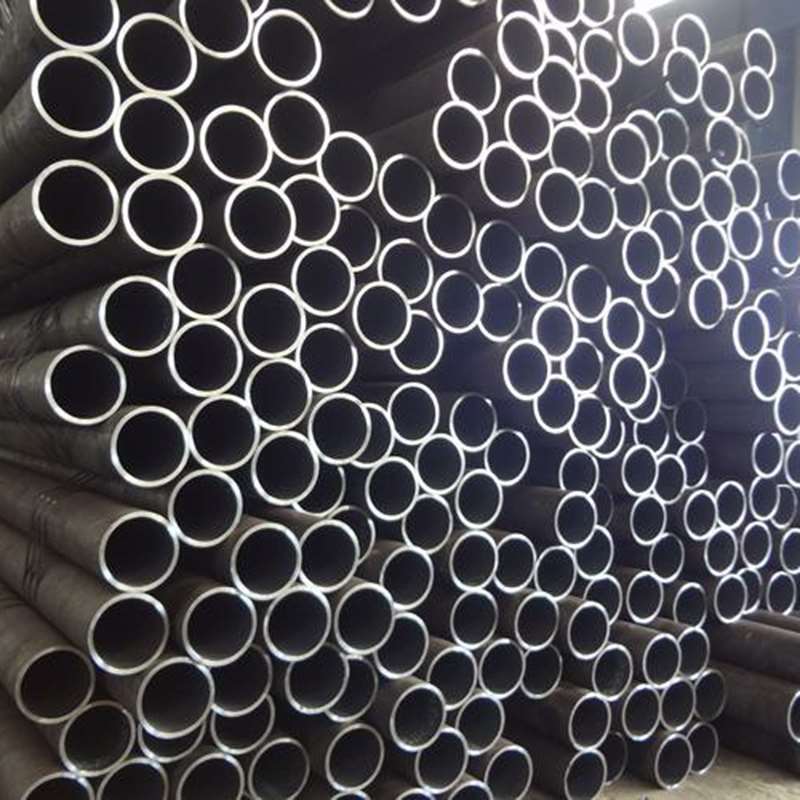
Hot rolled seamless carbon steel pipes are high-strength carbon steel pipes produced using a hot-rolling process. They feature uniform wall thickness, stable mechanical properties, and high pressure resistance.
Hot-rolled seamless carbon steel pipes conform to international standards such as ASTM, API, and EN. Different material grades (e.g., A, B, X42, X52) and specifications can be provided according to project requirements to meet the safety and durability requirements of medium and high-pressure pipelines.
The ends can be machined into flat or chamfered ends. The surface can be finished with black pipe or pickled and oiled coating. Anti-corrosion coatings include FBE, hot-dip galvanizing, or 3LPE. Packaging can be provided according to export shipping requirements, including bundling or wooden crate protection.
II. Standards for Hot-Rolled Seamless Carbon Steel Pipes
| Standard | Scope / Description |
|---|---|
| ASTM A106 | Hot rolled seamless carbon steel pipe for high-temperature and high-pressure service; available in Grades A, B, C |
| ASTM A53 | Hot-rolled or welded carbon steel pipe for water, steam, and oil & gas pipelines; available in Grades A, B |
| API 5L | Line pipe for transporting petroleum and natural gas; grades include X42, X46, X52, etc. |
| EN 10216-1 | European standard for seamless steel pipes used in high-temperature and high-pressure applications, suitable for boilers and pressure vessels |
| GB/T 8163 | Chinese standard for seamless steel pipes for fluid transportation, commonly used for water, oil, and gas pipelines |
| GB/T 8162 | Chinese standard for seamless steel pipes for structural purposes, suitable for general industrial structures |
III. Comparison Table of Material and Steel Grade for Hot Rolled Seamless Carbon Steel Pipes
| Standard | Material / Grade | Description / Typical Application |
|---|---|---|
| ASTM A106 | Grade A | Medium- and low-pressure fluid transportation; boilers, steam, and water pipelines |
| ASTM A106 | Grade B | Most commonly used; medium- and high-pressure pipelines; petroleum, chemical, and industrial fluids |
| ASTM A106 | Grade C | High-temperature and high-pressure pipelines; suitable for boilers and chemical installations |
| ASTM A53 | Grade A | Hot-rolled or welded pipe; medium- and low-pressure water, steam, and oil & gas pipelines |
| ASTM A53 | Grade B | Medium- and high-pressure pipelines; industrial, construction, and petroleum pipelines |
| API 5L | X42 | API 5L Grade B Carbon Steel Pipe for Oil & Gas Pipeline Yield strength 290 MPa |
| API 5L | X46 | Oil and gas pipelines; medium- and high-pressure service; yield strength 315 MPa |
| API 5L | X52 | Oil and gas pipelines; high-strength service; yield strength 360 MPa |
| API 5L | X56 | Oil and gas pipelines; high-strength long-distance pipelines; yield strength 390 MPa |
| EN 10216-1 | P235TR1 / P235GH | European standard; seamless steel pipe for high-temperature and high-pressure service; boilers and pressure vessels |
| EN 10216-1 | P265TR1 / P265GH | Medium- and high-pressure fluid pipelines and industrial pipelines |
| EN 10216-1 | P355NH / P355NL1 | High-pressure and high-temperature fluid pipelines |
| GB/T 8163 | 20# / 20G | Carbon steel seamless pipes for fluid transportation; water, oil, and gas pipelines |
| GB/T 8163 | 45# | Medium- and high-pressure pipelines and general industrial fluid pipelines |
| GB/T 8162 | Q235 | For industrial structures; suitable for medium- and low-pressure pipelines and mechanical structures |
| GB/T 8162 | Q345 | Higher strength; for medium- and high-pressure fluid pipelines and industrial structures |
IV. Chemical Composition and Mechanical Properties of Hot Rolled Seamless Carbon Steel Pipes
i. Chemical Composition Comparison Table
| Standard | Steel grade/grade | C (%) | Mn (%) | Si (%) | P (%) | S (%) |
| ASTM A106 | Grade A | ≤0.25 | 0.30–0.60 | ≤0.10 | ≤0.035 | ≤0.035 |
| ASTM A106 | Grade B | ≤0.30 | 0.29–1.06 | ≤0.10 | ≤0.035 | ≤0.035 |
| ASTM A106 | Grade C | ≤0.35 | 0.29–1.06 | ≤0.10 | ≤0.035 | ≤0.035 |
| API 5L | X42 | ≤0.26 | 0.60–1.20 | ≤0.35 | ≤0.035 | ≤0.035 |
| API 5L | X46 | ≤0.26 | 0.60–1.20 | ≤0.35 | ≤0.035 | ≤0.035 |
| API 5L | X52 | ≤0.26 | 0.60–1.20 | ≤0.35 | ≤0.035 | ≤0.035 |
| GB/T 8163 | 20# | 0.17–0.24 | 0.35–0.65 | 0.17–0.37 | ≤0.035 | ≤0.035 |
| GB/T 8163 | 20G | 0.17–0.24 | 0.35–0.65 | 0.17–0.37 | ≤0.035 | ≤0.035 |
| GB/T 8163 | 45# | 0.42–0.50 | 0.50–0.80 | 0.17–0.37 | ≤0.035 | ≤0.035 |
| EN 10216-1 | P235TR1 | ≤0.22 | 0.55 | ≤0.17 | ≤0.035 | ≤0.035 |
| EN 10216-1 | P265TR1 | ≤0.25 | 0.60 | ≤0.17 | ≤0.035 | ≤0.035 |
| EN 10216-1 | P355NH | ≤0.22 | 1.60 | ≤0.55 | ≤0.035 | ≤0.035 |
ii. Mechanical Properties Comparison Table
| Standard | Grade / Class | Yield Strength (MPa) | Tensile Strength (MPa) | Elongation (%) |
|---|---|---|---|---|
| ASTM A106 | Grade A | ≥ 205 | 330–480 | ≥ 30 |
| ASTM A106 | Grade B | ≥ 240 | 415–550 | ≥ 20 |
| ASTM A106 | Grade C | ≥ 275 | 415–550 | ≥ 20 |
| API 5L | X42 | ≥ 290 | 415–550 | ≥ 20 |
| API 5L | X46 | ≥ 315 | 460–610 | ≥ 20 |
| API 5L | X52 | ≥ 360 | 460–610 | ≥ 20 |
| GB/T 8163 | 20# | ≥ 235 | 375–500 | ≥ 20 |
| GB/T 8163 | 20G | ≥ 245 | 375–500 | ≥ 20 |
| GB/T 8163 | 45# | ≥ 345 | 470–630 | ≥ 20 |
| EN 10216-1 | P235TR1 | ≥ 235 | 360–510 | ≥ 22 |
| EN 10216-1 | P265TR1 | ≥ 265 | 410–560 | ≥ 21 |
| EN 10216-1 | P355NH | ≥ 355 | 470–630 | ≥ 20 |
V. Hot Rolled Seamless Carbon Steel Pipe Production Process
i. Main Production Flow
(1) Raw Material Preparation
High-quality carbon steel billets (round or square) that meet the required standards are selected, with strict control over their chemical composition.
The billets are heated in a heating furnace to 1100–1250℃ to ensure good plasticity and piercing performance, providing a stable foundation for subsequent forming processes.
(2) Piercing and Forming
The heated steel billet is perforated by a piercing mill to form a hollow tube blank.
This process is a crucial step in the formation of seamless steel pipes and directly affects the density and overall quality of the pipe.
(3) Hot Rolling and Stretching/Finish Rolling
The steel billet enters the hot rolling mill for multi-pass rolling, achieving elongation, sizing, and wall thickness control.
Through the hot rolling process, seamless steel pipes with uniform wall thickness and stable dimensions can be obtained, meeting the requirements of high-pressure and high-temperature working conditions.
Some specifications can be further processed into cold drawn seamless carbon steel pipes after hot rolling to improve dimensional accuracy and surface quality.
(4) Cooling
After hot rolling, the steel pipes are cooled using either water or air cooling methods to stabilize their internal structure and ensure consistent mechanical properties.
(5) Cutting to Length
Finished pipes are cut to standard lengths, typically 6–12 meters, but can also be manufactured to specific lengths according to project or customer requirements.
(6) End Finishing
The ends of the steel pipes can be processed into flat or beveled ends, facilitating welding, installation, and subsequent pipe connections, making them suitable for a variety of engineering applications.
(7) Surface Treatment and Corrosion Protection
Depending on the application environment, the pipes can undergo pickling and oiling, painting, galvanizing, or anti-corrosion treatments such as FBE or 3LPE.
Compared to ERW carbon steel pipes, seamless pipes offer greater safety advantages under high pressure and complex operating conditions.
(8) Inspection and Packaging
The finished products undergo dimensional inspection, chemical composition analysis, mechanical property testing, and UT/RT non-destructive testing.
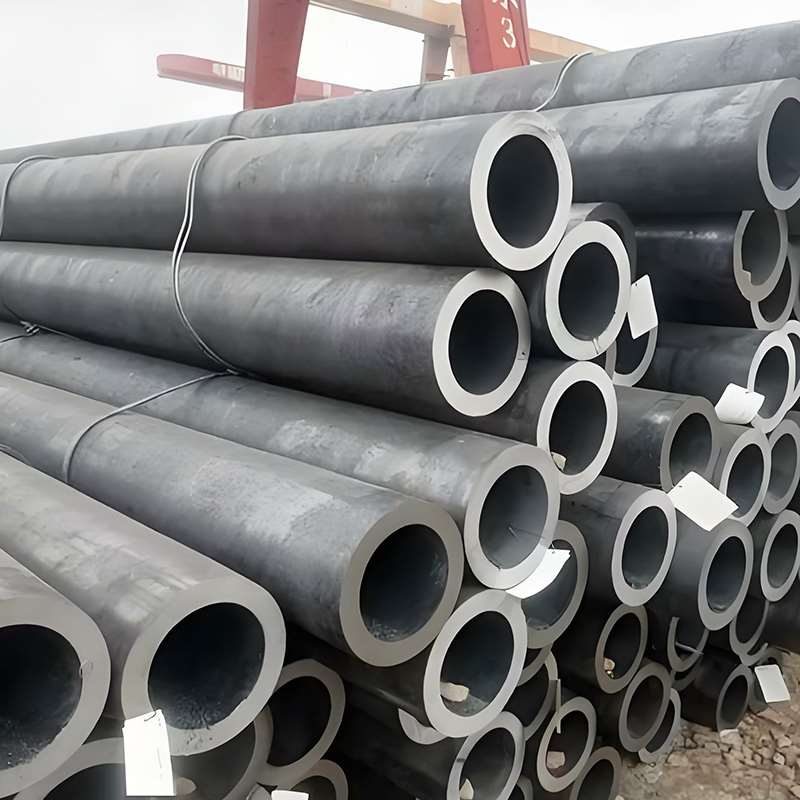
Qualified products, such as ASTM A106 Grade B seamless carbon steel pipes, are bundled with steel straps and protected with plastic end caps. Wooden crates can be added for export products to ensure safe transportation.
ii. Hot Rolled Seamless Carbon Steel Pipe Characteristics
- Seamless: Excellent integrity and high pressure resistance.
- Uniform wall thickness: Ensures safe fluid transport.
- Stable mechanical properties: Uniform yield strength, tensile strength, and elongation.
- Wide range of applications: Oil, natural gas, chemical, boiler, and industrial fluid pipelines.
VI. Application and Selection of Hot Rolled Seamless Carbon Steel Pipes
(1) Seamless Carbon Steel Pipe for Oil and Gas
Application Description: Used for oil and gas transmission pipelines, from medium-low pressure to high-pressure transmission scenarios.
Selection Recommendations:
Recommended steel grades include API 5L X42/X46/X52, with yield strength and tensile strength meeting pressure requirements.
OD and wall thickness calculated based on flow rate and pressure; lengths can be custom-cut.
For long-distance pipelines, FBE or 3LPE surface coatings are recommended for corrosion protection.
(2) Boiler and High-Temperature Steam Piping
Application Description: Used for boiler feedwater pipes and steam pipelines operating at high temperatures.
Selection recommendations for hot rolled seamless carbon steel pipes:
Recommended materials include ASTM A106 Grade B/C or EN 10216-1 P235TR1 / P265TR1 to ensure stable mechanical properties at elevated temperatures.
Ends should be chamfered for welding ease.
For steam pipes, acid pickling with oil coating or light anti-corrosion treatment may be considered.
(3) Chemical and Industrial Fluid Piping
Application Notes: Used in chemical plants and industrial fluid conveyance pipelines, including water, oil, light chemical liquids, etc.
Selection Recommendations:
Select material based on medium corrosivity: Carbon steel 20# / 20G for general liquids; consider internal coating or low-alloy steel for highly corrosive environments.
For medium-low pressure pipelines, choose GB/T 8163 20#; for high-pressure pipelines, recommend 20G or Q345.
Surface finish options include black pipe or pickled and oiled to prevent rust during transportation.
(4) Building and Structural Applications
Application Description: Used for industrial building structures, mechanical supports, and non-fluid pressure pipelines.
Selection Recommendations:
Choose higher-strength materials such as GB/T 8162 Q235 / Q345.
For load-bearing structures, prioritize sufficient wall thickness and mechanical properties meeting design requirements.
Surface treatment options include pickling and oil coating or spray painting, with rust prevention tailored to outdoor/indoor environments.
(5) Water and Steam Systems
Application Notes: Used for municipal water supply, heating systems, and steam pipelines.
Selection Recommendations:
Recommended grades: 20# or ASTM A53 Grade B, with medium-low pressure ratings.
Pipe diameter and wall thickness should be calculated based on flow rate and pressure.
Water system pipes may use standard black pipes; steam pipes are recommended to undergo acid washing and oil coating or light anti-corrosion treatment.
VII. Inspection Standards for Hot Rolled Seamless Carbon Steel Pipes
| No. | Test Category | Test Items | Method / Standard | Purpose |
|---|---|---|---|---|
| 1 | Chemical Composition | Content of C, Mn, Si, P, S, etc. | Spectroscopy / Chemical Analysis | Ensure material meets standards, guarantee weldability and mechanical properties |
| 2 | Appearance & Dimensions | Outer diameter, wall thickness, length, straightness, end condition | Vernier caliper, steel tape, visual inspection | Ensure pipe dimensions and appearance meet design requirements |
| 3 | Mechanical Properties | Yield strength, tensile strength, elongation | Tensile testing machine | Ensure the pipe meets required pressure and strength |
| 4 | Pressure Test | Hydrostatic or pneumatic test | Hydraulic or pneumatic testing | Check the pipe’s pressure resistance, ensure safe use |
| 5 | Nondestructive Testing (NDT) | Ultrasonic testing (UT), radiographic testing (RT) | GB/T 11345, ASTM E213 | Detect internal defects, cracks, or inclusions; ensure pipe integrity |
| 6 | Hardness Test | Brinell / Rockwell hardness | Hardness tester | Verify uniformity of material mechanical properties |
| 7 | Yield & Bending Performance | Bending test | Bending testing machine | Check pipe plasticity and toughness; ensure safe bending during installation |
| 8 | Surface Treatment & Coating Inspection | Coating thickness, adhesion, anti-rust treatment | Thickness gauge, visual inspection, adhesion test | Ensure protective coating integrity and extend service life |
| 9 | Packaging & Transportation Inspection | Bundle integrity, wooden crate / plastic caps | Visual inspection | Ensure pipes are not damaged during transportation |