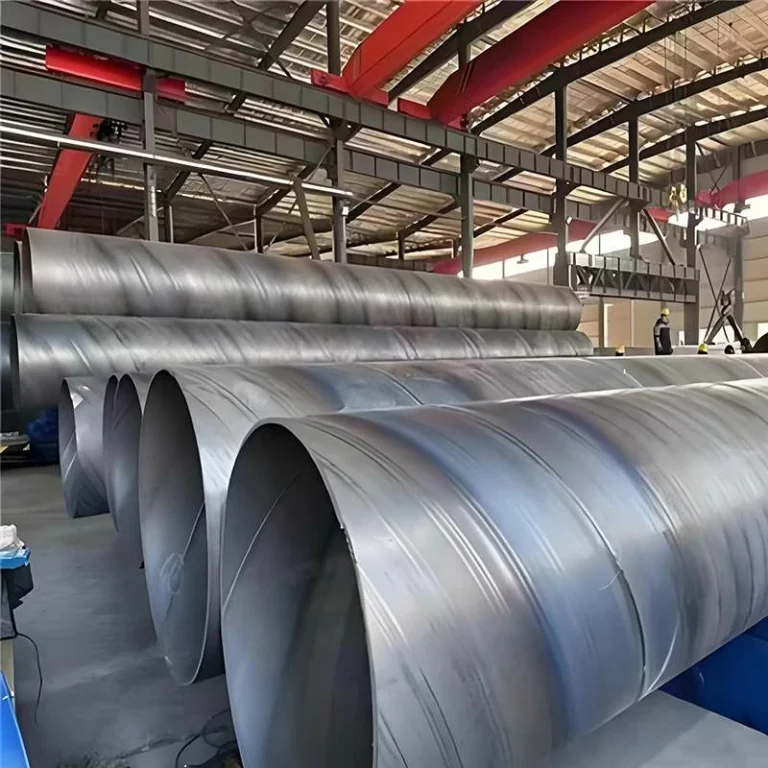
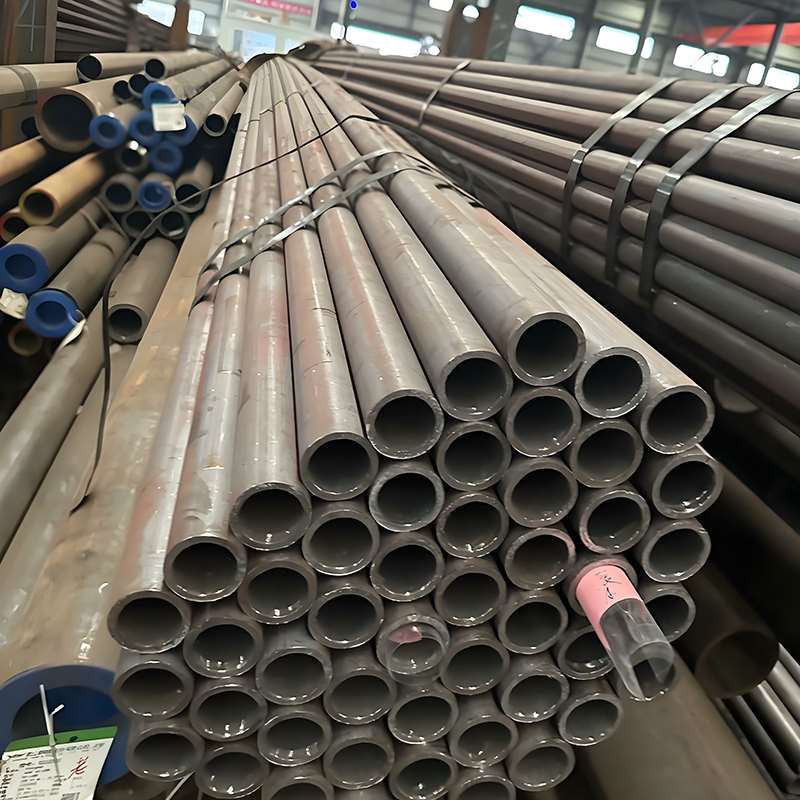
I. Overview of Cold Drawn Seamless Carbon Steel Pipes
Cold drawn seamless carbon steel pipes are high-precision steel pipe products manufactured from hot rolled seamless carbon steel pipes through cold drawing or cold rolling processes.
Compared to hot-rolled seamless pipes, cold-drawn seamless carbon steel pipes offer significant advantages such as high dimensional accuracy, uniform wall thickness, excellent surface quality, and stable mechanical properties, making them suitable for industrial applications requiring high precision in dimensions, tolerances, and surface finish.
Comparison Table of Cold-Drawn vs. Hot-Rolled Seamless Carbon Steel Pipes
| Comparison Item | Cold-Drawn Seamless Carbon Steel Pipe | Hot-Rolled Seamless Carbon Steel Pipe |
|---|---|---|
| Manufacturing Process | Hot-rolled billet followed by cold drawing | Directly hot-rolled without cold working |
| Wall Thickness Accuracy | High precision, uniform wall thickness | General precision, slight wall thickness variation |
| Surface Finish | Smooth and bright surface | Relatively rough surface; smooth after pickling |
| Mechanical Properties | Slightly higher yield and tensile strength, good plasticity | Uniform mechanical properties, slightly lower than cold-drawn |
| Controllable Size Range | Small outer diameter, customizable length, high precision | Large outer diameter, fixed length available, lower precision than cold-drawn |
| Machinability | Suitable for direct machining and precision structures | Suitable for general fluid transport and structural use |
| Application Scenarios | High-precision pipelines, machinery manufacturing, boilers, instrumentation pipes | High-pressure pipelines, boiler pipes, API 5L X42 Carbon Steel Pipe for Oil & Gas Pipeline, industrial fluid pipelines |
| Price | Higher due to complex processing | Lower due to higher production efficiency |
| Standards | ASTM A519, ASTM A106, GB/T 8163 | ASTM A106, API 5L, GB/T 8163 |
| End Finish | Plain ends or beveled ends, can be precisely machined | Plain ends or beveled ends, machinable but lower precision |
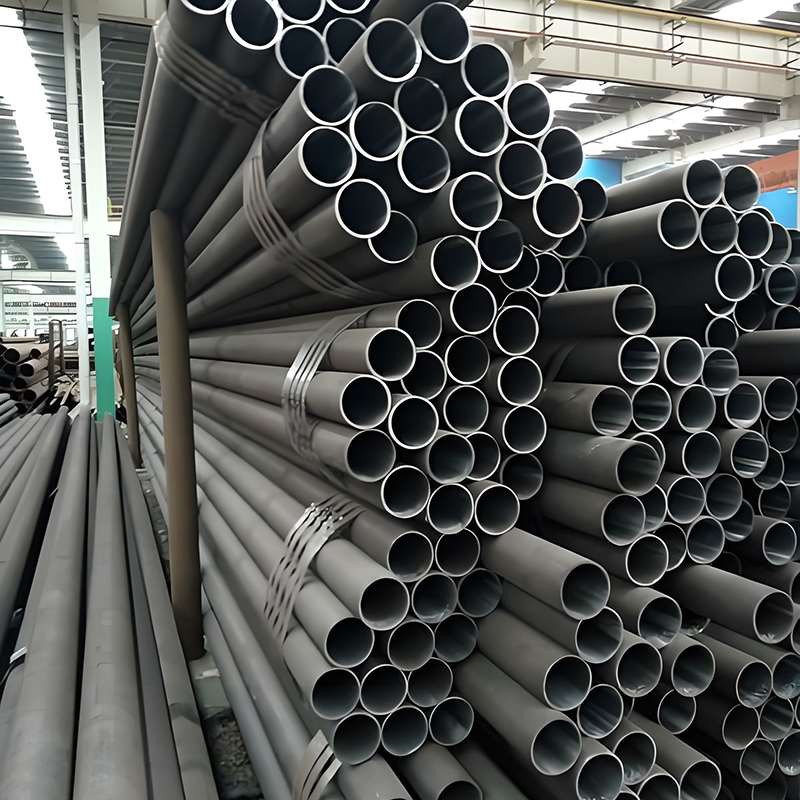
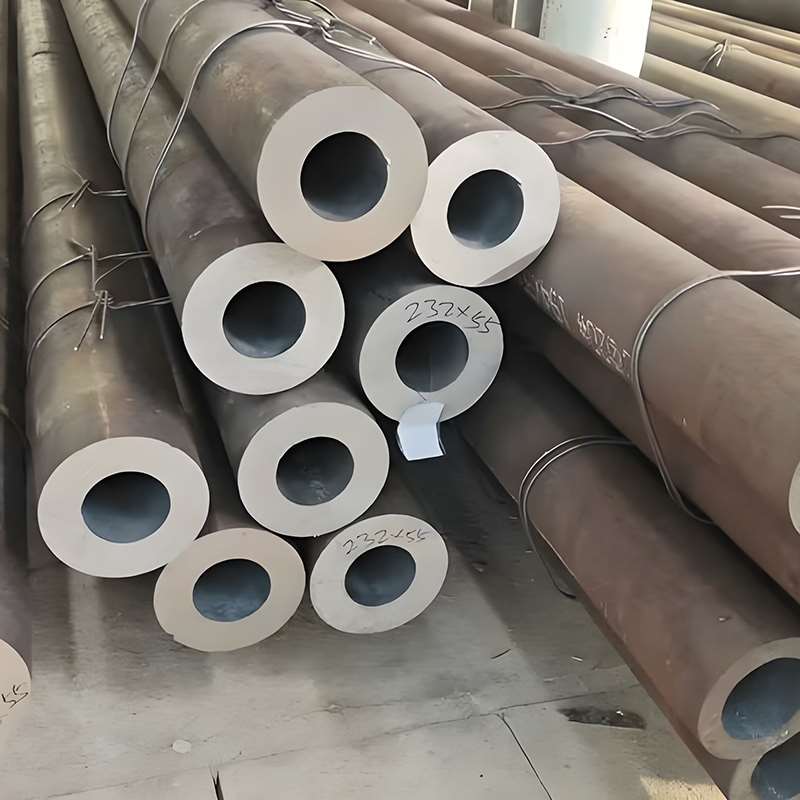
II. Standards for Cold-Drawn Seamless Carbon Steel Pipes
| Standard | Scope / Description |
|---|---|
| ASTM A513 | Cold-drawn or cold-rolled seamless carbon and alloy steel mechanical pipes; used for mechanical structures, precision parts, automotive, hydraulic tubing, etc.; emphasizes dimensional accuracy and surface finish |
| ASTM A106 / A53 | Can also be used for hot-rolled and cold-drawn seamless pipes, but cold-drawn is mainly for precision mechanical use; primarily for pressure pipelines and fluid transportation |
| EN 10305-1 | European standard for cold-drawn seamless steel pipes (precision seamless tubes); used for hydraulic and mechanical applications |
Cold drawn seamless pipes primarily emphasize dimensional accuracy, surface finish, and mechanical properties.
For international exports, ASTM A513 or EN 10305-1 are the most commonly used standards.
If the pipes are used for fluid conveyance, ASTM A106 may also be referenced; however, cold-drawn applications are predominantly found in precision machinery fields.
III. Chemical Composition and Mechanical Properties of Cold Drawn Seamless Carbon Steel Tubes
i. Chemical Composition (%)
| Standard | Grade / Class | C (%) | Mn (%) | Si (%) | P (%) | S (%) |
|---|---|---|---|---|---|---|
| ASTM A513 | 1010–1045 | 0.08–0.50 | 0.30–0.90 | ≤0.30 | ≤0.035 | ≤0.035 |
| ASTM A106 / A53 | Grade B | 0.17–0.24 | 0.35–0.70 | ≤0.30 | ≤0.035 | ≤0.035 |
| EN 10305-1 | C15–C45 | 0.12–0.50 | 0.30–0.80 | ≤0.30 | ≤0.035 | ≤0.035 |
ii. Mechanical Properties
| Standard | Grade / Class | Tensile Strength (MPa) | Yield Strength (MPa) | Elongation After Fracture (%) | Hardness (HB) |
|---|---|---|---|---|---|
| ASTM A513 | 1010–1045 | 370–750 | 235–355 | 16–28 | 120–235 |
| ASTM A106 / A53 | Grade B | 415–550 | ≥245 | ≥20 | 120–180 |
| EN 10305-1 | C15–C45 | 370–750 | 235–355 | 16–28 | 120–235 |
IV. Cold Drawn Seamless Carbon Steel Pipe Production Process
(1) Raw Material Preparation
Hot-rolled seamless steel pipe billets or round steel billets are selected, and their chemical composition must meet relevant standard requirements (such as ASTM A513, EN 10305-1). As a professional carbon steel pipe manufacturer, raw material consistency is crucial to ensuring product quality.
(2) Heat Treatment / Annealing (Optional)
The billets are normalized or annealed to improve the microstructure and enhance plasticity and cold working performance.
(3) Pickling / Surface Treatment
Oxide scale is removed through pickling to ensure a clean surface on the billet, providing favorable conditions for subsequent cold drawing.
(4) Cold Drawing Process
The hot-rolled billets undergo multiple cold drawing processes using drawing dies or drawing machines to reduce the outer diameter, control the wall thickness, achieve a bright surface, and gradually meet precise dimensional requirements.
(5) Intermediate Annealing / Tempering Treatment (Optional)
Intermediate annealing is performed on thick-walled or high-strength pipes to release internal stress and ensure uniform and stable mechanical properties.
(6) Sizing / Straightening
Dimensional accuracy and straightness are controlled through sizing and straightening processes, typically within a range of ±0.1–0.2 mm.
(7) Cold Working / Finishing (Drawing or Cold Rolling)
Further finishing is performed to achieve the final outer diameter and wall thickness tolerances, resulting in higher surface quality, suitable for applications requiring high precision.
(8) Heat Treatment (Tempering / Normalizing)
Tempering or normalizing treatment is performed according to project requirements to improve tensile strength, yield strength, and hardness, meeting performance requirements such as those for ASTM A106 Grade B seamless carbon steel pipes.
(9) Cutting and End Treatment
The pipes are cut to the specified length as required (typically 1–6 m, customizable), and the ends can be processed into flat or beveled ends.
(10) Surface Treatment and Protection
The finished products can be coated with anti-rust oil or undergo protective treatment. In some application scenarios, they can also complement hot dipped galvanized welded carbon steel pipes to form a complete product system.
(11) Inspection and Shipment
The finished products must pass dimensional, mechanical property, and surface quality inspections. After passing the inspections, they are packaged and shipped.
V. Application Fields and Selection Recommendations for Cold Drawn Seamless Carbon Steel Pipes
i. Oil and Gas Pipelines
Application Field: Cold drawn seamless carbon steel pipes are suitable for high-pressure pipeline systems transporting oil, natural gas, and other fluids. They can withstand high pressures while maintaining uniform pipe strength.
Selection Recommendations:
Recommended Steel Grades: API 5L X42, X46, X52
Select appropriate wall thickness based on pipeline pressure
Ends may be chamfered for welding convenience
FBE or 3LPE anti-corrosion coatings recommended for highly corrosive environments
ii. Boiler and Steam Piping
Application: Used in boiler feedwater pipes and steam piping systems where pipes must maintain stable mechanical properties under high-temperature conditions.
Selection Recommendations:
Recommended Steel Grades: ASTM A106 Grade B/C or EN 10216-1 P235TR1 / P265TR1
Ends chamfered for welding ease; surfaces acid-washed and oil-coated for rust prevention.
Select appropriate wall thickness based on steam pressure to ensure safety.
iii. Chemical and Industrial Fluid Piping
Application Areas: Piping systems for conveying water, oil, and light chemical liquids within industrial facilities.
Selection Recommendations:
For low-corrosive media: Select 20# carbon steel
For high-pressure or mildly corrosive media: Select 20G or Q345 steel
Surface treatment options: Pickling and oil coating or anti-corrosion coating
Standards reference: GB/T 8163 or ASTM, ensuring pipe performance meets requirements
iv. Mechanical Structures and Construction
Application Areas: Industrial supports, mechanical frames, and structural tubing for buildings.
Selection Recommendations:
Recommended steel grades: Q235 or Q345 to ensure load-bearing capacity
Wall thickness selected according to design requirements
Indoor use: Paint or acid-wash for rust prevention; outdoor environments may require additional anti-corrosion treatment
v. Municipal Water and Heating Systems
Application Areas: Water supply pipelines, heating systems, and steam pipelines.
Selection Recommendations:
For medium-to-low pressure pipelines, select 20# steel or ASTM A53 Grade B.
Pipe diameter and wall thickness must be calculated based on flow rate and pressure.
Standard black pipes may be used for indoor pipelines; acid-washed and oiled or lightly coated pipes are recommended for steam pipelines.
Selection Principles Summary
Determine medium type (water, steam, oil, chemical liquids) → Select corrosion-resistant or standard materials
Select steel grade and wall thickness based on operating pressure and temperature
Select surface treatment and coating based on usage environment (indoor/outdoor)
Match standards and steel grades (ASTM, API, GB, EN)
Confirm pipe length and end form (butt or chamfered ends)
VI. Inspection Standards Table for Cold Drawn Seamless Carbon Steel Pipes
| Test Category | Test Items | Purpose |
|---|---|---|
| Chemical Composition Test | Elements: C, Mn, Si, P, S, etc. | Ensure material meets standards; guarantee weldability and mechanical properties |
| Mechanical Properties Test | Yield strength, tensile strength, elongation | Ensure pipe pressure capacity and safe usage |
| Dimensions & Appearance Inspection | Outer diameter, wall thickness, length, straightness, end condition | Ensure pipe meets design requirements and facilitates installation |
| Nondestructive Testing (NDT) | Ultrasonic testing (UT), radiographic testing (RT) | Detect internal defects and ensure pipe integrity |
| Pressure, Hardness & Bending Test | Hydrostatic/pneumatic test, hardness test, bending performance | Verify pressure resistance, mechanical uniformity, and installation safety |
| Material Certificates & Third-Party Inspection | MTC (Material Test Certificate), third-party inspection | Record material information and increase reliability |
| Packaging Inspection | Steel strap bundling, plastic caps, or wooden crate protection | Prevent rust and damage; ensure safe transportation |
VII. Common FAQs About Cold Drawn Seamless Carbon Steel Pipes
1. What is the difference between cold drawn seamless carbon steel pipes and hot-rolled seamless pipes?
Cold drawn seamless carbon steel pipes undergo cold working, resulting in higher dimensional accuracy, more uniform wall thickness, and a smoother surface.
Hot-rolled seamless pipes are more suitable for large diameters and general applications, offering relatively lower costs.
For applications requiring high precision and surface quality, cold-drawn pipes are recommended.
2. Are cold drawn seamless carbon steel pipes suitable for high-pressure applications?
Yes.
Cold drawn seamless carbon steel pipes feature no welds and stable mechanical properties, making them suitable for medium-to-high-pressure applications.
The key lies in selecting the appropriate steel grade and wall thickness while complying with relevant standards (e.g., ASTM, API, GB).
3. How to select the appropriate steel grade based on operating conditions?
First, identify the medium type: water or steam, oil, or chemical liquids.
Then, confirm the operating pressure and temperature.
For general applications, 20# steel is suitable. For high-temperature and high-pressure conditions, 20G steel is recommended. For pipeline transportation, ASTM A106 or API 5L steel grades are appropriate.
4. Can cold drawn seamless carbon steel pipes be cut to length or customized?
Yes.
Outer diameter, wall thickness, and length can all be customized to requirements.
Common standard lengths range from 6 to 12 meters, though non-standard dimensions can be produced per project specifications.
5. Does cold drawn seamless carbon steel pipe require anti-corrosion treatment?
This depends on the usage environment.
For indoor or short-term applications, black pipe or acid-washed and oiled pipe may suffice.
For outdoor or corrosive environments, additional anti-corrosion coatings are recommended, such as spray painting, galvanizing, or FBE coating.
6. What inspection documents should be reviewed when purchasing cold drawn seamless carbon steel pipes?
Key documents to focus on include:
MTC (Material Test Certificate)
Chemical composition and mechanical property test results
Non-destructive testing or pressure test reports
These documents effectively ensure product quality and safe usage.